
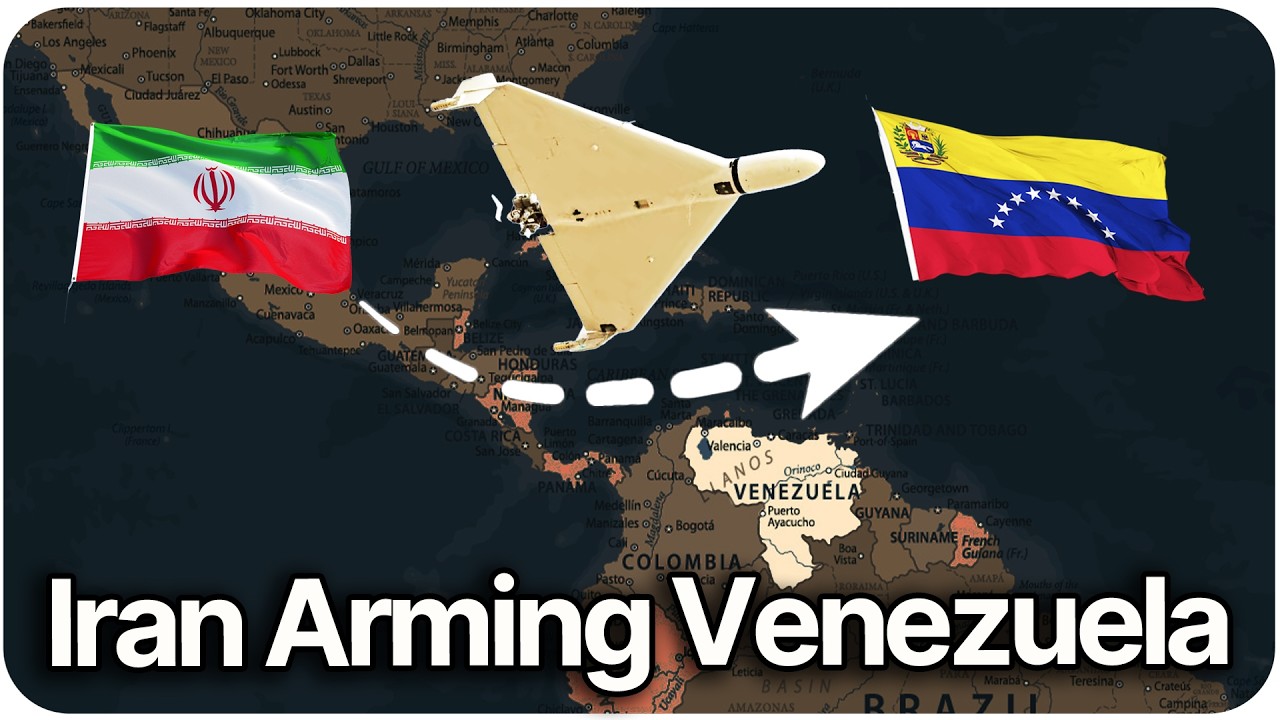
The military alliance between Iran and Venezuela represents a significant development in international relations, particularly concerning regional stability in the Caribbean. Iran’s provision of advanced military technologies, including anti-ship missiles and drones, to Venezuela poses risks not only to neighboring countries but also to U.S. interests in the region. This article examines the implications of Iran’s military support for Venezuela, focusing on the types of weaponry supplied, the involvement of proxy groups like Hezbollah, and the potential threats to U.S. naval operations.
By analyzing the various components of this burgeoning alliance, you will gain a comprehensive understanding of how Iran is extending its influence and bolstering Venezuela’s defense capabilities. This analysis highlights the urgency of recognizing and addressing the challenges this partnership presents to both regional and international security. You are invited to explore the intricacies of this situation and its broader ramifications for not only the Americas but also global geopolitical dynamics.
The Historical Context of Iran-Venezuela Relations
Early Political Alliances
The political relations between Iran and Venezuela can be traced back to the early 21st century, marked by mutual interests that flourished under the leadership of Hugo Chávez in Venezuela and Mahmoud Ahmadinejad in Iran. This period, encapsulated by a shared disdain for Western influence, especially that of the United States, led to the formation of strategic partnerships across various sectors. Bilateral agreements initiated in the early 2000s set the foundation for collaboration not only in oil but also in military and economic endeavors. The ideological alignment underpinned by anti-imperialist rhetoric created a fertile ground for deeper alliances to take root.
Oil Diplomacy and Economic Ties
The nexus of the Iran-Venezuela relationship fundamentally rests on oil diplomacy. Oil is the lifeblood of both nations; for Iran, it serves as a crucial source of revenue in the face of international sanctions, while for Venezuela, it is the pillar of its economy. Joint ventures in oil exploration and production have yielded substantial economic benefits for both nations. The establishment of the Iran-Venezuela Oil Company exemplifies efforts to bolster economic ties. Such collaborations have allowed both countries to sidestep Western sanctions, facilitating trade agreements that enable mutual sustenance amidst economic adversity.
Mutual Interests Against U.S. Influence
As both nations navigate a complex geopolitical landscape, their mutual interest in countering U.S. influence emerges as a salient theme in their relations. The United States has historically regarded both Tehran and Caracas with suspicion, characterizing their alliances as threats to regional stability. In response, Iran and Venezuela have strategically aligned to project a unified front against perceived external aggression. This entente represents not merely a response to immediate threats but a long-term strategy to carve out a sphere of influence in the region that distinctly excludes U.S. intervention.
Iran’s Military Aid to Venezuela
Types of Military Hardware Provided
The military relationship burgeoned with Iran supplying various military hardware to Venezuela, significantly enhancing its defense capabilities. Noteworthy among these provisions are fast-attack boats equipped with anti-ship missiles, which bolster Venezuela’s maritime defense. Additionally, Iranian drones, capable of surveillance and targeting, further amplify Venezuela’s military footprint. The diversity of military aid underscores Iran’s commitment to shifting the balance of power in the region.
Volume and Scale of Arms Transfers
The scale of arms transfers from Iran to Venezuela has been notable and continues to grow. Reports suggest that since the formalization of military ties, several shipments of military equipment have successfully crossed borders, often under obscure pretexts. These transfers are not limited to small arms but include significant systems capable of altering the strategic landscape. The volume of equipment provided indicates a robust commitment to equipping Venezuelan armed forces in a manner that explicitly challenges regional adversaries.
Logistics of Arms Delivery and Support
The logistics supporting these arms transfers portray a highly coordinated system of collaboration. Utilizing clandestine routes and coordinated shipments, Iran has effectively ensured that military hardware reaches Venezuela despite international scrutiny. Additionally, training missions and logistical support from Iranian military advisors further embed Iranian military doctrine within the Venezuelan armed forces. This dimension of support not only sustains the flow of arms but also ensures operational readiness for new systems introduced into the Venezuelan military arsenal.
Iran’s Advanced Weaponry in Venezuela
Fast-Attack Boats with Anti-Ship Missiles
The introduction of fast-attack boats armed with anti-ship missiles represents a significant evolution in Venezuela’s naval capabilities. These vessels, designed for rapid deployment, allow Venezuela to control maritime approaches and assert power over critical chokepoints. The presence of such weaponry denotes an escalation in naval warfare capabilities, enabling Venezuela to engage threats in its territorial waters effectively. The operational deployment of these boats marks a strategic pivot in military doctrine, aligning with Iran’s own naval strategy.
Deployment of Iranian Drones
The deployment of Iranian drones enhances Venezuela’s capacity for modern warfare, introducing advanced surveillance capabilities and precision strike options. These drones, including systems similar to the Mohajer-6 and Shahed series, afforded the Venezuelan military unprecedented reach and lethality. By incorporating such technology, Venezuela not only expands its tactical options but significantly alters the strategic calculus assessed by regional adversaries, posing new challenges to their military operations.
Impact of Drone Technology on Military Capability
The integration of drone technology into the Venezuelan military focuses on asymmetric warfare advantages, providing the nation with substantial leverage over both state and non-state actors in the region. The ability to conduct reconnaissance and precision strikes without direct human presence shifts the dynamics of military engagements. As drone capabilities proliferate within Venezuela, concerns surrounding regional stability increase, compelling neighboring countries to reassess their security postures in response to an evolving military landscape.
Proxy Networks and Militias
Role of Hezbollah and Its Operations
Hezbollah’s involvement in Venezuela as a proxy actor illustrates the hybrid warfare strategies being employed by Iran. The group’s established presence in the region facilitates the exchange of military knowledge and tactics with Venezuelan armed forces. By operating through this clandestine network, Iran extends its geopolitical influence, utilizing Hezbollah’s operational experience to bolster both military capability and local insurgent movements. This relationship embodies a strategic investment in cultivating asymmetrical warfare capabilities.
Training and Developing Local Militias
In addition to expanding its military hardware, Iran has focused on training local militias aligned with the Venezuelan government. This endeavor serves both immediate defensive needs and longer-term strategic goals, creating a network capable of supporting unconventional warfare. The conceptualization of these forces hinges on the idea of employing decentralized fighting units that can contest authority and engage in extended guerrilla tactics if necessary. The implications for domestic security and governance in Venezuela are profound, potentially inviting increased instability.
Potential Escalation of Violence in the Region
The emerging landscape of proxy networks and militias presents a potential escalation of violence in Latin America. As Iran’s influence solidifies through these groups, regional adversaries may feel compelled to intervene to safeguard their interests. The possibility of armed confrontations or conflicts intensifying between rival armed factions fosters an environment of uncertainty. This escalation carries broader implications, threatening not just Venezuela’s stability but also regional peace, necessitating diplomatic responses from neighboring countries and external actors alike.
Strategic Goals of Iran in Latin America
Expanding Geopolitical Influence
Iran’s strategy in Latin America reflects a concerted effort to expand its geopolitical influence beyond the Middle East. Establishing strong ties in Venezuela serves multi-faceted strategic purposes, including counterbalancing U.S. power and diversifying its international partnerships. This outreach serves to present Iran as a formidable player on the global stage, capable of engaging politically and militarily in regions historically viewed as outside its sphere of influence.
Undermining U.S. Hegemony
The Iranian-Venezuelan alliance strategically aims to undermine U.S. hegemony in Latin America. Through arms transfers and military cooperation, Iran seeks to create a coalition that can challenge U.S. interests directly. This coalition not only symbolizes a rejection of U.S. domination but also signifies a collective effort to support nations pursuing independent foreign policies, subsequently redrawing international alignments that have favored the West for decades.
Establishing a Front Against Western Interests
By cultivating relationships with like-minded regimes, Iran aims to establish a consolidated front that actively counters Western interests in the region. This front extends beyond military partnerships and encompasses economic, political, and social dimensions, presenting a holistic approach to resist what they perceive as imperialistic tendencies. The degree to which this front can effectively counter Western influence remains to be seen but poses a noteworthy challenge for the U.S. and allied states.
Venezuelan Internal Politics and Military Strategy
Government Support for Iranian Ties
The Venezuelan government has consistently championed its partnership with Iran due to its alignment with the regime’s anti-imperialist narratives. The support for Iranian ties reflects a broader strategy to legitimize the government’s initiatives domestically and project strength internationally. This partnership is marketed as a critical bulwark against external threats, reinforcing internal unity amid economic and political strife.
Military Collaboration with Revolutionary Guard
The collaboration between the Venezuelan military and Iran’s Islamic Revolutionary Guard Corps (IRGC) epitomizes a growing military-to-military relationship that enhances Venezuela’s capability to resist perceived aggression. The exchange of tactics, intelligence, and possibly direct intervention by IRGC personnel demonstrates a deepening commitment to supporting Venezuela’s military objectives. Such partnerships also echo Iran’s broader regional strategy of projecting power through proxy relationships.
Implications for Domestic Stability
While the military collaboration serves to bolster government strength, it simultaneously risks exacerbating internal divisions. The military’s growing reliance on foreign support may lead to questions of sovereignty among the populace, potentially igniting dissent. As the government relies on external military cooperation, the ramifications for domestic political stability could become increasingly pronounced, laying the groundwork for future upheavals or changes in governance.

Impact on Regional Security
Threats to Neighboring Countries
Iran’s military partnership with Venezuela raises alarm bells for neighboring countries. The introduction of advanced weapon systems poses direct threats as regional actors reassess their military readiness. Countries in close proximity may perceive these developments as existential threats, prompting them to enhance their own military capabilities in a competitive arms race. Such dynamics could lead to heightened tensions, with far-reaching implications for regional security.
Impact on Regional Military Balance
The introduction of Iranian weaponry into the Venezuelan arsenal has a profound impact on the regional military balance. Potential adversaries now need to contend with a fortified Venezuelan military that possesses advanced technologies previously unavailable in Latin America. Consequently, the recalibration of strategic military doctrines across the region is inevitable as nations adapt to a new military reality that presents asymmetric challenges.
Responses from Latin American Governments
Latin American governments find themselves at a crossroads, grappling with how to respond to the Iranian-Venezuelan military collaboration. Diplomatic outreach to enhance military cooperation and intelligence sharing among regional allies is likely to form part of the strategy aimed at countering perceived threats. The need for multilateral efforts to deter destabilizing activities driven by Iranian influence becomes paramount in maintaining regional order.
U.S. Response to Iran-Venezuela Military Collaboration
Political and Economic Sanctions
In light of the burgeoning military collaboration, the United States has resorted to imposing political and economic sanctions targeting both Iran and Venezuela. These measures seek to stifle the flow of resources facilitating military cooperation while also aiming to exert pressure on both governments to incentivize shifts in their alignment. The effectiveness of sanctions as a deterrent has been under scrutiny, considering their limited success in altering behavior in other contexts.
Military Preparedness and Strategy Adjustments
The U.S. military has adjusted its preparedness to contend with the evolving security landscape in Latin America. As Iranian influence deepens in Venezuela, U.S. military strategy is likely to focus on enhancing deterrence capabilities in the Caribbean and Central America. This shift could involve increased surveillance operations, naval deployments, and collaborative exercises with regional allies, reinforcing commitment to uphold security interests in the hemisphere.
Diplomatic Efforts and Regional Partnerships
In conjunction with strategic military adjustments, the U.S. is ramping up diplomatic efforts to fortify partnerships with Latin American countries. Engaging in dialogue with regional leaders to address collaborative threats posed by Iranian involvement is essential for a united front against foreign influence. This approach emphasizes coalition-building that transcends ideological differences to preserve regional stability.
Potential Risks to U.S. Interests
Threat to U.S. Shipping Lanes
The military empowerment of Venezuela poses tangible threats to U.S. shipping lanes, particularly within the Caribbean. The deployment of anti-ship missiles and fast-attack boats expands Venezuela’s operational reach to disrupt maritime traffic, vital for trade and energy transfer. The strategic implications of these developments bear considerable weight, risking potential economic repercussions should adversarial engagements arise.
Risks to Military Operations in the Caribbean
The evolving power dynamics facilitated by Iranian involvement could impact U.S. military operations in the Caribbean, making operational environments more complex and hostile. Escalating tensions may constrain U.S. forces engaged in counter-narcotics and disaster relief missions, as the region could witness heightened military readiness from Venezuelan forces. This reality obligates a comprehensive reassessment of military tactics and strategy to ensure operational effectiveness amidst potential adversities.
Impact on U.S.-Latin America Relations
Finally, the consolidation of Iranian influence in Venezuela risks imperiling U.S.-Latin America relations. The growing alignment between Caracas and Tehran serves as a rallying point for other nations in Latin America to challenge U.S. hegemony openly. Regional partnerships could be re-evaluated or even redefined, pushing some nations closer to Iran, complicating diplomatic relations and potentially fostering hostilities as alliances shift.
Conclusion
Summary of Key Points
The multifaceted relationship between Iran and Venezuela, grounded in historical alliances, has evolved into a significant military collaboration with profound implications for regional security. With an arsenal bolstered by Iranian weaponry, Venezuela stands at a strategic juncture, empowering it to act independently of U.S. interests. The ramifications extend beyond mere bilateral ties, influencing the broader geopolitical landscape in Latin America.
Final Thoughts on Regional Stability
As the dynamics of Iran-Venezuela relations continue to develop, the potential for destabilization looms large. The interplay between military capabilities, proxy networks, and the ideological alignments underscores the need for vigilance and proactive policy responses by nations prioritizing regional security. The landscape of Latin America may witness transformative changes dependent on how these alliances are navigated in the coming years.
Call for International Awareness and Action
To mitigate emerging risks, there is a pressing necessity for international awareness and concerted action regarding the Iran-Venezuela partnership. The collaborative efforts between these two nations demand thoughtful diplomatic engagement by global powers to foster a strategic dialogue focused on de-escalation. In a world increasingly defined by intricate geopolitical tensions, the stakes for regional security remain exceptionally high, necessitating collective responsibility toward preserving peace and stability.