
The F-14 Tomcat has long been a symbol of air superiority, renowned for its distinctive swing-wing design and formidable capabilities. After more than five decades of service, its tenure in Iran appears to come to a close, marking the end of an era for both the aircraft and the nation that has uniquely operated it alongside the United States. This article explores the intriguing history of the F-14, detailing how it became a pivotal part of Iran’s aerial defense strategy and the complexities surrounding its continued operation in a changing geopolitical landscape.
A thorough examination will reveal the journey of the F-14 from its inception in American aerospace engineering to its unexpected legacy within the Iranian military. Significant emphasis will be placed on the circumstances that led to Iran acquiring these advanced fighters, the operational history of the Tomcat in Iranian service, and the efforts undertaken to sustain them amid various challenges. Ultimately, this account reflects on the Tomcat’s lasting impact, not only within the scope of military aviation but also in the broader narrative of defense and international relations.

The Legacy of the F-14 Tomcat
Introduction to the F-14 Tomcat
The F-14 Tomcat, an aircraft that epitomizes American military might, was first introduced in the early 1970s. As a notable fleet defense fighter, its design was conceived as a strategic response to the shifting challenges faced by naval aviation in the Cold War era. Equipped with a variable-sweep wing, the F-14 could adapt its flight characteristics according to mission requirements, providing it with remarkable versatility. The aircraft not only revolutionized aerial combat with its technological advancements but also became an iconic symbol of U.S. military aviation, often portrayed in popular media. The legacy of the F-14 is particularly crucial when examining its operational history and eventual acquisition by Iran—an intriguing narrative that has unfolded over decades.
Design and Engineering Innovations
The F-14’s design encapsulated several engineering innovations aimed at maximizing its combat effectiveness. The hallmark of its design—the variable-sweep wing system—enabled the aircraft to shift its wing configuration in-flight, optimizing aerodynamics during various flight phases. This feature contributed to superior performance in dive speed and maneuverability. Moreover, the aircraft was equipped with advanced avionics and the groundbreaking AWG-9 radar system, which allowed it to track multiple targets simultaneously, thereby asserting its dominance in air-to-air combat scenarios. The combination of these technologies made the F-14 a formidable adversary in the skies, as it could engage enemy aircraft at long distances while maintaining the agility necessary for dogfights.
Operational Capabilities and Roles
Primarily purposed for air superiority, the F-14 was built to counter threats posed by advanced enemy fighters, particularly during the Cold War. Its dual-role capability stretched beyond mere interception; it was also adept in ground attack missions, carrying a variety of munitions including precision-guided bombs. The Tomcat was designed to perform both as a fleet defender and an offensive attack aircraft, allowing it to adapt to the evolving nature of aerial warfare. Its versatility enabled it to serve diverse roles, including reconnaissance and maritime strike operations, underscoring its significance within the U.S. Navy and setting the stage for its influential history in international contexts, particularly in Iran.
Historical Context of the F-14 in Iran
Iran’s Military Alliances Pre-1979
Before the 1979 Iranian Revolution, Iran maintained close military relations with the United States, particularly during the reign of Shah Mohammad Reza Pahlavi. As part of its modernization efforts, the Iranian military sought advanced technology and aircraft, leading to substantial defense partnerships with the U.S. This included the procurement of F-14 Tomcats, which were seen as a pivotal component in establishing a robust air defense capability, aimed at deterring potential threats from regional adversaries.
The Impact of the 1979 Iranian Revolution
The 1979 Iranian Revolution drastically altered the geopolitical landscape. As the Shah was overthrown, the new Islamic Republic demonstrated an antagonistic stance toward the West, particularly the United States. The military contracts and relationships established during the pre-revolution period suffered immensely, creating a significant disconnect between the operational needs of the Iranian Air Force and the capabilities it possessed, notably the F-14 Tomcats. This seismic shift in political allegiances had far-reaching implications for the usage and maintenance of the F-14 fleet surviving in Iran.
F-14 Sales and Deliveries to Iran
The F-14 deal with Iran was one of the most crucial aspects of the military-sales strategy implemented by the U.S. during the Cold War. A total of 79 F-14s were sold to Iran, alongside spare parts and training for Iranian pilots and crew. Delivered between 1974 and 1979, these aircraft were intended to solidify Iran’s air superiority in the Persian Gulf. While the transactions were seen as strategic investments in regional stability, the consequences of the subsequent revolution rendered them contentious and complicated.
Acquisition of F-14s by Iran
Negotiations and Agreements
Acquiring the F-14 Tomcat involved intricate negotiations between the Iranian government and the U.S. military-industrial complex. The desire for modernized defense capabilities led Iranian officials to advocate for advanced military hardware, resulting in the finalization of agreements that would substantially augment Iran’s aerial combat prowess. The negotiations were indicative of a broader U.S. strategy to fortify its relationships with Middle Eastern allies, emphasizing that the F-14s would act as a bulwark against Soviet aggression in the region.
U.S. Support and Technology Transfers
Alongside the procurement of F-14s, the U.S. committed to providing comprehensive support and technology transfers to ensure that Iranian forces could maximize the operational potential of these advanced aircraft. This included training for pilots and maintenance crews, ensuring that the F-14s could be sufficiently integrated into the Iranian military structure. The support provided not only facilitated the operational use of the aircraft but also engendered a sense of military cooperation that existed prior to the revolution.
Comparison with U.S. Fleet Usage
When comparing how Iran utilized the F-14 in contrast to the U.S. Navy, it became evident that the Iranian operational paradigm was affected by the restrictions imposed after the revolution. While the U.S. Navy continually updated its fleet with new technologies and systems, Iran was left to operate the F-14s with a mixture of legacy systems and a need to innovate under severe resource constraints. Despite this disparity, the Iranian Air Force adeptly employed the aircraft for aerial superiority, mirroring some of the strategic doctrines established by the U.S.
The F-14 Tomcat in Iranian Service
Operational Deployment in the Iran-Iraq War
The onset of the Iran-Iraq War in 1980 marked a significant phase for the F-14s in Iranian service. Deployed in a defensive capacity, the aircraft played a crucial role in intercepting Iraqi air strikes and asserting dominance over Iranian airspace. Utilizing their advanced radar and weapons systems, the F-14s engaged in aerial combat, achieving notable success against Iraqi Bombers and fighter aircraft. This deployment was instrumental in asserting the Iranian military’s resilience in the face of external aggression.
Notable Engagements and Achievements
Throughout the Iran-Iraq War, the tactical prowess of the F-14 Tomcat was displayed in several key engagements, with Iranian pilots managing impressive kill ratios against heavily armed adversaries. One such engagement includes the interception of Iraqi F-1 Mirage fighters, where Iranian F-14s successfully deployed AIM-54 Phoenix missiles, achieving significant air victory. These accomplishments not only elevated the aircraft’s reputation but also helped bolster the morale of Iranian forces amid a challenging conflict.
Role in Air Defense Strategy
The F-14 Tomcat became a cornerstone of Iran’s air defense strategy, providing a technological edge during a time of critical vulnerability. Its versatility in conducting both air-to-air combat and ground-attack missions allowed Iranian forces to protect vital infrastructures, military installations, and urban centers from aerial assaults. The strategic deployment of the F-14s demonstrated their importance in shaping tactical engagements, as Iranian military planners relied on the aircraft’s capabilities to carry out effective deterrent operations.
Maintenance and Continued Operation
Challenges in Spare Parts and Technology
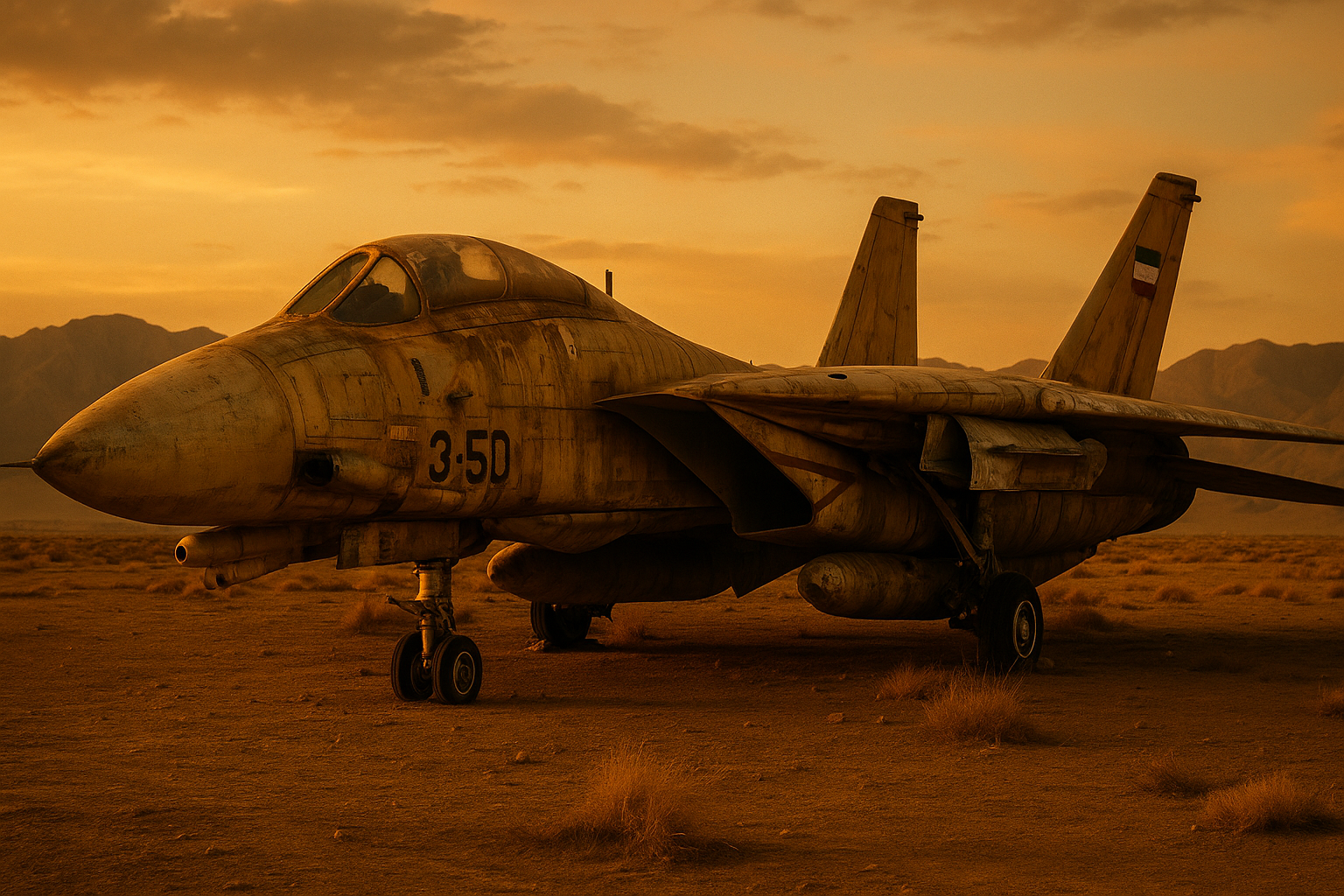
As the geopolitical landscape evolved, Iran faced severe challenges in maintaining its fleet of F-14s, primarily due to the absence of support from the U.S. after the revolution. The imposition of economic sanctions complicated access to spare parts, leading to significant operational hurdles. This scarcity forced Iranian engineers and technicians to innovate and devise new strategies for keeping the aging aircraft operational, revealing an impressive adaptability amidst adversity.
Iran’s Maintenance and Engineering Solutions
In response to the challenges of spare part shortages, Iran undertook significant maintenance and engineering initiatives. The Iranian military focused on reverse-engineering available parts and developing indigenous solutions to replace critical components. These efforts highlighted a broad commitment to ensuring the operational readiness of the F-14 fleet, emphasizing the determination of Iranian engineers to overcome the limitations imposed by international isolation.
The Role of Domestic Manufacturing
The emphasis on domestic manufacturing and engineering solutions became vital in sustaining the F-14 fleet. By leveraging local resources and expertise, Iran managed to establish a degree of self-sufficiency in the production of parts and maintenance systems. The development of a resilient domestic defense industry provided a framework for maintaining military capabilities and underscored the significance of the F-14 within the context of Iranian air power.
Technical Specifications and Upgrades
Original Specifications of the F-14
Originally, the F-14 Tomcat was designed with a maximum speed of over 2.3 Mach and a service ceiling of 50,000 feet. It boasted powerful engines, the Pratt & Whitney F401, capable of producing substantial thrust, contributing to its exceptional performance metrics. The F-14 was also outfitted with a sophisticated radar system and a diverse arsenal of air-to-air and precision-guided munitions, enhancing its lethality in combat situations.
Modifications and Upgrades Implemented by Iran
In the face of limitations in accessing American technology, Iran sought to make various modifications to its F-14 fleet. This included the integration of alternative systems and locally-made upgrades, focusing on enhancing avionics and weaponry. These modifications allowed Iranian pilots to optimize the aircraft’s functionality, enabling a level of operational effectiveness despite the outdated original specifications and limitations imposed by the lack of new technologies.
Ongoing Technological Challenges
Despite these efforts, Iran continued to face ongoing technological challenges in sustaining the F-14 fleet. Many systems remained outdated, and the absence of advanced electronic warfare capabilities and modern avionics limited their operational effectiveness in contemporary scenarios. As global conflicts evolved, ensuring that the F-14s equipped the Iranian military to contend with emerging threats became increasingly complex.
Impact on Regional Military Dynamics
F-14’s Role in Deterring Adversaries
The presence of the F-14 Tomcat in Iranian service has played a pronounced role in deterring regional adversaries, contributing to a balance of power in the Persian Gulf. This technology served as a key element in Iran’s defense strategy, enabling it to project power and deter external threats through the demonstration of advanced aerial capabilities. The ability to maintain a fleet of capable fighters enhanced Iran’s strategic negotiating position within a volatile geopolitical landscape.
Influence on Other Middle Eastern Air Forces
The Iranian utilization of the F-14 has influenced the military dynamics across the Middle East, shaping the procurement strategies of neighboring states. Countries observing Iran’s survival and continued use of the F-14 may have sought to emulate this capability or pursue similar advanced aircraft, leading to competitive military modernization efforts and regional arms races. Additionally, the F-14’s legacy has instigated discussions about proficiency in aerial combat among various Middle Eastern militaries.
Strategic Partnerships and Rivalries
The F-14 Tomcat has also been a focal point in the complex web of strategic partnerships and rivalries across the region. Its operational capabilities have facilitated Iran’s ability to forge alliances with non-state actors and other nations, augmenting its influence in various conflicts. Conversely, the aircraft has prompted rival nations, particularly Saudi Arabia and Israel, to reassess their defense policies and procure advanced technologies in response, illustrating the ripple effects of the F-14’s operational history.
Media Representation and Cultural Impact
Documentaries and Features on the F-14
The F-14 Tomcat’s storied legacy has been immortalized in numerous documentaries and features, chronicling its engineering marvels and impactful service history. These productions have delved into its technical specifications, operational history, and the geopolitical implications of its deployment, enabling viewers to appreciate the aircraft’s significance. Through such media representations, the F-14 is portrayed not merely as a military asset but as an enduring symbol of American naval aviation.
The F-14 in Iranian Pop Culture
In Iranian pop culture, the F-14 has transcended its military origins, symbolizing resilience and sovereignty amid adversity. Its depiction in films, literature, and art captures the complexities of its legacy, portraying a narrative that intertwines national pride with historical struggles. The aircraft has become an emblem of national identity, reflecting the aspirations of Iranian society and adding layers to the cultural discourse around military might and technological innovation.
Perceptions of the F-14 in the Global Context
Globally, the perception of the F-14 remains polarized, characterized by its duality as a capable fighter jet and a historical artifact of U.S.-Iranian relations. Debates surrounding its technological prowess, coupled with discussions about its operational efficacy and historical impact, prompt reflections on international military engagement and strategic partnerships. The enduring legacy of the F-14 underscores a broader conversation about aviation history and the dynamics of modern warfare.
The Final Chapter: Decommissioning the F-14
Status of the F-14 in Iran Today
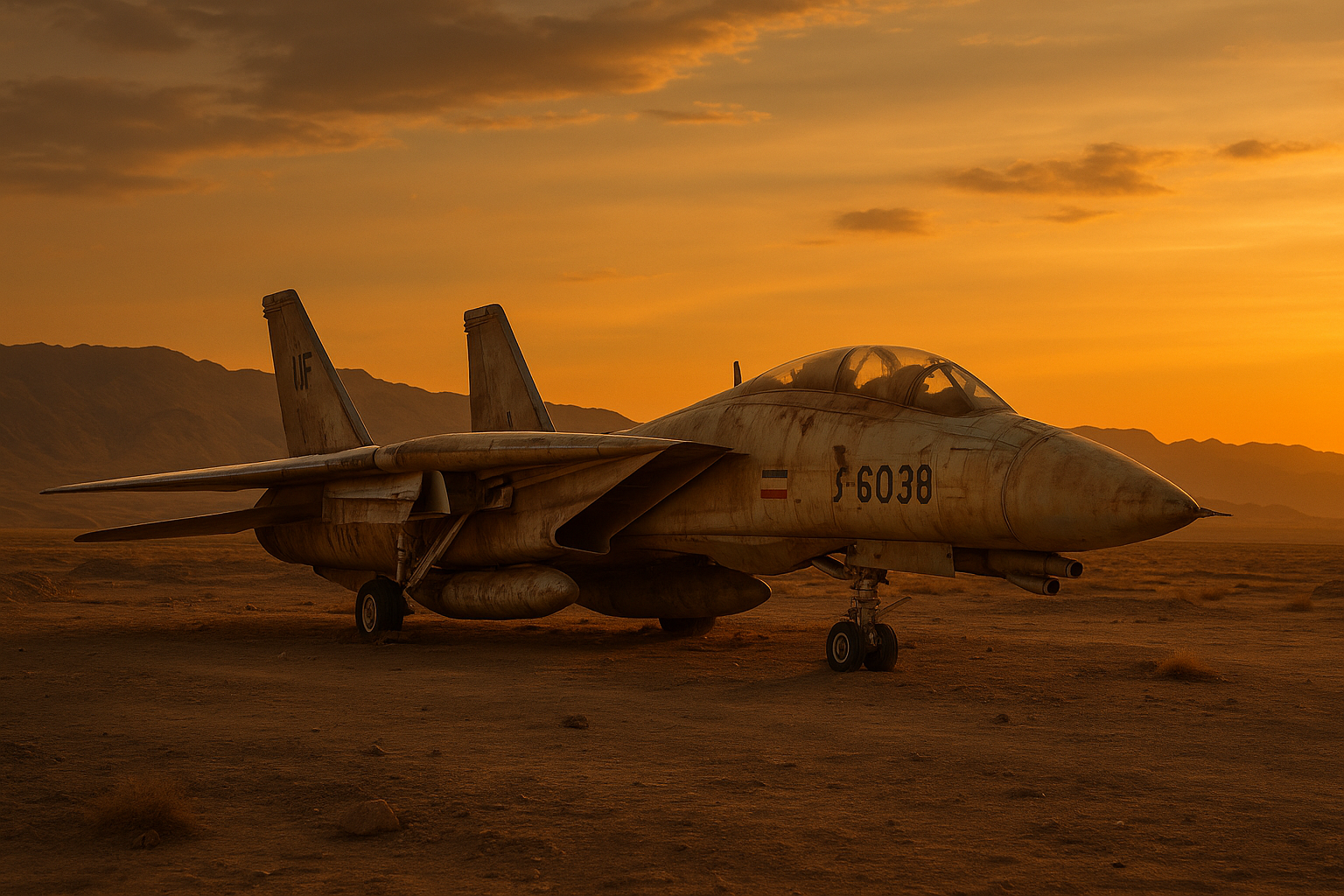
As of the present day, the operational status of the F-14 Tomcat in Iran is approaching its twilight. With increasing difficulties in maintaining aging fleets and sourcing spare parts, the Iranian Air Force faces the imminent reality of decommissioning its last F-14s. This phase signifies a poignant transition from a proud legacy of aerial combat capability to potential obsolescence, shaping the future of Iranian air power.
Plans for Replacement Aircraft
In anticipation of retiring its F-14 fleet, the Iranian military is exploring options for replacement aircraft. This process is complex, constrained by economic limitations and international isolation, yet there is an ongoing commitment to exploring alternatives that could upgrade Iran’s air capabilities. Potential candidates may include domestic designs or purchases from strategic partners, highlighting the tension between aspiration and the realities of sanctions and international relationships.
Emotional and Historical Significance of Retirement
The retirement of the F-14 Tomcat from Iranian service encapsulates a range of emotions and historical significance. For many in Iran, the F-14 represents a narrative of technological achievement against the backdrop of adversity. The aircraft’s decommissioning signals the end of an era, marked by both national pride in mastering advanced aerial technologies and the melancholy of change in military legacy. It evokes reflections on Iran’s past military partnerships, the unfolding of regional conflicts, and the enduring spirit of innovation amidst difficult circumstances.
Conclusion
Reflections on the F-14’s Legacy
In summary, the F-14 Tomcat’s legacy is multifaceted, reflecting its technological innovations, operational successes, and historical significance in shaping military dynamics. The aircraft stands as a testament to human ingenuity in the face of evolving warfare, serving as both a formidable combatant and a symbol of aspiration for those who have operated it. Its story intertwines with complex geopolitical narratives and human experiences, inviting ongoing discussion about the role of military aviation in shaping our world.
The End of an Era for Iranian Aviation
The culmination of the F-14 Tomcat’s service in Iran heralds the end of an era for Iranian aviation. With the gradual decommissioning of this iconic aircraft, a chapter characterized by remarkable aerial capabilities and strategic significance draws to a close. The modifications, adaptations, and continuous innovation by Iranian engineers to sustain this fleet are testaments to resilience and determination, leaving an indelible mark on the history of the Iranian Air Force.
Looking Forward: The Future of Fighter Aviation in Iran
As Iran embarks on the process of revitalizing its air force to replace the F-14, the future of fighter aviation in the country remains uncertain yet filled with potential. The direction of Iran’s military aviation strategy will be shaped by a myriad of factors, including technological advancements, regional dynamics, and the ongoing quest for sovereignty in the realms of military capability. Ultimately, the legacy of the F-14 Tomcat will linger, influencing the path of future generations of Iranian aviators and the broader narrative of military history.