
The recent integration of tactical jet skis into the Coast Guard’s operations marks a significant advancement in maritime security capabilities. This development enhances their ability to execute missions with greater agility and effectiveness, particularly in challenging coastal environments. Moreover, the addition of these versatile watercraft serves to modernize the agency’s approach to rapid response and law enforcement.
This article will explore the implications of this technological enhancement, including its potential impact on various law enforcement and search-and-rescue missions. Additionally, it will discuss the strategic benefits of employing tactical jet skis in safeguarding U.S. waters, contributing to both national security and public safety.
Overview of the Coast Guard’s Tactical Jet Skis
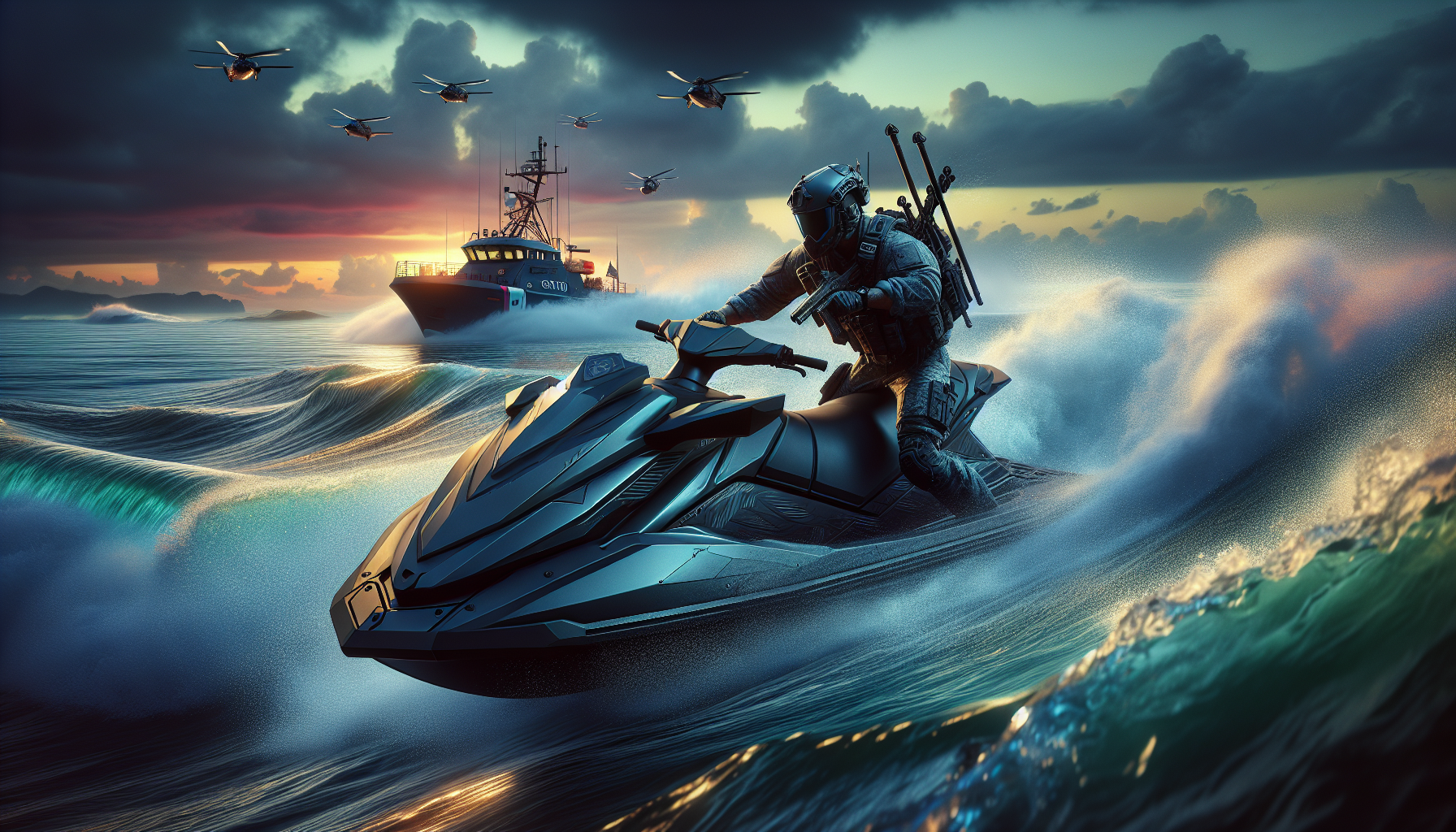
As you familiarize yourself with the Coast Guard’s tactical jet skis, consider their multifaceted role in enhancing maritime security. Tactical jet skis serve as a specialized, fast-response platform for Coast Guard operations, aimed at addressing a variety of maritime challenges. Their integration reflects an evolution in maritime strategy, adapting to the unique demands of the coastal environment while utilizing advanced technology to improve operational efficiency.
Evolution of Coast Guard Operations
The evolution of Coast Guard operations can be traced back to its founding principles as a lifesaving service. Over the years, as maritime threats have changed—from piracy in the Age of Sail to drug smuggling and human trafficking in modern waters—so too have the tools and methods employed by the Coast Guard. Tactical jet skis represent a significant leap forward in this evolution, providing agility and speed in responding to crises that unfold both near-shore and in more open waters.
Integration of Jet Skis into Maritime Missions
The integration of jet skis into maritime missions marks a strategic enhancement in response capabilities. By employing these high-speed watercraft, the Coast Guard can execute a range of missions, from search and rescue to law enforcement. Jet skis empower operators to navigate tight spaces and shallow waters where traditional vessels may be impeded, thereby broadening the scope of operational capacity within various maritime contexts.
Features of the Tactical Jet Skis
Understanding the features of tactical jet skis illuminates their functionality in operational scenarios. These advanced watercraft are meticulously designed to combine speed, agility, and endurance, making them indispensable assets in maritime law enforcement.
Specifications and Capabilities
Tactical jet skis boast specifications that prioritize performance in critical missions. Typically equipped with powerful engines, these jet skis can reach speeds exceeding 60 miles per hour, enabling quick responses in emergency situations. Their lightweight, compact design allows for maneuverability in nearly any aquatic environment, including rocky coastlines or dense marshlands. With a range of up to 150 miles on a single tank and the capability to carry an operator and additional passengers or equipment, these watercraft enhance the operational readiness of the Coast Guard.
Unique Design Elements for Mission Efficiency
The design of tactical jet skis incorporates several unique elements tailored for specific mission requirements. One key feature is the incorporation of storage compartments designed to hold essential gear such as medical supplies, rescue equipment, or surveillance tools. Additionally, features like reinforced hulls provide durability against harsh marine conditions and the rigors of high-speed operations. The ergonomic seating and intuitive controls ensure that operators can navigate efficiently and effectively, even in stress-laden scenarios.
Technological Advancements in Jet Ski Design
Technological advancements have significantly influenced the capabilities of tactical jet skis. Modern models may include GPS systems, integrated communication gear, and even advanced sonar technologies for navigation and threat assessment. These enhancements facilitate real-time data sharing between operators and command centers, streamlining responsiveness to evolving situations on the water. Continuous improvements reflect a commitment to integrating cutting-edge technology into everyday Coast Guard operations.
Operational Uses
Tactical jet skis serve a diverse set of operational uses, enhancing the Coast Guard’s effectiveness across various maritime missions. Their versatility ensures that they can be deployed in numerous contexts.

Search and Rescue Operations
In search and rescue operations, every second counts. Tactical jet skis excel in rapid response scenarios, allowing Coast Guard personnel to reach victims swiftly. Their ability to maneuver through obstacles and navigate shallow waters often means that they can arrive at the scene when larger vessels might be unable to deploy. Whether responding to distress calls or locating missing individuals, these jet skis have become vital tools in the Coast Guard’s arsenal.
Coastal Patrol and Surveillance
The role of tactical jet skis extends to coastal patrol and surveillance, where their speed and agility facilitate routine patrols of busy waterways. This function becomes crucial in monitoring fishing activities, recreational boating, and other maritime movements that could pose risks or require regulatory enforcement. As surveillance platforms, jet skis can also deploy advanced surveillance technology, gathering critical information for intelligence and strategic planning.
Counter-narcotics and Smuggling Efforts
In the fight against narcotics trafficking and smuggling operations, tactical jet skis have proven their worth. With the ability to swiftly pursue small boats engaged in illegal activities, they enhance the Coast Guard’s capability to interdict drug smuggling operations before they reach the shore. This operational use not only involves high-speed chases but also requires coordination with larger vessels and aerial support, showcasing the importance of jet skis within a multi-layered approach to maritime security.
Advantages of Jet Skis in Coast Guard Missions
There are several advantages to utilizing tactical jet skis in Coast Guard missions, making them a preferred choice for many operational scenarios.
Maneuverability and Speed Advantages
Primarily, jet skis are known for their exceptional maneuverability and speed. In maritime operations, the ability to navigate quickly through congested or complex environments is critical. Jet skis can change direction rapidly, allowing operators to pursue fleeing vessels or navigate around obstacles in a way that larger vessels cannot.
Accessibility to Shallow Waters and Coastal Areas
One of the standout benefits of tactical jet skis is their access to shallow waters and coastal areas—a persistent challenge for many larger naval assets. Jet skis can operate in depths that would ground larger vessels, making them ideal for missions that require close interaction with shorelines, marshes, or rocky coves.
Enhanced Response Time During Emergencies
The enhanced response time provided by jet skis is a game changer during emergencies. Their rapid deployment capabilities allow for immediate action when lives are at stake or when illegal activities are detected. The concept of ‘time is life’ is particularly evident in their operational use, where reduced response times can frequently determine outcomes in critical situations.
Training and Preparation
To capitalize on the advantages posed by tactical jet skis, the Coast Guard invests heavily in training and preparation.
Training Requirements for Coast Guard Personnel
Training requirements for Coast Guard personnel operating tactical jet skis are comprehensive. Operators must undergo specialized instruction that includes navigating techniques, emergency response tactics, and equipment handling. Practical skills are honed through simulated scenarios that mirror real-life challenges encountered during missions to ensure preparedness.
Simulations and Practical Applications
Simulations play a vital role in the training regimen, allowing personnel to practice maneuvers and coordination under controlled conditions. These simulations often include scenarios such as rescues within close proximity to shore, effective engagement with suspicious vessels, and multi-asset coordination involving larger ships or aircraft. The blend of classroom learning and hands-on training ensures that personnel can adapt to the unpredictability inherent to maritime operations.
Safety Measures and Protocols
Safety measures and protocols are imperative in training regimens as well. This encompasses not only the operation of the jet skis themselves but also the use of protective gear and emergency procedures during missions. Ensuring that personnel are well-prepared for any eventuality mitigates risks and enhances overall operational effectiveness.
Impact on Coast Guard Operations
The introduction of tactical jet skis has fundamentally transformed certain operational strategies within the Coast Guard.
Potential Changes to Operational Strategies
As jet skis continue to gain traction in maritime operations, there will be potential for changes in broader operational strategies. The flexibility and speed offered by these platforms allow for a shift in emphasis towards rapid response and agile deployment, adapting to evolving threats in real-time. This versatility aids in crafting tailored operational responses to specific mission needs.

Increased Efficiency in Mission Execution
With the enhanced capabilities provided by tactical jet skis, the efficiency of mission execution has markedly improved. Multiple missions that previously required larger vessels can now be conducted more expediently with the integration of these agile watercraft. This increases the Coast Guard’s overall capacity to maintain a robust presence in a variety of maritime environments while ensuring effective resource management.
Case Studies of Jet Ski Deployment
Case studies of jet ski deployment highlight their successes and operational impact. Instances where jet skis have been integral in rescue operations or thwarting smuggling efforts have become case studies for tactical innovation. By analyzing these specific scenarios, the Coast Guard can continually adapt and refine its tactical approaches based on lessons learned from past missions.
Challenges and Limitations
Despite their many advantages, the operational use of tactical jet skis comes with inherent challenges and limitations.
Environmental Factors Affecting Jet Ski Operations
Environmental factors such as rough seas, strong currents, and inclement weather can significantly affect jet ski operations. Experienced operators must contend with changing conditions that can impede maneuverability or make certain missions impractical. Understanding these limitations is crucial for planning effective operations.
Maintenance and Logistical Considerations
Maintenance and logistical considerations pose additional challenges. While jet skis may require less upkeep than larger vessels, they still necessitate regular servicing to ensure reliability. Logistical planning for deployments must also consider the availability of support vessels for longer operations or rescues that extend beyond the reach of the jet skis alone.
Budgetary Constraints and Resource Allocation
Budgetary constraints continually challenge operational capabilities within the Coast Guard. The integration of tactical jet skis necessitates careful resource allocation, and priority must be given to funding training, maintenance, and operational needs. Balancing these financial responsibilities against other essential priorities remains an ongoing challenge for Coast Guard leadership.
Public and Community Response
Understanding the public and community response to the use of tactical jet skis sheds light on the social dynamics surrounding their deployment.
Reactions from Local Communities
Local communities frequently express a mixed response to the presence of Coast Guard operations in their waters. While many appreciate the enhanced security and law enforcement capabilities, others may harbor concerns regarding noise and disruption to recreational boating. Engaging with local stakeholders remains crucial in bridging these gaps and building positive relationships.
Media Coverage and Public Perception
Media coverage of Coast Guard operations involving tactical jet skis often frames them within the broader context of maritime security. Public perception can sway based on portrayals of successful operations or failures, influencing community support and funding decisions. Transparent communication from the Coast Guard about the goals and successes of their operations is essential to fostering public trust.
Engagement with Local Stakeholders
Engagement with local stakeholders includes maintaining open dialogues with community members, environmental organizations, and other interested groups. By establishing partnerships and offering educational opportunities regarding Coast Guard roles and responsibilities, the Coast Guard can strengthen its relationship with the community and enhance collaborative efforts for maritime safety and security.
Future of Tactical Jet Skis in the Coast Guard
Looking ahead, the future of tactical jet skis in Coast Guard operations appears promising as enhancements and integrations are on the horizon.
Future Technological Advancements
Future technological advancements in jet ski design and functionality will likely lead to even more robust operational capabilities. Innovations in materials, power sources, and integrated systems could enhance performance characteristics while also ensuring sustainability in operations.
Potential Expansion of Capabilities
The potential for expanded capabilities may include the integration of unmanned systems, augmented reality for navigational aids, and advanced data analytics for predictive policing efforts in maritime environments. Each progression emphasizes an ongoing commitment to remaining at the forefront of maritime security.
Integration with Other Coast Guard Assets
Alongside technological advancements, the integration of tactical jet skis with other Coast Guard assets will continue to evolve. Collaborating with aerial surveillance units, larger patrol vessels, and even national agencies means that the tactical jet skis can serve as force multipliers, enhancing the effectiveness of broader operations.
Conclusion
In conclusion, the significance of tactical jet skis for the Coast Guard cannot be underestimated. They play an essential role in modern maritime operations, providing unparalleled speed and maneuverability that enriches mission execution across various contexts. As the Coast Guard further embraces technological advancements, the long-term implications for its operations are profound, paving the way for an evolving role of technology in maritime security. The ongoing integration of tactical jet skis stands as a testament to innovation in the pursuit of safeguarding the nation’s waters and enhancing the overall safety and security of maritime environments.