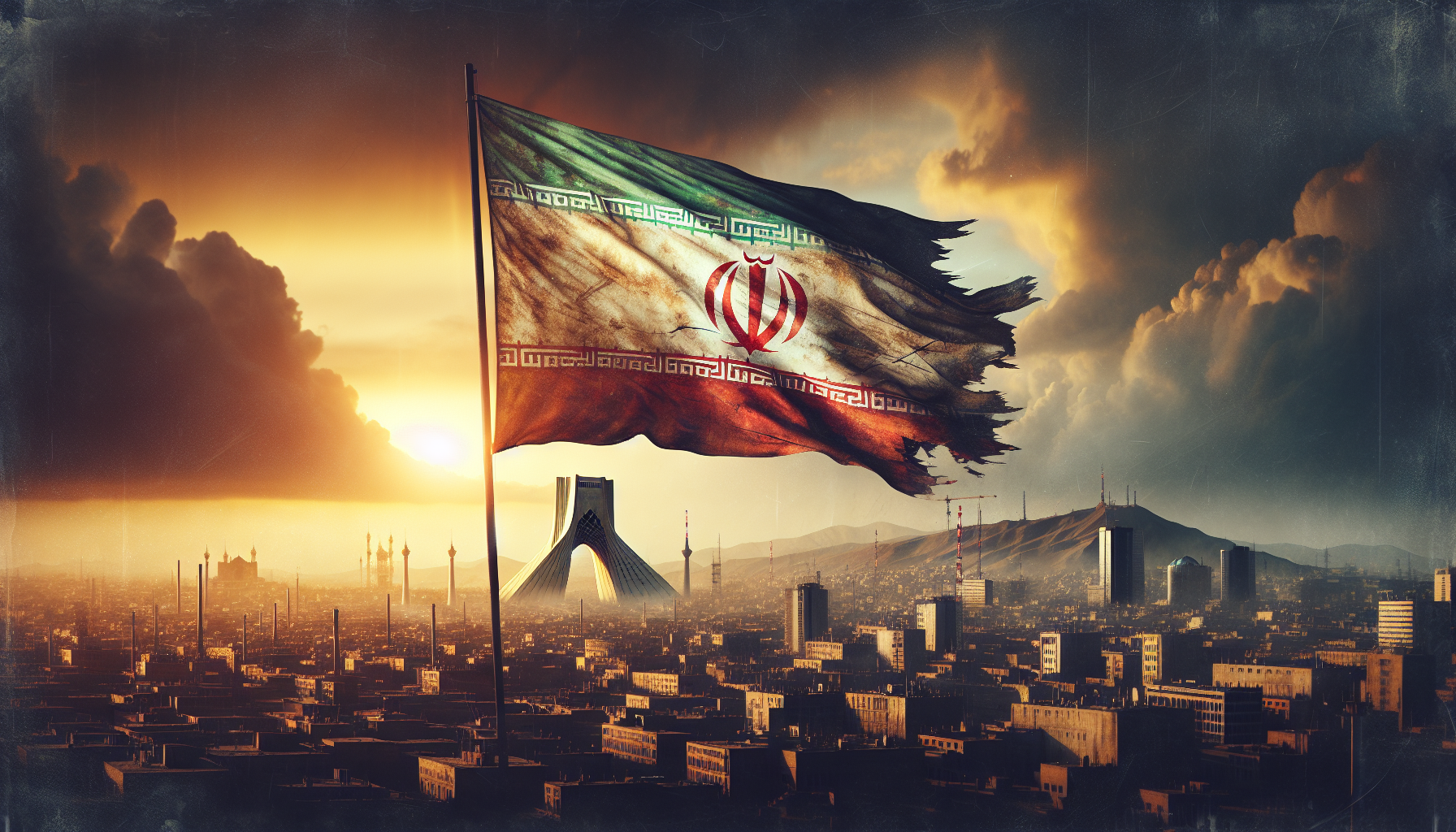
The Iranian Revolution of 1979 marked a pivotal moment in the history of Iran, culminating in the overthrow of the Shah after more than 25 years of authoritarian rule. This revolution not only displaced a long-standing monarchy but also established an Islamic Republic under the leadership of Ruhollah Khomeini. It serves as a case study in understanding the complexities of revolution, political power, and societal transformation.
This article will provide a comprehensive examination of the events surrounding the revolution, exploring the socio-political context that led to the Shah’s fall and the subsequent rise of Khomeini’s regime. Analysis will include key factors that fueled discontent among various societal groups, the role of external influences, and the lasting impact of this significant historical event on Iran and the broader Middle East.

Background of the Iranian Revolution
Historical context leading up to 1979
The Iranian Revolution, which culminated in 1979, was imbued with complex historical undercurrents that shaped its trajectory. To grasp the revolutionary fervor, one must understand the socio-political landscape in Iran during the Shah’s reign. After World War II, Iran found itself under a monarchical government led by Shah Mohammad Reza Pahlavi, who began a modernizing agenda focusing on economic development and Westernization. However, these policies led to significant socio-cultural tensions, as the rapid shifts alienated various segments of society. Furthermore, a history of foreign intervention, particularly by Britain and the United States, had cultivated a sense of resentment among Iranians towards external powers, setting the stage for revolutionary sentiments.
Key figures in the Shah’s regime
Central to understanding the dynamics of the period is the role of influential figures within the Shah’s regime. The Shah, an autocratic leader with a Westernized vision for Iran, surrounded himself with loyalists and technocrats, many of whom were often disconnected from the needs and aspirations of the Iranian populace. Figures such as Prime Minister Amir Abbas Hoveyda exemplified this detachment, focusing primarily on rapid economic growth while ignoring social unrest. Additionally, the presence of the SAVAK, the Shah’s secret police, instilled fear as it actively suppressed dissent, further alienating segments of society that became critical of the regime.
Socio-economic conditions of Iran in the 1970s
By the 1970s, Iran faced a myriad of socio-economic challenges. Despite substantial oil revenues, economic inequality surged, with wealth concentrated in the hands of a small elite. The working class and rural populations, largely marginalized and impoverished, became increasingly frustrated with their lack of access to resources and opportunities. Moreover, urbanization led to overcrowded cities where many sought employment in burgeoning industrial sectors that were often unregulated and exploitative. The discontent festered in the shadows, setting the stage for burgeoning opposition movements.
Rise of Opposition
Formation of opposition groups
In the face of oppressive conditions, various opposition groups began to coalesce, each contributing to the broader call for change. Political factions emerged, ranging from leftist elements, including Marxist groups like the Tudeh Party, to religious and traditionalist organizations. The diverse nature of these factions meant that they often struggled to unite under a single banner, but a shared desire for regime change fueled their activities. Through clandestine meetings and pamphlets, these groups disseminated anti-regime sentiment throughout the populace.
Role of religious leaders, particularly Ruhollah Khomeini
A pivotal figure in the rise of opposition was Ruhollah Khomeini, a cleric whose religious authority resonated deeply with the Iranian populace. Khomeini articulated a vision of governance rooted in Islamic principles, countering the Shah’s secular and modernizing agenda. His exile in the late 1960s did not quell his influence; rather, it transformed him into a martyr-like figure against the oppressions of the regime. Khomeini’s messages spread rapidly via tapes and clandestine publications, igniting a fervor among those yearning for a return to traditional values and social justice.
Involvement of students and intellectuals
The role of students and intellectuals in the opposition was crucial, as they galvanized support within urban centers, particularly in universities. Influenced by global movements and the blossoming of political consciousness, students organized protests, voiced dissent, and disseminated revolutionary ideas. Their activism was marked by a strong anti-imperialist sentiment, decrying foreign influence in Iranian affairs and calling for a new, equitable political order. They were instrumental in appealing to a broad spectrum of the population, bridging gaps between disparate groups.
Key Events Leading to the Revolution
Unrest and protests in 1977
The foundation for the revolution began to manifest in earnest in 1977, when widespread unrest sparked by various grievances erupted. Protests took shape against the backdrop of political repression, high inflation, and social injustice. Initial demonstrations were met with violent crackdowns, further inflaming public sentiments and leading to a cycle of protest and repression. As dissent became more visible, the regime’s attempts to maintain control only deepened public anger.
The White Revolution and its backlash
The Shah’s White Revolution, launched in 1963, aimed to modernize and reform Iranian society through measures such as land redistribution and women’s rights. However, these reforms were perceived by many as an imposition of Western values that clashed with traditional Islamic beliefs. This backlash against the White Revolution fueled opposition movements, particularly among rural landowners and religious clerics who felt their influence was being diminished. The backlash crystallized opposition sentiments, uniting various groups against the regime.
Mass mobilizations in late 1978
By late 1978, the uprising reached a critical mass. Mass mobilizations across urban areas ignited, with millions taking to the streets in acts of defiance. Demonstrations became larger and more organized, emerging from religious holidays and national protests. Events like the September 1978 protests in Tehran, which witnessed thousands marching in defiance of the Shah’s regime, illustrated the collective will for change. The unity of diverse factions solidified in these protests demonstrated the widespread discontent with the ruling order.
Responses from the Shah’s Government
Repression and censorship efforts
As public protests grew, the Shah’s government resorted to increasingly repressive measures in a bid to quell dissent. Censorship of the media intensified, with the regime attempting to silence voices critical of the government. Journalists, intellectuals, and opposition figures faced harassment and imprisonment, an attempt to maintain a veneer of stability. However, these efforts were counterproductive, as they only heightened tensions and reinforced the resolve of the revolutionaries.
The violence of the SAVAK
The SAVAK, the notorious secret police, played a significant role in the Shah’s attempts to suppress dissent. Its violent tactics included arbitrary arrests, torture, and execution of perceived opponents. Such brutality only served to vilify the Shah’s regime further, creating martyrs for the cause of revolution and pushing undecided citizens into the arms of the opposition. The fear instilled by the SAVAK became increasingly met with a resolute public, inspired to oppose the regime’s violent overreach.
Failure of the Shah’s reforms
The Shah’s attempts at reform, aimed at modernizing and westernizing the nation, ultimately failed to address the deeper socio-economic and political grievances of the Iranian populace. The perceived insincerity of these reforms led to disillusionment, as many felt they benefited only the elite. The disconnect between the regime’s promises and the stark reality for the average Iranian alienated large swathes of the population, tipping the balance toward revolt.
Significant Demonstrations
The Black Friday incident
One of the most pivotal moments leading up to the Iranian Revolution was the Black Friday incident on September 8, 1978. In a tragic turn of events, the Shah’s regime deployed the military to confront demonstrators in Tehran, resulting in the deaths of an estimated several hundred protesters. The violent crackdown escalated public outrage and solidified opposition sentiments. Images of the bloodshed circulated widely, galvanizing support for the revolution and becoming emblematic of the regime’s brutality.
Mass protests in cities like Tehran
Following Black Friday, mass protests erupted across various cities, especially in Tehran, as dissent reached its peak. Millions began to participate in demonstrations, underscoring a nationwide consensus against the Shah’s regime. The demonstrations transformed itself into a revolutionary movement as ordinary citizens, clerics, and diverse political factions unified in their demand for change. The sheer scale and determination of these protests illustrated that the Shah’s hold on power was weakening.
Role of women in the demonstrations
Women played a crucial role in the demonstrations, often at the forefront of protests against the regime. Their participation provided a powerful counter-narrative to the Shah’s claims of modernity and progress. Women demanded not only an end to oppression but also questioned the social inequalities embedded within Iranian society. Their active involvement showcased a diverse coalition of voices advocating for fundamental rights and liberties.
International Reactions
Foreign governments’ stances
The Iranian Revolution elicited various reactions from foreign governments, which were uncertain about how to navigate the political upheaval. Western allies of the Shah, particularly the United States, initially supported his regime while privately expressing concerns about its stability. The geopolitical implications of a revolutionary Iran alarmed regional powers and foreign interests, leading to a spectrum of diplomatic responses that highlighted the complexities of international relations in the context of sovereign movements.
Impact on oil markets and global economy
The revolution’s potential impact on global oil markets sparked considerable concern among foreign governments and corporations. Iran, as a major oil producer, had the ability to disrupt the flow of oil, creating ripples throughout the global economy. Speculation about market instability led to price fluctuations, influencing economic conditions worldwide. The Iranian Revolution thus not only transformed the political landscape domestically but also had significant ramifications for global economic dynamics.
Media portrayal of the revolution
Media outlets worldwide began to closely scrutinize the events in Iran, providing coverage that varied widely depending on perspective. While some reported on the brutality of the Shah’s regime, others labeled the uprising as a tumultuous and chaotic phenomenon. The framing of the revolution in media discourses influenced public perception and shaped international responses, reflecting the complexities inherent in covering revolutionary movements in real-time.
Fall of the Shah
Shah’s departure from Iran
On January 16, 1979, as the revolution intensified and popular support for the opposition surged, the Shah left Iran, ostensibly for medical treatment. His departure marked a significant turning point, as it indicated a regime in retreat. The absence of the monarch created a power vacuum as various factions, including those loyal to Khomeini, sought to fill the void, thereby escalating tensions within an already volatile situation.
Power vacuum and rising chaos
The Shah’s departure left Iran in a state of upheaval, with the central authority dissipating. The ensuing chaos opened avenues for various factions to vie for influence, leading to widespread uncertainty and factionalism within the revolutionary movement. While some sought to establish a theocratic regime under Khomeini, others had different visions for Iran’s future, leading to an intense struggle for power amid the societal turmoil.
Khomeini’s return from exile
Khomeini’s return to Iran on February 1, 1979, galvanized the revolutionary movement and solidified his leadership role. His arrival was met with jubilant crowds celebrating a figure they viewed as the embodiment of their collective aspirations. Khomeini’s return heralded the consolidation of power among revolutionary elements around a central figure who promised to reshape Iranian governance and society according to Islamic principles.
Establishment of the Islamic Republic
Formation of a new government under Khomeini
With Khomeini’s ascendance, efforts turned towards the establishment of a new government grounded in Islamic principles. The Revolutionary Council, comprised of Khomeini’s supporters and diverse factions, began drafting plans for a new political framework. This newly formed government sought to dismantle the remnants of the Shah’s regime, introducing policies that leaned heavily towards theocratic governance, merging political and religious authority under Islamic law.
Declaration of the Islamic Republic
In April 1979, a referendum led to the formal establishment of the Islamic Republic, signifying a watershed moment in Iranian history. The declaration of the Islamic Republic represented the culmination of years of struggle against monarchical rule. The new government was characterized by a commitment to Islamic values, fundamentally altering the social, political, and legal landscape of Iran.
Constitutional changes
Following the establishment of the Islamic Republic, efforts were made to draft a new constitution that embodied Islamic governance. The 1979 Constitution reflected the intertwining of state and religion and enshrined the authority of Khomeini as the Supreme Leader. The legitimate framework of governance would henceforth be predicated upon Islamic doctrines, evoking a significant transformation in the relationship between the state and its citizens.
Aftermath of the Revolution
Immediate effects on Iranian society
The aftermath of the revolution wrought profound changes within Iranian society. As the Islamic Republic took root, social and political structures were reconfigured, delineating the boundaries of public life through the lens of Islamic doctrine. The regime aimed to reshape society, focusing on cultural reintegration and ideological conformity, which led to significant shifts in personal freedoms, particularly for women and minority groups.
Suppression of opposition movements
In the immediate years following the revolution, the new regime engaged in the systematic suppression of opposition movements. Various factions that had contributed to the revolution faced repression, as the regime viewed them as threats to its authority. Political dissidents were often targeted, leading to detentions, executions, and the consolidation of power by Khomeini’s loyalists, further entrenching the theocratic state.
Impact on regional geopolitics
The Iranian Revolution heralded significant ramifications for regional geopolitics. The establishment of a theocratic regime inspired Islamist movements across the Middle East, altering the balance of power. The newly-established Islamic Republic positioned itself against Western influence and regional adversaries, shaping a confrontational stance that reverberated through Middle Eastern politics for decades.
Conclusion
Summary of key events during the revolution
In retrospect, the Iranian Revolution of 1979 emerged from a confluence of historical factors, socio-economic discontent, and a kaleidoscope of opposition movements, leading to the Shah’s ouster and the establishment of an Islamic Republic. Key events, from the initial unrest in the 1970s to massive protests, repression by the Shah’s regime, and the back-and-forth struggles for power following the revolution, underscore a pivotal juncture in Iranian history.
Reflections on the significance of the Iranian Revolution
The Iranian Revolution resonates not merely as a chapter in Iranian history but as a significant event with larger implications for global political movements and struggles. It exemplifies the intersection of religion, politics, and socio-economic grievances, serving as a case study of how popular movements can simultaneously fracture and unify society toward significant political outcomes.
The ongoing relevance of 1979 to current Iranian politics
The legacy of the 1979 revolution continues to shape Iranian politics today, with the Islamic Republic navigating challenges within and outside its borders. The unresolved tensions arising from the revolution and its aftermath reflect ongoing debates about governance, identity, and civil rights in contemporary Iran. As the international community observes, the lessons gleaned from the revolution remain pertinent for understanding the complexities of modern political upheavals within the broader Middle Eastern context.