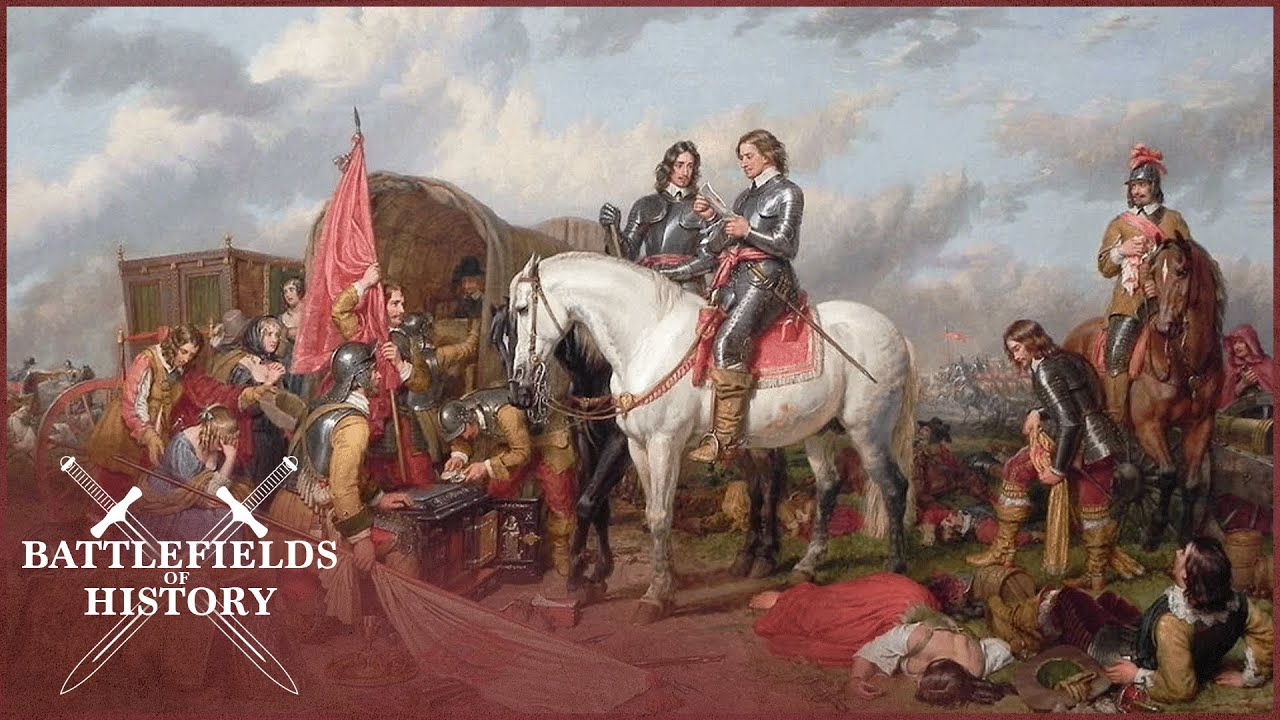
The English Civil War, a profound conflict that reshaped the nation, witnessed its most brutal phase in the final four years. This article examines the pivotal events and strategies that characterized this turbulent period, where allegiances shifted and violence escalated, ultimately leading to significant political transformation. You will explore key battles, figures, and the socio-political ramifications that emerged from this strife.
Focusing on the latter years of the conflict, you will gain insights into the military tactics employed by both Royalists and Parliamentarians, as well as the societal impact of prolonged warfare. The analysis is rooted in a thorough examination of military records and historical interpretations, offering a comprehensive understanding of how these final years dramatically influenced the trajectory of England’s governance and society.
The Brutal Final Four Years of the English Civil War

Background of the English Civil War
Origin of the Conflict
The English Civil War, a monumental conflict that spanned from 1642 to 1651, emerged from a confluence of political, religious, and social tensions that had been brewing for decades. At its heart lay the desire for a power struggle between monarchy and parliament, a contest that would redefine governance in England. The war was ignited in 1642 when King Charles I’s assertion of divine right clashed with the rising demands of Parliament, which sought greater representation and control over taxation and governance. As tensions erupted into violence, the conflict would engulf the nation, pitting royalists against parliamentarians in a fierce struggle for supremacy.
Key Players and Factions
The war’s complexities were further amplified by the range of influential figures and factions that played pivotal roles in shaping its course. Charles I, the monarch whose decisions precipitated the conflict, was adamant about his divine right to rule, yet found his authority consistently challenged. On the opposing side stood key figures such as Oliver Cromwell, a military strategist and prominent leader of the Parliamentarians whose unwavering resolve and tactical acumen would prove formidable. The war’s factions were diverse; the Royalists, loyal to the crown, included noblemen and clergy, whereas the Parliamentarians consisted of a coalition of Puritans and other reformist groups advocating for change.
Underlying Causes of Tension
At the root of the conflict were not merely surface-level grievances but deep-seated issues that had festered over time. The monarchy’s attempts to impose religious uniformity through the Church of England clashed violently with the Puritan sects striving for reform and greater religious freedom. Additionally, socio-economic disparities, exacerbated by the burdensome costs of war and conflicting interests among landowners and merchants, fueled discontent. Cultural transformations brought about by the rising middle class further complicated the struggle, as new ideas about governance and individual rights became prominent. You may discern that the English Civil War was not merely a battle for control but a clash of ideologies that would forever alter the trajectory of English society.
Major Battles Leading to the Final Years
The Battle of Marston Moor
One of the most decisive engagements during the war occurred at the Battle of Marston Moor on July 2, 1644. Positioned in Yorkshire, this battle marked a turning point for the Parliamentarians. Led by Oliver Cromwell, their well-coordinated forces managed to decisively defeat the Royalist army. The victory not only boosted the morale of Parliament but also signified the increasing efficacy of their military strategies. In your analysis, you must appreciate how Marston Moor crystallized the emergence of the New Model Army, emphasizing discipline and professionalism, setting it apart from the more disorganized Royalist forces.
The Battle of Naseby
The Battle of Naseby, fought on June 14, 1645, represented the apex of military engagement for the Parliamentarians. Your understanding of this encounter is critical, as it revealed the full maturation of the New Model Army under Cromwell’s leadership. The victory effectively crippled the Royalist cause and demonstrated the superiority of the parliamentarian tactics. It showcased not only strategic brilliance but a willingness to embrace modern military innovations, solidifying their grip on the conflict. Naseby laid bare the vulnerabilities of Charles I’s troops, signaling to the nation that the tide was irrevocably turning against the crown.
Impact of Early Conflicts on the War
The initial battles of the English Civil War, including those at Marston Moor and Naseby, shaped the overall trajectory of the conflict. Early victories for the Parliamentarians escalated their confidence but also provoked retaliatory measures from the Royalists. The brutalities and shifting allegiances created a cycle of violence that fractured communities. You must grasp that these initial skirmishes were not isolated events; they fed into a larger narrative of warfare that influenced public sentiment and eventually informed the radical solutions that emerged in the civil war’s later stages.
Political Developments in 1646
Parliament’s Control
By 1646, the power dynamics within England had shifted significantly as Parliament wrested control from the monarchy. This transition was underpinned by Parliament’s meticulous efforts to consolidate authority, effectively sidelining Charles I. The ability of Parliament to levy taxes and raise armies allowed it to pursue policies that would reshape the nation’s political landscape. Understanding this period is crucial; it marked the first assertions of parliamentary sovereignty in England, laying the groundwork for contemporary parliamentary democracy.
The King’s Captivity
Charles I’s descent into captivity was emblematic of the waning royal power. Captured by the New Model Army in May 1646, his inability to stabilize his regime marked a critical juncture in the conflict. The conditions of his imprisonment reflected Parliament’s growing assertiveness, and you might reflect on the psychological implications for both Charles and his supporters. The king’s captivity not only stripped him of his authority but also positioned him as a martyr in the eyes of his loyalists.
Emergence of Radical Factions
As Parliament consolidated power, radical factions began to emerge, each with distinct visions for the future of England. Groups like the Levellers and Diggers advocated for more egalitarian social structures, challenging the established norms of class and governance. You should recognize that this emergence of radical political thought signified a broader questioning of authority and an appetite for reform that transcended the initial battle for supremacy between king and parliament.
The Disintegration of Royal Authority
Charles I’s Strategic Blunders
Charles I’s miscalculations, characterized by his underestimations of the Parliamentarians and failures in military strategy, contributed significantly to the decline of royal authority. His attempts to negotiate with Parliament often faltered, as he prioritized loyalty over practicality. You are urged to consider how these strategic blunders not only emboldened his opponents but also eroded the loyalty of previously reliable supporters, rendering the Royalist cause increasingly untenable.
Royalist Internal Conflicts
As the war progressed, factionalism within the Royalist camp further unraveled their efforts. Disagreements over policy and military tactics created rifts that only weakened their cohesion. Royalist leaders were often divided between those advocating for conciliatory measures and those who favored unwavering loyalty to the crown. This lack of unity ultimately allowed the Parliamentarian forces to exploit the divisions within Royalist ranks, hastening their downfall.
The Impact of Military Defeats
The cumulative impact of military defeats on royal authority was profound. With each loss at the hands of the Parliamentarians, the perception of Charles I’s invincibility crumbled, leading to diminishing support from both nobles and commoners alike. The military defeats compounded the already existing grievances against the monarchy. Highlighting these defeat’s significance emphasizes to you that the war was as much about morale and public sentiment as it was about battlefield strategy.
The Rise of the New Model Army
Formation and Structure of the Army
The establishment of the New Model Army was a key development in the latter stages of the English Civil War. Formed in February 1645, this military entity organized soldiers based on merit rather than social class, ensuring a level of discipline and effectiveness previously unseen in the English army. Understanding its structure allows you to appreciate how it disrupted traditional military hierarchies and played a vital role in the Parliamentarians’ military successes.
Leadership of Oliver Cromwell
Cromwell emerged as a formidable leader, shaping the New Model Army into a cohesive fighting force. His visionary leadership style combined tactical genius with a penchant for inspiring devotion among his troops. You should recognize that Cromwell’s ability to bolster morale and articulate a compelling vision for the Parliamentarian cause was instrumental in rallying support and driving forward the military agenda.
Significance of Military Tactics
The New Model Army’s adoption of innovative military tactics—such as decentralized command structures and rapid maneuverability—changed the nature of warfare in England. Cromwell’s strategies, which emphasized flexibility and mobility, allowed the Army to engage effectively against larger Royalist forces. Recognizing the significance of these tactics is essential, as it highlights a broader evolution in military theory and practice that transcended the English Civil War.
The Trial and Execution of Charles I
Circumstances Leading to the Trial
The trial of Charles I in January 1649 was unprecedented, reflecting a radical shift in the political landscape. The circumstances leading to the trial were characterized by increasing public disenchantment with the monarchy and a desire for accountability. You may see this as a pivotal moment where the Parliament declared that a king could be held responsible for his actions, fundamentally challenging the notion of divine right.
Public Sentiment and Reactions
Public sentiment surrounding the trial was polarized. For some, Charles I became emblematic of tyranny, and his execution was seen as necessary for the preservation of liberty. Conversely, loyalists viewed the trial as a grave injustice, leading to an increase in support for the royalist cause among certain segments of the populace. As you delve into the complexities of public reaction, consider how this moment encapsulated the tensions between authority and the burgeoning ideals of republicanism.
Consequences of the Execution
The execution of Charles I had profound implications for the monarchy and the future governance of England. It signaled the dissolution of the monarchy as it had existed and propelled the nation into uncharted territory under the Commonwealth. The act legitimized the concept that governance should derive from the consent of the governed rather than divine sanction, an idea that reverberates through time.
The Transition to the Commonwealth
The Abolishment of the Monarchy
The abolition of the monarchy in 1649 marked a seismic shift in English governance, as it ushered in a radical new political order. The Commonwealth, established under the leadership of Oliver Cromwell, represented a break from traditional forms of governance. You must apprehend that this transition was fraught with uncertainty, as the nation struggled to find a stable political identity in the absence of a monarch.
Establishment of Republican Governance
With the monarchy abolished, the Commonwealth set the stage for an experiment in republican governance. This radical reconstitution of power intertwined various political philosophies, with debates surrounding democracy, representation, and social order taking center stage. Your analysis of this period must include an understanding of how these ideals were often at odds with each other, highlighting the inherent challenges of establishing a new governing framework.
Challenges Faced by the Commonwealth
The Commonwealth faced numerous challenges as it attempted to overthrow centuries of monarchical tradition. Fragmentation within political factions and external pressures from Royalist sympathizers represented significant obstacles. Additionally, Cromwell’s leadership was often criticized for authoritarian tendencies, revealing the complexities of navigating revolutionary ideals versus practical governance. You are cautioned to consider the draw of nostalgia for monarchy as well, as many yearned for stability amid the chaos of republican rule.
Continued Conflicts and Resistance
Royalist Uprisings
Despite the execution of Charles I, royalist sentiment lingered, manifesting in various uprisings across England. The insistence of staunch loyalists to restore the monarchy demonstrated contrary impulses within the nation. As you explore these uprisings, consider how they signified a relentless struggle for power that continued to fracture an already divided England.
The Battle of Worcester
The decisive confrontation at Worcester in September 1651 encapsulated the continuing contest between royalists and parliamentarians. This battle became the final major engagement of the war, with Parliamentarian forces decisively quelling Royalist ambitions. The outcome reaffirmed the Parliament’s dominance and extinguished hopes for a royalist restoration, underscoring the conflict’s enduring consequences. Delving into the intricacies of this battle enhances your understanding of how the outcome of warfare shaped the political landscape.
Foreign Intervention and Support
The ongoing conflict also caught the attention of foreign powers. Royalist factions received support from various countries eager to see the restoration of monarchy as a stabilizing force in Europe. However, the Parliamentarians laid their own diplomatic groundwork, seeking alliances to ensure their hold on power. Through your lens, the international ramifications of the English Civil War reveal how domestic struggles often intertwine with global political dynamics.
Social and Economic Impact of the War
Consequences for the English People
The English Civil War’s ramifications extended far beyond military and political outcomes, profoundly affecting the lives of ordinary citizens. Communities were torn apart, families displaced, and local economies disrupted. You must weigh the human cost of the war and reflect on how it reshaped societal norms and relationships, offering insight into the broader historical narrative of personal and collective trauma.
Economic Disruption and Famine
The war engendered widespread economic disruption. Agricultural practices faltered amidst the conflict, leading to famine and scarcity. The dissolution of traditional structures created economic instability, highlighting the war’s debilitating effects on livelihoods. Understanding these factors will allow you to grasp the full scope of the civil war’s brutality and its lingering effects on English society for years to come.
Changes in Social Structures
As the war progressed, significant alterations in social structures became apparent. Traditional hierarchies crumbled as soldiers returned home with new ideas about equality and governance. The emergence of a more politically aware working and middle class served as fertile ground for social movements in the years to come. You should analyze how the war acted as a catalyst for conversations around democracy and social justice that continue to echo in contemporary discourse.
Conclusion
Reflection on the War’s Brutality
In reflecting on the English Civil War, one cannot overlook its brutality and human cost. The violence that characterized the conflict starkly illustrates the depths to which humanity can descend when ideological divisions are left unbridled. Your contemplations should encompass not only the historical significance of the war but also the moral imperatives that it presents.
Lessons Learned from the Final Years
The final years of the English Civil War impart vital lessons about governance and societal change. The emergence of radical factions underscores the importance of inclusive dialogues in governance, warning against the pitfalls of tyranny, whether from monarchy or the masses. You must consider how the balance of power is fragile and necessitates ongoing vigilance to prevent excesses.
The Enduring Significance of the Conflict
The ramifications of the English Civil War resonate through history, laying the groundwork for modern concepts of democracy and citizenship. Its lessons continue to inform contemporary political discourse and struggles for rights and representation. As you conclude your examination, reflect on how the echoes of this pivotal conflict remind us of the importance of embracing change while respecting the complexities of governance and society.