
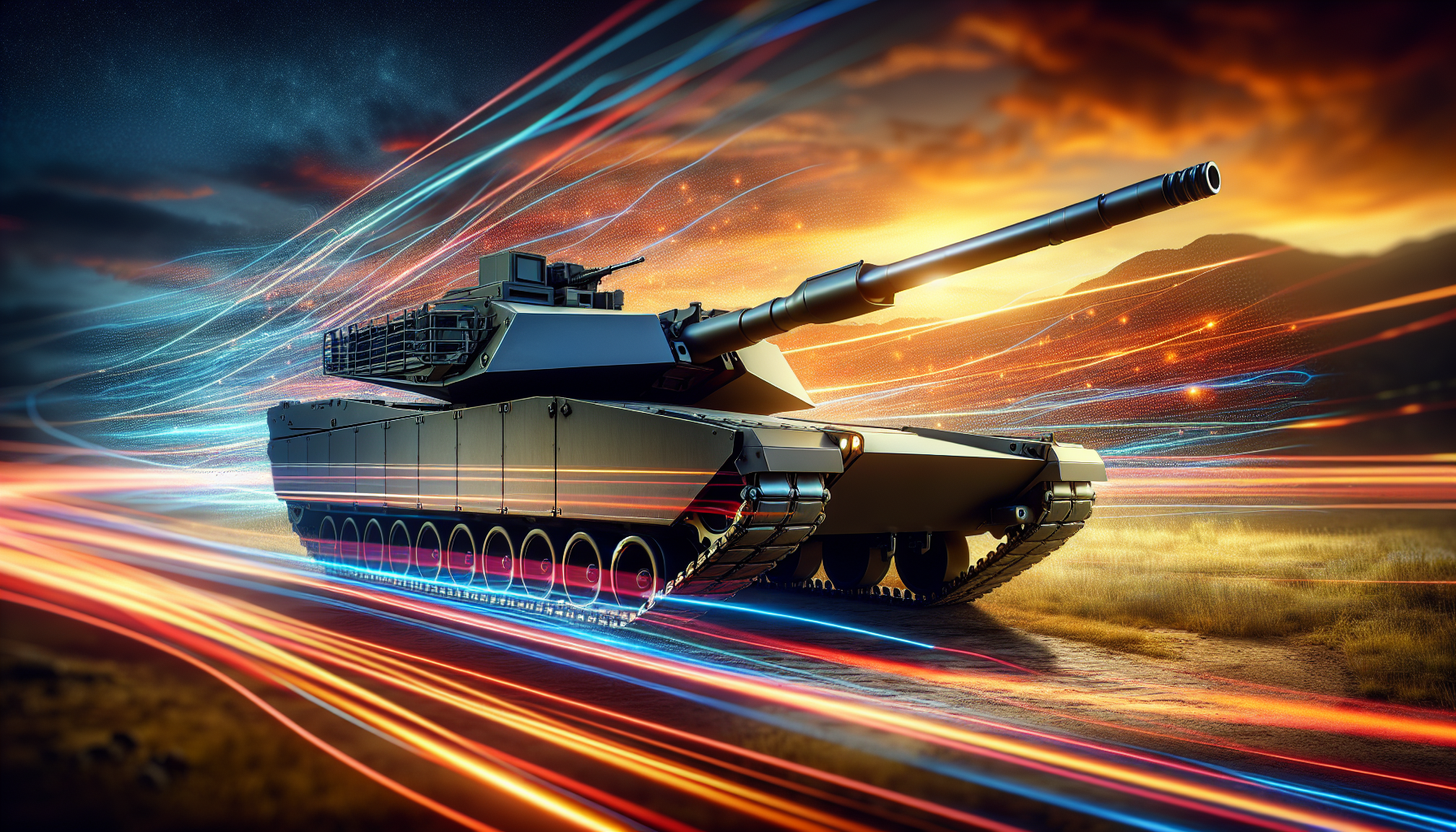
The unveiling of the M1E3 Abrams prototype marks a significant milestone in military technology advancement. This prototype, referred to as a “technology demonstrator,” was presented by the Army on January 6th, showcasing the latest innovations designed to enhance battlefield capabilities. Insight into this development provides a promising glimpse into the Army’s strategic direction concerning armored warfare.
The article will elucidate the features and implications of the M1E3 Abrams, examining its role within the larger context of military modernization. Additionally, attention will be given to the discussions surrounding this prototype’s potential impact on defense strategies, illustrating how military technology continually evolves to meet contemporary challenges.
Overview of the M1E3 Abrams Prototype
Purpose of the Prototype
The unveiling of the M1E3 Abrams prototype serves as a pivotal moment in military innovation, aiming to enhance the capabilities of the United States Army’s armored forces. This prototype acts as a “technology demonstrator,” designed primarily to showcase advancements that could be integrated into future main battle tanks. By mitigating emerging threats and adapting to evolving battlefield environments, the M1E3 prototype seeks to pinpoint and articulate the strategic needs of modern warfare. Its development represents not merely an improvement of military hardware but rather an embodiment of a proactive approach to combat readiness and technological advancement.
Key Features and Innovations
The M1E3 Abrams prototype is distinguished by its array of cutting-edge features and technological innovations. Significant upgrades have been made in armor composition, which improves survivability against modern threats, including a forecast of advanced kinetic threats and explosive devices. Additionally, the integration of enhanced weaponry and targeting systems allows for increased accuracy and lethality during engagements. These features assure not only operational efficiency but also allow adaptability to a wide range of combat scenarios, reinforcing the tank’s role as a versatile asset on the contemporary battlefield.
Comparison to Previous Models
When compared to its predecessors, such as the M1A2 SEP v3, the M1E3 reveals significant enhancements that signify a leap forward in tank technology. The most notable differences lie in its weight-to-power ratio and mobility features, which allow for improved maneuverability without compromising durability. The M1E3 also incorporates a more integrated electronic architecture that enhances vehicle networking and battlefield awareness. These advancements collectively ensure that the M1E3 is not just an incremental upgrade but a substantial evolution in the Abrams lineage.
Historical Context of the Abrams Tank
Development of the Original M1 Abrams
The original M1 Abrams tank, introduced in the late 1970s, marked a key development in armored warfare technology. Its design emphasizes mobility, firepower, and protection, which have become hallmarks of modern tank warfare. The development aimed to respond to the perceived threat of Soviet armored forces during the Cold War, placing an emphasis on operational adaptability and survivability in hostile environments. This initial model laid the groundwork for a lineage of improvements that would see the Abrams evolve over subsequent decades.
Evolution Through Different Variants
The Abrams tank has undergone numerous evolutions since its original deployment. Variants such as the M1A1 and M1A2 incorporated upgrades in armor, weapon systems, and electronic warfare capabilities. Each successive version has been a direct response to combat experiences and technological advancements, ensuring that the Abrams remains relevant on the battlefield. These refinements have allowed it to adapt to diverse operational requirements, ranging from urban warfare to large-scale mechanized combat.
Significant Engagements in Military History
The Abrams tank has demonstrated its capabilities in various significant military engagements, reinforcing its reputation as a formidable presence in combat. From the Gulf War, where it played a decisive role in the rapid defeat of Iraqi ground forces, to more recent operations in Afghanistan and Iraq, the Abrams has continued to evolve based on battlefield feedback. Each engagement has provided valuable data, informing subsequent upgrades and leading to the current iteration of the M1E3, thereby ensuring its strategic relevance.
Technological Advancements in the M1E3

Next-Generation Armor Solutions
Among the key technological advancements in the M1E3 Abrams prototype is the next-generation armor solution, which utilizes advanced materials to mitigate the effects of explosive threats, including anti-tank guided missiles and improvised explosive devices. This futuristic armor not only provides enhanced protection but also contributes to weight reduction, thereby allowing for greater mobility. With a focus on survivability, the M1E3’s armor systems are designed to withstand the rigors of modern warfare, contributing directly to the safety of personnel and mission success.
Enhanced Weaponry and Targeting Systems
The M1E3 Abrams prototype showcases a reworked weapon system, featuring upgraded main armament and precision targeting technologies. Enhanced lethality is achieved through improved lethality metrics and adaptive engagement systems, which facilitate rapid targeting and increased hit probability. The incorporation of advanced targeting systems also enables the vehicle to operate effectively in the darkness and adverse weather conditions, broadening the scope of operations during nighttime and inclement weather engagements.
Integration of Artificial Intelligence
Artificial intelligence (AI) represents a transformative element within the M1E3’s technological advancements. AI is woven into the vehicle’s operational framework to enhance decision-making capabilities, threat assessment, and tactical responses. The ability to analyze vast amounts of battlefield data in real-time significantly improves situational awareness and operational efficiency. This integration positions the M1E3 as a future-ready platform capable of functioning in complex battle scenarios anticipated in modern warfare.
Operational Capabilities of the M1E3
Mobility and Speed Enhancements
The M1E3 Abrams prototype incorporates several enhancements aimed at increasing speed and mobility, critical for maintaining tactical advantage during engagements. Engine performance improvements coupled with advanced transmission systems enable rapid maneuvering on a variety of terrains. This agility allows the M1E3 to reposition quickly in reaction to changing threats, thereby enhancing overall combat effectiveness against adversarial forces.
Survivability Features
One of the paramount characteristics of the M1E3 is its focus on survivability. In addition to next-generation armor, the prototype includes advanced countermeasures against guided missiles and drones, reflective of the evolving threats on the battlefield. The incorporation of sophisticated sensor systems enhances detection of incoming threats and enables the implementation of evasive maneuvers in real-time. These features underpin the operational philosophy of preserving crew safety while maximizing combat effectiveness.
Multi-Domain Operations Compatibility
As military operations become increasingly joint and multifaceted, the M1E3 has been designed with multi-domain operations in mind. The system supports seamless communication and interoperability with other platforms across land, air, sea, cyber, and space domains. This compatibility is crucial for modern military operations, emphasizing the importance of integrated force structures capable of executing combined arms maneuvers, thereby optimizing operational success in complex environments.
Impact on Military Strategy
Shifts in Ground Warfare Tactics
The M1E3 Abrams prototype is emblematic of a broader shift in ground warfare tactics, as it offers capabilities tailored to meet the conflicts of the 21st century. Its advanced systems allow commanders to employ rapid strike capabilities and engage in hybrid warfare scenarios that blend conventional and asymmetric tactics. By adapting to the new realities of warfare, such as urban combat and operations against non-state actors, the M1E3 enhances the military’s strategic options.
Importance in Joint Military Operations
The importance of the M1E3 Abrams within joint military operations cannot be overstated. Its advanced networking capabilities ensure that it can serve as an effective node within a larger coalition force, enabling synchronized operations among air, naval, and ground units. This capability fosters a greater level of tactical coordination, ensuring that any operation can leverage the strengths of various branches in synergy with ground forces, leading to more effective outcomes.
Deterrent Effects on Potential Adversaries
The introduction of the M1E3 Abrams prototype is likely to have a significant deterrent effect on potential adversaries. The demonstrable advancements in firepower, protection, and operational integration create an environment where adversaries must reconsider their military strategies in the face of an upgraded Abrams fleet. The perception of heightened capability can lead to a recalibration of threat assessments and operational planning among potential adversaries, reinforcing U.S. strategic posture.
Regulatory and Budgetary Considerations
Funding Allocations for Development
The funding allocations for the M1E3 prototype development reflect strategic priorities within the military budgeting process. Significant government resources are devoted to ensuring that the latest innovations materialize in operational units. This emphasis on funding new technologies is indicative of an overarching commitment to maintaining a technological edge over competitors and preparing for future conflict scenarios.
Projected Costs vs. Benefits
The projected costs associated with the M1E3 development must be weighed against anticipated benefits, from enhanced combat effectiveness to increased survivability of personnel. Assessing these costs requires a thorough evaluation of long-term implications that accompany advanced military investments. While initial expenditures may appear substantial, the potential for operational improvements and the deterrence factor suggest that the benefits far outweigh the costs involved in research, development, and production.
Impact on Defense Budget and Procurement Policies
The implementation of the M1E3 Abrams prototype can significantly influence defense budget and procurement policies. As financial resources are directed toward the development of this advanced platform, other programs may need to be reevaluated or reallocated. This realignment can lead to broader implications for defense spending as the military adapts its expenditures to prioritize programs that enhance readiness and response capabilities in the evolving threats landscape.
Collaborations and Partnerships

Role of Defense Contractors in Development
Defense contractors play an essential role in the development of the M1E3 Abrams, facilitating innovation through collaboration with military engineers and strategists. These partnerships bring specialized expertise in various technological domains, ensuring the effectiveness of the final product. The collaboration extends beyond simple procurement; it represents a confluence of military requirements and industrial capabilities aimed at optimizing performance and meeting defined operational standards.
International Collaborations and Technology Sharing
The M1E3 Abrams’ design and development have also benefited from international collaborations, leveraging technology-sharing agreements with allied nations. This approach enhances the prototype’s capabilities through shared insights and experiences from foreign military operations. Such partnerships foster a more unified defense posture and contribute to the overall effectiveness of allied forces, making the M1E3 a more formidable asset in coalition operations.
Lessons Learned from Allied Feedback
Feedback from allied forces has proven invaluable in the development process of the M1E3 prototype. Observations made during joint exercises and real-world operations yield critical insights into improvements that can enhance effectiveness on the battlefield. Learning from allied experiences enables a more robust design process that accounts for a broader spectrum of threats and operational environments, ultimately leading to a superior combat vehicle.
Future Prospects and Upgrades
Potential for Future Variants
The M1E3 Abrams prototype sets the stage for the development of future variants, building upon its innovative foundation. Recognizing the fluid nature of technological advancement, the military envisions a continuous evolution of the Abrams design to incorporate future innovations. As battlefield requirements change, so too can the Abrams, enabling the Army to retain a tactical and technological advantage over any potential adversaries.
Integration with Emerging Technologies
The ongoing evolution of the M1E3 highlights the need for integration with emerging technologies, including enhanced sensor systems, drone warfare capabilities, and next-generation weapon systems. The potential for interoperability with cyber warfare tools is also a priority, as modern conflicts increasingly rely on the fusion of electronic and kinetic warfare. The M1E3’s design takes this growing emphasis into account, ensuring a versatile platform fit for future operational landscapes.
Long-term Maintenance and Support Strategies
A vital component of the M1E3’s success will be the establishment of comprehensive long-term maintenance and support strategies. Such frameworks will ensure that the vehicle remains operationally ready throughout its lifespan, addressing wear and tear while integrating incremental upgrades. Creating a sustainable support structure is essential for maximizing return on investment and ensuring that the M1E3 can fulfill its mission objectives effectively over the years.
Reactions from Military Experts and Analysts
Feedback from Defense Analysts
Feedback from defense analysts on the M1E3 Abrams prototype has been largely positive, highlighting its advanced capabilities and transformative features. Analysts emphasize the importance of integrating technological advancements that improve both offensive and defensive capabilities. They stress that the M1E3 must remain adaptable to future threats, ensuring it stays ahead in a rapidly evolving military landscape.
Reactions from Military Personnel
Military personnel have expressed enthusiasm regarding the advancements seen in the M1E3 prototype. With a focus on real-world operational demands, personnel feedback underscores the need for survivability, firepower, and mobility – qualities they believe are enhanced significantly in the M1E3. Their insights are crucial in driving future refinements and ensuring that the vehicle is both effective and user-friendly in real combat scenarios.
Public Perception of Military Advancements
Public perception of military advancements, including the M1E3, is mixed but generally trends toward appreciation for technological innovations that protect servicemen and servicewomen. While concerns regarding defense spending and the militarization of technology exist, there is also recognition of the importance of maintaining a strong defense posture amid evolving global threats. The advancements represented by the M1E3 prototype evoke discussions around the implications of military technology and its impact on future warfare.
Conclusion
Summary of the M1E3’s Significance
The M1E3 Abrams prototype embodies a significant leap forward in armored combat technology, integrating advancements that enhance its operational effectiveness and adaptability. As a showcase of military innovation, the M1E3 stands testament to the U.S. Army’s commitment to maintaining a competitive edge on the battlefield.
Looking Ahead: The Future of the Abrams Line
As the Abrams line continues to evolve, the M1E3 prototype serves as a cornerstone for future upgrades and refinements. The anticipated advancements in technology will help shape the next generation of armored vehicles, ensuring they remain equipped to confront the diverse challenges of modern warfare.
Final Thoughts on Military Innovation
In examining the M1E3 Abrams prototype, it becomes clear that military innovation is not merely about hardware; it is about creating systems and strategies that allow for successful engagements in an uncertain future. As the U.S. military continues to adapt to new technologies and requirements, the M1E3 serves as a crucial step forward in armored warfare, embodying the principles of innovation and preparedness essential for responding to emerging global conflicts.