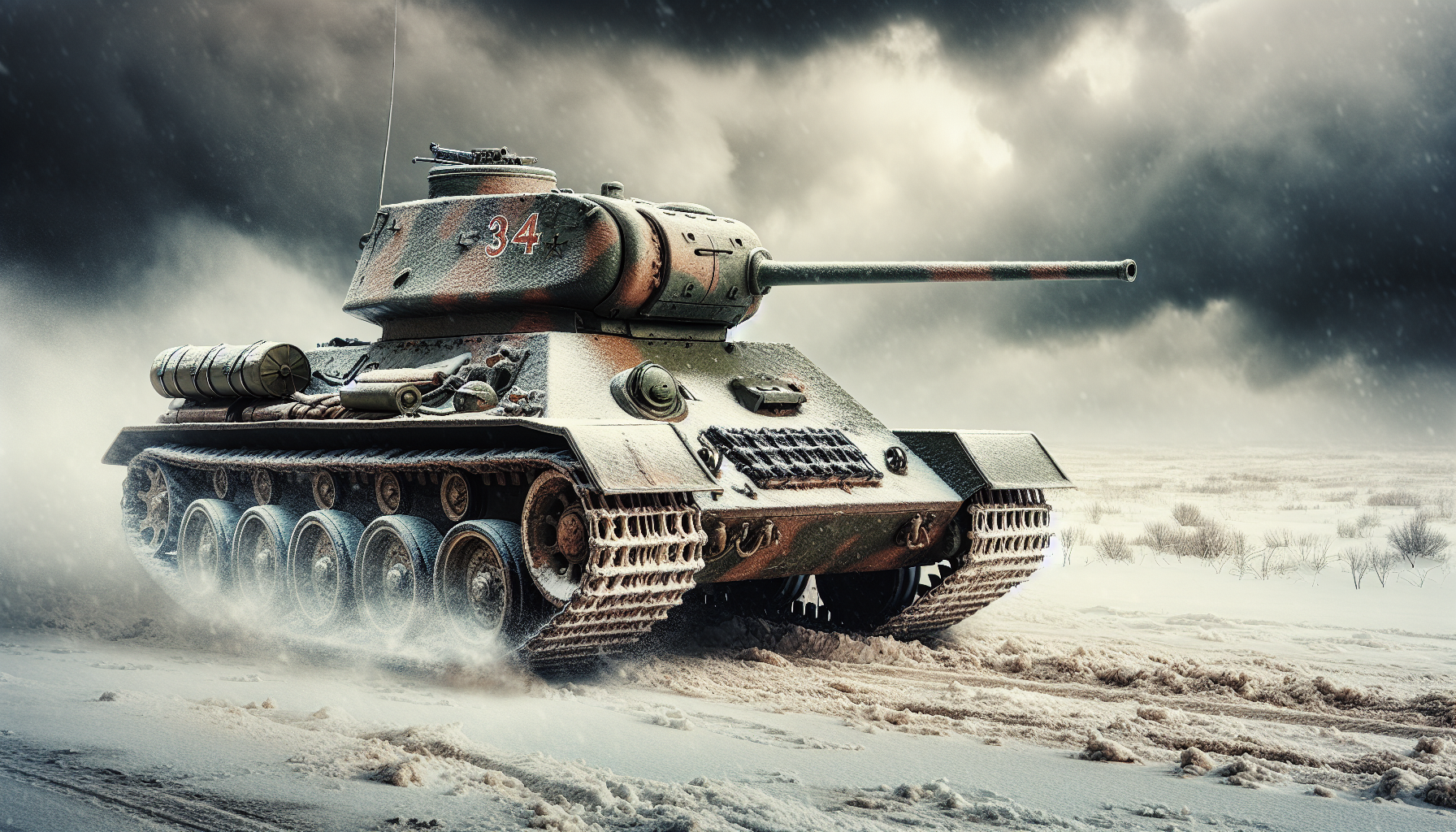
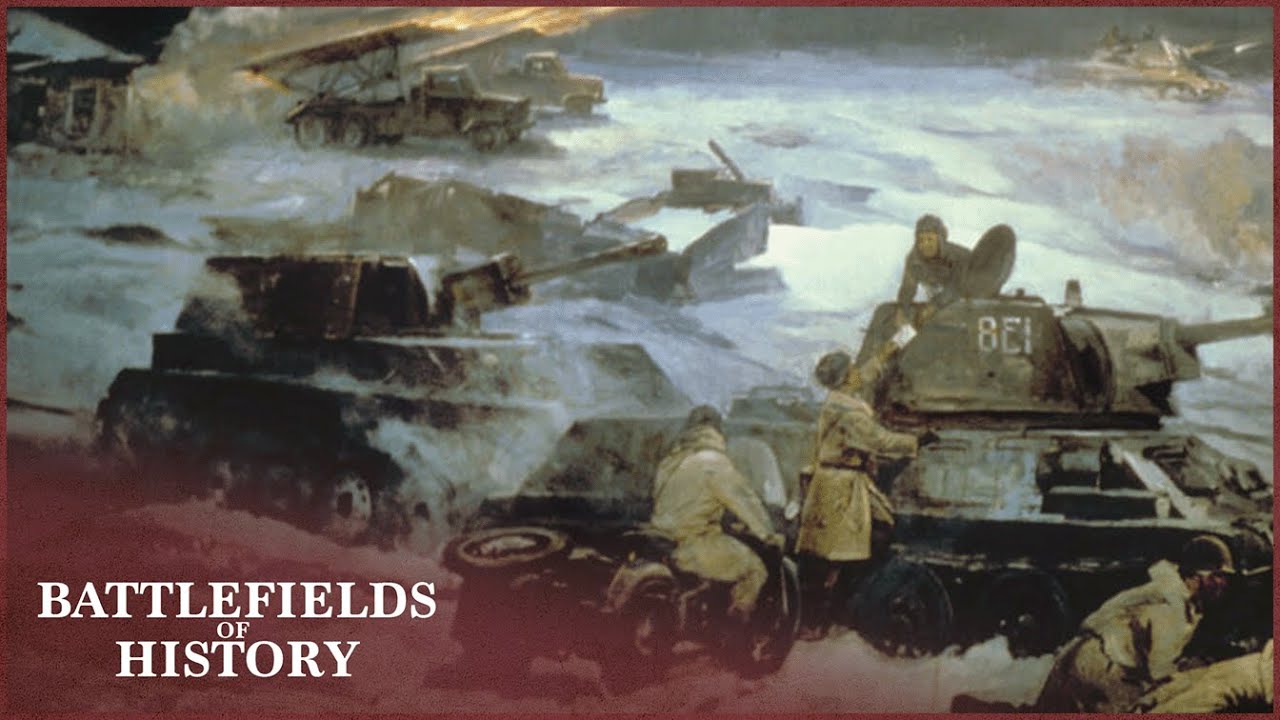
The documentary “WW2 In Color: How The Soviets Cornered Germany In The Eastern Front” presents a comprehensive analysis of the pivotal events that characterized the Eastern Front during World War II. Focusing on the dramatic transformations beginning in the summer of 1943, it examines key Soviet offensives, including the liberation of Kharkov, the defeat of the Siege of Leningrad, and the significant impact of Operation Bagration. Each of these events is crucial in understanding how the Red Army systematically dismantled German defenses over an extensive 1,500-mile front.
This examination not only highlights the strategic brilliance of Soviet military actions but also emphasizes the broader implications of these battles on the overall war effort. By analyzing the intricacies of each offensive, you can appreciate the resilience and determination displayed by Soviet forces, which ultimately played a decisive role in shifting the tide of the conflict. This documentary serves as an insightful resource for understanding the complexities of military history and the factors that influenced one of the largest theaters of war.
The Eastern Front: A Comprehensive Overview of World War II’s Most Crucial Theater
Overview of the Eastern Front
Geographical significance of the Eastern Front
The Eastern Front during World War II encompassed a vast and strategically important expanse of territory, stretching from the Baltic Sea in the north to the Black Sea in the south. This expansive front measured over 1,500 miles, making it one of the most extensive theaters of war. Its geographical significance was augmented by the presence of crucial urban centers, critical supply routes, and natural barriers such as rivers and forests, which played pivotal roles in military strategy. You must understand that the vastness of the landscape not only presented immense logistical challenges but also provided opportunities for both sides to exploit the terrain to their advantage. The severe weather, particularly the harsh Russian winters, further complicated military operations, which often relied on rapid mobility and effective supply chains.
Key nations involved: The Soviet Union and Germany
The primary nations embroiled in the conflict on the Eastern Front were the Soviet Union and Nazi Germany, whose ideological and territorial ambitions brought them into a cataclysmic confrontation. The Soviet Union, under Joseph Stalin, was committed to expanding its influence and securing its borders, while Germany sought Lebensraum, or “living space,” to the east. Your comprehension of their ideologies helps elucidate how deeply entrenched these motives were, as each nation marshaled its political and military resources toward what they believed was an existential confrontation. Notably, the Eastern Front emerged as a stark battlefield where the totalitarian regimes of both nations met, leading to extensive and horrific human suffering.
Initial state of warfare prior to major offensives
Before major offensives officially commenced, the Eastern Front experienced a turbulent and fragmented state of warfare characterized by escalating skirmishes and border tensions. The early phases of the conflict were marked by the failure of diplomatic efforts, the instability of alliances, and the fierce ideologies driving both nations. You should note that the initial stages featured a mixture of rapid advances and stark retreats, setting a chaotic tone for the events that would follow. A desperate buildup of forces on both sides foreshadowed the devastating offensives that would soon engulf the front.
Pre-war Tensions and the Invasion of Poland
Context of Soviet-German relations
The fractious relationship between the Soviet Union and Germany can be traced back to the aftermath of World War I and the Treaty of Versailles, which severely restricted Germany’s territorial and military capabilities. You should appreciate that this discontent laid the groundwork for cooperation between these ideologically opposed nations, culminating in the signing of the Molotov-Ribbentrop Pact in August 1939. This non-aggression treaty allowed both nations to pursue their respective territorial ambitions without fear of direct conflict, thus foreshadowing the partitioning of Eastern Europe.
Impact of the Molotov-Ribbentrop Pact
The Molotov-Ribbentrop Pact was a pivotal moment that facilitated the swift invasion of Poland in September 1939 by both countries, which effectively began World War II. You would benefit from recognizing how this agreement not only allowed for a coordinated assault but also marked the beginning of the brutal Soviet-German collaboration that would soon turn hostile. The partition of Poland demonstrated the strategic calculus at play, as the two countries divided the spoils of their conquest while strengthening their military positions for future engagements.
Initial invasion strategies and outcomes
When Poland was invaded, Germany unleashed its Blitzkrieg tactics, striking with rapid aerial bombardments followed by ground assaults, capturing key locations with lighting speed. Conversely, the Soviet Union moved into the eastern segment of Poland under the guise of liberating oppressed Ukrainians and Belarusians. Your understanding of the outcomes of this invasion is crucial, as it encapsulated the colluded strategies of two nations that, just a few years later, would turn their militaries against one another in a desperate struggle for survival on the Eastern Front.
Operation Barbarossa: The German Invasion
Launch of Operation Barbarossa in June 1941
The launch of Operation Barbarossa on June 22, 1941, marked the beginning of an all-out invasion of the Soviet Union by Nazi Germany, fundamentally altering the landscape of the Eastern Front. It signified a dramatic escalation in hostilities, as Adolf Hitler sought to achieve a swift victory over the Soviets that would facilitate his broader ambitions in Europe. You should consider how Barbarossa employed a multi-faceted strategy of deception, rapid mobilization, and a massive concentration of forces that caught the Soviet military largely unprepared.
Major battles and initial Soviet setbacks
In the early phases of Operation Barbarossa, the German Wehrmacht achieved stunning successes, encircling major cities and inflicting heavy casualties on Soviet forces. Battles such as the encirclement of Kiev and the siege of Smolensk showcased the effectiveness of the German Blitzkrieg, which combined mechanized infantry, air support, and artillery to devastating effect. It is critical for you to realize that initial Soviet setbacks were both strategic and logistical in nature, as the army’s preparedness and its command structure were both severely challenged by the rapid German advances.
The strategy of Blitzkrieg and its effectiveness
The efficacy of Blitzkrieg tactics during the early stages of Operation Barbarossa cannot be understated. Utilizing fast-moving armored divisions and close air support, the Germans were able to disrupt Soviet defenses and create disarray behind enemy lines. Your analysis should note that this strategy not only achieved immediate military objectives but also inflicted psychological blowbacks that contributed to the initial paralysis within Soviet command. The sheer speed and surprise of the German advance alarmed Soviet leadership and forced a reevaluation of their defensive strategies as they endeavored to adapt to the new realities of warfare.
Major Soviet Defenses and Stalingrad
The Siege of Stalingrad: A turning point
The Battle of Stalingrad, commencing in August 1942, emerged as a key turning point in the Eastern Front. As German forces sought to capture the city named after Joseph Stalin to deliver a significant psychological blow to the Soviet Union, they were met with fierce resistance. You should take note of how the tenacity of Soviet troops, coupled with the city’s strategic importance as a transportation hub, made it a focal point in the war. The brutal urban fighting, characterized by house-to-house battles, ground the German blitzkrieg to a halt and turned the tide of momentum in favor of the Soviets.
Soviet defensive tactics and resilience
The Soviets employed a variety of defensive tactics in Stalingrad that showcased their resilience. To withstand the German onslaught, they implemented a strategy of attrition, utilizing the densely populated urban environment to their advantage. You must understand that the defense was marked by a willingness to sacrifice ground for the sake of inflicting maximum damage on German forces. The encirclement maneuver executed by the Soviets in late 1942 highlighted their capacity for strategic planning under dire circumstances and marked the beginning of a series of successful counteroffensives.
The importance of Stalingrad in the Eastern Front
Stalingrad’s eventual capture by Soviet forces in February 1943 had monumental implications for the Eastern Front. It represented not only a significant defeat for the Germans but also rejuvenated Soviet morale. This victory instilled hope and unity among the Soviet citizens, forging a spirit of determination amidst the earlier failures. You should contemplate how the psychological repercussions of the Stalingrad battle acted as a catalyst for subsequent Soviet offensives, shifting the balance of power decisively towards the Allies on the Eastern Front.
Soviet Counteroffensives: 1943
Key operations in early 1943
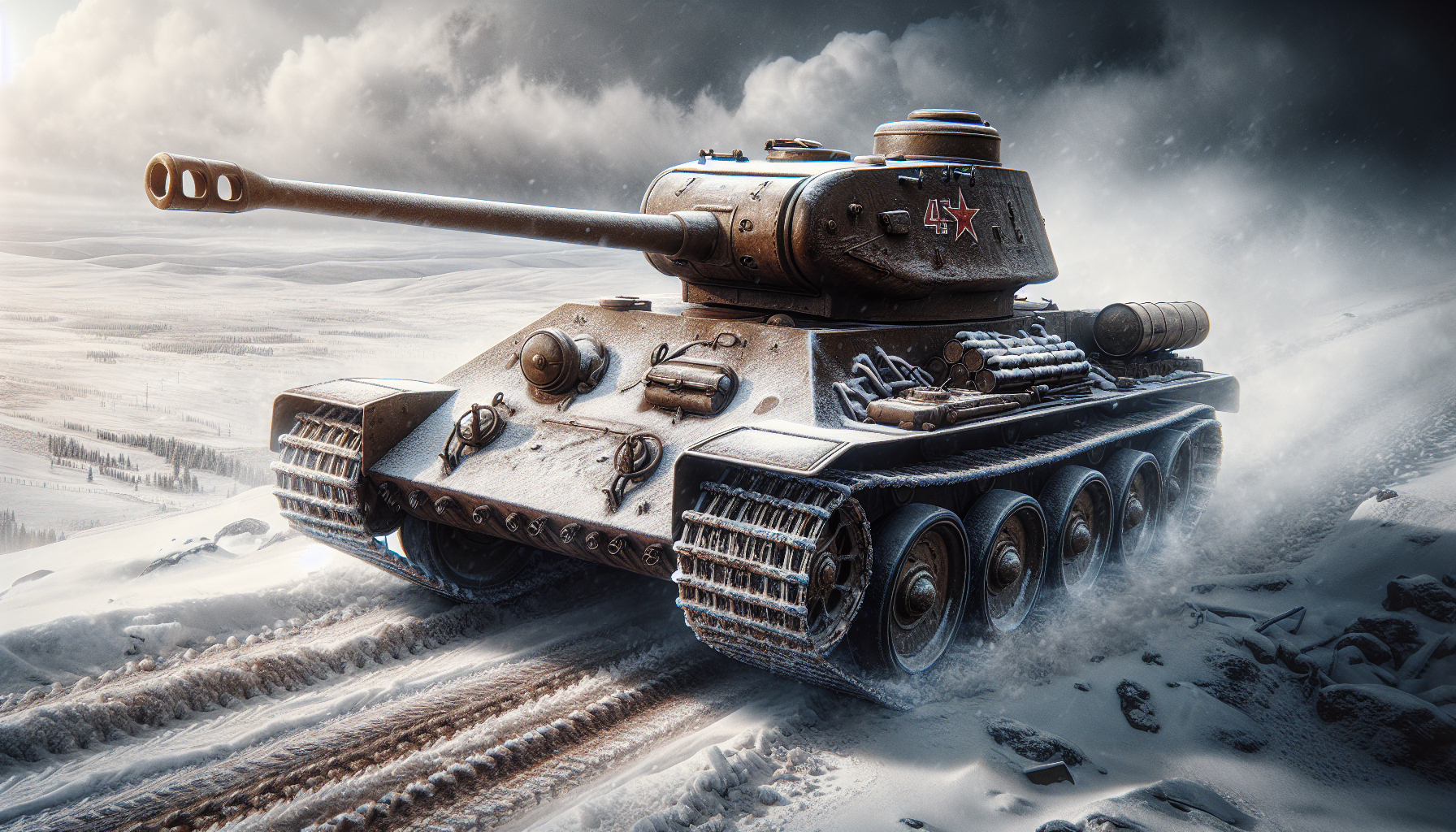
In the wake of the Stalingrad victory, the Soviet Union initiated a series of counteroffensives throughout early 1943, demonstrating strategic ingenuity and operational effectiveness. Noteworthy operations included the Soviet advances at Kharkov and the encirclement of significant chunks of the retreating German Army. You would benefit from recognizing the importance of these maneuvers, as they effectively dismantled German positions and solidified Soviet territorial gains while also contributing to the overall war effort.
The liberation of Kharkov
The liberation of Kharkov in 1943 was a critical operation that highlighted the Soviet’s ability to regain and fortify lost ground. This city held strategic significance in the overall structure of railways and supply lines that were crucial for maintaining military logistics. As Soviet armies advanced in a coordinated effort to recapture lost territories, the success at Kharkov served as both a morale booster for the Red Army and a clear signal of the shifting tide of war. You should consider how this liberation deepened the rift in German lines and further weakened their operational capacity on the Eastern Front.
Impact of the Siege of Leningrad’s end
The conclusion of the Siege of Leningrad in January 1944 marked a definitive moment of resilience for the Soviet Union. After enduring a relentless blockade lasting nearly two and a half years, the Red Army’s breakout dismantled a critical German offensive strategy. You must appreciate this victory’s symbolic importance, as it reignited public and military fervor while simultaneously paving the way for further Soviet advances westward. The lifting of the siege facilitated a reorganization of Soviet forces, preparing them for the subsequent offensives that would continue to unsettle German positions.
Operation Bagration: A Strategic Masterstroke
Planning and execution of Operation Bagration
Launched in June 1944, Operation Bagration represents one of the most meticulously planned and executed Soviet offensives of World War II. Your acknowledgment of the strategic brilliance involved in this operation is crucial, as the Soviets sought to decimate the German Army Group Centre, which was primarily situated in Belarus. Through careful deception and overwhelming force, the Red Army successfully breached German lines, establishing a momentum that would lead to a rapid advance through Eastern Europe. The operation exemplified effective planning that capitalized on the earlier successes and learnings accumulated over the course of the war.
Consequences for the German Army
The ramifications of Operation Bagration were disastrous for the German military. You should recognize that it resulted in catastrophic losses for Army Group Centre, with hundreds of thousands of casualties and the complete disintegration of its combat capabilities. The operation not only facilitated Soviet advances towards Poland but also initiated a rapid decline in German operational integrity across the Eastern Front. Such consequences underscored the changing dynamics of the war and the weaknesses that had been steadily accruing within German forces.
Shifts in the balance of power on the Eastern Front
The success of Operation Bagration fundamentally altered the balance of power on the Eastern Front. By eliminating a significant portion of the German military’s operational and tactical frameworks, the Soviets reclaimed the initiative and expanded their territory significantly. You must evaluate how this shift accentuated the growing strength of the Red Army and paved the way for subsequent offensives that would ultimately lead to the capture of Berlin. The operation served as a poignant reminder of the resilience of the Soviet military after the harrowing early years of the conflict.
The Role of Partisan Warfare
The rise of Soviet partisans
Throughout the Eastern Front, partisan warfare emerged as a meaningful complement to Soviet conventional military efforts. You should note that as the Red Army retreated in the face of early German advances, local resistance movements sprang forth in occupied territories, employing guerrilla tactics against the occupiers. The interplay between the Red Army and these partisans contributed to the larger war effort, disrupting German supply lines and gathering intelligence critical to the Soviet command’s broader strategies.
Impact on German supply lines and morale
The activities of Soviet partisans wreaked havoc on German supply lines and logistics, severely hampering the efficiency of their operations. You should appreciate the psychological impact of continued partisan resistance on German morale, as the constant threat of ambush and sabotage contributed to growing unease among occupying forces. The existence of these resistance movements not only demonstrated the latitudinal stakes of the conflict but also underscored the commitment among civilians to liberate their homeland, influencing overall strategic calculations.
Collaborations between the Red Army and partisans
Collaboration between the Red Army and the partisans yielded significant advantages, as these groups shared intelligence and resources to maximise their impact against the German occupation. Over time, such interactions helped enhance the skills and effectiveness of both factions, enabling more organized and successful operations. Understanding these dynamics illuminates the complexity of warfare on the Eastern Front, as diverse efforts converged to create a collaborative front against a common enemy.
Logistics and Supply Chains on the Eastern Front
Importance of supply lines in military strategy
Logistics and supply lines were of paramount importance in the Eastern Front, as the scale and nature of the conflict necessitated effective coordination of troops, equipment, and resources. You must grasp how control over supply routes could mean the difference between victory and defeat—an assertion supported by numerous historical accounts. Both the Soviets and Germans recognized that the resilience of their forces hinged on their ability to maintain lines of supply, thus determining operational capacities on the battlefield.
Soviet ingenuity in overcoming logistical challenges
Despite being initially hampered by logistic inefficiencies and the ravages of war, the Soviets displayed remarkable ingenuity in overcoming such challenges. The centralization of logistics, along with the effective utilization of local resources and manpower, enabled the Red Army to adapt to the fluid circumstances of warfare. You should appreciate how these efforts not only ensured a steady supply of troops and materials but also fostered a resilience that facilitated successful offensives as the war progressed.
Comparison with German logistical weaknesses
In contrast to Soviet strategies, the German logistics began to falter as the war dragged on. You need to assess how overstretched supply lines, coupled with heavy losses and the vast distances across the Eastern Front, hampered their military effectiveness. This comparison illuminates the critical impact of logistics on operational success, underscoring that even the most potent forces can falter when logistical frameworks collapse.
Allied Support for the USSR
Lend-Lease Act and its impact
The Lend-Lease Act, implemented by the United States in 1941, greatly affected the Soviet war effort by providing an influx of vital military supplies and equipment. You should understand that this act symbolized a significant strategic shift, as it showcased Allied commitment to support the Soviet Union in its fight against Nazi Germany. The delivery of food, vehicles, and weaponry had a profound impact on the Soviet war machine, allowing them to sustain their combat operations as they faced mounting pressures on multiple fronts.
Military supplies and equipment received
Through the Lend-Lease program, the Soviet Union received substantial quantities of military supplies, including tanks, aircraft, and artillery pieces, which modernized and re-equipped their forces. You must evaluate the importance of these contributions, as they not only strengthened Soviet capabilities but also highlighted the crucial role of Allied support in shaping the outcome of the Eastern Front. Such military aid bolstered the Red Army in their efforts to reclaim lost territories and better engage with German forces.
Strategic support from the Allies
Strategically, the cooperation with Allied nations during the war provided the Soviets with much-needed assistance in various forms. This encompassed not only military equipment but also intelligence sharing and logistical planning. You should reflect on how these collaborative efforts enhanced Soviet operations and underscored the interconnectedness of the Allied campaigns against axis powers, culminating in a formidable resistance against German ambitions.
Conclusion
Summary of the Soviet strategies leading to victory
The myriad strategies employed by the Soviet Union during World War II culminated in a decisive victory on the Eastern Front. By adapting their military doctrines, investing in logistics, collaborating with partisans, and capitalizing on moments of German vulnerability, the Soviets played a crucial role in reshaping the trajectory of the war. You should appreciate the cumulative impact of these strategies, which fostered a resilient fighting force that ultimately triumphed over the formidable German Wehrmacht.
The Eastern Front’s role in shaping modern history
The Eastern Front’s significance extends beyond the immediate conflict, as it profoundly influenced the post-war geopolitical landscape and the contours of modern history. The impact of the war forged the Soviet Union into a superpower while simultaneously reconfiguring Europe for decades to come. You must recognize how the lessons learned and the atrocities endured during this conflict continue to resonate, providing valuable insights into the complexities of international relations and military strategy.
Reflection on the human cost of the conflict
As you traverse the annals of this historical narrative, it is imperative to reflect on the human suffering wrought by the conflict on the Eastern Front. The staggering death toll and collective trauma endured by millions stand as a stark reminder of the grim realities of war. You should carry forward an acknowledgment of the sacrifices made by countless individuals whose experiences have become intertwined with the larger historical narrative of the 20th century, emphasizing the need for understanding and remembrance when considering the repercussions of large-scale conflict.