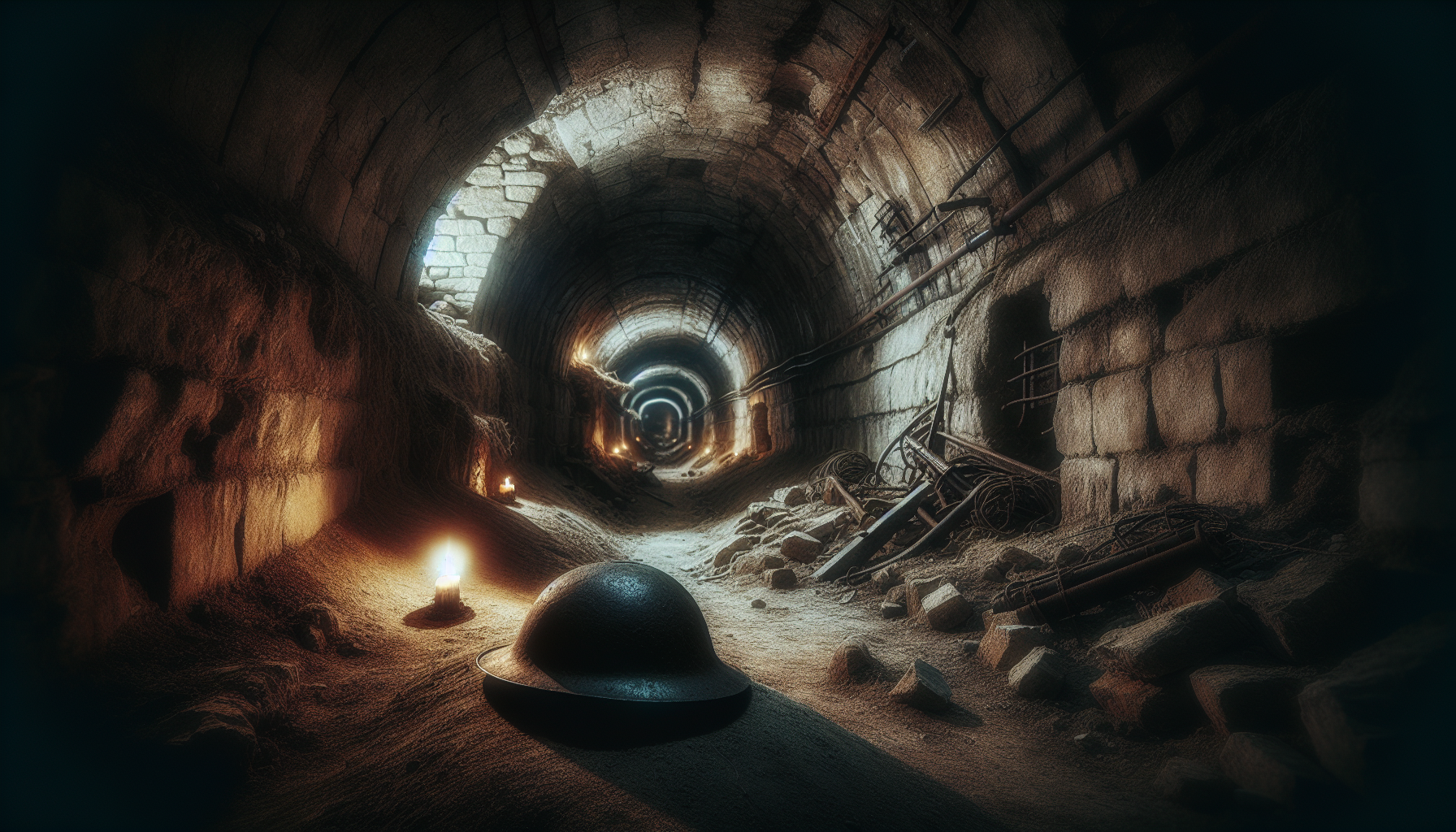
The hidden complexities of World War I encompass not only the well-documented battles above ground but also the intricate web of tunnels that defined a significant aspect of trench warfare. This article examines the strategic importance and the grim reality of these subterranean passages, often referred to as the “Tunnels of Death,” where soldiers endured tremendous hardships while executing crucial military operations.
Through an exploration of the purpose and construction of these tunnels, you will gain insight into the psychological and physical challenges faced by those who fought beneath the surface. The dynamics of warfare during this period are further illuminated, revealing how these underground networks contributed to the overall narrative of one of history’s deadliest conflicts. Understanding this aspect of World War I enriches the comprehension of the war’s multifaceted nature and its profound human cost.

Overview of WW1 and Its Trench Warfare
Introduction to World War I
World War I, oftentimes referred to as the Great War, erupted in 1914 and wracked the globe until 1918. It involved a myriad of nations divided primarily between the Allies and the Central Powers. As you delve into the annals of this monumental conflict, you cannot overlook how it reshaped the modern world. The war was marked by unprecedented levels of carnage, not just due to conventional battles but also through the advent of industrialized warfare, characterized by innovative weaponry and tactics. The introduction of trench warfare became a defining feature, illustrating a paradigm shift in military engagement, wherein soldiers faced the harrowing reality of static line fighting where fortifications dictated strategies and outcomes.
The significance of trench warfare
Trench warfare represented a desperate response to the lethal efficiency of World War I’s weaponry. The trenches spanned across the Western Front, stretching from the English Channel to the Swiss border, forming a web of defenses. You would find yourself confronted with a landscape of mud, barbed wire, and the omnipresence of death. This strategic deadlock not only prolonged the war, but it also inflicted profound psychical trauma on those who fought within this hellish domain. The trenches became both a mighty barrier and a prison, encapsulating a generation locked in agonizing struggles that seemed to echo endlessly.
The strategies behind trench construction
The construction of trenches was rooted in strategic necessity, reflecting a careful appraisal of battlefield realities. Engineers and soldiers alike undertook the formidable task of digging complex networks of trenches that maximized both defensive capabilities and tactical positioning. You would observe that these trenches were not mere ditches; they were carefully designed with multiple lines of defense, including deep shelters, firing bays, and communication trenches. The combination of strategic depth and psychological fortitude created an environment where human ingenuity wrestled with the sheer tumult of war, demonstrating that survival depended equally on engineering ingenuity and sheer tenacity.
The Origins of Tunneling in Warfare
Historical context of military tunneling
The practice of tunneling in warfare finds its roots deep in history, going back thousands of years to ancient civilizations where siege warfare necessitated subterranean tactics. Armed forces have long employed tunneling to sabotage, gather intelligence, and disrupt enemy fortifications. As you explore the historical trajectory of military tunneling, you notice how techniques evolved alongside technologies and methodologies, shaping the very nature of combat.
Early examples of tunneling in conflicts
Notable early examples of tunneling can be traced through various conflicts, from the Romans utilizing tunnels during the siege of Jerusalem to World War I’s inescapable reality. During the American Civil War, extensive mining operations were conducted at places like Petersburg, Virginia. You can see that these earlier uses of tunnels set the stage for the more sophisticated and coordinated efforts observed in the First World War, where anticipation of combat dynamics led to systematic innovations in subterranean warfare.
Technological advancements enabling tunneling
Advancements in technology, particularly those in mining equipment and explosives, paved the way for World War I’s extensive tunneling operations. Innovations in drilling techniques allowed soldiers to burrow deeper and traverse more difficult terrains. Moreover, the utilization of dynamite and other explosives amplified the lethality of tunneling, transforming underground warfare into a harrowing contest of ingenuity and resistive adaptations. You would find that such shifts not only dictated military strategies but also reshaped the battlefield’s very texture.
The Purpose of Tunnels during WW1
Tunnels for offensive strategies
Throughout the Great War, tunnels served primarily as instruments of offensive strategy, enabling armies to circumvent fortified enemy lines. You could witness how troops dug tunnels toward enemy trenches, often laden with explosives aimed at taking down entire sectors of fortifications. The effectiveness of such strategies relied on stealth, careful planning, and precise execution, allowing soldiers to create breath-taking moments of shock that altered the tide of battle, albeit at a significant risk to their own lives.
Defensive uses of tunnels
Tunnels also took on defensive applications as soldiers sought shelter from the ravages of artillery bombardments and sniper fire. The subterranean networks provided sanctuaries where troops could regroup and recuperate, creating a strategically advantageous environment from which they could launch counteroffensives. These defensive tunnels not only represented survival but also illustrated adaptability in the face of overwhelming odds, showcasing the creative capacity of soldiers huddled beneath the earth’s surface.
Logistical support through underground networks
In addition to offensive and defensive functions, the tunnels provided vital logistical support throughout the war, allowing for the transport of supplies, ammunition, and communications. You could imagine the subterranean pathways buzzing with soldiers, each carrying the weight of survival beneath layers of earth, while facilitating a lifeline to the front lines. This clandestine network of tunnels transformed the ways in which armies functioned, highlighting the interdependency of strategy and logistics in the underbelly of warfare.
Construction Techniques and Challenges
Methods of tunneling used by soldiers
Soldiers employed a range of methods for tunneling, drawing on both rudimentary and advanced techniques. Using hand tools, shovels, and pickaxes, you would watch as they chipped away at the ground, often working in small teams to maintain silence and avoid detection. While some tunnels were constructed with speed and efficiency in mind, others required intricate planning and engineering foresight to withstand the enormous pressures from the surrounding soil.
Overcoming geological challenges
The challenges of tunneling varied dramatically based on geographical conditions and soil composition. You would be confronted with the reality that, in some locations, soldiers faced extraordinarily hard rock while in others, the soil’s saturation rendered tunnels perilous and prone to collapse. The adaptive capacity of teams working especially hard in these conditions highlights their incredible resolve, yet it’s clear—tunneling in such circumstances could easily become a fight against nature itself.
Safety measures in tunnel construction
The perils of tunnel warfare were manifold, leading to a host of safety measures being implemented. Proper ventilation was crucial, as the risk of suffocation or gas attacks loomed over soldiers undertaking these laborious tasks. Additionally, structural supports were often established to prevent collapses, showcasing an acknowledgment of the fundamental precariousness that characterized life beneath the surface. Through these measures, you witness the fragility and tenacity of human life in the shadows of warfare.
Life Inside the Tunnels
Living conditions for soldiers
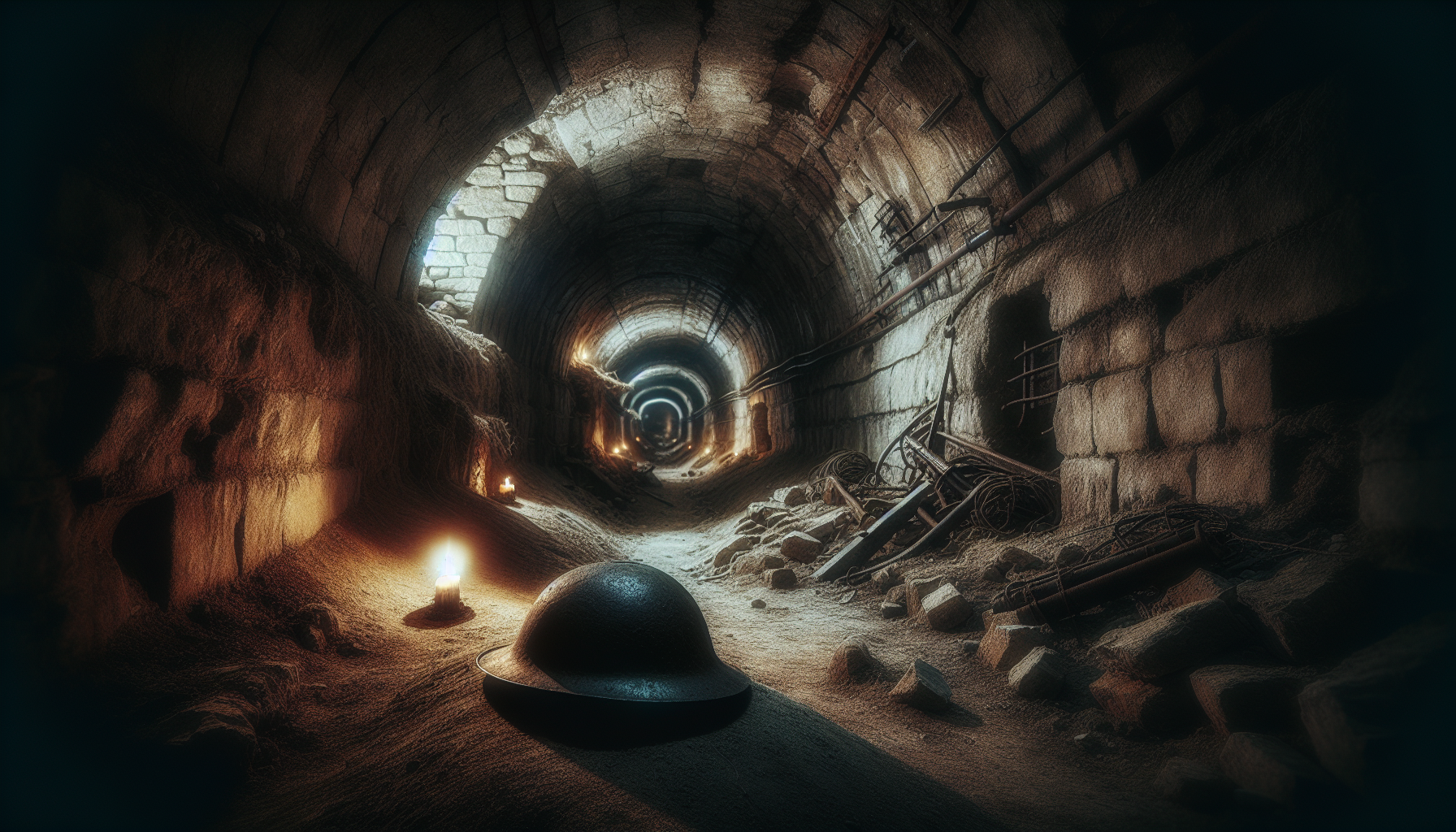
Life underground was starkly different from that on the surface. Soldiers endured cramped, damp conditions, often sharing narrow tunnels with fellow combatants and supplies. The relentless presence of mud, darkness, and the constant threat of enemy attacks contributed to a dismal existence. You would see individuals trying to find small comforts—a flicker of light from a scavenged candle or a shared joke to stave off the desolation. These small acts of humanity became lifelines in an atmosphere rife with despair.
Psychological effects of tunnel warfare
The psychological toll of life in these sub-surface environments was immense. The constant threat of enemy detection, coupled with the oppressive darkness and confinement, often led to anxiety, claustrophobia, and profound isolation. You would struggle to navigate the emotional and mental barriers that such environments imposed, facing the haunting echoes of battle above while wrestling with the dissonance of life below the ground. Soldiers contended with the unique strain of war that spiraled into a psychological labyrinth, often leaving scars that lingered long after the conflict had ended.
Day-to-day activities beneath the surface
Despite the grim existence, everyday life within the tunnels comprised a blend of tasks aimed at survival and fortification. Soldiers would perform a precarious balancing act—maintaining their tunnels while preparing for potential assaults. You might find them preparing meals in makeshift kitchens or conducting repairs on the structure. Each day was drenched in uncertainty, but the determination to create a sense of normalcy amidst chaos was a defining characteristic of life underground.
The Role of Mining in WW1
Mining practices for creating explosions
Mining played a pivotal role in World War I, enabling armies to execute explosive offensives that ultimately sought to rattle enemy morale and inflict maximum damage. You would study how National forces utilized intricate mining techniques—digging underneath enemy positions and planting explosives that, upon detonation, would obliterate fortifications. This deadly dance of creation and destruction represented a complex symbiosis of engineering prowess and military necessity.
Famous mining operations during the war
Among the multitude of mining operations executed during WWI, one of the most notable was the attack at the Battle of Messines, where British forces detonated a series of mines beneath the German frontline. You would find accounts of how these operations necessitated immense coordination, meticulous planning, and the courage to traverse the underground depths. These operations were emblematic of the broader strategies employed throughout the war, revealing an unsettling marriage between technological advancement and the vendetta of combat.
Consequences of mining on the battlefield
The consequences of mining on the battlefield were profound, not only impacting tactical engagements but also shaping the very fabric of the landscape. You would witness the aftermath of explosions reshaping the earth, creating craters as grotesque reminders of warfare’s brutality. The symphony of destruction resonated across the battlefield and served as a grim reminder of the cost of human conflict, as soldiers grappling with the aftermath realized that not only were lives lost, but entire ideologies—rooted in honor and valor—were also irrevocably altered.
The Notorious Battles Fueled by Tunnel Warfare
Key battles influenced by tunneling strategies
The Great War featured several battles where tunneling strategies played a decisive role, with underground operations acting as a critical determinant in engagements. Each conflict demanded innovation, as commanders sought to exploit their enemies’ vulnerabilities through coordinated subterranean offensives. You would come to appreciate how these clandestine maneuvers altered traditional perceptions of battlefield engagement, rendering the underground a crucial theater of war.
The Battle of Messines as a case study
The Battle of Messines, fought in June 1917, represents a landmark case of successful mining operations in World War I. This meticulously planned offensive involved a series of mines that undermined German positions, resulting in one of the most substantial detonation sequences of the war. You might immerse yourself in the strategic brilliance that led to the eventual success of the British forces—how planning, tunneling, and artillery were melded into a cohesive strategy that ultimately yielded significant territorial gains and psychological advantages.
Lessons learned from tunnel engagements
As you analyze these battles, it’s impossible not to consider the lessons that emerged from engagements influenced by tunneling strategies. The importance of reconnaissance, the comprehensive planning of logistics, and the psychological aspects of warfare became starkly apparent. Each battle’s outcome represents not just a shift in territories but an evolution in military thought, revealing an ever-growing understanding of the intricate connections between soldier, strategy, and the environment.
The Psychological Impact of Tunnel Warfare
Fear and trauma of subterranean combat
The psychological impact of tunnel warfare cannot be understated. Soldiers were ensconced within an environment riddled with fear—both from the ever-looming threat of enemy attacks and the inherent dangers of the tunnels themselves. You would observe firsthand how this environment birthed an intricate constellation of trauma and desolation, shaping a generation’s mental framework as soldiers confronted the fragility of their existence beneath the battlefield’s surface.
Stories from soldiers who experienced tunneling
Narratives from those who endured the hardships of tunnel warfare reflect a kaleidoscope of human experience, each story unique yet joined by common threads of trauma and resilience. These accounts amplify the grueling reality of subterranean life while showcasing snippets of courage and despair. You would sift through these stories, finding threads of humanity interwoven with visceral accounts of survival, loss, and the never-ending cycle of conflict.
The legacy of psychological scars post-war
As you conclude exploring these narratives, the implications of psychological scars—often referred to as “shell shock” during the war—echo resoundingly into the years that followed. The toll of underground combat indelibly marked those who lived through it, shaping not just individual lives but societal perceptions of trauma and recovery. You would face the unsettling reality that the consequences of war extend far beyond the battlefield, impacting future generations through the legacies of mental health challenges borne from subterranean strife.
Post-War Legacy of WW1 Tunnels
Current state of WW1 tunnels in Europe
Today, the remnants of World War I tunnels stand as haunting testaments to one of history’s most destructive conflicts. Many of these subterranean networks remain intact, lying beneath the soil of Europe as silent witnesses to humanity’s darkest hours. You would wander through these sites and explore the vast layers of history that them embody—a physical link to the past forging connections between the sacrifices made then and our present understanding of conflict.
Historical preservation vs. urban development
As urbanization progresses across Europe, the struggle to preserve these historical sites intensifies. You would grapple with the dichotomy between the desire to honor history and the practical needs for urban development, recognizing how these tunnels encapsulate a unique chapter of human history. In discussions about their preservation, the challenge remains to balance cultural remembrance with contemporary needs, allowing future generations to grasp the profound lessons embedded within these very tunnels.
Tunnels as a part of war history education
The educational implications of World War I tunnels encompass not only historical preservation but also serve as vital institutions for learning and reflection. You would see that many of these sites now function as museums and educational programs designed to offer insights into the implications of war, fostering a greater understanding of humanity’s trials and tribulations. In this way, the tunnels become conduits of memory, ensuring that the sacrifices of those who fought are never forgotten, while also imparting critical lessons about conflict and humanity.
Conclusion
Summary of tunneling’s impact in WW1
As you look back at the tunnels of World War I, you perceive how they represented both a profound necessity and a tragic consequence of human conflict. These subterranean systems encapsulated strategies geared toward survival and offense, revealing significant implications for understanding warfare. By integrating tunneling as a warfare tactic, you witnessed a shifting paradigm, one that reshaped military strategies and tactics for generations.
Reflection on the evolution of warfare
The evolution of warfare, as illustrated through the lens of WWI tunneling, unveils the complexity of human ingenuity and the tragic consequences of conflict. You cannot help but reflect upon how these subterranean engagements not only altered tactics but also laid the groundwork for future warfare practices—forever changing perceptions on the battlefield. The intertwining of innovation, strategy, and human endurance in the tunnels casts a long shadow on contemporary military practices.
The importance of remembering the sacrifices made
Ultimately, it becomes clear that recognizing the sacrifices of those embroiled in the grueling depths of tunnel warfare remains crucial as we navigate the legacies of the past. As you confront the complex narratives of trauma, endurance, and heroism, you grasp a deeper understanding of humanity itself—how resilience can emerge from the darkest depths of despair and how remembering the past infuses meaning into our collective journey toward peace.