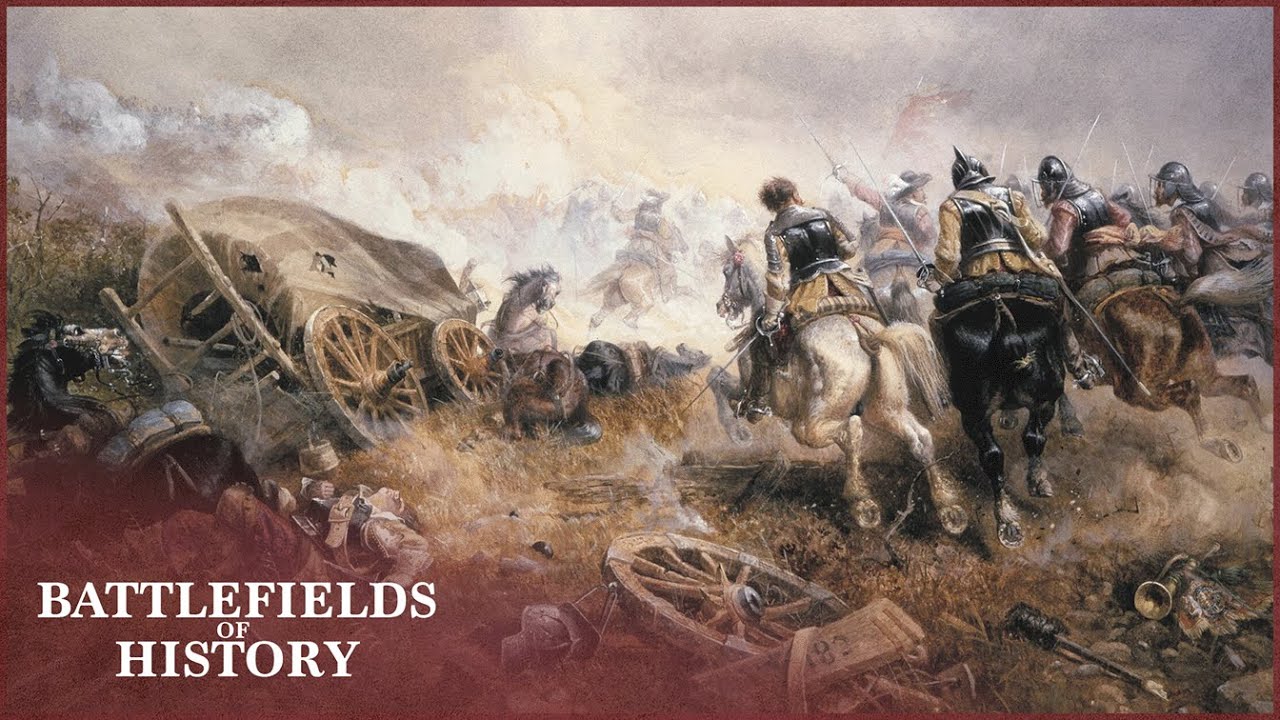
The English Civil War represented a pivotal moment in the history of England, characterized by a profound struggle between the monarchy and Parliament. This conflict arose from a complex interplay of political, social, and religious tensions that escalated during the 17th century. The ensuing battles not only shaped the governance of England but also laid the groundwork for modern concepts of democracy and individual rights.
In the following exploration, you will uncover the underlying factors that led to this historic confrontation. Attention will be given to the motivations of King Charles I and the responses of Parliamentary leaders, highlighting the broader implications of their conflict for English society and governance. Understanding this tumultuous period will enhance your comprehension of its lasting impact on contemporary political structures.
The English Civil War: An Analytical Exploration

Historical Context of the English Civil War
Overview of 17th Century England
In the 17th century, England was a kaleidoscope of evolving identities, with a society grappling with the profound effects of the Renaissance, the Reformation, and emerging modernity. The country was characterized by a shifting political landscape marked by increasing tensions between monarchy and parliamentary governance. As you navigate this tumultuous period, you will find yourself immersed in a milieu shaped by intense political maneuvering, cultural introspection, and a growing awareness of individual rights—that would eventually catalyze the revolutionary movements across the globe.
Political landscape pre-Civil War
Prior to the outbreak of the English Civil War, England’s political landscape was fraught with conflict. It was a time when the divine right of kings was fervently upheld by supporters of the monarchy while being challenged by the growing assertiveness of Parliament. You will discover that King Charles I, who ruled from 1625 to 1649, sought to govern without regular recourse to Parliament, throwing the nation into disarray. This political tension was compounded by Charles’s insistence on maintaining royal prerogative against the burgeoning urge for parliamentary sovereignty, thus setting the stage for an intense and bloody showdown.
Religious tensions and their impact
Religion in 17th century England was not merely a matter of personal belief but a catalyst for communal strife. You will notice that the Protestant Reformation had created a relatively fragmented religious landscape, with the Anglican Church, Puritan sects, and Catholic communities contending for influence and recognition. The enforcement of the Book of Common Prayer and Charles I’s perceived favoritism towards Catholicism only deepened the societal rift. These religious tensions did not merely inform individuals’ faith; they became the very marrow of political affiliations and loyalties, drawing battle lines that would soon lead to civil conflict.
Key Figures in the Conflict
King Charles I: His beliefs and leadership style
King Charles I embodied the complexities of rulership during turbulent times. His staunch belief in the divine right of kings infused his leadership style with a certain authoritarian gravitas. You will notice that his insistence on royal absolutism incited a backlash from Parliament and the public alike. His attempts to implement reforms without their consent, coupled with a distinct lack of political foresight, reveal the vulnerabilities in his reign. Charles’s leadership, ultimately marked by both charisma and inflexible dogma, would become a defining element of the conflict that would engulf the nation.
Parliamentary leaders: John Pym and Oliver Cromwell
Opposing the king were prominent parliamentary figures such as John Pym and Oliver Cromwell, who stood as titans of the parliamentary cause. John Pym, often regarded as the architect of the parliamentary resistance, utilized his adept skills in rhetoric and coalition-building to galvanize dissent against Charles. Meanwhile, Oliver Cromwell emerged as a military tactician whose ideological fervor would shape the Parliamentarians into an efficient fighting force. You will see that their leadership styles nestled within a larger tapestry of political and religious conviction, offering you a lens through which to understand the multifaceted dynamics of the English Civil War.
The role of lesser-known figures in the conflict
While the conflict is often framed through a few prominent personalities, a plethora of lesser-known figures also played critical roles in shaping the events of the Civil War. Leaders from both sides, including military commanders, local magnates, and common soldiers, must not be overlooked. Their stories and experiences provide a vital context to the broader narratives of power struggles and allegiances. The voices of these individuals, often relegated to the margins of history, echo the complexities of a society in upheaval and demonstrate that the struggle was one that resonated across various strata.
The Causes of the English Civil War
Political power struggles between the monarchy and Parliament
At the heart of the English Civil War lay a series of irreconcilable political power struggles between the monarchy and Parliament. As you delve deeper, you will observe that the attempts by Charles I to reclaim authority were met with escalating defiance from Parliament, which had begun to view itself not as a subordinate body but as a legitimate representative of the people’s will. The king’s sporadic dissolutions of Parliament and his unilateral decisions on governance can be seen as direct provocations, pushing the nation toward conflict. The political machinations of this era reveal a complex interplay of institutional authority that would irrevocably alter the fabric of English governance.
Financial disputes and taxation issues
The financial underpinnings of this conflict are equally illuminating. Charles I’s struggles with Parliament over financial matters constituted a pivotal cause of the Civil War. Through your examination, you will find that the king’s attempts to levy taxes without parliamentary consent—evidenced by schemes like Ship Money—sparked outrage and directly fed into the narrative of governmental overreach. The bitter disputes over financial control underscored a broader societal aversion to arbitrary rule, illustrating how economic grievances fueled the flames of rebellion.
Religious conflicts and their ramifications
As you analyze the myriad causes of the Civil War, it becomes evident that religious conflicts were deeply interwoven with political motivations. The religious dimension added a potent layer to the conflict, rooted in differing beliefs about the nature and governance of the Church of England. Charles I’s efforts to mandate Anglican practices in a landscape rife with dissent, particularly from Puritan factions, inflamed tensions which erupted into violence. The ramifications of these religious conflicts were both immediate and far-reaching, as they carved out allegiances that transcended mere political horse-trading and seeped into the very identities of competing factions.
The Role of Religion
The Anglican Church versus Puritanism
Religious identity played a decisive role in framing the allegiances and animosities during the Civil War. You will find that the Anglican Church, characterized by its rituals and hierarchy, encountered formidable opposition from Puritan movements that sought a more austere form of worship. The conflict between these two, established religious entities spoke to a broader struggle over the direction of the nation’s spiritual governance. This divide was not limited merely to theology; it manifested in political ideologies that influenced loyalties and participation in the Civil War.
The Book of Common Prayer and its controversies
A focal point of religious contention was the Book of Common Prayer. You will see that the imposition of this text by Charles I was perceived by Puritans as a move toward Catholicism, thus polarizing communities and inflaming dissension. The controversies surrounding the Book of Common Prayer illuminated the deep-seated fears about royal authority encroaching on religious beliefs, further entrenching divisions in society. The disputes it incited were emblematic of both broader theological disagreements and the struggle for autonomy against an overpowering monarchy.
Religious radicals and their influence on the war
The socio-religious landscape was also populated by various radical groups that exerted substantial influence on the trajectory of the conflict. You will notice the rise of sects such as the Levellers and Diggers, who espoused radical ideas not only about religion but also about governance and social order. Their calls for equality and communalism posed direct threats to established hierarchies and advanced revolutionary discourse. As they engaged with the war’s main narratives, their unique perspectives highlight how religious motivations were interwoven with radical notions of citizenship and governance, reshaping societal expectations during a period of upheaval.

The Outbreak of War
The failed attempt to arrest five members of Parliament
The spark that ignited the Civil War can be traced to the king’s failed attempt to arrest five members of Parliament in January 1642. You will observe that this dramatic act was not simply a political maneuver; it revealed Charles I’s underestimation of parliamentary resolve and the widespread discontent brewing among the populace. The incident catalyzed a wave of anti-royalist sentiment that swept through England, proving to be a decisive moment that crystallized the opposition against the king.
Early skirmishes and the escalation of conflict
Following the tensions escalated, skirmishes began to emerge across England, laying the groundwork for broader conflict. You will note key early confrontations, such as the discontent that led to the mobilization of local militias. As allegiances formed and hardened, initial armed encounters saw both sides testing their resolve. The deterioration of dialogue and the shift toward violence marked a new chapter in the struggle for power, revealing how quickly political disputes could escalate into armed conflict.
Formation of opposing armies: Royalists vs. Parliamentarians
As unrest deepened, both sides organized their forces into structured armies. You will observe that the Royalists rallied under the banner of King Charles I while the Parliamentarians amassed their troops including notable leaders such as Oliver Cromwell, who would later shape the tactics of the New Model Army. The formation of these opposing armies symbolized not merely a military escalation but the crystallization of a national identity with distinct loyalties. The battle lines were now drawn—both physically and ideologically—signifying the emergence of a conflict that would reshape the very essence of English governance.
Major Battles and Turning Points
The Battle of Edgehill: The first major encounter
The Battle of Edgehill, fought in October 1642, marked the first significant clash between Royalist and Parliamentarian forces. You will find that this encounter was not merely a military confrontation but a bellwether of the strategies and sentiments that would define the war. Both sides suffered substantial casualties in this inconclusive battle, reflecting the complexities of a protracted conflict while exemplifying the initial martial fervor and chaos that characterized early engagements. Understanding Edgehill is critical for contextualizing how warfare itself became a crucible for shaping allegiances and determining paths to victory.
The New Model Army and its rise to prominence
In the midst of the conflict, the New Model Army emerged as a transformative force for the Parliamentarians. As you delve into its history, you will see that the disciplined, ideologically motivated troops represented a departure from traditional military structures. Oliver Cromwell’s leadership and innovative tactics galvanized this new army, emphasizing the need for well-trained, committed soldiers who favored merit over aristocracy. The rise of the New Model Army proved pivotal, altering not only military fortunes but also societal expectations about leadership and governance.
Significant battles: Naseby and Marston Moor
The turning points of the Civil War can often be traced to major battles such as Naseby (1645) and Marston Moor (1644). At Naseby, the decisive defeat of Royalist forces by the New Model Army fundamentally shifted the trajectory of the war in favor of Parliament. The victory at Marston Moor, equally significant, underscored the weaknesses within Royalist ranks while uniting various Parliamentary factions. As you analyze these battles, you gain insight into military strategy, the evolving nature of warfare, and the ideological fervor that propelled ordinary men into extraordinary circumstances.
The Trial and Execution of Charles I
The charges against the king
In the aftermath of the war, the trial and subsequent execution of King Charles I in January 1649 are consequential moments, encapsulating the era’s dramatic shift in political ethos. You will find that he was charged with treason against the English people, a concept that challenged the notion of kingship and divine right. The trial was both a legal proceeding and a radical repudiation of monarchical rule, signaling a profound restructuring of authority in England. The charges leveled against him and the public proceedings underscore the emergence of new political ideologies that would resonate beyond the immediate context.
Public perception and the impact on monarchy
The public’s perception of Charles I shifted dramatically during his trial and execution, revealing a fracture in the traditional belief surrounding monarchy. You will find that while some viewed him as a martyr and defender of the divine right, others saw his execution as a necessary act for the preservation of English liberties. This polarizing event not only marked a watershed moment in the relationship between the monarchy and its subjects but also planted seeds of political radicalism that would influence subsequent generations. The events ushered forth debates surrounding governance and accountability that would become ever more relevant in the evolving tapestry of political ideas.
Aftermath and significance of the execution
The execution of Charles I carried profound implications for England and beyond. It paved the way for the establishment of a republican framework under the Commonwealth and set in train a reexamination of authority and the nature of governance. You will see reflections of the king’s execution in later revolutionary movements worldwide, as it crystallized the idea that sovereignty rested with the people rather than a distant crown. Understanding this aftermath provides critical insights into how the English Civil War not only altered internal dynamics but also reverberated through history, influencing future democratic thought and practice.
The Interregnum and the Commonwealth
Establishment of the Commonwealth under Oliver Cromwell
Following the Civil War and the execution of Charles I, England entered an unprecedented period known as the Interregnum. Under the leadership of Oliver Cromwell, the Commonwealth was established in 1649, heralding a revolutionary departure from monarchical governance. As you examine this era, you will find that Cromwell’s regime sought to implement a Puritanical vision of society, aiming for both political reform and religious orthodoxy. This shift marked a notable attempt to redefine governance and societal values within the framework of a revolutionary ideology.
Changes in governance and society
The Commonwealth period was marked by significant shifts in governance and societal structure. You will see that the dissolution of the monarchy led to the establishment of various governance systems, including the Instrument of Government which sought to balance power among different governing bodies. Socially, this was a time of both upheaval and reform, with Cromwell’s government facing challenges related to religious tolerance, economic stability, and public disorder. The societal changes that unfolded during the Commonwealth period revealed the tensions between revolutionary ideals and the realities of governance, offering a glimpse into the complexities of establishing a new political order.
Challenges faced during the Interregnum period
Despite its initial promise, the Interregnum was fraught with challenges and contradictions. You will notice that Cromwell’s regime faced opposition from both royalists and radical factions, each critically assessing the legitimacy and effectiveness of the Commonwealth. Economic hardships, military commitments, and religious sectarianism tested the resolve of the government, often leading to conflicts between differing ideologies. These challenges underscore the difficulties inherent in realizing revolutionary aspirations, illuminating the tension between ideals and practice that would eventually contribute to the Restoration of the monarchy.
Restoration of the Monarchy
The conditions that led to the Restoration
The Restoration of the monarchy in 1660 was not simply a return to old ways but a complex convergence of political necessity and public sentiment. After a period marked by unrest, disillusionment with the Commonwealth, and internal factional strife, there was a growing desire among the populace and political elite to restore stability. You will find that the Restoration was facilitated by the lack of consensus on governance, as the alternative republican structures proved ineffective in addressing the needs of society. The interplay of these conditions underscored how revolutionary dreams can yield to the realities of governance, ultimately leading to the reinstatement of monarchic authority.
Charles II and the return of the monarchy
The return of Charles II to the throne in 1660 heralded a new era in England. You will see that Charles, often celebrated as the “Merry Monarch,” sought to navigate the delicate balance between traditional monarchy and the newer aspirations for parliamentary authority. His reign signified a cautious acceptance of the changes brought about by the Civil War while still attempting to reclaim royal prerogative. This period proved transformative as the monarchy adapted to the political realities of a society that had fundamentally shifted during the preceding upheaval.
Consequences for Parliament and governance
The Restoration had lasting implications for both Parliament and governance in England. You will find that the king and Parliament navigated a complex relationship characterized by ongoing negotiations and power dynamics that defined the subsequent Commonwealth under Charles II. The events of the Civil War fundamentally reshaped how power was distributed, encouraging a gradual evolution of parliamentary authority. Through your analysis, you will perceive a society grappling with its identity, as the Restoration fostered attempts to reconcile past grievances with the demands of a modern government.
Conclusion
Summary of key points discussed
This analytical exploration of the English Civil War has taken you through a labyrinth of historical complexity, examining the myriad political, religious, and social factors that precipitated one of England’s most transformative periods. From the outlines of key figures to the profound ramifications of the king’s execution, it has illuminated the interwoven threads of conflict that continue to inform our understanding of governance and authority.
Reflection on the importance of understanding the Civil War
Understanding the Civil War is paramount not just as an event in English history, but as a lens through which one can examine the evolution of democratic principles and individual rights. You have seen how ideological battles and fervent calls for legitimacy carved out a new political landscape, challenging concepts of power and governance that continue to resonate in contemporary political discourse.
The enduring significance of the conflict in contemporary society
Ultimately, the English Civil War serves as a powerful reminder of the ongoing struggle for legitimate authority and the role of the individual within the socio-political framework. As you reflect on this epoch, consider how its lessons echo through history, resonating in today’s democratic struggles and the continuing quest for just governance. The conflict’s legacy is an enduring testament to the complexities of societal transformation, encapsulating a struggle that remains relevant far beyond its 17th-century origins.