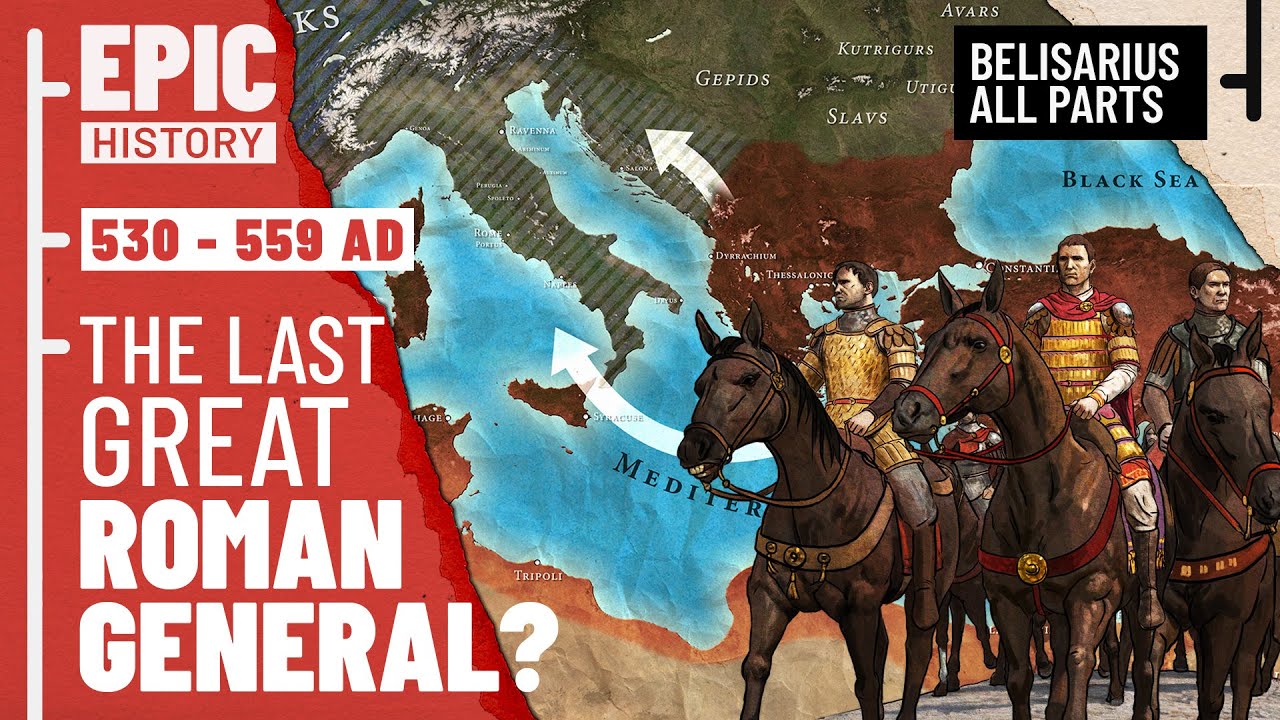
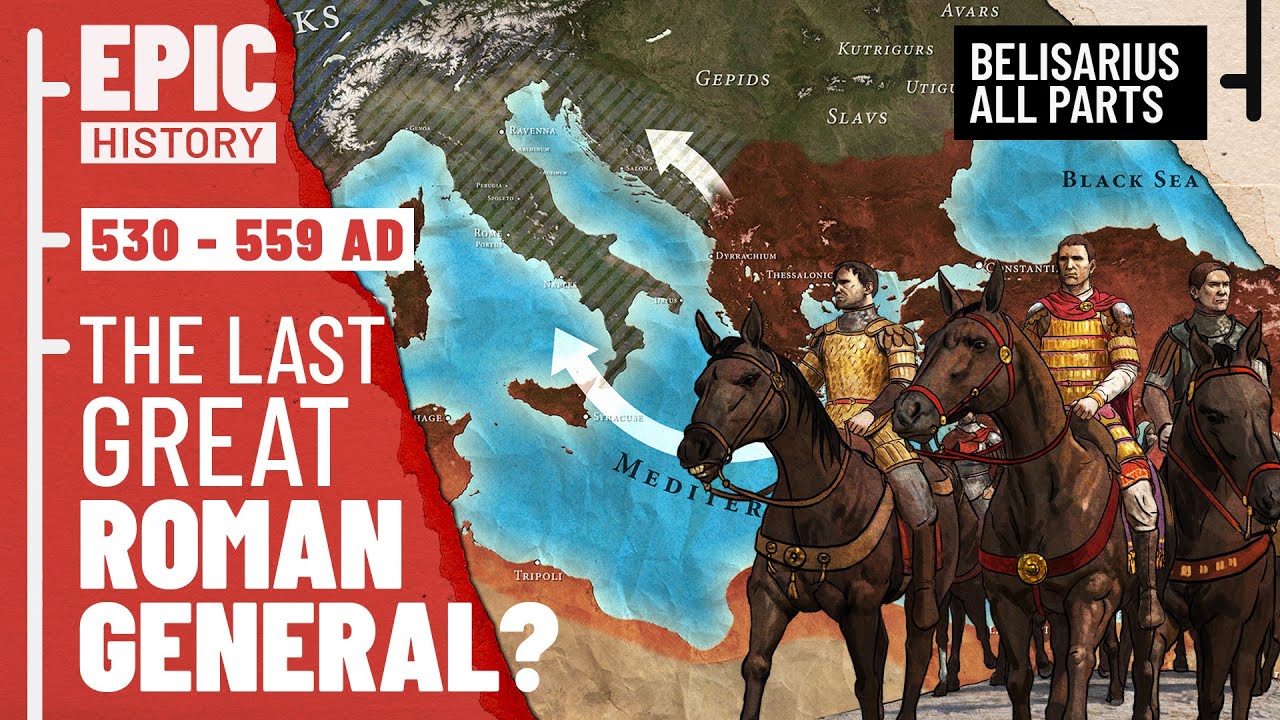
The historical narrative surrounding Flavius Belisarius, a prominent general during the reign of Emperor Justinian in the sixth century AD, reveals a pivotal chapter in the tale of the Eastern Roman Empire. This article examines Belisarius’s military exploits, which led to the reconquest of territories such as Italy and North Africa, previously lost to invading tribes. Utilizing primary sources, including the writings of historian Procopius, the analysis seeks to illuminate the tactical ingenuity and leadership qualities that defined Belisarius’s campaigns, as well as the political and social context of the time.
As the empire faced internal strife and external threats, Belisarius emerged as a central figure in managing these challenges through his victories on the battlefield. The narrative chronicles the strategic reforms in the Roman military structure and highlights the complexities of warfare during a transformative period in history. Furthermore, the discussion underscores Belisarius’s lasting legacy as arguably the last great Roman general, whose contributions continue to resonate in the annals of military history.
Historical Context of the Byzantine Empire
Overview of the Byzantine Empire’s Status in the 6th Century
In the 6th century AD, the Byzantine Empire presented a remarkable juxtaposition of strength and vulnerability. Emerging from the remnants of the Roman Empire, it maintained a significant presence in the eastern Mediterranean, commanding a population of approximately 30 million. Key to its stability were its economic vitality and administrative sophistication, which afforded the empire the ability to manage its extensive territories. Cities like Constantinople stood as bastions of culture and commerce, showcasing the empire’s previous glory while fostering the belief that the Romans had not completely vanished. Yet, despite this apparent resilience, the empire faced myriad challenges, including threats from both internal strife and external adversaries.
The Fall of the Western Roman Empire
The fall of the Western Roman Empire in 476 AD marked a significant turning point not just in European history, but also for its eastern counterpart. As invaders known as “barbarians”—Goths, Vandals, and others—seized control of key territories like Italy and North Africa, the Roman authority in the West crumbled. This decline had profound effects, leading to a fragmented Europe characterized by diminished trade and cultural exchange. In contrast, the Eastern Roman Empire continued to flourish, drawing upon its resilient administrative structures and the economic surplus generated by the provinces. The West’s fall solidified a dichotomy where the Eastern Roman Empire, later termed the Byzantine Empire, began to forge a distinct identity, marked by Christian orthodoxy and a renewed cultural vigor.
Justinian’s Ascent to Power in 527 AD
In 527 AD, Justinian I, a civil servant turned emperor, ascended to the throne, poised to redefine the course of the Byzantine Empire. His background—rising from humble peasant origins in Illyricum—served as both an inspiration and a challenge. Justinian’s reign commenced with ambitious aims: he sought to restore the Roman Empire to its former territories and unify Christendom under a single theological belief. Faced with the legacies of his predecessors, Justinian viewed his ascent not as a mere continuity but as a revitalization of an empire, committed to halting the tides of decline that had engulfed the West. This vision would soon lead him into realms of both legal reform and military conquest, setting the stage for the campaigns carried out by his formidable general, Belisarius.
Justinian’s Ambitions
Religious Goals and the Unity of the Christian Church
Justinian recognized the necessity of religious unity in consolidating imperial power. The era was characterized by deep divisions within Christianity, primarily between the Chalcedonian (Orthodox) and Miaphysite factions regarding the nature of Christ. This schism threatened not only the church’s cohesion but also the stability of the empire itself. In what can be described as a dual mission of faith and governance, Justinian launched initiatives aimed at reconciling these differences. He engaged in theological debates and sought to impose Chalcedonian Christianity as the official dogma, believing that a united church was fundamental to a robust empire, effectively intertwining ecclesiastical and imperial authority.
Legal Reforms: The Corpus Juris Civilis
In conjunction with his religious fervor, Justinian prioritized a sweeping reform of Roman law that culminated in the Corpus Juris Civilis, or the “Body of Civil Law.” This colossal compilation aimed to systematize and clarify existing legal codes, making laws accessible and coherent for the citizens of the empire. It served not only as a legal foundation but also as a mechanism for reinforcing Justinian’s vision of a centralized state. The Corpus Juris Civilis would leave a long-lasting imprint on legal systems in both Western and Eastern traditions, embodying the emperor’s ambition to infuse governance with a sense of justice derived from divine principles, thus establishing a legacy that transcended his reign.
Military Aspirations: Reconquering the Lost Territories
Justinian’s military ambitions were inexorably linked to his vision of empire. He aspired to regain territories lost to the “barbarians,” viewing military conquest as essential to both national pride and Christian duty. His vision extended beyond mere reclamation; he sought to reinstate the idea of a unified Roman Empire, recognizing that military campaigns would serve as demonstrations of divine favor and imperial strength. This aspiration saw the emergence of strategic planning and military reform, laying the groundwork for ambitious campaigns across North Africa and Italy that would soon unfold under the command of General Belisarius.
Belisarius: Early Life and Career
Background and Military Training
Born to a peasant family, Flavius Belisarius’ rise in the Byzantine military hierarchy was atypical for a man of his background. His formative years were spent in the rugged landscapes of Thrace, where he likely received practical military training. This early exposure to the elements of warfare, combined with a natural aptitude for strategy, honed his tactical skills. He acquired firsthand knowledge of both frontline combat and the strategic operations of larger military campaigns. This invaluable experience would lay the foundation for his future role as one of history’s celebrated generals.
Rise to Prominence Under Justinian
Belisarius’ career gained significant momentum when he was appointed by Justinian as commander of troops stationed in the eastern territories. His capabilities came to the fore during conflicts with Persia, where his strategic acumen was tested under duress. As he demonstrated his ability to prevail against formidable opponents, such as at the Siege of Dara, his reputation quickly eclipsed that of many contemporary commanders. This growing trust culminated in Belisarius being entrusted with monumental campaigns upon Justinian’s orders, marking him as a pivotal figure in the emperor’s ambitious plans for reconquest.
First Military Leadership Roles
His early military leadership roles were characterized by a blend of tactical innovations and unyielding resolve. Belisarius’ approach was both adaptive and ambitious; he transformed the Byzantine military from a passive defensive force into an agile, offensive combat unit. His successful strategies during the Persian Wars both secured key victories and enhanced his standing within the imperial court, culminating in his escalated authority and responsibilities that would soon extend to the broader scope of Justinian’s military ambitions.
The Persian Wars
Initial Conflicts and Strategic Importance of the Persian Front
The Persian Wars represented a fundamental aspect of Justinian’s military agenda. Situated on the eastern frontier, the Persian Empire posed an acute threat to Byzantine stability. This geographical reality dictated a need for vigilant military engagement. The region’s strategic importance could not be understated; it was crucial for securing trade routes and ensuring the safety of various territories within the empire. Initial skirmishes often escalated, prompting both empires to fortify their defenses and engage in preemptive strikes, illustrating the delicate balance of power in the region that required skilled military leadership.
Key Battles: The Siege of Dara
The Siege of Dara in 530 AD exemplified the complexities and stakes entwined within the Persian Wars. Belisarius commanded a force significantly outnumbered, tasked with defending this vital outpost against a Persian army led by the formidable General Kavad. Through ingenious use of fortifications, strategic counterattacks, and cohesive troop movements, Belisarius managed not only to withstand the siege but also to repel the attackers after a series of brilliantly executed maneuvers. His success at Dara not only showcased his military prowess but also fortified Byzantine morale, echoing through the corridors of power in Constantinople and reinforcing Justinian’s vision of reclaiming lost glory.
Belisarius’s Tactics and Military Innovations
Belisarius’s tactical innovations were paramount to his success in the Persian Wars. Learning from previous military encounters, he integrated lessons about the effective use of cavalry and the importance of mobility into his strategies. He transformed the traditional Roman legions by incorporating heavier cavalry units—known as clibanarii—and enhancing the role of archers at critical points in battle. These adjustments allowed him to develop a more flexible combat style that could swiftly respond to the dynamic nature of warfare, mitigating the risks posed by larger enemy forces.
The Vandalic War
Justinian’s Proclamation of War Against the Vandals
The Vandalic War marked another significant chapter in Justinian’s broader military ambitions. In 533 AD, buoyed by earlier successes in the Persian Wars, Justinian proclaimed war against the Vandals, who had established a stronghold in North Africa after displacing the Roman authority in the region. Seeing the reconquest of North Africa not only as a strategic necessity but also as a moral duty to reclaim territories that belonged to Christendom, Justinian appointed Belisarius to lead this audacious campaign. This directive set the stage for a military operation of significant consequence.
Key Battles and Strategies Employed by Belisarius
During the Vandalic War, Belisarius demonstrated his expertise in rapid warfare. The campaign unfolded swiftly, characterized by two pivotal battles: the landing at Caput Usitatum and the decisive battle at Thapsus. By applying a combination of tactical surprise and effective logistics, Belisarius achieved victories that would culminate in the fall of Carthage in a remarkably short period. His strategies included exploiting local knowledge and engaging with local allies, thus maximizing the limited resources at his disposal. This approach reinforced the notion that military success was not solely reliant on the size of the force but rather on the efficacy of command and the excellence of execution.
The Fall of Carthage and Its Significance
The fall of Carthage carried immense significance for both the Byzantine Empire and the broader historical landscape. It signified not only a strategic victory but also a restoration of Roman pride in territories that had long been deemed lost. Belisarius’s triumph reaffirmed Justinian’s apotheosis of restorative imperial authority and illustrated the effectiveness of a unified military under competent leadership. The conquest laid the groundwork for subsequent campaigns and presented an assertive re-establishment of Byzantine influence in the Mediterranean, setting a precedent for future military endeavors.
The Gothic Wars
The Context of the Conflict in Italy
The Gothic Wars epitomized a different sort of struggle, one rooted in the complex tapestry of power dynamics in Italy. With the Ostrogothic Kingdom asserting dominance over Italy, the region became embroiled in conflict as Justinian sought to reclaim lands integral to Roman history and legacy. The political machinations and ongoing discord characterized the backdrop against which Belisarius would operate. The resurgence of Roman authority was as much about militaristic endeavors as it was about reestablishing a unifying cultural identity across the empire, making this conflict both personal and strategic.
Major Battles: The Siege of Rome
The Siege of Rome in 537 AD represented the apex of the Gothic Wars, with Belisarius leading the Byzantine forces against a city besieged by Goths. Employing ingenuity in fortifications and strategic deception, Belisarius ingeniously reinforced the city’s defenses while searching for opportunities to break the siege. Despite being severely outnumbered, Belisarius’s leadership inspired unwavering loyalty among his troops. His tactical brilliance in coordinating counterattacks ensured that the city remained under imperial control, thus preventing Gothic forces from establishing dominance over this historically iconic city.
The Capture of the Gothic Stronghold
The culmination of the Gothic Wars materialized with the capture of key strongholds, eventually leading to the defeat of the Gothic forces. Through meticulous planning and incisive assaults, Belisarius seized important locations that disrupted the Goths’ supply lines, thereby undermining their position. The fall of these strongholds symbolized the reassertion of Byzantine authority in Italy and underscored the effectiveness of Belisarius’s military strategies that had evolved through previous campaigns, blending speed with overwhelming force.
Military Innovations and Tactics
Reforming the Roman Army: New Structures and Units
One of the distinguishing marks of Belisarius’ campaigns was his profound influence on the structure and organization of the Byzantine military. As he embraced the lessons learned from earlier conflicts, a new army structure emerged that focused on swift, specialized units. He formed distinct cavalry divisions, integrated archers more prominently, and established elite units such as the bucellarii. These reforms revolutionized the military landscape, enabling the Byzantine army to mobilize quickly and adapt its strategies to the evolving realities of warfare.
The Importance of Cavalry and Archers
Belisarius’ innovative tactics underscored the pivotal role played by cavalry and archers. The newly developed heavy cavalry, equipped with the latest armor and weaponry, emerged as an essential component of his strategy. Coupled with the expertise of archers skilled in using composite bows, these units offered a versatility that traditional infantry faltered to match. This focus on mobility and firepower enabled Belisarius to deploy forces more effectively in battle, outflanking enemies and creating tactical advantages previously unachievable in Roman military doctrine.
Integration of Barbarian Troops into the Roman Military
Moreover, Belisarius’ willingness to integrate formerly marginalized barbarian troops—such as the Goths and Huns—into the Roman military further diversified the composition of his forces. This integration not only strengthened the army’s capacity but also facilitated a necessary reconciliation between former enemies and the imperial authority. By leveraging the experience and skills of these troops, Belisarius enhanced the overall effectiveness of the Byzantine military, reflecting a broader recognition that the empire’s strength lay not solely within its traditional formations but also in the ability to adapt and innovate.
Procopius: The Historian’s Perspective
Life and Background of Procopius
Procopius emerged as a pivotal figure in the historical account of the Byzantine Empire during the 6th century. Born around 500 AD in Caesarea, Palestine, he received an elite education that prepared him for a career deeply intertwined with the imperial court. As a trusted advisor to General Belisarius, and later as a historian, Procopius witnessed firsthand the majesty and the tumult of Justinian’s reign. His narrative unfolded against the backdrop of an empire in flux, with his works reflecting a complex understanding of political, military, and social dynamics.
His Significant Works: The Wars and the Secret History
Procopius is best known for his monumental writings, The Wars and The Secret History. In The Wars, he chronicled the military campaigns undertaken by Belisarius, providing invaluable insight into the strategies, tactics, and personalities at play during this transformative period. This account offers not only a detailed analysis of numerous battles but also serves as a testimonial to Belisarius’ military genius. Conversely, The Secret History paints a rather unflattering portrayal of Justinian and Theodora, revealing the complexities and deceptions beneath the surface of their rule. This dual lens presents historians and readers with a multifaceted understanding of an era steeped in contradiction.
Bias and Reliability in Historical Accounts
However, as with any historical narratives, Procopius’ accounts warrant critical examination. His admiration for Belisarius sometimes clouded his objectivity, raising questions about bias and reliability. The contrast between his two works, with one lauding the emperor’s military achievements while the other viciously critiques the same emperor’s policies and character, illustrates the nuanced layers of allegiance Procopius navigated. This blend of reverence and critique enriches our understanding of the period, revealing the Kaleidoscope of perspectives that marked Byzantine historiography.
Belisarius’s Leadership Style
Tactical Brilliance and Defensive Strategies
Belisarius’s leadership style encapsulated a blend of tactical brilliance and adaptive strategies that revolutionized Byzantine warfare. His preference for defensive maneuvers, complemented by calculated counterattacks, showcased a sophisticated understanding of military engagement. Belisarius often utilized terrain and fortifications to his advantage, transforming potential weaknesses into formidable defensive positions. This versatility not only secured immediate victories but also instilled confidence among his troops and commanders, reinforcing his reputation as a general capable of outstrategizing formidable opponents.
Inspiration and Morale: Leading by Example
At the core of Belisarius’s effectiveness was his ability to inspire those under his command. He led by example, frequently placing himself directly at the forefront of engagements, promoting morale, and demonstrating resolute leadership in challenging circumstances. His capacity to forge bonds with his soldiers engendered loyalty and camaraderie, factors that proved essential during prolonged campaigns. This intrinsic motivation, coupled with a shared sense of purpose, solidified Belisarius’s eminence and ensured rising support for imperial ambitions.
Humanity in Warfare: Treatment of Prisoners and Civilians
Importantly, Belisarius’s approach to warfare distinguished him from many of his contemporaries. His humane treatment of prisoners and civilians during military campaigns endured as a hallmark of his leadership. Rather than resorting to brutal reprisals, Belisarius understood the long-term implications of warfare on civilian populations and chose restraint where others would not. This strategic humanity not only helped maintain regional stability during and after conflict but also enhanced the perception of Byzantine authority as just and benevolent—ideals essential to the restoration efforts championed by Justinian.
Conclusion
Belisarius’s Impact on Byzantine Military History
Belisarius remains one of the most pivotal figures in Byzantine military history, a paragon of leadership whose strategies and innovations shaped the empire’s military doctrine for generations. His military campaigns executed under Justinian marked a significant era of resurgence, reclaiming territories lost to foreign powers and reinforcing the legitimacy of Byzantine authority. The legacy of Belisarius endures not only in military texts but also in the cultural memory of an empire that, at its zenith, sought to recreate the glory of Rome.
Evaluation of Whether He Was the Last Great Roman General
Though some may contend that Belisarius stands as “the last great Roman general,” this categorization may overlook the broader definitions of military leadership that emerged in the evolving Byzantine context. While he indeed exemplified the qualities of a great strategist and tactician, the dynamic landscape of warfare and political power necessitated that subsequent leaders adapt to an ever-changing world, redefining the parameters of military success. Thus, while his contributions cannot be diminished, evaluating his place in the annals of military history requires a nuanced understanding of the complexities that followed his era.
Reflections on the Long-Term Effects of Justinian’s Wars
The wars waged during Justinian’s reign, prominently featuring Belisarius’s military campaigns, had profound long-term repercussions. They reshaped the maps of medieval Europe and North Africa while leaving a legacy of administrative and military reforms that influenced future generations. Moreover, the emphasis on legal codification and military strategy pursued by Justinian and Belisarius fostered a cultural renaissance, setting precedents for Byzantine governance that would resonate throughout subsequent centuries. The impact of these endeavors not only preserved the essence of Roman civilization but also established a durable foundation for the Byzantine Empire’s multifaceted identity, demonstrating that the echoes of history often carve pathways into the future.