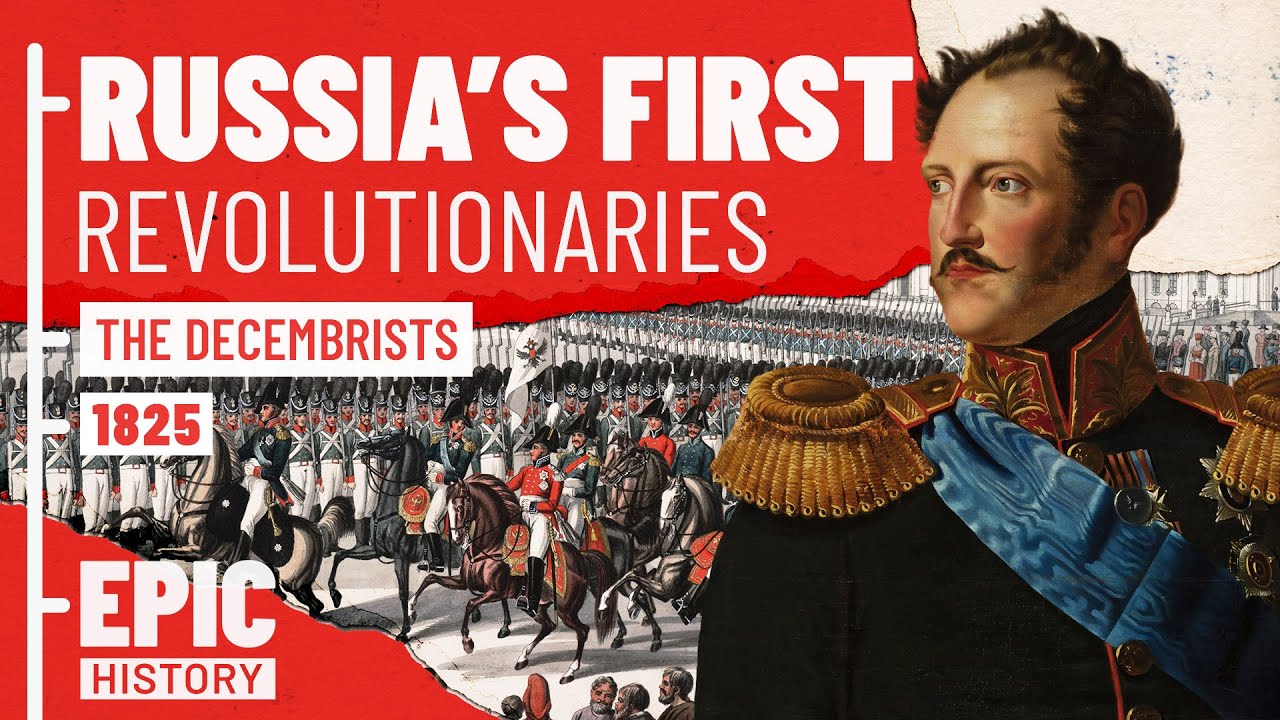
The legacy of the Decembrists emerges from a critical juncture in Russian history, whereby a cadre of young aristocrats and army officers sought to challenge the entrenched autocracy of Emperor Alexander I. Their aspirations for reform became increasingly pronounced in the wake of the Napoleonic Wars, as many were inspired by European liberalism encountered during their military campaigns. Despite initial hopes for progressive change under Alexander’s reign, the Emperor’s retreat from liberal ideals prompted these individuals to organize clandestinely, ultimately culminating in the Decembrist revolt of December 1825.
This article will examine the formation of secret societies among disillusioned officers, the ideological underpinnings of their revolutionary ambitions, and the consequences of their failed uprising. An analysis of the Decembrists’ proposals and the political climate of the era illustrates both the immediate and enduring impacts of their actions, highlighting their role as precursors to future reform movements in Russia. Their bold efforts to envision a constitutional framework for the nation, although thwarted, sowed the seeds for subsequent generations to aspire toward a more just and equitable society.
Russia’s First Revolutionaries: The Decembrists

Overview of the Decembrists
Definition and Origins
The Decembrists were a group of young Russian aristocrats and army officers who emerged in the early 19th century, driven by aspirations for liberal reform in Russia. This cohort, shaped by their experiences during the Napoleonic Wars, returned home with a newfound commitment to modernizing Russia’s autocratic regime. They found themselves disillusioned with the rigidly conservative policies of Emperor Alexander I, leading to their quest for change through political means, including revolution. Their name, derived from the month of their ill-fated uprising in December 1825, symbolizes a pivotal moment in Russian history—one that straddles the divide between the autocratic traditions of the past and the burgeoning ideas of reform that would later shape the nation.
Key Figures and Members
Prominent among the Decembrists were influential individuals who played significant roles in shaping both the organizational structure and revolutionary aspirations of the movement. Notable figures include Nikita Muravyov, a captain in the elite Guard division, who articulated plans for constitutional reform; Sergei Muravyov-Apostol, a colonel who led movements in Ukraine; Prince Sergei Trubetskoy, a celebrated war hero tasked with leading the Decembrist insurrection in St. Petersburg; and Pavel Pestel, a decorated officer and radical thinker advocating for a republic devoid of monarchy. Each contributed uniquely to the collective vision for a reformed Russia, harnessing their aristocratic backgrounds and military experiences to challenge the status quo.
Goals and Aspirations
At the heart of the Decembrists’ mission was the desire to abolish serfdom and establish a constitutional monarchy that embraced the principles of representative governance, akin to the ideals observed in Western Europe and the United States. They drafted various constitutions, which collectively sought to promote civil liberties, a legislative assembly, and legal equality. This group’s aspirations reflected an acute realization of state inefficiencies and societal injustices that permeated the vast landscape of imperial Russia, ultimately leading them towards revolutionary action as a means to effecting substantial change.
Disillusionment with Alexander I
Initial Liberal Intentions
Initially, Emperor Alexander I exhibited a desire to implement liberal reforms after ascending to the throne in 1801. Encouraged by the ideals of the Enlightenment and the socio-political changes occurring in Europe, he inspired hope among his subjects, including the Decembrists. His early policies showed promise; for instance, the 1803 decree allowing landowners to emancipate their serfs heralded a potential shift towards modernity and greater personal freedom within the tightly controlled Russian empire.
Rejection of Reform
However, this promise quickly diminished. Following the trauma of the Napoleonic Wars, especially after the 1812 invasion, Alexander’s attitude towards reforms hardened. Influenced by a resurgence of religious sentiment and the belief in a divine mission for Russia, he increasingly viewed liberal initiatives as threats to the established order. Consequently, he rejected calls for democratic governance and maintained stringent control over the populace, reverting to autocratic measures that stifled dissent and disabled effective governance.
Impact on the Decembrists’ Ideals
This trajectory of disillusionment fostered a profound frustration among the Decembrists, who hoped to ally with Alexander in their quest for reform. His rejection of their ideals catalyzed their resolve to pursue radical actions. The realization that the emperor would not support their vision of reform necessitated a strategic shift: they began organizing in secretive societies to rally support and plan for an uprising.
Formation of Secret Societies
Purpose and Structure of the Societies
In response to their growing disillusionment, the Decembrists formed clandestine societies aimed at orchestrating a revolution. These groups sought both to educate the public and to consolidate their plans for political change. The secretive organizational structure allowed them to operate under the radar of the oppressive government, fostering a sense of solidarity among like-minded individuals seeking a radical transformation of Russian society.
Notable Societies: Union of Salvation and Union of Prosperity
Two of the principal secret societies were the Union of Salvation and the Union of Prosperity. The Union of Salvation, founded in 1816, consisted of influential army officers driven by a shared vision of constitutional reform and public enlightenment. This society later merged with the more radical Union of Prosperity, which aimed to eliminate serfdom, expand education, and promote civil rights. The Green Book, a foundational document for the Union of Prosperity, delineated its objectives of establishing a constitutional framework and advocated for a more enlightened citizenry that could support reform efforts.
Activities and Revolutionary Plans
The Decembrists dedicated themselves to drafting constitutions, sharing revolutionary literature, and ultimately igniting a collective consciousness about the need for change. They also engaged in widespread discussions about governance ideals, drawing upon Enlightenment philosophy. However, underlying their intellectual pursuits were concrete plans for insurrection, culminating in a desperate attempt to seize political power during the succession crisis that followed Alexander’s unexpected death.
Historical Context
Aftermath of the Napoleonic Wars
The end of the Napoleonic Wars in 1815 marked a critical juncture for Russian society. While the Russian Empire emerged as one of the victors, the war exposed deep-seated issues regarding governance, social stratification, and the mechanisms of power. Many returning soldiers and officers, disillusioned by their experiences, began to critically assess the legitimacy of autocracy in a rapidly changing European landscape.
Contrasts with Western Influences
In contrast to the absolute rule of the Russian monarch, emerging Western European nations like France and Britain embraced constitutional changes and democratic ideals. Russian officers encountered these transformative ideas while serving abroad, igniting a sense of urgency for reform upon their return home. The stark contrast between the freedoms experienced in Europe and the oppressive conditions in Russia intensified aspirations for a more just and equitable society.
Emergence of Revolutionary Ideas
The ideological currents flowing from the Enlightenment and Romanticism began to permeate Russian intellectual circles, providing the Decembrists with a conceptual framework to articulate their discontent. The works of liberal philosophers and revolutionaries informed their beliefs in democracy, equality, and civil rights. This intellectual blossoming paved the way for a new generation that sought to reshape the fabric of Russian society and governance.

Influence of European Ideas
The Enlightenment and Liberal Reform
The Enlightenment exerted substantial influence on the Decembrists, providing a philosophical underpinning for their aspirations. Concepts such as human rights, social contracts, and the separation of powers became integral to their revolutionary vision. The Decembrists believed that a transition to a constitutional monarchy was essential not only for political stability but also for the moral and ethical elevation of society as a whole.
Interaction with European Peers
As many Decembrists had served with or alongside Western officers during the Napoleonic Wars, their exposure to European revolutionary ideas shaped their perspectives. These interactions cultivated a belief in the universality of Enlightenment ideals, encouraging them to advocate for similar reforms in Russia. They perceived their struggle not only as a national endeavor but as part of a broader movement toward liberty that transcended borders.
Incorporation of Western Ideals into Russian Thought
The Decembrists actively incorporated Western political theories into their own proposals for Russia. They saw the establishment of a constitution as a necessary evolution for their country, suggesting a separation of powers and the establishment of representative institutions. This integration of Western ideals not only illuminated their own paths for reform but also positioned their movement within the larger narrative of 19th-century global political change.
Rise of the Decembrists’ Movements
Founding of the Union of Salvation
The Union of Salvation was founded in 1816 by a group of idealistic young officers, disillusioned with the stagnation of reform under Alexander I. This inaugural society aimed to awaken a sense of civic responsibility and lay the groundwork for constitutional change in Russia. Their gatherings were characterized by earnest discussions of political philosophy, governance, and the dire need for change, embodying the collective frustrations of an army that had bled in the name of freedom abroad yet returned to authoritarianism at home.
Coalescence of the Union of Prosperity
As the movement flourished, the Union of Salvation would later merge with other secret societies, forming the Union of Prosperity. This coalition signified a strengthening of revolutionary intent, as members unified around a shared vision of a constitutional government that promised to eradicate serfdom and implement education reforms. The Union of Prosperity became a critical voice for change, galvanizing support among those who yearned for a more enlightened society.
Impact of Leadership on Society Goals
The leadership within these societies played a vital role in shaping their goals. Figures such as Pestel and Muravyov articulated concrete plans for governmental structure and socio-economic reform. Their élan and determination inspired fellow officers and civilian sympathizers to commit to the cause, fostering an environment where revolutionary aspirations could take root in the hearts and minds of their compatriots.
Political Climate Under Alexander I
Autocracy and Authoritarian Rule
During Alexander I’s reign, the political climate was increasingly characterized by autocracy. Despite his initial liberal inclinations, his governance became more draconian, emphasizing centralized control. Laws were tightened, censorship intensified, and any dissent was ruthlessly quashed. This atmosphere stifled political discourse and alienated many segments of society, notably the military elite yearning for reform.
Factors Contributing to Discontent
Several intertwined factors begot widespread dissatisfaction among the Decembrist cohort. The grim realities of serfdom, socioeconomic disparity, and the absence of political representation fostered a volatile environment. Additionally, negative responses to military hardships experienced during war, alongside sentiments of betrayal stemming from failed reform promises, transformed idealistic ambitions into a burgeoning revolutionary fervor among the officers.
Role of the Military in Political Change
The military acted as a fertile ground for revolutionary thought, harboring networks of like-minded individuals disillusioned by the state. The experiences of soldiers who had fought for their country only to return to oppressive conditions spurred revolutionary zeal. Moreover, the military institution itself provided a degree of organization and discipline that would later facilitate the planning and execution of the Decembrists’ rebellion.
The Decembrist Revolt
Chronology of Events on December 14, 1825
The Decembrist Revolt erupted on December 14, 1825, amidst the chaotic atmosphere following Emperor Alexander I’s death. With the sudden ascension of his brother Nikolai, a faction within the Decembrists sought to challenge the legitimacy of the new emperor. Ill-prepared yet driven by conviction, they attempted to seize the Winter Palace, leading to a standoff that culminated in violent confrontations with loyalist forces.
Key Leaders and Their Roles
Central to the revolt were pivotal figures like Sergei Trubetskoy, who spearheaded initial efforts to instigate the uprising in St. Petersburg, and Pavel Pestel, whose radical ideology pushed for a republic devoid of monarchy. Their leadership demonstrated a blend of tactical ambition and ideological fervor, yet deep-seated divisions between moderates and radicals within the Decembrist ranks ultimately hampered their coordinated efforts.
Goals of the Uprising
The Decembrist uprising was motivated by a desire for radical political reform, including the establishment of a constitutional monarchy, the abolition of serfdom, and the implementation of civil rights. They envisioned a modern Russia that aligned with the Enlightenment ideals that had shaped their understanding of governance. However, the lack of a cohesive strategy and the element of surprise led to the revolt’s failure, with many of its key figures arrested or executed.
Outcome and Legacy of the Revolt
Immediate Consequences for Leaders
Following the failure of the Decembrist Revolt, the immediate consequences were dire for its leaders. Many were executed, such as Pestel, while others faced harsh imprisonment in Siberia. The upheaval highlighted the risks associated with revolutionary pursuits in an autocratic state, serving as a grim reminder of the sociopolitical realities deeply entrenched within Russian society.
Long-term Influence on Future Reform Movements
Despite its immediate failures, the Decembrist Revolt had enduring ramifications for future reform movements in Russia. Their ideals and aspirations would resonate through subsequent generations of reformers and revolutionaries who continued to grapple with the question of state governance and individual rights. The Decembrists’ struggle marked a foundational moment that laid the groundwork for further revolutionary efforts throughout the 19th and into the 20th century.
Cultural and Historical Recognition
Culturally, the Decembrists became martyred figures, representing the unyielding spirit of those who aspired for justice and equality in the face of oppressive rule. Their legacy is commemorated in literature and history as symbols of resistance against tyranny, advocating for civil rights and social progress in Russia. The name “Decembrist” has transcended its original context to become synonymous with revolutionary ideals in Russian consciousness.
Conclusion
The Enduring Impact of the Decembrists
The Decembrists remain an essential touchstone in the narrative of Russian history, symbolizing the clash between autocratic governance and the yearning for reform. Their aspirations may have been thwarted in their time, yet their ideals continue to echo throughout the ages, propelling the discourse around governance, rights, and justice within the Russian landscape.
Lessons Learned from Their Struggle
The Decembrists’ experience underscores vital lessons about the complexities of revolutionary action. Their passionate commitment to reform in the face of adversity illustrates the volatility inherent in challenging established orders. As we reflect on their legacy, it becomes evident that the struggle for rights and reform persists as a timeless endeavor inherent in the human experience.
Continuity of Revolutionary Thought in Russian History
In the broader context of Russian history, the Decembrists represent the initial spark of revolutionary thought that ignited subsequent movements, culminating in the seismic upheavals of the 20th century. Their intellectual and moral courage illuminated pathways for future generations, reminding us that even the most audacious efforts can lay the groundwork for transformative societal change. The continued examination of their legacy provides critical insights into the ongoing dialogue regarding governance, justice, and the pursuit of an equitable society.