
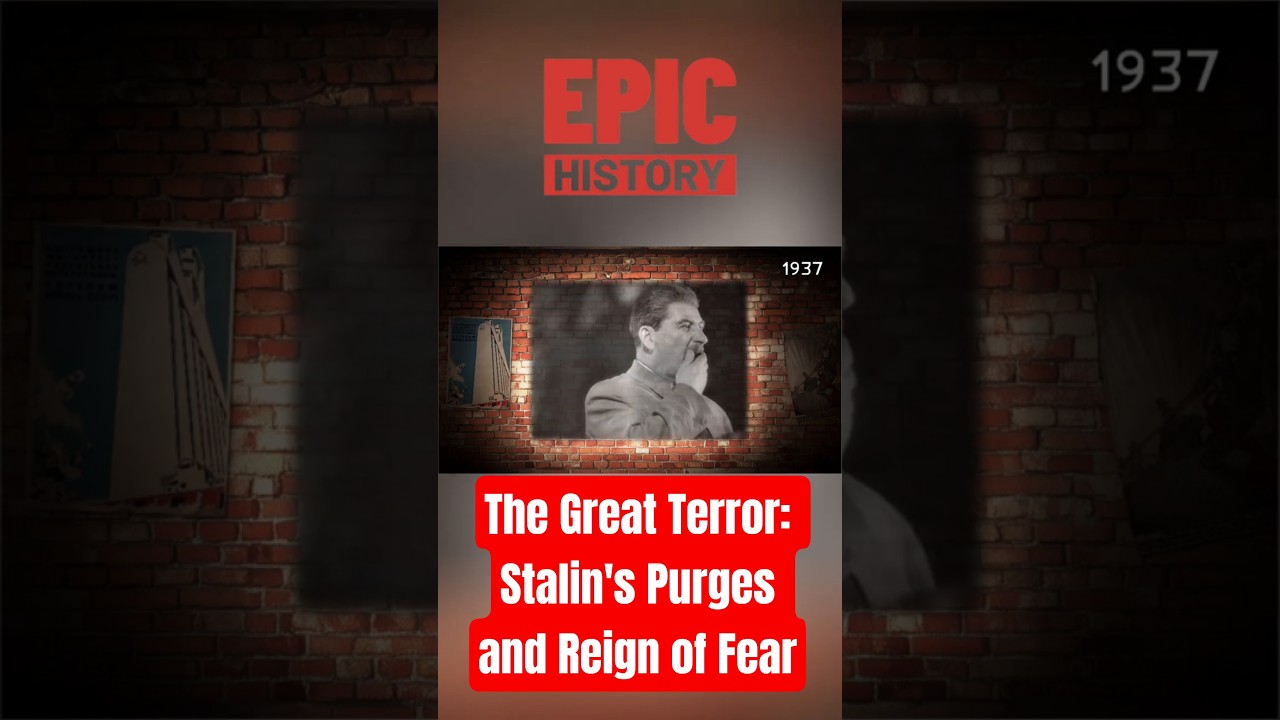
The period known as the Great Terror represents a harrowing chapter in Soviet history, characterized by Stalin’s aggressive purges from 1936 to 1938. During this time, a climate of fear permeated society as political adversaries, intellectuals, military personnel, and ordinary citizens became targets of state-sanctioned repression. This series of events, spurred by Stalin’s paranoia following Sergei Kirov’s assassination, resulted in the execution of over 700,000 individuals and the imprisonment of millions in the Gulag, fundamentally reshaping the power dynamics within the Communist Party.
Central to this tumultuous era were figures such as Nikolai Yezhov, who led the NKVD in orchestrating notorious show trials that employed torture to extract false confessions from victims. The consequences of the Great Terror extended beyond immediate human loss; it significantly undermined the Red Army’s leadership and instilled a pervasive atmosphere of mistrust and betrayal among citizens. This examination serves as a cautionary tale regarding the dangers of unchecked authoritarianism and the profound human costs associated with the consolidation of power.
The Great Terror: Stalin’s Purges and Reign of Fear
The Context of the Great Terror
Political Landscape in the Soviet Union Pre-Purges
Before the Great Terror unfolded between 1936 and 1938, the Soviet Union functioned within a distinctly precarious political environment influenced by the aftermath of the Russian Revolution and the subsequent civil war. You would note that the Bolshevik regime, having succeeded in overthrowing the old order, was still in the throes of internal conflict and dissent. Various factions, ranging from moderate socialists to outright counter-revolutionaries, posed continual threats to the consolidation of communist power. You would observe that the political landscape was volatile, marked by an ongoing struggle for control, where the foundation of the newly established state was still under siege from remnants of the old regime and ideological opponents within.
Stalin’s Rise to Power and Consolidation of Authority
Stalin’s ascent to power epitomizes a ruthless bureaucratic cunning coupled with a strategic elimination of rivals. As you analyze the unfolding events, it becomes clear that following Lenin’s death in 1924, Stalin maneuvered within the Communist Party to gradually oust key figures, notably Leon Trotsky, who posed significant challenges to his authority. The years leading up to the Great Terror reflect your understanding of power dynamics, where manipulation and silence became tools of governance. By the time of Kirov’s assassination, Stalin had established a near totalitarian grip on the party apparatus, exemplifying not just the elimination of opposition, but also a pervasive atmosphere of fear and oppression.
Impact of Sergei Kirov’s Assassination
The assassination of Sergei Kirov in December 1934 served as a watershed moment which precipitated the purges. As you delve deeper into this context, you might recognize that Kirov’s popularity threatened Stalin, who perceived him as a potential rival. His murder provided a pretext for Stalin to launch a sweeping campaign of repression, couched in the language of protecting the revolution. This incident unveiled your glimpse into Stalin’s psychology—his paranoia regarding threats real and imagined catalyzed the implementation of widespread purges that would redefine the Soviet state.
Mechanisms of Repression
Role of the NKVD in the Purges
You would find it pertinent to focus on the role of the NKVD (People’s Commissariat for Internal Affairs), which became the primary instrument of Stalin’s terror. Empowered with near-unlimited authority, the NKVD facilitated mass arrests, executions, and surveillance, instilling fear throughout Soviet society. Under the leadership of figures like Nikolai Yezhov, the NKVD transformed into a repressive force that silenced dissent, as you might explore through documents and testimonies depicting their brutal methods.
Show Trials and Fabricated Confessions
The show trials that punctuated the Great Terror reflected a grim theatricality, where the judicial process was perverted to serve the state’s objectives. You would examine the orchestrated confessions, often extracted through torture, that painted defendants—many of whom were loyal communists—as conspirators against the state. These public trials served not only as a means of punishment but also as a spectacle, reinforcing the narrative that enemies were lurking within to undermine socialism. Through this lens, you grasp the dual function of fear and spectacle in consolidating Stalin’s power.
Arrest Quotas and Their Implications
As you consider the chilling statistics surrounding the Great Terror, the concept of arrest quotas emerges as a critical mechanism. The NKVD was mandated to meet predetermined quotas for arrests, a policy that transformed ordinary citizens into informants and accusers. This systemic brutality had profound implications—friends became enemies, as you would analyze the social fabric of Soviet life, torn apart by the relentless demands of the state. The quotas created an atmosphere of paranoia where the loyalty of acquaintances could no longer be taken for granted.
Key Figures and Their Roles
Joseph Stalin’s Influence and Motivations
In scrutinizing Joseph Stalin’s tyrannical grip during the Great Terror, it is essential to understand not only his political strategies but also his psychological motivations. You might argue that Stalin’s fierce pursuit of absolute power was driven by an inherently paranoid mindset. Recognizing perceived enemies everywhere around him, he justified the purges as necessary for the security of both the Soviet regime and the communist ideal. His motivations extend beyond mere speculation, rooted in personal experiences and historical traumas that shaped his worldview.
Nikolai Yezhov: The Face of the Purges
Nikolai Yezhov emerges as a central figure in the orchestration of the Great Terror, often dubbed the “bloody dwarf” for his ruthless execution of Stalin’s orders. In your studies, you would appreciate how Yezhov personified the terror applied against the Soviet populace—a bureaucrat who effectively executed Stalin’s far-reaching ideology through terror. His eventual downfall, resulting in his own execution, illustrates the peril of operating in a climate devoid of loyalty, showcasing the volatility of Stalin’s inner circle.
Impact of Other Officials and Party Members
The involvement of other high-ranking officials complicates the narrative, revealing a complex interplay of ambition, fear, and complicity. As you explore these relationships, figures such as Lavrentiy Beria and others within the Communist Party exemplify how bureaucratic ambition often eclipsed morality. The willingness of these individuals to participate in the purges heightened the brutality experienced during the Great Terror, further consolidating Stalin’s absolute control over the Soviet Union.
Targeted Groups and Victims
Political Rivals and Old Bolsheviks
You would observe that the Great Terror primarily targeted political rivals and Old Bolsheviks, many of whom had been pivotal in the revolution yet found themselves accused of various crimes. Figures like Trotsky’s allies were eliminated, signaling a comprehensive erasure of dissent within the party ranks. The systematic liquidation of established leaders underscored Stalin’s quest to create a compliant party structure, devoid of challenge or criticism.
Intellectuals and Cultural Figures
The purges extended beyond political figures into the realms of intellectuals and cultural leaders, stifling dissenting voices across literature and art. You would study how this cultural repression aligned with Stalin’s vision of socialist realism, where artists had to conform to party ideology or face dire consequences. The collateral damage inflicted upon cultural expression reflected your understanding of the broader implications of such oppression on society’s moral compass.
Military Leadership and Its Consequences
The purging of military leadership, particularly within the Red Army, yielded significant consequences as the Soviet Union approached the Second World War. You would analyze how the execution and imprisonment of experienced military commanders severely weakened the Soviet military’s operational effectiveness. As a result, you might conclude that Stalin’s purges not only crippled the leadership but left a legacy of distrust within the ranks, compromising the Red Army’s preparedness for conflict.
The Gulag System and Its Expansion
Conditions of Imprisonment in the Gulags
Your investigation into the Gulag system reveals a grim reality marked by inhumane conditions. The camps, designed for forced labor and political repression, were places of suffering and deprivation. You would find that the harsh environments, coupled with insufficient food and brutal treatment, led to countless deaths, spotlighting the horrific human cost of Stalin’s policies.
Forced Labor and Its Economic Impacts
Forced labor from the Gulag system became a significant economic resource for the Soviet Union, fueling industrial projects under Stalin’s Five-Year Plans. You would examine how this exploitation further ingrained the logic of repression into the Soviet economy, where the suffering of imprisoned individuals became a driving force behind national progress. This paradox showcases the moral conflicts that emerge when economic growth is predicated upon systemic injustice.
Long-term Effects on Soviet Society
The long-term effects of the Gulag system permeated Soviet society, influencing not only those who were directly impacted but also the broader public consciousness. You would consider the pervasive trauma inflicted on millions of families, affecting the social fabric of the nation long after the purges had ended. This buried history, laden with grief and loss, continued to shape collective memory and identity within the Soviet context.
Impact on the Communist Party
Elimination of Dissent Within Party Ranks
The impact of the Great Terror on the Communist Party was multifaceted, as dissent was systematically eradicated, leaving a climate of fear. You would argue that the purges reinforced Stalin’s authority but simultaneously created a culture of sycophancy within the party, where loyalty was valued over competence. The elimination of dissent became a political tool that stifled innovation and critical thought, hindering the development of Soviet governance.
Shifts in Leadership and Ideology
You would note that the Great Terror catalyzed a shift in leadership and ideology within the Communist Party, as Stalin sought to align the party more closely with his vision. Traditional Bolshevik principles were subverted in favor of a monolithic ideology centered around Stalin’s personality. This realignment had lasting implications, constructing a narrative where ideological conformity became synonymous with allegiance.
Consequences for Future Party Dynamics
The consequences of the Great Terror would echo through subsequent decades, as the party emerged more homogenized but also increasingly detached from the populace it governed. You might consider how the fear instilled during this period hindered meaningful dialogue and dissent, consolidating a legacy that would ultimately contribute to the stagnation experienced during the later years of the Soviet Union.
Widespread Fear and Societal Impact
Psychological Impact on the Soviet Populace
The societal impact of the Great Terror resonated profoundly on a psychological level, instilling a pervasive sense of fear and distrust. You would examine how the constant threat of denunciation and arrest altered interpersonal dynamics, shaping behaviors and attitudes among citizens. The atmosphere of terror transformed trust into suspicion, deeply affecting daily life.
Neighbors Turning Against Each Other
In a chilling manifestation of paranoia, neighbors often turned against each other, fueled by fear or opportunism. You would analyze how this betrayal reflected a societal breakdown of solidarity, as individuals sought to protect themselves at the expense of their communities. The erosion of human connections was one of the most haunting legacies of the Great Terror, indicative of a profound moral collapse.
Cultivating a Culture of Suspicion
The pervasive climate of fear cultivated an entrenched culture of suspicion within Soviet society. As you delve into accounts and anecdotes from this period, you would observe how daily life was not just altered but reframed through a lens of survival. The result was a society where trust was a rare commodity, influencing interactions both at personal and institutional levels.
The Great Terror’s Aftermath
Short-term Consequences on Soviet Politics
In the immediate aftermath of the Great Terror, Soviet politics underwent significant transformation characterized by obscured dissent and normalized repression. You would note that while Stalin secured his power, the purges also resulted in a politically marked landscape where the collective memory of terror influenced governing strategies for decades to come.
Long-term Effects on Soviet Military Capability
The long-term ramifications of the purges weakened Soviet military capability considerably. You might argue that the loss of experienced leadership severely hampered the Red Army’s operational effectiveness, contributing to initial setbacks during the early years of World War II. Stalin’s shortsightedness in prioritizing personal security over military readiness had dire consequences for the nation.
Legacy of Fear and Repression
The Great Terror bequeathed a legacy of fear and repression that lingered well beyond Stalin’s death. As you reflect on this legacy, you would find that the trauma and distrust shaped the subsequent governance of the Soviet Union, influencing how authority and dissent were managed in the decades that followed. Understanding this legacy provides insight into the complexities of Soviet identity during and after the Stalin era.
International Reactions to the Great Terror
Responses from Western Democracies
The international response to the Great Terror was characterized by a mix of shock, disbelief, and nuanced understanding among Western democracies. While some governments remained silent, viewing the changes in the Soviet Union as an internal matter, others condemned Stalin’s actions. You would find it illuminating to comprehend how these responses were often entwined with geopolitical considerations, reflecting a complicated relationship with a rising superpower.
Communist Sympathizers’ Views
Among socialist groups and communist sympathizers worldwide, reactions to the Great Terror varied significantly. While some sought to justify Stalin’s purges as necessary for the survival of socialism, others criticized the brutal methods employed. You would appreciate how this division within the left illustrated the ideological dilemmas faced by activists, influencing long-term sympathies and alignments.
Repercussions for Soviet Foreign Relations
The Great Terror had tangible repercussions for Soviet foreign relations, contributing to heightened tensions with the West. As the purges drew international scrutiny, the Soviet Union’s foreign policy underwent a recalibration, evidenced by attempts to project an image of strength. Analyzing these developments, you would discern how Stalin’s actions during this period not only redefined relations with foreign states but also shaped the geopolitics of the inter-war era.
Conclusion
Summary of Key Points
In summation, the Great Terror marked a profound period in Soviet history characterized by intense repression, widespread fear, and the brutal consolidation of power under Stalin. Through mechanisms such as the NKVD, show trials, and the Gulag system, millions suffered as political rivals, intellectuals, and ordinary citizens faced persecution. Key figures in Stalin’s orbit instituted a climate of suspicion that transformed social dynamics and reshaped the Communist Party.
Reflection on the Impact of the Great Terror
The impact of the Great Terror resonates deeply, instilling a legacy of fear and trauma that influenced the very fabric of Soviet society. This examination would lead you to reflect on the consequences—politically, socially, and culturally—of such a devastating period, raising critical questions about governance, power, and human cost.
Relevance to Contemporary Society and Politics
Finally, you would recognize the relevance of the Great Terror to contemporary society, where issues of authoritarianism and political repression remain pertinent. The lessons learned from this dark chapter serve as a stark reminder of the dangers posed by unchecked power and the need for vigilance in safeguarding human rights and freedoms. As you contemplate the implications today, the story of the Great Terror remains a cautionary tale urging reflection on the vulnerabilities of democratic systems against tyranny.