The years 1935 and 1936 mark a pivotal period in the lead-up to World War II, characterized by significant geopolitical upheaval and rising totalitarian regimes. In Germany, Adolf Hitler’s unchecked authority facilitates the dismantling of the Versailles Treaty and the promotion of Nazi ideology, while in China, the pressing threat of a Japanese invasion compels Nationalist and Communist factions to reconsider their longstanding divisions. Concurrently, Mussolini’s ambitions in Africa ignite conflict in Ethiopia, further destabilizing the region. Amidst these developments, economic pressures exacerbate political divisions across Europe.
As tensions escalate, 1936 witnesses the eruption of the Spanish Civil War, illustrating the increasing polarization and violence gripping the continent. This article will explore the multitude of crises that unfolded during these crucial years, assessing whether the global powers would mobilize in collective action or retreat into self-serving isolation. An examination of these historical events underscores the complex interplay of nationalism, economic strife, and militarism that shaped the trajectory toward global conflict.
Rise of Militarism in Germany
Hitler’s Consolidation of Power
In the early 1930s, Adolf Hitler emerged as a central figure in German politics, leveraging the discontent following World War I and the economic turmoil of the Great Depression to achieve unchecked authority. His ascension was marked by the strategic elimination of political adversaries and the establishment of a totalitarian regime. You would observe how the Nazi Party systematically dissolved democratic institutions and implemented policies steeped in militarism, nationalism, and stark racial ideologies. The use of violence and intimidation through the SA (Sturmabteilung) and SS (Schutzstaffel) facilitated a climate of fear that stifled dissent and centralized Hitler’s power. This repressive framework enabled the aggressive expansion of military capabilities while promoting a culture that valorized warfare and the expansionist aspirations central to Nazi ideology.
Challenges to the Versailles Treaty
The Treaty of Versailles, imposed in 1919, was perceived as a national humiliation by many Germans, leading to a widespread desire to overturn its stipulations. As you explore this phase, consider how Hitler manipulated public sentiment, positioning himself as a champion of national renewal. His regime’s blatant disregard for the treaty—such as the reintroduction of conscription in 1935 and the rearmament of the German military—was initially met with minimal effective response from other powers. This aggressive stance was pivotal not only in reinvigorating German military strength but also in fostering a sense of national pride that further solidified his support among the populace.
Militarization and Propaganda Efforts
Hitler’s consolidation of power was not solely based on military strength but was equally complemented by sophisticated propaganda efforts. The Nazi regime employed state-controlled media to glorify militarism and promote a narrative of strength and unity. You would note the pervasive use of rallies, films, and posters that idealized the military and the Aryan race, creating a culture that glorified warfare as a means of national revitalization. Such propaganda not only mobilized public support for military expansion but also laid the groundwork for the societal acceptance of future aggression, effectively obscuring the real costs of war.
The Erosion of the Versailles Treaty
Reoccupation of the Rhineland
In March 1936, the remilitarization of the Rhineland marked a critical escalation in Hitler’s defiance of the Versailles Treaty. This region, which had been demilitarized under the treaty’s terms, was a strategic buffer that facilitated future expansionist ambitions. As you reflect on this event, it becomes clear that this move was emblematic of the wider disregard for international agreements. Hitler’s gamble paid off as he faced no immediate military opposition. This emboldened him and signaled to both allies and adversaries that the Weimar Republic’s protective constraints had effectively unspooled.
Expansion of the German Military
The period following the reoccupation of the Rhineland witnessed significant growth in Germany’s military capabilities. You would see evidence of a fully operational Luftwaffe (air force) and the development of modern mechanized divisions, which were previously prohibited. The regime prioritized military production and innovation, investing resources into both the army and the navy, thereby violating the military restrictions imposed by the Versailles Treaty. Such militarization was fundamental not only for defensive capacity but also for future offensive operations, setting the stage for broader territorial ambitions.
International Response and Failure of Diplomacy
The international community’s response to Germany’s actions reflected a troubling naivety and a reluctance to confront aggressive militarism. European powers, still grappling with the scars of World War I, failed to mount effective diplomatic or military interventions to curb Hitler’s ambitions. You would observe how this reluctance precipitated a climate of impunity, emboldening further acts of aggression. This marked a critical failure of collective security principles upon which the League of Nations was founded, revealing the inadequacies of diplomatic frameworks that were meant to secure peace and stability.
The Situation in China
Conflict Between Nationalists and Communists
As the global focus turned to Europe, a parallel conflict unfolded in China between the Nationalists and the Communists, which you would examine as a vital context for understanding the era. The Chinese Civil War, characterized by ideological rifts and power struggles, rendered the nation vulnerable to external threats. The Nationalists, under Chiang Kai-shek, battled Communist forces led by Mao Zedong, leading to a fragmented state unable to unify against other aggressors. The civil strife illustrated the broader challenges facing nations struggling with internal divisions amidst growing external pressures.
Japanese Aggression in Manchuria
Amidst this turmoil, Japanese militarism escalated with the invasion of Manchuria in 1931, revealing the predatory imperial aspirations of Japan. As you analyze this aggression, focus on the implications it had not only on China’s internal dynamics but also on the balance of power in East Asia. The occupation of Manchuria exemplified a broader trend of imperial expansion wherein Japan sought to establish dominance. The inability of both the Nationalists and the Communists to present a united front allowed Japanese forces to exploit divisions, altering the region’s geopolitical landscape significantly.
The Need for Unity Against Foreign Invasion
The multifaceted crisis underscored the dire necessity for unity among the Chinese factions against foreign intervention. You would recognize how the threat posed by the Japanese invasion compelled a temporary truce between the Nationalists and Communists, reflecting a pragmatic acknowledgment of the need for collective resistance. This drive for cooperation, albeit fragile, would shape future strategies, illustrating how existential threats can occasionally transcend domestic ideological conflicts.
Italian Expansionism in Africa
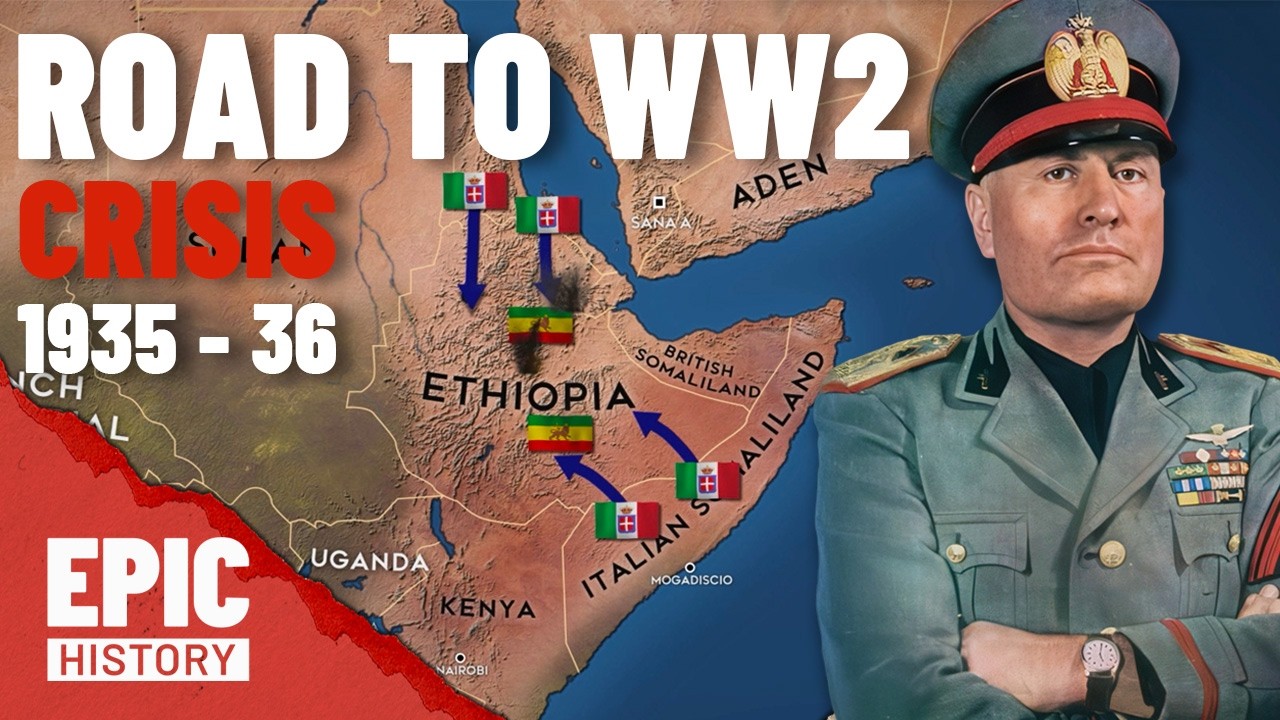
Mussolini’s Ambitions in Ethiopia
Simultaneously, in Europe, Italy’s expansionist ambitions under Benito Mussolini were crystallizing. His vision of a revitalized Roman Empire prompted aggressive territorial pursuits, notably targeting Ethiopia. As you examine Mussolini’s motivations, consider how national pride, economic motivations, and the desire for geopolitical prestige coalesced into a fervent push for colonial expansion. The Italian regime framed these ambitions as a pursuit of civilizational duty, masking the underlying brutality of imperialistic objectives.
The Italo-Ethiopian War
The Italo-Ethiopian War, which erupted in 1935, was characterized by brutal tactics and widespread atrocities inflicted by Italian forces. As you delve into the conflict, reflect on its implications for international norms regarding warfare, including the use of chemical weapons and the targeting of civilians. The war represented both a significant military endeavor for Italy and a troubling foreshadowing of the broader conflicts that would engulf the world in the coming years.
International Reactions and League of Nations’ Ineffectiveness
In response to Italy’s aggression, the League of Nations convened to address the situation, yet its effectiveness was drastically undermined by the lack of collective action. As you scrutinize the League’s reaction, it becomes evident that the diplomatic responses were largely ineffectual, failing to implement sanctions that could have mitigated Mussolini’s expansionist efforts. This episode epitomized the organizational weaknesses that plagued the League, ultimately contributing to its decline as a stabilizing force in international relations.
The Economic Landscape of Europe
Impact of the Great Depression
The economic landscape of Europe in the 1930s was heavily influenced by the Great Depression. As you analyze its impacts, consider how the widespread economic instability fostered social unrest and contributed to the rise of extremist political ideologies. Unemployment soared, and millions were plunged into poverty, creating fertile ground for both fascism and communism to flourish. The economic despair reverberated across nations, eroding faith in democratic institutions and paving the way for totalitarianism.
Political Extremism: Fascism and Communism
In this climate of crisis, political ideologies such as fascism and communism gained traction, presenting themselves as alternatives to the socio-economic challenges being faced. These movements thrived on discontent, offering radical solutions that, while divisive, appealed to segments of populations desperate for change. As you study this dynamic, recognize how the polarized political environment inspired passionate devotion among followers while simultaneously deepening societal divisions.
Social Unrest and Political Division
The culmination of economic hardship and political extremism ignited social unrest and political fragmentation, drastically reshaping European societies. You would observe how strikes, protests, and violent confrontations became common as various factions fought for control of the narrative during this tumultuous period. This unrest laid the groundwork not only for radical changes within individual nations but also contributed to a broader instability that imperiled peace across the continent.
The Spanish Civil War
Causes of the Civil War
The Spanish Civil War, which erupted in 1936, can be seen as a direct manifestation of the social and political crises that pervaded Europe at the time. As you explore its causes, take note of the historical tensions between conservatives and progressives, as well as the rise of anarchism and socialism that characterized the preceding decades. In this context, the election of the Popular Front—a coalition of leftist groups—provoked a reaction from conservative factions who feared the erosion of traditional values and power structures, leading to a brutal civil conflict.
Involvement of Foreign Powers
The Spanish Civil War attracted international attention and involvement, with both the Soviet Union and Nazi Germany playing significant roles in supporting opposing sides. As you examine foreign interventions, consider how this conflict served as a precursor to World War II, revealing the ideological fissures that would soon fracture Europe. The international brigades, comprised of volunteers from various countries, highlighted the global ideological battle lines, while the strategic interventions by major powers underscored the geopolitical stakes at play.
The Rise of Extremism and Polarization
Consequently, the Spanish Civil War marked an escalation of extremism on both sides of the ideological spectrum. You would recognize that the brutality of the conflict exemplified how polarization could spiral into violence, displacing thousands and exacerbating societal divisions. The warfare unleashed a vicious cycle of retribution that would have long-lasting ramifications for Spain and the international community, establishing a bloody precedent for future conflicts fueled by ideological extremism.
The Role of the League of Nations
Inability to Prevent Aggression
During the interwar period, the League of Nations was established with the noble intent of fostering international cooperation and preventing conflicts. However, as you scrutinize its operations, you would find a recurring theme of ineffectiveness in curbing aggression. The League struggled to enforce its resolutions and lacked the military power necessary to act decisively against aggressor nations, leading to a growing disillusionment with its role on the world stage.
Case Studies: Japan and Italy’s Actions
The cases of Japan and Italy reveal the League’s shortcomings in addressing blatant violations of international norms. As noted earlier, Japan’s invasion of Manchuria and Italy’s aggression in Ethiopia both occurred without sufficient consequences from the League, exposing systemic weaknesses. You would observe that these failures greatly undermined the League’s credibility as a body capable of maintaining global peace, while emboldening aggressor states.
Calls for Reform and Enhanced Authority
In light of these deficiencies, there were growing calls for reform within the League of Nations, emphasizing the need for enhanced authority to deal with aggressions effectively. You would recognize that these discussions often revolved around the establishment of collective security agreements and the importance of cooperation among major powers. Yet, despite such advocacy, the League’s structural limitations persisted, contributing to the erosion of international stability leading into World War II.
Isolationism and Appeasement
United States’ Non-Interventionist Stance
Amidst the backdrop of escalating tensions, the United States adopted a non-interventionist stance, prioritizing isolationism over global engagement. As you delve into this policy, consider how the American public’s aversion to another foreign war influenced its leaders’ decisions. The Neutrality Acts exemplify this reluctance, as they were designed to prevent American involvement in international conflicts as the clouds of war began to gather in Europe and Asia.
British and French Policies Towards Hitler
Simultaneously, Britain and France pursued policies of appeasement in their dealings with Hitler, believing that conciliatory measures could avert a broader conflict. You would scrutinize the motivations behind this approach, particularly the desire to avoid the catastrophic costs of war, which loomed large in the aftermath of World War I. However, this strategy of appeasement, characterized by concessions such as the Munich Agreement, inadvertently emboldened Hitler further, illustrating the grave miscalculations made by established powers.
Consequences of Appeasement
The consequences of appeasement became increasingly evident as Hitler pushed forward with his aggressive agenda. You would see how this approach ultimately failed, as it did not dissuade future aggression—but rather facilitated it, laying the groundwork for the outbreak of World War II. The lessons from these diplomatic endeavors underscore a critical reflection on the efficacy of compromise in the face of blatant military aggression.
Crisis in Eastern Europe
Political Turmoil in Hungary and Poland
As Europe confronted mounting crises, Eastern Europe experienced significant political turmoil, particularly in Hungary and Poland. You would examine how these nations faced their own internal divisions, grappling with the specters of nationalism, communism, and fascism. The instability manifested in governmental changes and social unrest, contributing to an overall atmosphere of uncertainty that further destabilized the region.
Emerging Alliances Against the Axis Powers
In light of the rising threat posed by the Axis Powers, you would observe the formation of emergent alliances among Eastern European nations, seeking to counterbalance German and Italian ambitions. These agreements reflected a growing recognition of the necessity for collective security, even as individual national interests often complicated cooperation. The fraught political landscape underscored the challenges of aligning disparate factions against a common adversary.
Czechoslovakia’s Vulnerability
Czechoslovakia emerged as a particularly vulnerable state within this turbulent geopolitical landscape, straddling the divide between Western democracies and Eastern authoritarian regimes. As tensions escalated, you would note how its borders, fortified against aggression, could not stave off the inevitable encroachment of Nazi expansionism. The eventual dismantling of Czechoslovakia in 1938 symbolized the broader collapse of stability across Eastern Europe, fearfully foreshadowing the continent’s impending descent into war.
Conclusion
Summary of the Tension Leading to WWII
In synthesizing the multitude of factors contributing to the road towards World War II, you would recognize a tapestry woven from the threads of militarism, nationalism, economic turmoil, and political extremism. The unchecked aggression of leaders like Hitler and Mussolini, coupled with the failure of international bodies and policies of appeasement, created a cascading effect that eroded the fragile foundations of peace.
The Consequences of Inaction
The consequences of inaction during this pivotal period serve as a cautionary tale about the dangers of complacency in the face of rising hostility. You would reflect on how each instance of failure—whether through the League of Nations, isolationist policies, or appeasement—contributed to an environment in which militaristic ambitions could flourish uncontested.
Reflections on the Path Forward
Ultimately, your examination of this complex historical landscape calls for a profound reflection on the lessons learned and the essential need for proactive engagement in global affairs. As we confront contemporary challenges, recognizing the signs of similar patterns can guide pathways away from division and towards collaborative solutions that prioritize peace and security. The legacy of this turbulent era functions as a crucial reminder of the cost of inaction and the imperative for vigilance in the pursuit of a more stable and harmonious world order.