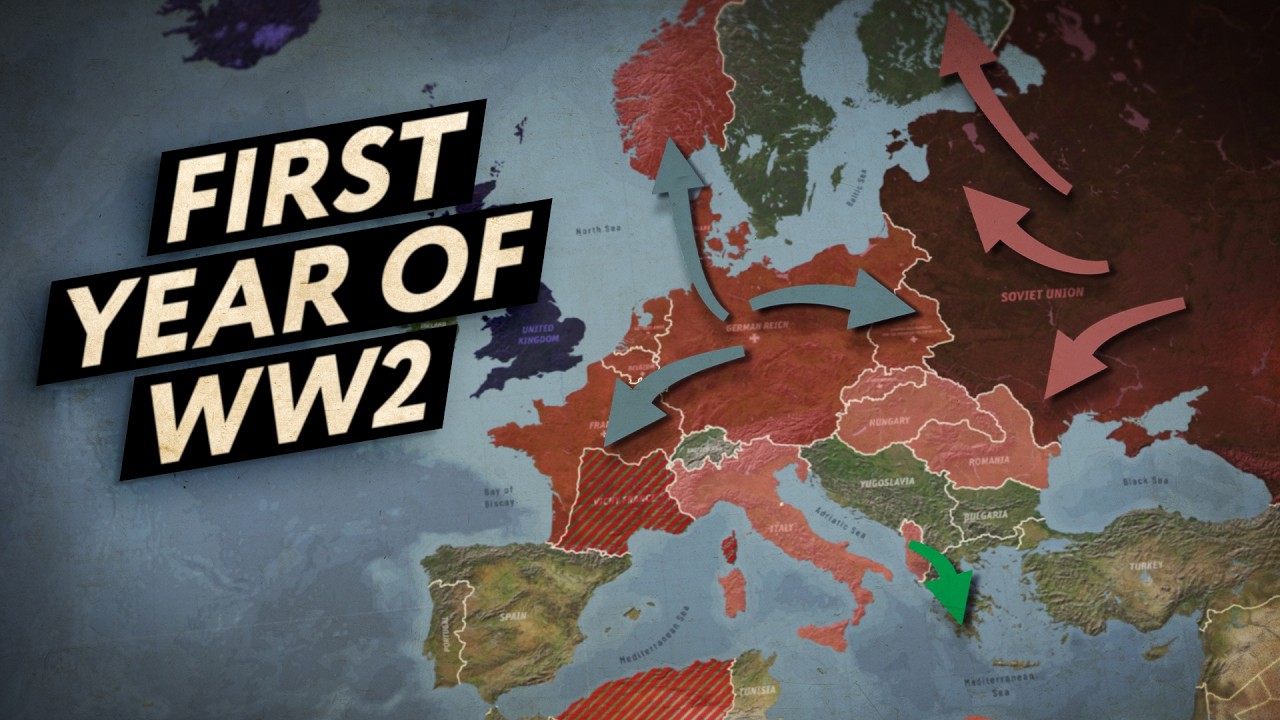
The documentary titled “First Year of WW2 1939-1940” meticulously chronicles the early phase of World War II, illustrating the dramatic shifts in power across Europe. Beginning with Germany’s aggressive invasion of Poland in September 1939, the narrative unfolds against a backdrop of broken treaties and escalating hostilities. By the conclusion of 1940, Britain’s steadfast resistance stands in stark contrast to Germany’s swift and overwhelming military successes, raising questions about the long-term implications of these initial confrontations.
Throughout the documentary, several pivotal events are examined, including the German-Soviet invasion of Poland, the unpredictable Phoney War, and the significant Battles of the Atlantic and Britain. The exploration extends to various theaters of war, emphasizing how these early encounters not only reflected the chaos of wartime Europe but also sowed the seeds for eventual resistance and defeat of the Axis powers. This analysis invites you to consider the complex interplay of strategy, alliances, and military might that characterized the first year of this global conflict.
The Invasion of Poland
Background of German-Soviet Relations
In the years leading up to World War II, the political landscape of Europe became increasingly precarious, marked by shifting allegiances and diplomatic maneuverings. The relationship between Germany and the Soviet Union was particularly complex, oscillating between animosity and mutual benefit. The signing of the Molotov-Ribbentrop Pact in August 1939 was a pivotal moment that reshaped the dynamics of European power. This non-aggression treaty allowed both nations to pursue their expansionist agendas without fear of interference from the other. For Nazi Germany, it not only secured its eastern flank but also provided an opportunity to invade Poland with the assurance that the Soviet Union would not intervene. For the Soviets, the pact promised territorial gains in Eastern Europe, including parts of Poland and the Baltic states. This seemingly pragmatic collaboration foreshadowed a brutal conflict that would engulf the continent shortly thereafter.
The Outbreak of War: September 1, 1939
On September 1, 1939, Germany launched a calculated and ruthless assault on Poland, effectively igniting World War II. The attack was characterized by the swift execution of Blitzkrieg tactics, which emphasized speed and coordination between ground and air forces. Poland found itself woefully unprepared to withstand such an onslaught. The culmination of years of political instability and military neglect left the Polish forces outmatched and outmaneuvered. Within days, cities were burning, and the Polish military was in retreat. The invasion was not merely a military conquest; it represented a stark violation of sovereignty and an affront to the principles of self-determination that had emerged after World War I. As German troops advanced into Polish territory, the world watched in horror, yet response remained tepid.
Military Strategies and Tactics Used
The German invasion employed the Blitzkrieg strategy, characterized by rapid, concentrated attacks meant to disorient and demoralize the enemy. Foot soldiers, tanks, and air support operated in a synchronized manner to create openings in Polish defenses. The Luftwaffe’s strategic bombing raids targeted not just military installations but also urban centers, causing significant civilian casualties and panic. The Polish forces, relying on outdated tactics and equipment, struggled to mount a cohesive defense. Counterattacks were hindered by logistical challenges and a lack of coordination. As the invasion unfolded, it became tragically evident that the tactics employed by the Germans highlighted not only their military superiority but also the catastrophic consequences of underestimating their adversaries.
International Reactions to the Invasion
The international response to the invasion of Poland was marked by a mixture of outrage and impotence. Britain and France, having pledged to support Poland, issued ultimatums demanding a withdrawal of German forces. However, the threats were met with indifference, and soon it became clear that appeasement had failed. The Allies launched declarations of war against Germany, but immediate military action remained absent. The United States, though sympathetic to the plight of Poland, adhered to a policy of neutrality, further complicating the situation. This collective failure to respond decisively established a precedent that would influence military and political decisions in the years to come, allowing German aggression to go largely unchecked.
The Soviet-Finnish Winter War
Initiation of Conflict: November 1939
In November 1939, following its orchestrated invasion of Poland, the Soviet Union turned its attention towards Finland, seeking to expand its territory and secure a buffer against future aggression. The Winter War, which commenced on November 30, 1939, was marked by significant Soviet military objectives, which included the consolidation of the Karelian Isthmus and the establishment of strategic control over the Gulf of Finland. The conflict was initiated under the guise of self-defense, with the Soviets claiming they were protecting their borders from the threat posed by Finnish neutrality. This justification masked grander ambitions and set the stage for a brutal confrontation.
Tactics of the Soviet Red Army
The Soviet Red Army, despite suffering from poor morale and underestimating their enemy, attempted to deploy a strategy predicated on overwhelming numbers. The Soviet high command believed that sheer manpower could overcome the Finnish defenses. However, the results were less than favorable as the Finnish forces, equipped with a deep understanding of their terrain, utilized guerrilla warfare tactics and hit-and-run assaults effectively. The Soviets faced significant challenges, including inadequate winter gear and ineffective coordination among their various units. Rather than a swift victory, the conflict devolved into a protracted struggle that showcased glaring weaknesses within the Soviet military structure.
Finnish Defenses and Guerrilla Warfare
The Finnish military, though outnumbered, demonstrated remarkable resilience and ingenuity in its defense against the Soviet onslaught. The Mannerheim Line, a series of fortifications, held fast against initial Soviet attacks. Moreover, Finnish troops leveraged their knowledge of the harsh winter terrain to engage in guerrilla tactics, utilizing ambushes and surprise assaults against larger Soviet formations. This asymmetric approach, coupled with high morale and nationalistic fervor, allowed Finland to inflict substantial casualties on Soviet forces and prolong the conflict beyond initial expectations.
Consequences of the Winter War
The Winter War, which ultimately concluded in March 1940, had profound implications for both Finland and the Soviet Union. Finland, despite territorial losses, emerged with a strengthened national identity and international recognition for its plight. The Soviets, conversely, faced significant embarrassment due to their inability to secure a swift victory against a smaller adversary. This failure exposed weaknesses in Soviet military leadership and strategy, planting the seeds of dissent within their ranks. Additionally, the war cultivated a deep-seated animosity between Finland and the Soviet Union that would shape the geopolitical landscape of Northern Europe for decades to come.

The Phoney War
Understanding the Concept of the Phoney War
After the initial tumult of 1939, a period known as the Phoney War ensued during the early months of 1940. This peculiar phase was characterized by a lack of direct military action on the Western Front, despite the formal declarations of war between the Allies, namely Britain and France, and Germany. The term “Phoney War” captures the surreal atmosphere as troops fortified positions, but major offensives remained conspicuously absent. This lull created a deceptive sense of security and uncertainty, leaving both military leaders and civilians in anticipation of the inevitable escalation of conflict.
Military Preparations by France and Britain
During the Phoney War, both France and Britain undertook extensive military preparations in anticipation of an eventual German offensive. The British Expeditionary Force was brought to France, and the French military consolidated its defensive lines along the Maginot Line—a fortified series of defenses that stretched along the Franco-German border. However, the preparations were fraught with contradictions; while the armies were mobilized, the strategic doctrines remained rooted in past experiences. Outdated tactics clashed with the need for rapid adaptability in the face of German innovation, leaving serious gaps in readiness.
German Strategies During the Stalemate
For Germany, the Phoney War presented an opportunity to strategize further. While Allied forces remained static, German military planners exploited this time to reinforce their position, conduct espionage, and prepare for rapid maneuvers. The concept of Bewegungskrieg (mobile warfare) was further refined during this period, allowing the German military to build on the lessons learned from the invasion of Poland. When the time for action arrived, they aimed to catch the Allies off guard, which would bring the Phoney War to a dramatic conclusion.
Psychological Impact on Soldiers and Civilians
The Phoney War’s psychological impact on soldiers and civilians was profound. For the military, the absence of conflict fostered frustration and uncertainty, as men trained diligently yet felt an increasing disillusionment with the inaction surrounding them. For civilians, the eerie quiet was punctuated by propaganda efforts from both sides, intending to maintain morale as fears of impending violence loomed. The experience of living in this uneasy calm cultivated a sense of dread and anticipation that would ultimately transform when warfare resumed.
The Battle of the Atlantic
Impact of U-Boat Warfare
As World War II unfolded, control over the Atlantic Ocean became a critical factor in determining the war’s outcome. The Battle of the Atlantic epitomized the struggle for dominance in maritime logistics, with German U-boats emerging as a formidable threat to Allied shipping. Employing surprise tactics and heavily armed submarines, the German Navy sought to disrupt supply lines from North America to Britain, ultimately aiming to starve Britain into submission. The U-boat campaigns inflicted significant losses on merchant fleets, creating palpable tensions across the Atlantic.
Allied Naval Strategies and Challenges
In response to the escalating threat posed by U-boats, the Allies attempted to reformulate their naval strategies. Initiatives such as convoy systems were established to provide greater protection for merchant vessels traversing vital supply routes. Additionally, advancements in naval technology, including depth charges and improved sonar systems, aimed to counteract U-boat attacks. However, these strategies were not without challenges; the vastness of the Atlantic, coupled with the U-boats’ effectiveness in stealth and ambush, rendered the efforts of the Allied navies an ongoing struggle against time and attrition.
Key Battles and Turning Points in the Atlantic
Key engagements, such as the Battle of the River Platte and the ongoing U-boat campaigns, brought the battle to the forefront of military strategy. The coordination of air and naval assets became critical, leading to significant confrontations at sea. The turning point came with the introduction of long-range aircraft, which allowed Allied forces to extend their reach significantly and provide air cover for convoys. The gradual shift in naval tactics and resource allocation ultimately favored the Allies, showcasing the evolving nature of warfare during this tumultuous period.
Logistics and Supply Lines in Wartime
The logistical infrastructure underpinning wartime efforts in the Atlantic was crucial to both Allied and Axis powers. The safe passage of resources such as food, ammunition, and equipment dictated operational capabilities on land and at sea. As U-boat warfare intensified, the necessity of safeguarding these supply lines became paramount. The Allies engaged in ruthless countermeasures, emphasizing the role of intelligence and communication in the war effort. The outcome of this battle would not simply be determined by military engagements; it hinged on the capacity to sustain and protect the lifeblood of the war machine.
German Invasion of Denmark and Norway
Strategic Importance of Scandinavia
Scandinavia, with its geographical locations and natural resources, held considerable strategic value during World War II. Control over the region granted access to vital shipping routes, and Norway’s extensive coastline offered numerous ports for naval bases. The ability to secure supply lines and prevent Allied forces from establishing a foothold in northern Europe prompted Germany to act swiftly in spring 1940. The resultant military operations aimed to thwart any potential threats from Britain while enhancing German dominance in the region.
Operation Weserübung: Execution and Outcomes
In April 1940, Operation Weserübung saw German forces launch simultaneous invasions of both Denmark and Norway. The campaign was marked by lightning-fast assaults: Denmark capitulated within hours, while Norway’s rugged terrain resulted in a more protracted engagement. The rapid execution of military strategy minimized resistance and emphasized the effectiveness of the German military machine. As a result, the Nazis secured vital strategic positions, albeit at the cost of triggering widespread international condemnation.
Reactions from the Allies
The swift German conquest of Denmark and Norway caught the Allies off guard, leading to urgent discussions regarding military strategies and defense reactions. Britain, in particular, felt threatened by the German presence in Scandinavia, as it risked jeopardizing supply routes to Europe. British forces were quickly dispatched to Norway in a bid to reposition and counteract Germany’s ambitions; however, the attempts largely failed, once more illustrating the inadequacies within Allied planning and execution.
Long-term Consequences for Germany
While the initial successes of Operation Weserübung bolstered German morale, the long-term consequences would prove more complex. The establishment of control over Scandinavia stretched German resources thinner, complicating supply lines and operational strategies throughout the war. Furthermore, the occupation sowed seeds of resistance within both Denmark and Norway, as local populations opposed German rule. The repercussions of these conflicts would be felt throughout the course of the war, challenging German dominance.
The German Blitzkrieg: France, Belgium, and the Netherlands
Overview of Blitzkrieg Tactics
The German Blitzkrieg, or “lightning warfare,” became the hallmark of German military strategy as the conflict expanded into 1940. This approach combined speed, surprise, and concentrated firepower, compelling adversaries to react and adapt hastily. The coordination between infantry, armored units, and air support allowed for rapid penetration into enemy territory, disorienting opposing forces before they had the capability to regroup or fortify defenses.
Key Battles: Dunkirk and the Fall of France
The campaign in the West exemplified the efficacy of Blitzkrieg tactics during key battles, particularly in the fall of France. The rapid German advance led to the encirclement of Allied troops in Dunkirk, where British and French forces became trapped. The ensuing evacuation, while viewed as a success due to the rescue of British troops, highlighted the catastrophic failures in Allied decision-making and military coordination. The fall of France in June 1940 marked a stark turning point, extinguishing the expectations for a swift Allied victory.
The Role of Air Power in Ground Success
Control of the skies proved essential to the success of Blitzkrieg. The Luftwaffe’s dominance not only provided immediate air support for ground troops but also allowed for significant strategic bombings of critical infrastructure and supply points. This air superiority disrupted communications and logistics, crippling the ability of the Allies to mobilize effectively. The integration of air power into military planning ushered in a new era of warfare, enabling rapid advances that would become a defining characteristic of the German military strategy.
Allied Response and Their Evacuations
The Allied response to the German onslaught revealed both resilience and shortcomings. The evacuation of Dunkirk stood as a pivotal moment, illustrating determination in the face of overwhelming odds. However, the broader Allied strategy remained flawed, hindered by poor intelligence and outdated tactics. Urgent attempts to regroup and defend against Germany’s advances reflected the need for a strategic reevaluation within the Allied command, ultimately informing military strategies as the war progressed.
Soviet Occupation in Eastern Europe
The Molotov-Ribbentrop Pact and its Implications
The Molotov-Ribbentrop Pact shattered the post-World War I order, facilitating unparalleled Soviet expansion in Eastern Europe. The division of Poland, as detailed in secret protocols within the treaty, established clear spheres of influence for both the Nazi regime and Stalin’s Soviet Union. The consequences of this arrangement would resonate throughout Europe, contributing to the devastating humanitarian impacts and ethnic tensions that would plague the region for decades.
Estonian, Latvian, and Lithuanian Experiences
The Soviet occupation of the Baltic states—Estonia, Latvia, and Lithuania—in summer 1940 brought immediate changes to the political and social landscape. Each nation faced a rapid assimilation into the Soviet Union’s administrative framework, leading to mass arrests, deportations, and resistance movements. Cultural suppression and the imposition of Soviet ideology aimed to erase national identities, generating fierce pushback from local populations striving to maintain their sovereignty.
Resistance Movements in Occupied Territories
The imposition of Soviet rule engendered various resistance movements within occupied territories. From partisan groups to underground organizations, local populations mobilized to oppose Soviet authority. These movements highlighted the resilience of national identities and the complexity of regional politics during wartime. Although ultimately stifled by state-led reprisals, the desire for autonomy persisted, laying the groundwork for future resistance and national liberation efforts.
Cultural and Social Changes Post-Occupation
The aftermath of the Soviet occupation led to profound cultural and social shifts within Eastern European nations. The eradication of traditional systems of governance and the imposition of Soviet-style economic management fostered a deep sense of disenfranchisement. While some elements within society aligned with socialist ideologies, broader resistance demonstrated that the desire for authentic autonomy and cultural integrity remained deeply ingrained. The legacy of this occupation would echo throughout the political landscape of Eastern Europe in subsequent decades.
The British Empire’s Role in 1940
Commonwealth Contributions to the War
As the war unfolded, the British Empire harnessed the vast resources and manpower from its Commonwealth nations to bolster its military efforts. Troops from Canada, Australia, New Zealand, and South Africa joined the fight against Axis powers, reflecting a collective commitment to resist tyranny. The contributions of Commonwealth nations not only augmented British military forces but also underscored the notion of shared responsibility in combating the rising tide of fascism across Europe.
The Experience of Britain Under Siege
The Battle of Britain would come to symbolize British resolve in the face of adversity. As German Luftwaffe bombarded British cities and military installations, the experience of living under siege galvanized civilian morale. The spirit of resilience emerged not only through military efforts but also through cultural expressions, propaganda, and community solidarity. The innate determination of the British people established a narrative of hope amidst the pervasive gloom of war.
The Role of Propaganda in Maintaining Morale
Propaganda played an instrumental role in shaping public perception and maintaining morale during the tumultuous early days of the war. Government messages sought to frame the conflict as a moral crusade against tyranny, appealing to the deeply entrenched British values of liberty and justice. The bombastic speeches of figures such as Winston Churchill resonated widely, providing inspiration and fostering a collective resolve to resist at all costs.
Colonial Troops and Their Impact on the War
Colonial troops from diverse backgrounds made significant contributions throughout the war, challenging prevailing notions of racial hierarchies. Their participation underscored the complex interplay of loyalty, obligation, and colonial legacies that marked this era. The experiences and sacrifices of these soldiers not only challenged perceptions within their home nations but also began to reshape the political discourse surrounding colonialism as the war progressed.
Mediterranean Theatre of Operations
Strategic Importance of the Mediterranean
The Mediterranean Sea became a focal point of military operations during World War II, with control over this vital region holding immense strategic importance. The proximity of the Mediterranean to both Axis and Allied powers rendered it a critical theater for naval engagements, trade routes, and supply lines. The struggle for dominance in this arena was emblematic of broader geopolitical conflicts, as powers sought to extend their influence and secure territorial advantages.
The Italian Campaign: Failures and Setbacks
As Italy entered the war on the side of Germany, the Allies faced new challenges in the Mediterranean theatre. The Italian Campaign served as a backdrop to a series of military setbacks, with both land and naval operations yielding mixed results. The Allies struggled to combat the well-fortified Italian defenses, undermined by logistical difficulties and the complexities of multilateral coordination. Despite early successes, the campaign ultimately revealed the vulnerabilities endemic within Allied strategies.
Naval Battles and Control of Shipping Routes
Naval supremacy in the Mediterranean highlighted the importance of controlling vital shipping routes and trade routes. A series of significant naval battles ensued, including the critical Battle of Taranto, where British forces targeted Italian naval strength directly. These engagements showcased the high stakes involved and the strategic recalibration necessary for success. The battle for control of the Mediterranean underscored the evolving nature of warfare and the need for decisive action in limiting enemy operational capabilities.
Impact on British Forces and Strategy
The Mediterranean theatre forced British leadership to reevaluate their military strategies, shifting operational focus toward securing supply lines and maintaining naval superiority. The pressures of continental engagement prompted Britain to adapt to emerging realities, forging new alliances and adopting innovative tactics. These adjustments ultimately proved instrumental in recognizing the key interconnections between land and naval operations, setting the stage for future military endeavors, particularly as the war entered its critical turning points.
Conclusion
Assessing the Outcomes of the First Year
The first year of World War II revealed the multifaceted dynamics of conflict, underscoring the profound complexities that emerge during significant geopolitical upheavals. Initially characterized by swift victories and territorial expansions, the early engagements exposed critical vulnerabilities across both Axis and Allied forces. Each campaign illuminated deeper flaws in strategies, morale, and geopolitical relations, offering insights that would shape the subsequent phases of the war.
Lessons Learned from Early Engagements
The myriad engagements across Europe and beyond provided valuable lessons that transcended the immediate military context. As strategies evolved, the centrality of cooperation, adaptability, and advanced logistics became increasingly apparent. The interconnectedness of land, air, and sea operations reinforced the necessity for cohesive planning and a comprehensive understanding of the evolving nature of warfare. Each conflict contributed to a rich tableau of learning that would guide future military decisions and reshape international relations.
The Road Ahead: Preparing for Future Conflicts
As the narrative of World War II unfolded, the lessons of the first year suggested both opportunities and challenges on the road ahead. The emergence of partisanship, evolving military technologies, and the shifting allegiances of nations would shape the next phases of conflict. The complexities inherent in global systems necessitated a rediscovery of strategy and collaboration, compelling nations to reassess their commitments and alliances amid escalating tensions.
The Lasting Impact of 1939-1940 on WW2
The legacy of the first two years of World War II reverberated throughout the course of the conflict, laying the groundwork for shifting power dynamics and military strategies. The experiences and challenges faced during this climactic period not only shaped individual nations but redefined the relationships among global powers. In examining the escalation of tension, the pursuit of cooperation reveals an innate tension between conflicting interests, exemplifying the nuanced legacy that echoes through history in the aftermath of this turbulent era.