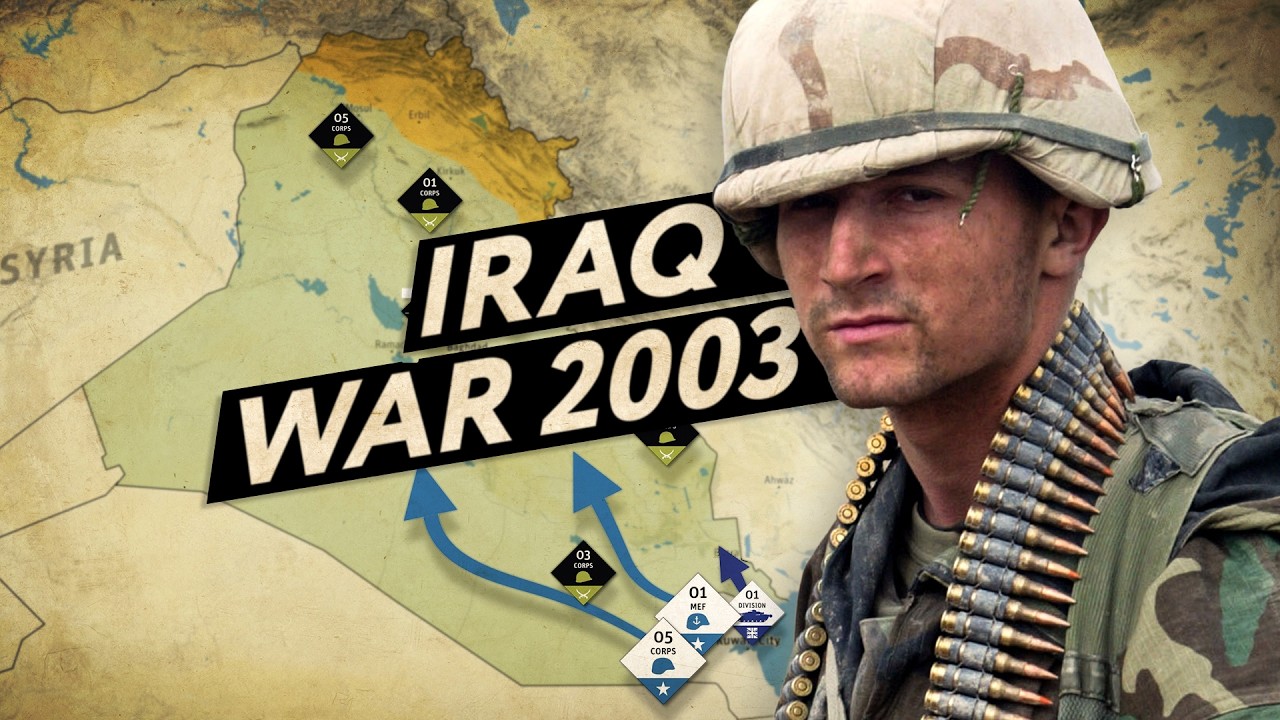
The documentary “Operation Iraqi Freedom 2003: The Invasion” presents a detailed examination of the multifaceted military operation initiated by a US-led coalition against Iraq in March 2003. This invasion was predicated on the assertion by President George W. Bush that disarming Saddam Hussein of purported weapons of mass destruction was imperative for global security. The rapid capture of Baghdad and other key cities marked the beginning of a turbulent conflict that extended far beyond immediate military victories.
In analyzing the events surrounding the invasion, the documentary engages with the complexities of warfare, political narratives, and the implications of regime change. By integrating various sources and perspectives, it explores the aftermath of the initial success and the challenges faced by coalition forces in stabilizing the region. This study serves to contextualize the invasion within a broader historical framework while prompting reflections on the consequences of foreign interventions.
Operation Iraqi Freedom: An Academic Exploration
Background of Operation Iraqi Freedom
Historical Context Leading to the Invasion
The genesis of Operation Iraqi Freedom can be traced back to the aftermath of the Cold War, where the geopolitical landscape shifted dramatically. The dissolution of the Soviet Union led to increased U.S. influence in the Middle East, particularly following Iraq’s invasion of Kuwait in 1990, resulting in the Gulf War. This historical backdrop set the stage for a heightened American presence in the region, ostensibly to promote stability and democracy. You can view this period as one where tensions simmered due to the U.S. and its allies’ concerns over weapons proliferation, especially in light of Iraq’s previous use of chemical weapons.
Saddam Hussein’s Regime and Its Global Implications
Saddam Hussein’s rule in Iraq was emblematic of a regime that not only suppressed dissent but also projected a belligerent foreign policy. His authoritarian regime was often equated with terror, drawing international condemnation and leading to restrictive sanctions. The regime’s actions fostered an atmosphere of profound instability within the region. As you analyze the global implications of Hussein’s leadership, consider how it exacerbated fears among U.S. policymakers regarding terrorism, leading to the narrative of a “Axis of Evil” post-9/11, which included Iraq.
Weapons of Mass Destruction Claims
The assertion that Iraq possessed weapons of mass destruction (WMD) became a focal point in the lead-up to the invasion. U.S. intelligence and the Bush administration claimed that Iraq was reconstituting its WMD programs and had failed to comply with United Nations resolutions. This claim not only justified the invasion in the eyes of many but also created a moral imperative to act against what was perceived as an imminent threat to global security. However, subsequent investigations revealed that the WMD narrative was fraught with inaccuracies, casting a long shadow over the legitimacy of the invasion.
Pre-Invasion Strategy
Coalition Forces and Their Objectives
The coalition forces, primarily led by the United States and the United Kingdom, aimed to depose Saddam Hussein and liberate the Iraqi people from his tyrannical regime. As a member of the international community, you should recognize that the coalition’s stated objectives extended beyond military action; they also included promoting democracy and regional stability post-invasion. The coalition’s approach involved careful diplomatic negotiations to garner support, although many nations remained skeptical.
Military Planning and Preparations
The military planning for Operation Iraqi Freedom was extensive and detailed. Strategic objectives were clearly defined, focusing on a rapid military campaign to minimize U.S. and coalition casualties. These preparations encompassed logistical deployments, intelligence gathering, and defining engagement rules. You would observe that this meticulous planning reflected a shift from previous military engagements, emphasizing speed and decisive action, influenced heavily by the lessons learned from past conflicts.
Diplomatic Efforts Prior to the Invasion
Prior to the invasion, the coalition engaged in extensive diplomatic efforts, seeking to acquire legitimacy through the United Nations. Resolutions were passed, and numerous briefings were held to align international sentiment with their objectives. Despite these efforts, notable opposition emerged, with significant global protests and dissent coming from various quarters. As you examine this facet of the pre-invasion period, it is crucial to consider how these diplomatic endeavors set a precedent for future military engagements.

The Invasion Begins
Timeline of Key Events in March 2003
The invasion of Iraq commenced on March 20, 2003, with a coordinated air strike dubbed “shock and awe.” This marked the beginning of a military campaign that was characterized by rapid movement and significant firepower. Key events unfolded rapidly, including the swift capture of southern cities and strategic infrastructure, forming the backdrop for a conflict that would evolve unpredictably.
Initial Military Strikes and Tactics
The initial military strikes, primarily aerial bombardments targeting key military and government installations, were meant to weaken Iraq’s defensive capabilities. These tactics illustrated a departure from previous engagements, where ground troops had taken the lead early in conflicts. You should take note of how the military’s focus on technological superiority—utilizing precision-guided munitions—played a role in the operational strategy.
Response from Iraqi Forces
In response to the initial strikes, Iraqi forces exhibited a mix of strategic withdrawals and attempts to mount defensive actions. Overall, the reaction of Iraqi military units was significantly less coordinated than anticipated, leading to rapid territorial gains for coalition forces. As you assess the effectiveness of these military operations, consider how morale, leadership, and equipment readiness influenced the response of Hussein’s forces.
Key Battles and Operations
The Attack on Baghdad: Strategies and Execution
The assault on Baghdad was marked by both strategic brilliance and significant challenges. Coalition forces executed a multi-pronged attack, encircling the city and employing both ground and air units to penetrate the Iraqi defenses. Urban warfare tactics became essential, as soldiers navigated through the complexities of urban combat, safeguarding civilian lives while engaging with entrenched Iraqi units.
Major Confrontations with Iraqi Military Units
Throughout the advance into Baghdad, numerous confrontations highlighted the disparity in military capabilities between the coalition and Iraqi forces. Battles at key locations such as the airport and central government buildings illustrated the determination of Iraqi soldiers, despite overwhelming odds. Your examination of these confrontations reveals a complex narrative of bravery, confusion, and the dire realities of war.
Operation Shock and Awe: Effectiveness and Consequences
Operation Shock and Awe was conceptualized to deliver a decisive blow to Iraqi capabilities, intending to instill psychological shock. While it achieved initial tactical superiority, the long-term consequences of such overwhelming force became evident. The ensuing chaos contributed to sectarian strife and paved the way for insurgent groups to gain traction. It is critical for you to reflect on how this initial military success did not correlate with sustained peace and stability.

Role of Media During the Invasion
Coverage of the Invasion by International Media
International media played a pivotal role in shaping perceptions of the invasion. Journalists were positioned as both observers and narrators, providing real-time coverage of the unfolding events. Your analysis should consider how varying narratives emerged based on national perspectives, influencing public opinion and political debates surrounding the war.
The Impact of Embedded Journalists
The concept of embedded journalists emerged as a dual-edged sword. While embedding provided unprecedented access to military operations, it also raised questions of objectivity and manipulation. As you evaluate the impact of embedded journalism, ponder the extent to which media narratives were shaped by military objectives, and how this influenced public perception in the U.S. and globally.
Media Narratives Shaping Public Perception
The narratives constructed by both mainstream and alternative media during the invasion significantly influenced public perceptions of the conflict. Consider how frames of liberation and democracy versus images of violence and chaos evolved, reflecting the complexities and contradictions inherent in warfare. This dichotomy is crucial for understanding the broader implications of media in shaping historical memory.
After the Fall of Baghdad
Transition from Invasion to Occupation
Following the swift takeover of Baghdad, a critical transition occurred, shifting from invasion to occupation. The power vacuum left in the wake of Saddam Hussein’s regime led to a myriad of challenges in governance. As you examine this transition, consider the implications it had on Iraqi society and the coalition’s responsibilities in establishing a new order.
Security Challenges and Insurgency Emergence
As the initial euphoria of liberation dissipated, security challenges rapidly escalated. The emergence of insurgency groups, motivated by a blend of nationalism, sectarianism, and anti-occupation sentiments, transformed the operational landscape. Your inquiry into the roots and motivations of these insurgent movements reveals the multifaceted nature of resistance that complicated efforts at stabilization.
Civilians’ Experiences During the Occupation
Civilian experiences during the occupation were varied and complex, marked by both hope and despair. As you delve into this aspect, focus on the narratives of ordinary Iraqis, juxtaposing their aspirations for peace and security against the challenges posed by ongoing violence. You should explore how the occupation reshaped daily lives, permeating through socio-economic conditions and community relations.

International Reaction
Global Support and Opposition to the Invasion
The international response to the invasion was polarized, with some nations expressing support while others vehemently opposed the military action. Notably, countries such as the United Kingdom allied with the U.S., while nations across the globe protested against what many deemed an unlawful incursion. Your analysis should consider how these varied international positions influenced diplomatic relationships in the subsequent years.
United Nations and International Law Implications
The invasion ignited a fierce debate within the U.N. regarding the legality of military action absent comprehensive support from Security Council resolutions. As you explore these discussions, think critically about the implications of unilateral military actions on international law and collective security frameworks. The invasion raised pressing questions regarding state sovereignty and accountability that continue to resonate today.
The War’s Effect on U.S. and Allied Relations
The Iraq War induced significant strain on U.S. relations with traditional allies and newcomers alike. As you reflect on this dynamic, consider how the repercussions of the war influenced alliances, global diplomacy, and geopolitical stability. Such considerations are vital for understanding the long-term ramifications borne from the decision to invade.
Consequences of the Invasion
Political Instability in Iraq Post-Invasion
The aftermath of the invasion gave rise to political instability that reverberated across Iraq. The disbandment of the Iraqi army and the de-Baathification policy created a power vacuum and fostered disenfranchisement among various segments of society. Your exploration should highlight the struggles over political power, identity, and governance that ensued in the years following the invasion.
Long-Term Impacts on U.S. Foreign Policy
The repercussions of Operation Iraqi Freedom significantly shaped U.S. foreign policy in the 21st century. Your critical examination of these impacts should address shifts in military engagement strategies, perceptions of interventionism, and the recalibration of priorities in global diplomacy. Consider how the experiences of Iraq influenced broader concepts of national security and international relations.
Lessons Learned from Operation Iraqi Freedom
As you reflect on the lessons derived from Operation Iraqi Freedom, emphasize the complexities of military interventions, the importance of understanding local contexts, and the need for coherent post-war strategies. This analysis should cultivate a nuanced understanding of warfare, emphasizing the need for preparedness and adaptability in future engagements.
Personal Accounts and Testimonies
Veterans’ Perspectives on the Invasion Experience
Veterans provide invaluable insights into the realities of the invasion experience, illuminating the human elements often overshadowed by political narratives. As you engage with their testimonies, seek to understand the emotions, challenges, and moral dilemmas they faced in a conflict characterized by chaos and uncertainty.
Iraqi Civilians Recounting Their Stories
The voices of Iraqi civilians serve as crucial perspectives that capture the nuanced realities of life during and after the invasion. Their stories articulate the profound disruptions and hopes for peace, contributing a vital dimension to the historical record. Your analysis should strive to honor these voices while emphasizing their importance in understanding the conflict’s broader impact.
Documentary Footage and Its Emotional Impact
Documentary footage covering the invasion presents a visceral portrayal of the events that unfolded. As you analyze these visual narratives, consider the emotional resonance they have on audiences. You should reflect on the power of visual storytelling in shaping historical memory and the ethics surrounding representation in conflict zones.
Conclusion
Summary of Key Outcomes from the Invasion
In conclusion, Operation Iraqi Freedom, while initially perceived as a rapid military success, gave rise to complex challenges that continue to shape Iraq and the international community. Assessing the outcomes of the invasion involves recognizing both the immediate territorial gains achieved and the sustained turmoil that followed.
Reflections on the Legacy of Operation Iraqi Freedom
The legacy of Operation Iraqi Freedom is multifaceted, encompassing military, political, and societal dimensions. Your reflections should grapple with the differing narratives surrounding the invasion, considering how it altered perceptions of the U.S. and its role in the world.
Future Implications for U.S. Military Interventions
As you contemplate the future of U.S. military interventions, consider the crucial lessons learned from the Iraq experience. Emphasizing the need for caution, cultural understanding, and comprehensive post-war strategies can lay the groundwork for more effective engagement in the complex geopolitical landscape of the future.