
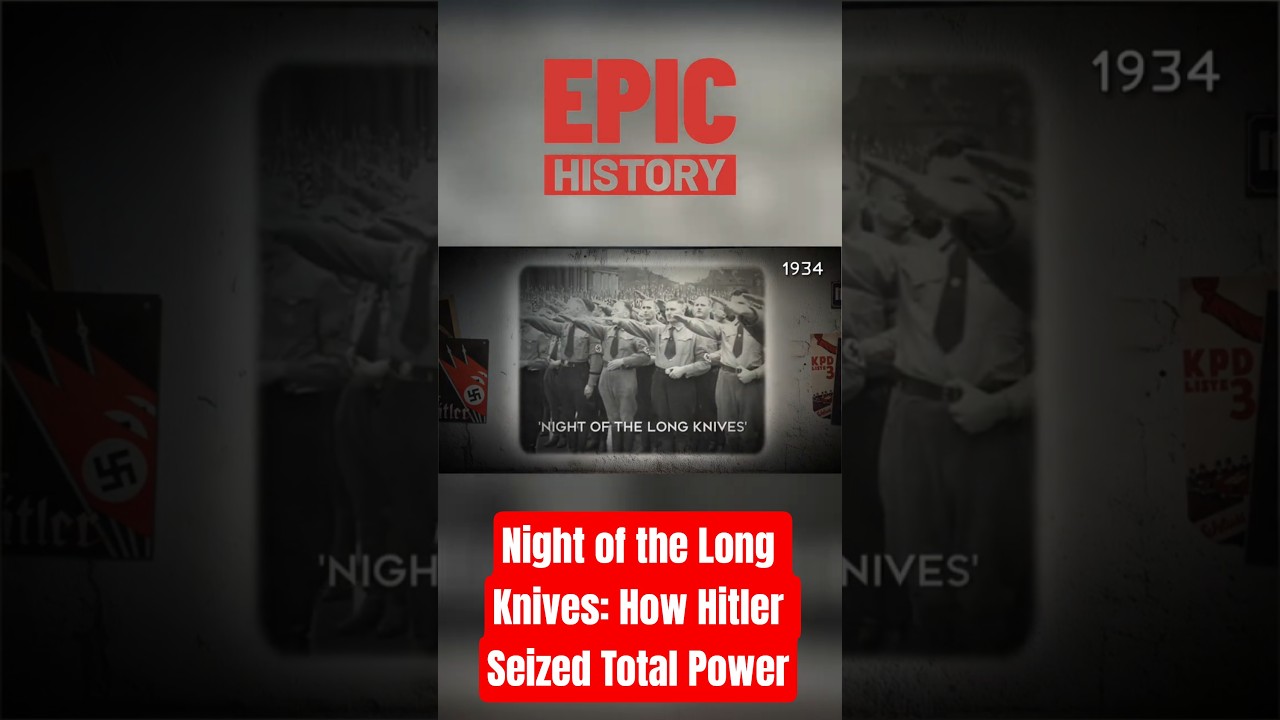
The Night of the Long Knives represents a critical turning point in the consolidation of Adolf Hitler’s power within Nazi Germany. This event, which occurred from June 30 to July 2, 1934, involved a series of political extrajudicial executions aimed at eliminating potential threats to Hitler’s authority. By targeting the Sturmabteilung (SA) leadership and other political adversaries, Hitler effectively dismantled opposition and paved the way for his unchallenged dominance.
This article will explore the events leading up to the Night of the Long Knives, detailing the motivations behind Hitler’s drastic actions. Additionally, it will examine the broader implications of this event on the political landscape of Germany and the rise of Nazi ideology. Ultimately, understanding this pivotal moment provides insight into the mechanisms of totalitarian control and the lengths to which leaders may go to secure their power.
Night of the Long Knives: How Hitler Seized Total Power
Historical Context of Germany Pre-1934
The Aftermath of World War I
The end of World War I in 1918 left Germany in a state of disarray, both physically and psychologically. The Treaty of Versailles, imposed upon a defeated Germany, mandated severe reparations, territorial losses, and disarmament, leading to a profound sense of humiliation and resentment among the German populace. The repercussions of the war extended beyond military defeat; they penetrated the very fabric of society, leaving behind a legacy of bitterness and a yearning for a return to national glory. Social order unraveled, and political instability prompted the emergence of various factions, from communists to nationalists, vying for control in the chaos of the Weimar Republic.
Economic Instability and the Great Depression
The fragile Weimar Republic was further destabilized by economic hardship, most notably through hyperinflation in the early 1920s. Citizens watched helplessly as their savings evaporated, contributing to a societal crisis marked by desperation and discontent. When the Great Depression struck in 1929, it exacerbated the existing economic turmoil, leading to soaring unemployment rates and poverty. As frustration mounted, many Germans began to lose faith in traditional democratic institutions, opening the door for extremist parties that promised radical solutions to the nation’s problems.
Rise of Extremist Politics in Weimar Germany
With the political landscape plagued by instability, the Weimar Republic witnessed a surge in extremist ideologies. On one side, communists attracted the working class with promises of revolution, while on the other, nationalist factions cultivated a sense of nationalism and exclusion, particularly against Jews and other minorities. Amidst this polarization, Adolf Hitler and the Nazi Party gained traction, positioning themselves as the answer to Germany’s woes. The emotional turmoil of the populace and society’s disillusionment with democracy created fertile ground for radical politics to flourish.
The Rise of Adolf Hitler
Hitler’s Early Life and Politicization
Adolf Hitler, born in Austria in 1889, harbored aspirations of becoming an artist but eventually moved to Vienna, where he encountered harsh economic realities that shaped his worldview. His experiences of poverty and rejection instilled in him a deep-seated resentment towards the status quo, and it was during this time that he developed a fervent nationalism. After serving as a soldier in World War I, Hitler’s post-war disillusionment ignited a passion for political engagement, leading him to join the German Workers’ Party, which would later evolve into the Nazi Party.
Formation of the Nazi Party
The National Socialist German Workers’ Party (NSDAP) formally organized in 1920 under Hitler’s leadership, coalescing disparate right-wing factions into a unified movement. The party adopted a platform that combined extreme nationalism, anti-Semitism, and anti-communism, resonating with a populace yearning for answers. Through strategic propaganda and rallies, the Nazi Party cultivated a cult of personality around Hitler, compelling many to view him as a charismatic savior amidst the social and economic turmoil.
Public Appeal and Propaganda Strategies
Hitler’s adeptness at using propaganda played a crucial role in his rise to power. He understood the power of imagery and rhetoric in garnering public support. Utilizing posters, speeches, and rallies, he crafted a narrative of hope and renewal, targeting the insecurities of the German people. By presenting a vision for a revitalized Germany, he effectively tapped into the nationalistic sentiments that had flowed through the nation since World War I.
The Role of SA (Stormtroopers)
Formation and Purpose of the SA
The Sturmabteilung (SA), commonly known as the Stormtroopers, was formed in the early 1920s as the paramilitary wing of the Nazi Party. Comprised mostly of disaffected World War I veterans and young men seeking purpose and power, the SA functioned as a tool for intimidation and violence against political opponents. Their presence was instrumental in creating an atmosphere of fear that stifled dissent and suppressed rival factions within the tumultuous political landscape of Weimar Germany.
Influence of Ernst Röhm
Ernst Röhm, the leader of the SA, emerged as a pivotal figure within the Nazi Party. Röhm advocated for a second revolution to address the concerns of the proletariat and sought to expand the role of the SA beyond mere street violence. However, his ambitions began to conflict with Hitler’s consolidation of power, as Röhm’s radical ideas increasingly threatened Hitler’s vision for the party’s direction. While initially an ally, Röhm became one of Hitler’s perceived rivals, further complicating the party dynamics.
The SA’s Radicalization and Growing Power
Over time, the SA’s power became a double-edged sword for Hitler. While their aggressive tactics helped mitigate opposition, their growing influence and radicalization began to pose a potential challenge to his control over the party. The SA’s calls for greater social revolution were at odds with the interests of the traditional conservative military establishment, deepening the rift between Röhm’s faction and Hitler’s ambitions for a more centralized power structure.
The Political Landscape in 1934
The Weimar Republic’s Fragility
By 1934, the Weimar Republic existed in a precarious state, burdened by economic strife, public disillusionment, and the looming threat of political extremism from both left and right. The fragmentation of political parties contributed to a weakened democratic framework, rendering governance inefficient. This environment of uncertainty provided Hitler with both an opportunity and a motive to consolidate his authority, dismantling the fragile remnants of democracy.
Opposition Parties and Movements
As the Nazis ascended to power, they faced opposition from various factions, including communists, socialists, and even sections of the conservative establishment. However, Hitler’s strategic political maneuvers and the use of violence through the SA systematically dismantled these opposition groups, often resulting in brutal crackdowns that rendered many ineffective. The dispersed nature of dissent meant that resistance to Hitler’s regime lacked coordination and strength, allowing for his gradual consolidation of power.
Hitler’s Consolidation of Power through Political Maneuvering
Employing a blend of legal takedowns and violent reprisals, Hitler adeptly navigated the political landscape to eliminate rival factions. The enabling laws passed in 1933 allowed for the legal suppression of opposition, effectively rendering dissent unlawful. Additional measures, such as the establishment of concentration camps for political enemies, solidified Hitler’s grip on power while instilling fear across the populace that dissent would be met with severe consequences.
Hitler’s Strategic Goals
Eliminating Rivals within the Nazi Party
In the lead-up to 1934, Hitler recognized that the greatest threat to his authority came not solely from external opposition but also from within his ranks. To solidify his leadership within the Nazi Party, he sought to eliminate those he perceived as rivals, notably Ernst Röhm and the radical elements of the SA. This internal strife necessitated strategic calculations that ultimately led to the decision for a decisive purge.
Establishing Absolute Control over the Military
To fortify his control, Hitler understood the necessity of aligning the military—the Reichswehr—with his regime. The SA’s growing power and Röhm’s ambitions posed a direct threat to military chiefs, who were wary of the paramilitary organization. By reducing the SA’s influence through the Night of the Long Knives, Hitler not only appeased the military but also cemented his role as the supreme leader, gaining their loyalty and backing as he prepped for future aggressive expansions.
Securing International and Domestic Legitimacy
Acknowledging the importance of both domestic approval and international perception, Hitler aimed to position himself as a legitimate leader who would restore German pride and stability. The purge was not merely an exercise in violence; it was a calculated move designed to present an image of decisiveness and order, thereby fostering a sense of national unity. By silencing opposition and projecting an aura of strength, Hitler sought to secure his vision and garner support both within Germany and abroad.
Planning the Night of the Long Knives
Setting the Stage for the Purge
The groundwork for the Night of the Long Knives was laid in the complexities of intrigue and deception that dominated internal Nazi politics. In the months leading up to the purge, Hitler met with key military leaders and advisors, gauging their sentiments towards the SA and Röhm. The stage was set amidst growing tensions between the SA and the military, as well as increasing authoritarianism, leading to a scenario ripe for a violent reckoning.
Key Players Involved in the Planning
Several key figures played integral roles in orchestrating the purge, including Heinrich Himmler, head of the SS, and Hermann Göring. With military backing and a vested interest in dismantling Röhm’s power, these individuals collaborated with Hitler to finalize details of the assassination plans. The timing and execution were selected meticulously, aiming for a swift and decisive action that would simultaneously silence dissent within the party and reassure the military of Hitler’s commitment to order.
Timing and Execution of the Plan
The actual execution of the purge took place over the course of several days, beginning on June 30, 1934. The operations were methodically planned, with lists of targets compiled in advance. The timing was crucial; executing the purge during a period when dissent was perceived to be brewing among the SA offered a justification for the violence, portraying it as preemptive action to stabilize the nation. The operation was shrouded in secrecy, as Hitler aimed to maintain control over the narrative amidst the chaos.
The Execution of the Purge
Overview of the Event on June 30, 1934
The Night of the Long Knives unfolded in a brutal and shocking manner, resulting in the deaths of Ernst Röhm and many SA leaders, alongside numerous other political adversaries. Those targeted were either murdered in their homes or arrested and executed, often in acts of violence that left the nation reeling. The shocking nature of the purge served both to eliminate rivals and to instill fear across the political spectrum, reinforcing Hitler’s message that disloyalty would not be tolerated.
Profiles of Major Targets and Their Significance
Ernst Röhm, as the leader of the SA, was perhaps the most notable casualty of the purge. His vision for a radical revolution conflicted starkly with Hitler’s aims, leading to his downfall. Other significant figures included Karl Ernst and Gustav von Kahr, who represented various strands of opposition that posed challenges to Hitler’s control. Each execution was laden with symbolic weight, reflecting Hitler’s resolve to eliminate any and all threats, whether real or perceived, to his burgeoning dictatorship.
Methods of Execution and Key Locations
The purge was carried out with brutal efficiency, employing assassination squads that moved swiftly from one target to the next. Key locations included Munich, where many of the SA’s leadership resided, as well as sites across Germany where political rivals were identified. The methods ranged from shootings to staged “arrests” that turned fatal, creating an atmosphere of terror that served to reinforce loyalty among the remaining party members.
Aftermath of the Night of the Long Knives
Immediate Consequences for the SA
The immediate aftermath of the purge was detrimental to the SA. What had been a once-mighty force within the Nazi Party was effectively crippled, with its leadership dismantled and its authority significantly diminished. The SS emerged as the new enforcer of the Nazi regime, signaling a structural shift in power that favored more loyal and discreet mechanisms for managing dissent.
Reactions from German Society and the Military
Responses from German society and the military varied; while many in the military welcomed the purge as a stabilizing measure, critical voices were silenced, often out of fear of reprisal. The atmosphere of intimidation solidified Hitler’s image as a strong leader, further reinforcing a culture of conformity and compliance that permeated German society. The purged SA members were often branded as traitors, effectively reshaping public perception to align with the regime’s narrative.
Long-Term Implications for Nazi Germany
In the long run, the Night of the Long Knives marked a significant turning point in the consolidation of Hitler’s totalitarian regime. It set a precedent for political violence as a legitimate tool for governance, establishing a climate of fear that allowed the Nazis to effectively eliminate opposition. The purge significantly bolstered the SS as the primary instrument of state terror, shaping the future trajectory of Nazi Germany and laying the groundwork for subsequent atrocities.
Hitler’s Consolidation of Power Post-Purge
Removal of Dissent within the Nazi Party
Following the purge, dissent within the Nazi Party was minimized. Critics of Hitler were eliminated or coerced into silence, creating a political environment in which loyalty to the Führer was paramount. This underpinning of fear allowed Hitler to focus on consolidating power without internal challenges, establishing an unassailable grasp over the party that would extend into all levels of government and society.
Strengthening Ties with the German Military
The aftermath of the purge effectively strengthened Hitler’s relationship with the traditional military leadership, assuring them of his commitment to military reform and national revival. By quelling the SA and addressing their concerns, Hitler solidified the Reichswehr’s loyalty, which proved crucial for his future militaristic ventures and expansionist policies that followed.
Institutional Changes Solidifying Totalitarian Rule
In the wake of the Night of the Long Knives, institutional changes were swiftly implemented to further entrench totalitarian rule. The Nazi regime expanded its control over all facets of life, utilizing propaganda, censorship, and state-sponsored terror to maintain dominance. This transformation was evident in the increased militarization of civil society and the establishment of a regime that demanded unwavering loyalty, setting ominous precedents for the years to come.
Conclusion
Summary of Key Points
The Night of the Long Knives stands as a pivotal moment in the history of Nazi Germany, representing the culmination of Hitler’s efforts to consolidate power and eliminate internal opposition. Through calculated violence, political maneuvering, and the manipulation of public perception, Hitler effectively reshaped both the Nazi Party and the landscape of German politics, fostering a regime founded on fear and loyalty.
Reflection on the Implications for Modern Governance
The implications of this historical event resonate in contemporary governance discussions, reminding us of the precarious balance between power and responsibility. It underscores the dangers of unchecked authority and the ease with which democracies can descend into authoritarianism when political dissent is stifled. Lessons drawn from this period serve as cautionary tales in an age grappling with the complexities of political legitimacy and the role of activism in safeguarding freedoms.
Importance of Remembrance and Historical Analysis
The Night of the Long Knives and the broader context of Nazi ascendance necessitate ongoing remembrance and analysis to understand the mechanisms of tyranny. By studying this dark chapter in history, you celebrate the resilience of democratic principles while remaining vigilant against authoritarian tendencies that threaten to resurface. Historical reflection serves as both a tribute to the lives lost and a compass guiding our collective responsibility to safeguard human rights and democratic values in an increasingly complex world.