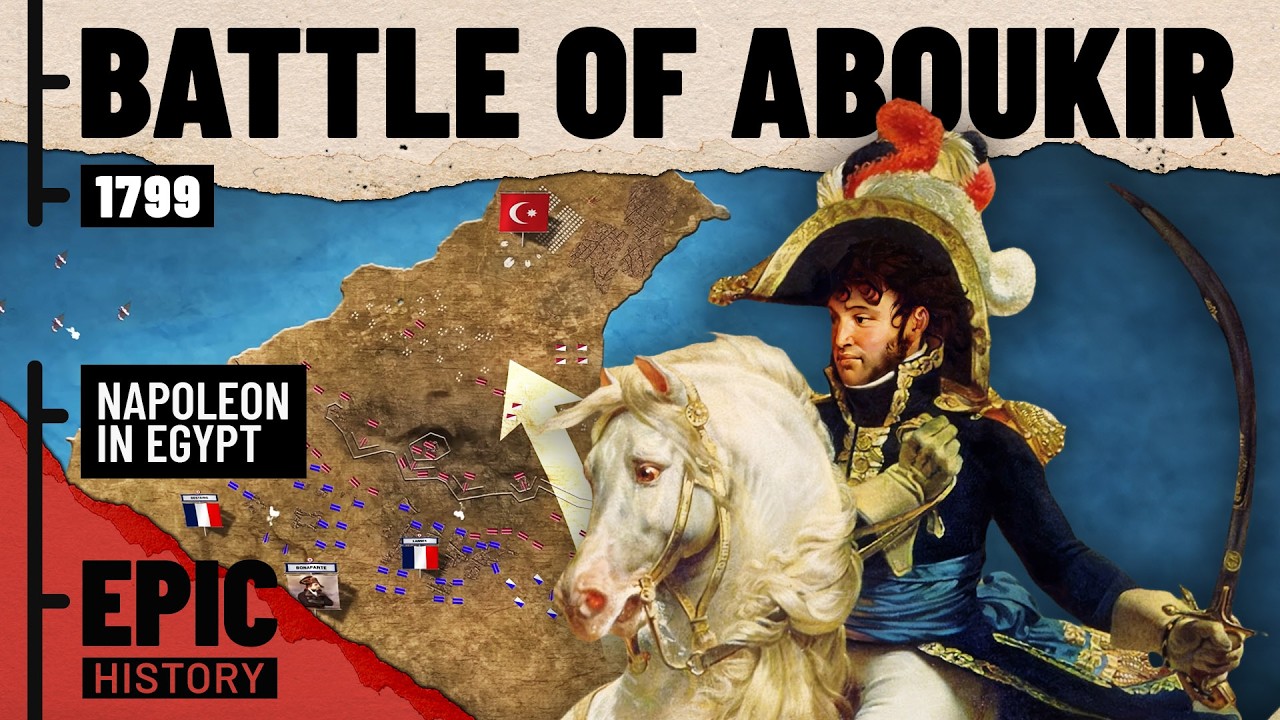
The historical narrative surrounding General Napoleon Bonaparte’s campaign in Egypt during 1799 offers a revealing glimpse into the complexities of military ambition and strategic decision-making. In pursuit of weakening British influence in the Mediterranean and claiming the riches of the Ottoman province, Napoleon’s expedition unfolds against a backdrop of logistical challenges and fierce resistance. You will explore the multifaceted dynamics of the Battle of Aboukir, including the operational tactics employed and the ethical implications of his choices amid escalating conflict.
This article will examine the early operations leading to the pivotal encounter, the struggle against disease and dwindling resources, and the significant battles that defined the campaign. An analysis of the infamous siege of Acre and the subsequent military engagements will highlight both Napoleon’s tactical ingenuity and the human costs involved. Ultimately, the narrative will illustrate how this formidable expedition, despite its tactical triumphs, set the stage for long-term repercussions on both a military and ethical level, shaping historical perceptions of Napoleon’s legacy.
Napoleon in Egypt: Battle of Aboukir 1799

Background of the Campaign
Context of French Revolutionary Wars
As you examine the backdrop to Napoleon Bonaparte’s Egyptian campaign, it is crucial to understand the broader context of the French Revolutionary Wars. Following the upheaval of the French Revolution, which began in 1789, France found itself embroiled in a series of conflicts against various European monarchies. In this turbulent atmosphere, French leaders sought not only to stabilize their own nation but also to expand their influence abroad. The Revolutionary Wars, fueled by revolutionary zeal and a desire for territorial gain, became both a means of asserting power and a platform for the promotion of republican ideals. Against this historical tableau, Napoleon’s ambition to conquer Egypt emerged, signaling his intent to turn the tide of war in favor of the French.
Napoleon’s ambitions and objectives
Napoleon’s ambitions in the Mediterranean were twofold. First, he desired to strengthen France’s global position by undermining British interests in the region. The British Empire, dominant on the seas, posed a significant threat to French aspirations and ambitions. By seizing Egypt, Napoleon aimed to cut off British access to the lucrative trade routes of India and the East. Furthermore, he recognized the strategic value of Egypt as a base from which to launch further military campaigns, not only against the Ottomans but also potentially against British outposts in India and elsewhere. In his mind, this bold maneuver would establish a new French empire, further legitimizing his power and delivering a decisive blow to his enemies.
Influence of British interests in the Mediterranean
The Mediterranean Sea served as a critical theater in this complex geopolitical landscape. British interests were deeply entrenched, due in part to their naval supremacy and economic ambitions. Their control of maritime commerce and trade routes made them formidable adversaries, prompting Napoleon to act with urgency. British naval superiority culminated in the destruction of Napoleon’s fleet at Aboukir, which effectively isolated French forces in Egypt. This naval dominance would play a pivotal role in shaping the trajectory of the campaign, bringing logistical challenges to the forefront of military strategy and complicating Napoleon’s objectives.
Military Context
Initial challenges faced by Napoleon’s forces
As you delve into the military context, it becomes apparent that Napoleon’s forces were immediately besieged by numerous challenges. Arriving with a determined yet lacking contingency of about 13,000 troops, the realities of desert warfare soon became apparent. Poorly equipped for the harsh environmental conditions of the Sinai Desert, the French army faced shortages of food, water, and medical supplies. Moreover, a burgeoning revolt in Egypt, driven by local sentiments against foreign occupation, further complicated Napoleon’s military endeavors. The volatility of the local populace, coupled with logistical issues, rendered the initial stages of the campaign fraught with difficulties.
Impact of British naval actions
In examining the impact of British naval actions, the strategic vulnerability of the French becomes evident. The Royal Navy’s decisive action at the Battle of Aboukir in 1798 not only decimated Napoleon’s fleet but also severed vital lines of communication and supply between France and her forces in Egypt. Without the ability to replenish troops or receive reinforcements, Napoleon’s expedition faced an ever-increasing array of adversities. This isolation would necessitate audacious military maneuvers, as Napoleon sought to adapt to an unfavorable situation that was continuously deteriorating.
Strategic importance of engaging Ottoman forces in Syria
Recognizing the strategic importance of engaging the Ottoman forces amassed in Syria was paramount for Napoleon. He perceived these forces as an imminent threat to his foothold in Egypt. Therefore, his campaign’s design aimed at striking first and destabilizing the Ottoman military before they could effectively mobilize against him. The intention to neutralize this perceived threat would require a concerted effort laden with risk, revealing the tenuous balance of power within the region during this epoch.
Early Operations
Napoleon’s advance into the Sinai Desert
On February 10, 1799, you would find Napoleon leading a formidable contingent of his remaining troops into the unforgiving terrain of the Sinai Desert. The objective was to advance onto Palestinian territory, where fertile lands and resources awaited—a necessary reprieve following the punishing desert march. Despite the army’s enthusiasm, the venture was met with severe challenges rooted not only in the inhospitable environment but also in the unpredictable reactions of local populations and military forces.
Siege of el-Arish and its implications
Arriving at el-Arish, Napoleon found the city unexpectedly fortified with an Ottoman garrison of approximately 3,000 soldiers. This revelation presented a significant hurdle, forcing Napoleon into a protracted siege that lasted 11 days and resulted in approximately 400 French casualties. The garrison’s eventual surrender came under the terms negotiated by Napoleon, allowing the Ottomans to withdraw with their lives intact but stripped of their armaments. However, the implications of this engagement were far-reaching; it demonstrated both the military might and vulnerabilities of Napoleon’s forces and exposed the complexities of engaging with local populations that sparked conflicts in the wake of failed negotiations.
Casualties and negotiations with the Ottoman garrison
The heavy losses suffered during the siege of el-Arish reflect the brutal realities of warfare during this campaign. The negotiations preceding the surrender of the Ottoman garrison were marked by an emergence of life’s fragile intricacies, which became entangled with the machinery of military ambition. For Napoleon, every loss was a strategic setback with cascading effects on his ability to maintain control and morale within his troops. Negotiations, whether diplomatic or coercive, illustrated the dual roles of force and strategy in the colonial landscape of Egypt.
Capture of Gaza and Jaffa
Strategic significance of Gaza’s capture
On February 24, the French army captured Gaza, a strategically significant port that not only provided vital supplies but also served as a potential launch point for further incursions into Palestinian territory. The unanticipated discovery of abandoned stores of food and ammunition boosted morale and offered a momentary reprieve from the logistical burdens that had plagued Napoleon’s advance. Yet, even amidst this newfound success, the overarching strategic campaign was in dire jeopardy as complications began to compound.
The assault on Jaffa and its brutal aftermath
Following the capture of Gaza, Napoleon set his sights on the coastal city of Jaffa, held by 5,000 Ottoman defenders. The assault upon Jaffa was precipitated by an incident where an Ottoman military officer executed a French messenger sent to negotiate terms, igniting a visceral response from French troops. The ensuing battle was marked by brutality, with soldiers rampaging through the city and perpetrating acts of violence that would haunt the memory of the campaign. The aftermath revealed a tumultuous narrative encompassing not only military triumphs but also moral quandaries that would rise to the surface in the stark light of historical retrospection.
Consequences of French commander decisions
In evaluating the decisions made by French commanders in the siege of Jaffa, one must reckon with the complicated relationship between military efficacy and ethical considerations. The violent retribution meted out against the inhabitants and military of Jaffa illustrated the precarious balance Napoleon and his commanders sought to strike between maintaining authority and the resulting fallout. These choices not only shaped the immediate strategic landscape but would echo through history as examples of the harsh realities faced in colonial conquests.

Struggles Ahead
Logistical challenges post-Jaffa
In the aftermath of Jaffa’s capture, Napoleon confronted mounting logistical challenges, confounded by the sheer number of Ottoman prisoners—3,000 soldiers—which soon became a liability. With dwindling resources and diminishing troop morale, the dilemma of how to manage these captives highlighted the stark realities of military campaigns where decisions would lead to far-reaching consequences. The complexity of sustaining an occupying force became increasingly apparent, as each advance was counterbalanced by the weight of necessity.
The decision to execute Ottoman prisoners
The decision to execute the Ottoman prisoners became a defining moment of moral and ethical complexity in the camp. Faced with persistent supply shortages and threats from fresh Ottoman forces, Napoleon ultimately sanctioned the execution of the prisoners, declaring it necessary to preserve the strength and survival of his own troops. This act of brutality underscored the gnawing compromise between military efficiency and humanity—a disquieting revelation that would continue to provoke discussion and debate long after the campaign’s conclusion.
Moral implications of military decisions
In the greater context of military ethics, the choices made by Napoleon and his commanders invite reflection on the contradictions inherent in wartime leadership. The brutal execution of captured soldiers, ultimately perceived as a method of instilling fear within the enemy, became a chilling representation of the lengths to which leaders might resort when confronting the specter of defeat. As you analyze these events, it becomes apparent that the historical portrayal of military leaders takes place against a backdrop of harrowing decisions that define not only battles but also the broader narratives of human conflict.
Encountering the Plague
Impact of the plague on troop morale
In the midst of military maneuvers, an unforeseen calamity struck: an outbreak of the plague began afflicting Napoleon’s troops. This public health crisis swiftly deteriorated troop morale, exacerbating the existing strain caused by logistical demands and heightened anxieties regarding their precarious position. The psychological toll of battling not only a foreign enemy but also an invisible foe created a pervasive atmosphere of dread, complicating efforts to maintain discipline and readiness within the ranks.
Public health crises within the army
Amidst the chaos of warfare and disease, the French army faced a distinct public health crisis that threatened to derail the entire campaign. As soldiers fell ill, the military apparatus struggled to respond adequately, grappling with surging numbers of afflicted individuals while also attempting to mobilize effectively for combat. The inability to stem the tide of contagion and sickness led to tragic losses, revealing the intersection between military strategy and public health—a connection that has been observed throughout the annals of warfare.
Effect on military operations during the campaign
The fallout from the plague ultimately hampered military operations, yielding a painful reminder that success on the battlefield often hinges on factors beyond simple strategic calculation. As troops faced illness, the cohesion and morale essential for effective engagement waned. This struggle against disease, compounded by logistical strife and the challenges of engaging hostile forces, signified the multitiered pressures that define military campaigns, prompting reflection on the broader implications of health crises during times of conflict.

Siege of Acre
Initial strategies and failures during the siege
As you turn your focus to the siege of Acre, launched in March 1799, one must consider the initial strategies that Napoleon employed. His forces sought to besiege the ancient port city, which was essential for controlling the coast and interrupting Ottoman supply lines. However, the plans quickly unraveled due to unexpected resistance from the Ottoman defenders, who displayed a fierce determination to hold the city. This resistance created significant setbacks for the French, leading to a siege characterized by intense fighting and considerable miscalculations.
Resistance from Ottoman defenders
The resilience displayed by the Ottoman defenders, notably led by Ahmed Pasha al-Djezzar, highlighted the complexities of the military landscape. Despite their numerical superiority and prevailing political turmoil, the Ottomans managed to organize a well-coordinated defense, bolstered by local support and fortified positions. They skillfully exploited the weaknesses in Napoleon’s offensive plan, challenging his assumption that a quick victory could be won through overwhelming force. The prolonged resistance illustrated the harsh reality of warfare, dispelling notions of unimpeded French supremacy.
Role of British naval support in the engagement
Adding further complexity to the siege was the intervention of British naval forces, which provided vital support to the Ottoman defenders. The Royal Navy’s strategic positioning and subsequent resupply operations undermined Napoleon’s ability to maintain a sustained siege, demonstrating how critical naval power was in shaping the outcome of conflicts in this era. By blocking French access to essential resources and supplies, British ships diminished the effectiveness of Napoleon’s forces, complicating his ambitions within the broader Mediterranean theater.
Military Engagements
Tactical maneuvers employed by Napoleon
In the midst of intense military engagements, Napoleon’s tactical ingenuity became apparent as he sought to adapt to ever-shifting battlefield dynamics. Employing rapid maneuvers and strategic innovations, he endeavored to outflank his opponents while maximizing the effectiveness of his smaller, more mobile forces. It became evident that a combination of audacity and strategic insight was central to his military philosophy—a hallmark of his leadership that would be both revered and critiqued in the annals of history.
Outnumbered but resilient: challenges faced
Throughout various battles during the campaign, you would observe French forces often significantly outnumbered yet remarkably resilient. Their audacity and training allowed them to engage more extensively with larger enemy contingents—a testament to the effectiveness of Napoleon’s command. However, this resilience was continuously tested as the realities of warfare took their toll, amplifying the challenges—both logistical and psychological—that confronted the French.
Casualties and resource depletion in engagements
The struggles of combat brought about staggering casualties and the depletion of resources. The realization that each engagement extracted a heavy toll on manpower and material underscored the brutal nature of warfare in this campaign. As battles waged on, the ability to sustain army operations became increasingly tenuous, reflecting the intertwined fate of ambition and hubris that often accompanies military endeavors.
Final Stages of the Siege
Urgency of the situation for Napoleon’s forces
As the siege stretched on, you would sense an urgency enveloping Napoleon’s forces. The continuous resistance from the Ottoman defenders, combined with the threat of reinforcement from their ranks, amplified the sense of impending crisis. Each passing day heightened the stakes, driving home the realization that failure to take Acre could destabilize the precarious foothold France had established in the region.
Arrival of reinforcements and heavy artillery
In an effort to tip the scales in his favor, Napoleon eagerly awaited the arrival of reinforcements and heavy artillery, which he presumed would shift the balance of power. The anticipation of these resources served as a crucial motivator, potentially rekindling hope among weary troops. However, the delayed arrival only exacerbated tensions, revealing complications inherent in managing an army stretched thin amid ongoing hostilities.
Outcome and implications of renewed assaults
When the long-awaited artillery finally arrived on May 7, 1799, Napoleon ordered renewed and desperate assaults against the fortified city. However, the outcomes were mixed, with fierce resistance thwarting French attempts to capture Acre, contrasting sharply with the previously successful engagements. The implications of these failures reverberated beyond the battlefield, reshaping perceptions of Napoleon’s invincibility and casting a shadow over his military legacy—a testament to the profound complexities of wartime leadership.
Conclusion
Reflection on Napoleon’s legacy in Egypt
Reflecting on Napoleon’s campaign in Egypt prompts us to contend with a nuanced legacy marked by both military genius and moral controversy. The expedition encapsulated the tensions inherent in colonial endeavors and the realities faced by military leaders—balancing ambition against ethical considerations amid the chaos of war. While he achieved notable victories, the echoes of his decisions—particularly those concerning the treatment of prisoners—will linger in the historical narrative, inviting continued examination.
Long-term effects on Egyptology and archaeological discoveries
Furthermore, the expedition inadvertently catalyzed an interest in Egyptology, as French scholars and scientists began to document and study the civilization’s rich cultural legacy. Notable discoveries, including the Rosetta Stone, emerged, setting the stage for subsequent academic pursuits dedicated to unlocking the mysteries of ancient Egypt. In this way, albeit unintentionally, Napoleon’s campaign sown the seeds for a growing fascination with Egypt that would endure well beyond the immediate military ambitions of his era.
Summary of the campaign’s historical significance
In summary, as you consider the broader implications of Napoleon’s Egyptian campaign, it emerges as a complex chapter in both military history and colonial enterprise. The interplay of strategic daring, ethical dilemmas, and unforeseen challenges offers insight into the nature of warfare during this period of history. As we encounter the multifaceted narratives entwined in the campaign, we recognize that the legacy of such endeavors extends far beyond the battlefield, touching upon cultural, scholarly, and moral dimensions that continue to resonate today.