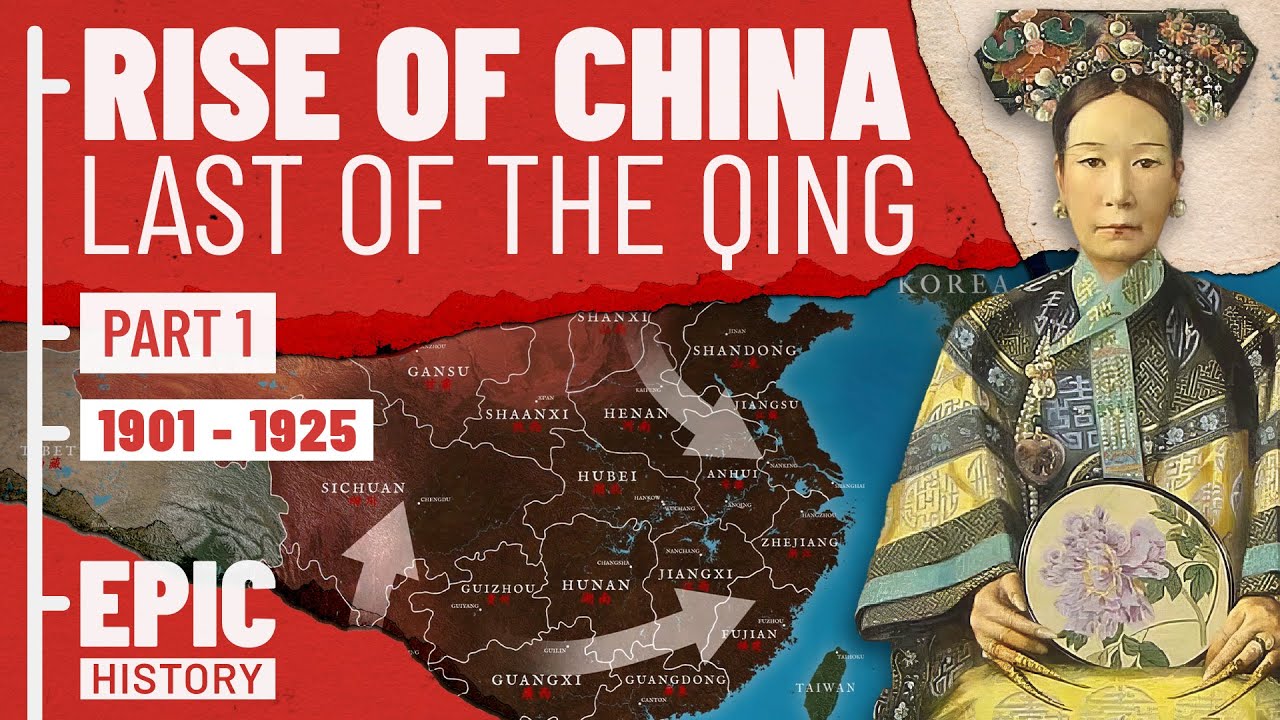
The narrative of “Last of the Qing – Rise of China Part 1” provides a detailed exploration of China’s historical evolution during the decline of the Qing dynasty. This monumental period spans over two centuries and highlights the complex interplay of cultural, social, and political changes within the nation. It begins with the imperial rule dominated by Confucian values, transitioning through tumultuous events such as the Opium Wars and internal rebellions that significantly impacted China’s trajectory and sovereignty.
You will encounter critical moments that include the fall of imperial authority, the rise of revolutionary leaders like Sun Yat-sen, and the struggle for a new national identity amidst foreign encroachment. By examining these developments, the article paves the way for understanding how China transformed from a vast empire to a modern republic, setting the stage for the challenges and aspirations that defined its 20th-century narrative.
The Evolution of the Qing Dynasty: A Comprehensive Analysis

Historical Context of the Qing Dynasty
Overview of the Qing Dynasty’s Reign from 1644 to 1912
The Qing Dynasty, which reigned from 1644 to 1912, represents the last imperial dynasty of China. Established by the Manchu, it succeeded the Ming Dynasty and marked the beginning of a new era characterized by significant territorial expansion and complex socio-political dynamics. Spanning nearly 268 years, the Qing Dynasty witnessed an extensive evolution of Chinese civilization, leaving an undeniable mark on the nation’s cultural and historical landscape. The Manchu rulers, originating from the northeastern region of China, engaged in a meticulous strategy of consolidation, ultimately hindering the influence of the native Han majority while intertwining with their customs and practices. This fusion not only defined the dynasty’s early years but also served as a catalyst for internal strife and subsequent reforms that would come to shape modern China.
Cultural Significance and Legacy of the Qing Period
The Qing Dynasty’s cultural significance lies in its rich blend of traditions and innovations, where it served as both a custodian of Confucian values and a promoter of cultural exchange. Artistic expression flourished during this period, manifesting in various forms, including literature, painting, and porcelain craftsmanship. The novel “Dream of the Red Chamber,” authored by Cao Xueqin, emerged as an epitome of Qing literature, reflecting the society’s complexities and emotional intricacies. Furthermore, the dissemination of Confucian principles permanently influenced the societal framework, prioritizing family loyalty and respect for authority. The legacy of the Qing also lays in its eventual downfall, symbolizing the end of imperial rule and paving the way for the establishments of modern governance structures in China.
Economic Landscape and Trade Dynamics during the Qing Era
The economic landscape of the Qing Dynasty was marked by considerable agricultural productivity alongside burgeoning trade opportunities. By the 19th century, the Qing Empire had established itself as a formidable player in global trade, characterized by an influx of foreign goods and commodities. This dynamic, however, created reliance on opium, imported primarily from British merchants, leading to a devastating public health crisis. The economy’s dual nature, oscillating between stability and turmoil, shaped the Qing Dynasty’s interactions with foreign powers, ultimately culminating in a series of conflicts that would alter its economic fabric and governance.
Demographics and Territorial Expansion
Peak Population Statistics and Density in the Qing Era
At its zenith, the Qing Empire encompassed an extraordinary population of approximately 450 million, making up about one-third of the global populace during that period. This demographic expansion was largely fueled by agricultural advancements and a relatively stable social structure, which enabled sustained population growth throughout the 18th and early 19th centuries. Consequently, areas such as the coastal provinces flourished, with urban centers becoming densely populated hubs of commerce and culture.
Territorial Boundaries and the Significance of the Empire’s Expanse
The Qing Empire peaked at around 14.5 million square kilometers, stretching from the Pacific Ocean to the Himalayas and covering significant portions of Central Asia. Such extensive territory not only signified a powerful imperial presence but also highlighted the Empire’s ambition to cultivate a harmonious relationship among its diverse ethnic groups. The significance of this expanse was further emphasized by the economic benefits it brought, including increased trade routes and resource availability, though it also posed considerable challenges in governance and territorial management.
Migration and Settlement Patterns within the Empire
Migration patterns within the Qing Empire were intricately linked to agricultural practices and trade. As prosperity blossomed, significant movements of Han settlers into frontier regions occurred, reshaping the demographic composition of various provinces. These migrations facilitated the spread of Han culture, often resulting in a blend of indigenous and Han practices. Settlements transformed from small agricultural communities into bustling towns, which eventually played pivotal roles in trade dynamics and administrative oversight.
Confucianism and Social Structure
The Role of Confucian Values in Governance and Society
Confucianism served as the ideological backbone of the Qing Dynasty, profoundly influencing governance, societal norms, and interpersonal relationships. Emphasizing harmony, filial piety, and moral integrity, Confucian values permeated every layer of society. The concept of “Mandate of Heaven,” which justified the emperor’s rule, created an expectation of benevolent leadership. As you study this era, you can observe how Confucian principles fostered a sense of social order, promoting loyalty, respect, and the responsibility of leaders to their subjects.
Hierarchy and the Bureaucratic System of Scholar-Officials
The Qing bureaucratic system was characterized by a rigid hierarchy dominated by scholar-officials, selected through arduous civil service examinations based heavily on Confucian texts. This examination system underscored the importance of meritocracy, yet it also entrenched a social class of educated elites. Understanding this intricate system reveals how scholar-officials cultivated governance practices that prioritized stability; however, it also highlights the growing disconnect between the ruling elite and an increasingly frustrated populace during the dynasty’s latter years.
Impact of Confucianism on Family and Community Relationships
Confucian ideology instilled a deep-rooted emphasis on familial bonds and communal responsibilities, shaping both daily life and social interactions. The family structure, organized around patriarchal authority and hierarchical roles, influenced everything from marriage practices to inheritance laws. This reliance on social cohesion and mutual obligation fostered communities that valued cooperation and collective well-being, but it also constrained individual expression, especially for women, who were often relegated to submissive roles.
Opium Wars: Conflict and Consequences
Origins and Causes of the Opium Wars
As you delve into the history of the Opium Wars, it becomes clear that these conflicts were the product of complex interactions between foreign powers and the Qing Empire. The British began exporting opium to China in the early 19th century, seeking to balance the trade of their prized tea and silk. The consequent addiction crisis and resulting societal upheaval ignited fierce public and governmental outrage. Such forces culminated in the First Opium War (1839-1842), which primarily stemmed from the Qing’s attempts to curtail opium trade and protect public health.
Key Battles and Military Strategies Employed
The First Opium War unfolded through a series of significant battles, including the decisive engagements at the Battle of the Pearl River and the capture of cities such as Guangzhou. The British, equipped with superior naval technology and military tactics, were able to outmaneuver Qing forces effectively. The humiliating defeats exposed the Qing military’s vulnerabilities and accelerated calls for reform, laying the groundwork for a shift in internal policies and military strategies.
Aftermath and the Treaty of Nanking’s Implications
The signing of the Treaty of Nanking in 1842 marked a humiliating turning point for the Qing Empire. Forced to concede territory, including Hong Kong, and establish five treaty ports for British trade, this treaty epitomized the ‘unequal treaty’ framework that prevailed throughout the 19th century. As you analyze this treaty’s implications, consider the long-term socio-economic ramifications it brought, including increased foreign influence and the exacerbation of existing internal discontent, contributing to the empire’s eventual decline.

The Taiping and Boxer Rebellions
Causes and Ideologies Behind the Taiping Rebellion
The Taiping Rebellion (1850-1864) emerged as a profound socio-political upheaval driven by widespread discontent with the Qing governance, fueled by economic strains, corruption, and social injustices. Led by Hong Xiuquan, who claimed a divine mandate, the rebellion sought to establish the “Taiping Heavenly Kingdom.” Your investigation into the causes of this massive civil war should focus on the interplay of religious fervor, an anti-Manchu sentiment, and the desire for reform, which captured the imagination of millions and led to devastating consequences.
Impact of Internal Strife on the Qing Dynasty
The Taiping Rebellion, resulting in an estimated 40 million deaths, significantly undermined the Qing state, ravaging regions and depleting resources. The sheer scale of the conflict exposed the empire’s administrative weaknesses and contributed to a broader loss of faith in the ruling dynasty. You should contemplate how this internal strife precipitated not only immediate humanitarian crises but also long-term destabilization, laying the groundwork for subsequent movements and revolts against Qing authority.
The Boxer Rebellion: A Reaction Against Foreign Influence
Faced with external pressures and increasing national humiliation from foreign interventions, the Boxer Rebellion (1899-1901) erupted as a nationalist uprising aimed at expelling foreign devils and their influences. Comprised primarily of anti-Qing secret societies, the Boxers expressed the frustrations of the Chinese populace through violent means. Investigating the motivations and outcomes of this rebellion allows you to appreciate the extent of national fervor and disillusionment with Qing leadership, culminating in further foreign intervention and a breakdown of Qing legitimacy.
Reforms under the Qing Dynasty
Overview of Reforms Initiated Post-Rebellions
In the face of internal turmoil and external pressures, the Qing Dynasty initiated a series of reforms aimed at modernization. The Self-Strengthening Movement sought to enhance military capabilities while adopting Western technologies. Analyze how these reforms not only served as a reaction to prevailing crises but also highlighted the increasing urgency within the dynasty to adapt to a changing world.
Attempts at Modernization in Military and Education
Substantial efforts were made to modernize military structures and education systems, including the establishment of new schools and the abolition of the archaic civil service examinations. The introduction of Western methodologies and technologies became pivotal in these modernizing endeavors. You may critically consider the effectiveness of these attempts, as they often fell short of addressing significant institutional weaknesses and undercurrents of discontent.
Public Response to the Qing’s Reform Efforts
The Qing reforms drew mixed responses from the public, with some viewing the alterations as necessary and long overdue, while others regarded them as superficial attempts to placate the populace without addressing the underlying issues. Your exploration of public sentiment toward these reforms reveals the complexities of Qing relationships with its subjects amidst a backdrop of fear, hope, and burgeoning revolutionary consciousness.
Emergence of Revolutionary Leaders
Sun Yat-sen’s Vision for a Republican China
As revolutionary sentiment simmered across the empire, Sun Yat-sen emerged as a pivotal figure advocating for the establishment of a republic in China. His vision encompassed principles of nationalism, democracy, and the people’s livelihood, which resonated with a populace weary of imperial neglect. As you examine Sun’s ideas and leadership, consider how they reflected broader aspirations for reform and modernization endemic to a new generation of Chinese intellectuals.
Political Ideologies and Influence on the Revolutionary Movement
Sun’s ideologies significantly influenced the revolutionary movement, fostering a sense of unity among disparate groups seeking to dismantle the Qing dynasty. His foundational principles would coalesce into the political platform of the Kuomintang (KMT), which sought to galvanize support across the country. Reflecting on the ideological evolution during this period will deepen your understanding of the intricate interplay between hope, despair, and national identity among ordinary citizens.
The Role of the Kuomintang and Sun’s Leadership
The Kuomintang, founded with Sun Yat-sen’s leadership, would become a unifying force in the revolutionary struggle against Qing rule and set the stage for future political contests in China. As you study the KMT’s establishment and mission, examine its commitment to republican principles, as well as the challenges it faced in rallying popular support amidst regional fragmentation and fluctuating loyalties.
The Fall of the Qing Dynasty
The Significance of the 1911 Wuchang Uprising
The Wuchang Uprising of October 10, 1911, marked a decisive turning point in Chinese history, instigating the end of over two millennia of imperial rule. As you evaluate the significance of this uprising, consider its roots in rising discontent among revolutionary groups and a desire for systemic change. This event would become the catalyst for widespread revolt, demanding an end to Qing supremacy and fostering hopes for a republic.
Succession of Power and the Abdication of Emperor Pu Yi
Following a series of revolts, the abdication of the last emperor, Pu Yi, officially occurring on February 12, 1912, symbolizes the dissolution of imperial authority. Reflect on how this transition of power precipitated a unique moment in Chinese history, wherein the Qing legacy gave way to the challenges of republican governance, creating a vacuum filled with political uncertainty and rapid change.
The Establishment of the Republic of China and Its Implications
The proclamation of the Republic of China on January 1, 1912, represented a monumental shift in governance, propelling China into the tumultuous waters of modernity. As you analyze the implications of this transition, consider the dilemmas faced by the new republic, including maintaining a unified state amidst diverse regional interests and international pressures, ultimately revealing the fragile nature of its foundational ideals.
Political Turmoil Post-Qing
Yuan Shikai’s Presidency and Consolidation of Power
In the wake of the imperial collapse, Yuan Shikai emerged as a powerful figure, assuming the presidency of the Republic of China. His consolidation of power, however, was fraught with challenges. You can critically evaluate Yuan’s leadership style and political maneuvering, as he frequently resorted to military tactics to quell dissent, raising pressing questions about the viability of democratic ideals in a nation steeped in autocratic traditions.
Challenges to the New Republic from Revolutionaries
The newly established republic faced immediate challenges, particularly from revolutionary factions like the Kuomintang, which sought to secure a representative government. The competition for political legitimacy laid bare the divisions within Chinese society and revealed the complex relationship between revolutionary aspirations and the realities of governance. Your exploration of these tensions will illuminate how they shaped the political landscape during this critical juncture.
The Assassination of Song Jiaoren and Its Impact on Democracy
The assassination of Song Jiaoren, a prominent KMT leader, in March 1913 severely undermined the nascent democratic processes in China. You should reflect on how this violent act curtailed hopes for a participatory government and solidified the suspicion surrounding Yuan’s rule. This event not only disrupted the KMT’s democratic aspirations but also propelled China into escalating political instability.
Conclusion
Summary of the Qing Dynasty’s Decline and Its Implications for China
The decline of the Qing Dynasty, marked by internal conflicts, foreign subjugation, and profound reform attempts, ultimately set the stage for the tumultuous transition to republicanism in China. Your examination of this period reveals how the far-reaching implications shaped subsequent historical trajectories, laying the groundwork for future revolutions and political upheavals.
Reflection on the Ongoing Tensions and Conflicts in Early 20th-Century China
As you contemplate the ongoing tensions in early 20th-century China, the aftereffects of imperial collapse resonate through the evolving political landscape. The fragmentation that emerged from both internal strife and foreign encroachment underscored a nation grappling with competing ideologies and identities, reflecting collective aspirations for modernization under unprecedented pressures.
Setting the Stage for the Subsequent Rise of Chiang Kai-shek
The legacies of the Qing Dynasty and the political turmoil of the early 20th century ultimately culminated in the rise of Chiang Kai-shek and the Kuomintang, who sought to unify a fragmented nation amidst the lingering uncertainties. As you conclude your examination of this transformative era, consider how these developments would give rise to continued struggles for leadership, identity, and stability in China, shaping the trajectory of its future.