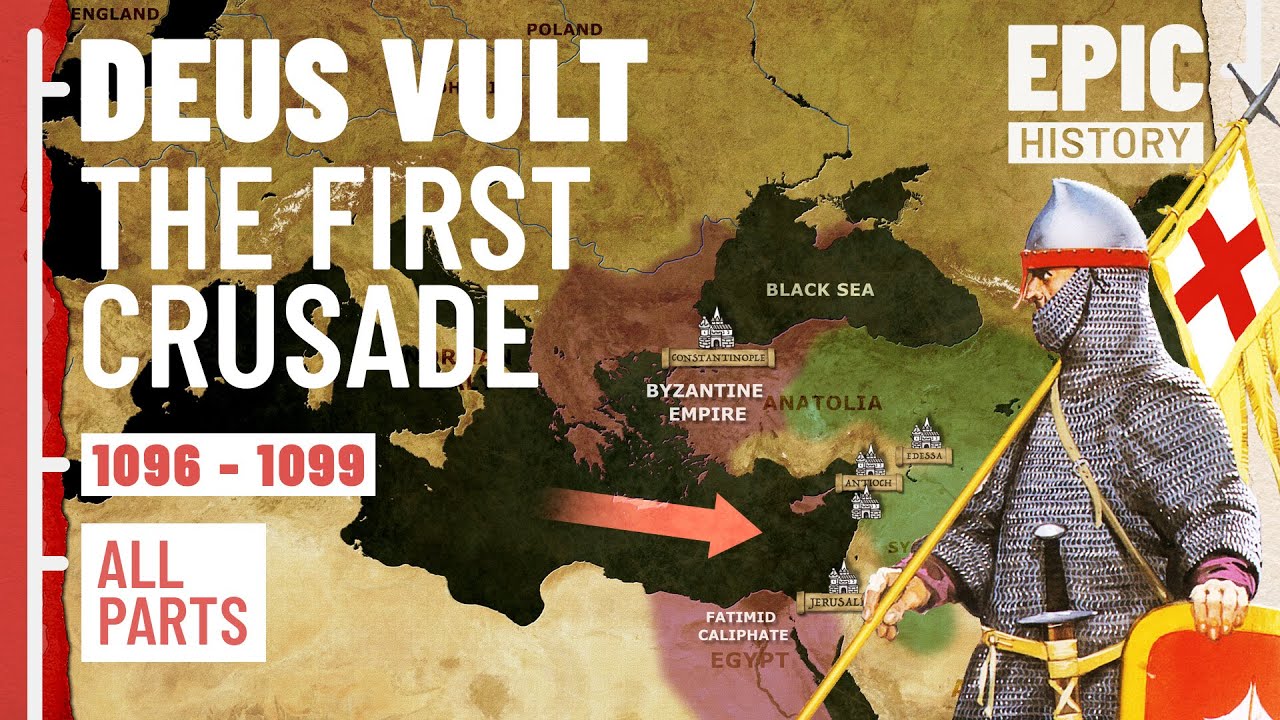
The First Crusade marked a pivotal moment in medieval European history, characterized by the intersection of religious fervor and military ambition. Initiated by an urgent appeal from the Byzantine Empire for assistance against the encroaching Seljuk Turks, Pope Urban II’s sermon at Clermont in 1095 ignited an extraordinary mobilization among Christians. His call not only aimed to mend the divide between Eastern and Western Christianity, but also sought to reclaim Jerusalem—a city of immense spiritual significance—from Muslim control. By promising absolution for sins to those who joined the cause, Urban II effectively transformed a regional conflict into a widespread religious campaign.
The ensuing mobilization attracted a diverse group of participants, ranging from noble knights to common peasants, many of whom were drawn by the promise of spiritual salvation. However, the early Crusaders faced significant challenges, including disorganization and internecine strife, as demonstrated by the violent actions taken against local Jewish communities. As the Crusaders advanced toward their goal, their military efforts exhibited both successes and tensions, particularly in their relationships with the Byzantine allies. This article explores the profound impact of Pope Urban II’s rhetoric on the development and consequences of the First Crusade, examining both its immediate outcomes and its lasting implications for Christian-Muslim relations in the region.
Historical Context of the First Crusade
The First Crusade was driven by a complex interplay of geopolitical and religious factors that shaped the medieval world. You must understand this historical context to appreciate the magnitude and implications of the Crusade.
The Byzantine Empire’s Request for Assistance
In the late 11th century, the Byzantine Empire found itself increasingly vulnerable to external threats, particularly from the Seljuk Turks, who had made significant territorial gains following their decisive victory at the Battle of Manzikert in 1071. The Byzantine Emperor Alexius I Comnenus recognized that his empire’s survival hinged on the assistance of Western Christendom. Consequently, he reached out to Pope Urban II in 1095, appealing for military support against the encroaching Turkic forces. This request was not unprecedented, yet it became a catalyst for a larger movement that would impact Europe and the Near East.
The Rise of the Seljuk Turks
The Seljuk Turks had been steadily expanding their influence across Anatolia, converting to Islam and establishing a formidable military force that posed a existential threat not only to the Byzantine Empire but to Christian territories in the region. By the time Alexius sent his appeal, several major cities, including Nicaea and Antioch, had already fallen to Seljuk occupation. Their expansion disrupted the balance of power and instigated a call for action among Christians who felt compelled to defend their faith and lands from what they perceived as an infidel invasion.
The Socio-Political Climate of 11th Century Europe
During the 11th century, Europe was rife with internal strife, feudal wars, and social upheaval, marked by the complex hierarchy of nobility seeking to expand their domains. This environment fostered a burgeoning sense of identity among various European states, particularly among the knightly class who were keen to assert their power and religious devotion. The papacy, under Urban II, sought to consolidate its authority by positioning the Church as a unifying force; the Crusade became a perfect mechanism for channeling the ambitions of feudal lords into a collective religious endeavor. Thus, the socio-political dynamics of the time coalesced to create a fertile ground for the First Crusade.
Pope Urban II and His Motivations
Understanding the motivations behind Pope Urban II’s call to arms is imperative, as they set the stage for the entire Crusading movement.
Background of Pope Urban II
Pope Urban II, born Odo of Châtillon, rose to the papacy in 1088 during a time when the Church sought to reaffirm its supremacy over secular powers. His leadership was marked by a desire to strengthen the position of the papacy, heal rifts within Christianity, and reinvigorate church governance, especially following the Great Schism of 1054. Urban II viewed the Byzantine request for help as an opportunity to cement the Church’s authority and rally Christians under a shared banner.
Desire to Heal the Schism between Eastern and Western Christianity
The Great Schism had created a significant divide between the Eastern Orthodox and Roman Catholic churches. Urban II saw the Crusade as a means of reconciling these two branches of Christianity, presenting it as a unified effort against a common enemy. By leading a military campaign, the papacy could assert its power while simultaneously fostering unity among Christians.
Aiming to Reclaim Jerusalem from Muslim Rule
At the heart of Urban II’s motivations lay the goal of reclaiming Jerusalem, the site of Christ’s crucifixion and a city of profound spiritual significance. The city had fallen under Muslim rule nearly 400 years earlier, and Urban’s vision of a crusade was not merely a military endeavor but a spiritual reclamation. He envisioned a movement where knights would fight not for land or wealth, but for eternal salvation, thereby transforming their quest into a divine mission.

The Sermon at Clermont
The sermon at Clermont in 1095 became the rallying cry for the First Crusade, charged with emotional and ideological fervor.
Content and Themes of the Sermon
Urban II’s sermon invited listeners to view the military campaign not just as a battle against the Turks, but as a sacred pilgrimage. He spoke passionately of the suffering of Christians in the East and emphasized their need for aid, framing the Crusade as an opportunity for redemption. His portrayal of Jerusalem as a coveted prize stirred the imaginations of his audience, invoking a sense of divine purpose.
Urban II’s Strategy to Rally Support
Urban II employed a strategic exhortation designed to resonate with various segments of society. He appealed not only to the nobility but also to common folk, invoking the ethos of chivalry and the moral imperative to liberate fellow Christians. The inclusion of all classes in the call to action addressed widespread discontent and aspirations for honor that permeated the medieval landscape.
The Promise of Spiritual Rewards
The Pope’s most compelling enticement was the promise of absolution and eternal salvation for those who answered the call to arms. Phrases like “Deus vult!” or “God wills it!” became a battle cry that echoed throughout Europe, inciting fervor and fervency among potential crusaders. This offer of spiritual rewards provided a powerful incentive, converting an ordinary military campaign into a holy mission.
Immediate Impact of the Sermon
The aftermath of the sermon at Clermont was profound, as it led to an unprecedented surge of support for the Crusade.
Surge of Volunteers: Who Answered the Call?
A mix of nobility, knights, and commoners soon emerged, inspired by Urban II’s passionate call. Thousands believed the Crusade offered a chance for adventure, significance, and salvation. The idea of undertaking a pilgrimage to Jerusalem morphed into a collective identity among those who were willing to don the cross, ultimately resulting in an enthusiastic, albeit poorly organized, gathering of crusaders.
Role of Nobility and Common Folk
While the initial wave of crusaders included great lords and knights, the participation of common folk was equally notable. Peasants and laborers represented a cross-section of medieval society; many sought not just spiritual absolution but also a break from their mundane existences, viewing the Crusade as an opportunity for social mobility or a way to escape the rigors of feudal life.
Emergence of the Crusading Spirit
The fervor ignited by Urban II’s sermon gave rise to a distinctly crusading spirit—an amalgamation of religious zeal, social aspiration, and escalating conflict. This movement was not merely a reaction to an external threat from the Seljuk Turks but reflected deeper spiritual and social currents present in medieval society. The call to crusade marked a significant shift in the perception of warfare, merging the concepts of piety and violence.

The Nature of Crusader Forces
An understanding of the composition and organization of the Crusader forces is essential to grasp the dynamics of the military campaigns that ensued.
Composition of the Main Crusader Army
The main Crusader army was a diverse coalition composed of various factions that included knights, serfs, and bandits, all united under a shared banner of faith. The noblemen were better equipped, riding armored horses and wielding swords, while the commoners typically came with little more than resolve and makeshift weapons. This mixture of social classes added complexity to the military structure and contributed to both cohesion and chaos.
Influence of Leaders Like Godfrey of Bouillon
Notable leaders played pivotal roles in uniting these diverse factions. Godfrey of Bouillon emerged as a central figure among the Crusader leaders, characterized by a blend of military acumen and deep religious conviction. His leadership style inspired loyalty and dedication, essential for maintaining morale among the expansive and heterogeneous army. The involvement of such prominent figures lent a degree of legitimacy and direction to the nascent Crusade.
Challenges Faced by Early Crusaders
Early on, the Crusaders faced significant challenges, including massive logistical issues. From inadequate supplies to the harsh terrains of Anatolia, the undertaking proved more daunting than anticipated. Moreover, the lack of coherent leadership amongst the numerous factions led to disputes and disorganization, raising profound concerns about the feasibility of their ultimate goal.
Violence and Religious Intolerance
As the First Crusade progressed, an unsettling proclivity for violence emerged, revealing a deeply ingrained intolerance that would have lasting ramifications.
Attacks on Jewish Communities
The fervor of the crusading spirit engendered violent excesses, particularly directed against Jewish communities in Europe. Many crusaders, fueled by a warped sense of mission, attacked local Jewish populace, leading to mass killings and outbreaks of violence that left a tragic stain on the movement. These actions raised ethical questions about the nature of the Crusade, underscoring the dangers of religious zealotry.
The Role of Popular Movements Like That of Peter the Hermit
The phenomenon of popular movements, particularly the Peasant’s Crusade led by figures such as Peter the Hermit, exemplified a more chaotic aspect of the Crusade’s recruitment. Unorganized and ill-equipped, these groups often acted on their own interpretations of Urban II’s call to arms, resulting in disastrous expeditions that underscored the volatility of popular enthusiasm for the crusading cause.
Impact on Christian-Muslim Relations
The violence inflicted by crusaders, particularly against Jewish communities, further exacerbated Christian-Muslim relations, feeding into a cycle of intolerance that would shape centuries of conflict. The emotional scars left behind by these early acts of violence contributed to a perception of Muslims as enemies that was to persist throughout the historiography of the era.
Military Campaigns and Key Battles
The course of the First Crusade was marked by military campaigns and decisive battles that would ultimately determine its trajectory.
The Siege and Capture of Nicaea
The initial campaign culminated in the siege and capture of Nicaea in 1097, which became the first major success for the Crusaders. After a grueling six-week siege, the city surrendered to Byzantine forces, yet this victory sowed seeds of tension between the Crusaders and their Byzantine allies, who felt that the city’s riches had been usurped from them.
Tensions Between Crusaders and Byzantines
The relationship between the Crusaders and the Byzantines grew increasingly fraught as territorial disputes and competing claims emerged. The Crusaders’ insistence on independent control over captured territories posed a direct challenge to Byzantine authority, which had expected to utilize the crusading forces to support its own ambitions in retaking lost lands.
Significant Battles: Dorylaeum and Beyond
The Battle of Dorylaeum in 1097 was a pivotal encounter that marked a significant turning point for the Crusaders. Facing a larger Turkish force, the Crusaders, under Godfrey’s coordination, staged a daring defensive strategy that ultimately secured a hard-won victory. This success revitalized their mission and solidified their resolve, encouraging further advances towards Jerusalem.
Challenges Along the Route to Jerusalem
The journey to Jerusalem was fraught with difficulties that tested the Crusaders’ resolve and introduced unforeseen complications.
Logistical Issues: Supplies and Terrain
One of the most immediate challenges confronting the Crusaders was securing adequate supplies and navigating the diverse terrains of Anatolia. As they ventured deeper into hostile territory, the Crusaders faced issues of resource scarcity that led to tension within the ranks, exacerbating the already precarious situation.
Health Crises: Disease and Starvation
As the march continued, the effects of disease and starvation began to take their toll on the crusading forces. The cramped conditions, limited access to food, and physical hardships weakened morale and led to increasing casualties. The specter of illness loomed large, at times overshadowing even the anticipated clashes with Turkish forces.
Revitalization of Morale Through Reinforcements
Despite these overwhelming challenges, the arrival of reinforcements at crucial junctures bolstered the Crusaders’ spirits. Notable figures, such as Baldwin of Boulogne, were instrumental in invigorating the troops, as their presence underscored the legitimacy and growing momentum of the undertaking. Such reinforcements often reignited hope and determination to continue the arduous journey toward Jerusalem.
Siege of Antioch
The siege of Antioch represented one of the most critical episodes in the First Crusade, underscoring the challenges and complexities faced by the crusaders.
The Fortifications of Antioch
Antioch, fortified by formidable walls and a strategic position, presented a daunting obstacle. Situated in a region heavily fortified by the Turks, the city’s defenses proved to be a formidable barrier, leading to a lengthy and arduous siege that demanded immense resources and patience from the besieging forces.
Discovery of the Holy Lance
In a dramatic turn of events during the siege, one of the Crusaders discovered what they claimed to be the “Holy Lance,” a relic associated with the crucifixion of Christ. This discovery infused the besieged forces with renewed vigor and faith, serving as both a psychological and spiritual enhancer. The significance of the Holy Lance turned the siege into a battle fight for divine favor, further intensifying the mission’s spiritual dimensions.
Aftermath: Securing Antioch for the Crusaders
After a prolonged and exhaustive siege, the Crusaders finally managed to secure Antioch in June 1098. This victory not only represented a significant loss for the Seljuk Turks but also crucially shifted the momentum of the Crusade. However, the victory was marred by subsequent violence and disorder as the city’s residents faced brutal reprisals, reflecting the complex interplay of faith, violence, and political ambition that characterized the First Crusade.
Conclusion
The First Crusade remains a defining moment in medieval history, shaped by a multitude of factors that extend beyond the battlefield.
Summary of Urban II’s Impact
Pope Urban II’s impact was instrumental in catalyzing what would become a mass movement that transcended mere military objectives. By appealing to the shared sense of identity and divine duty, he successfully mobilized a diverse cross-section of European society into a collective crusade.
Lasting Legacy of the First Crusade
The legacy of the First Crusade is multifaceted, marked by both triumphs and tragedies that resonate through the ages. Its success served as a potent reminder of the power of ideological conviction, while its failings highlighted the moral ambiguities inherent in the quest for religious supremacy.
Historical Significance and Interpretations
As you reflect on the historical significance of the First Crusade, it becomes evident that it was not merely a religious campaign; rather, it was a complex interplay of socio-political dynamics, religious fervor, and human ambition. The First Crusade would indeed set the stage for centuries of conflict and cooperation between Christian and Muslim entities, leaving an indelible mark on world history.