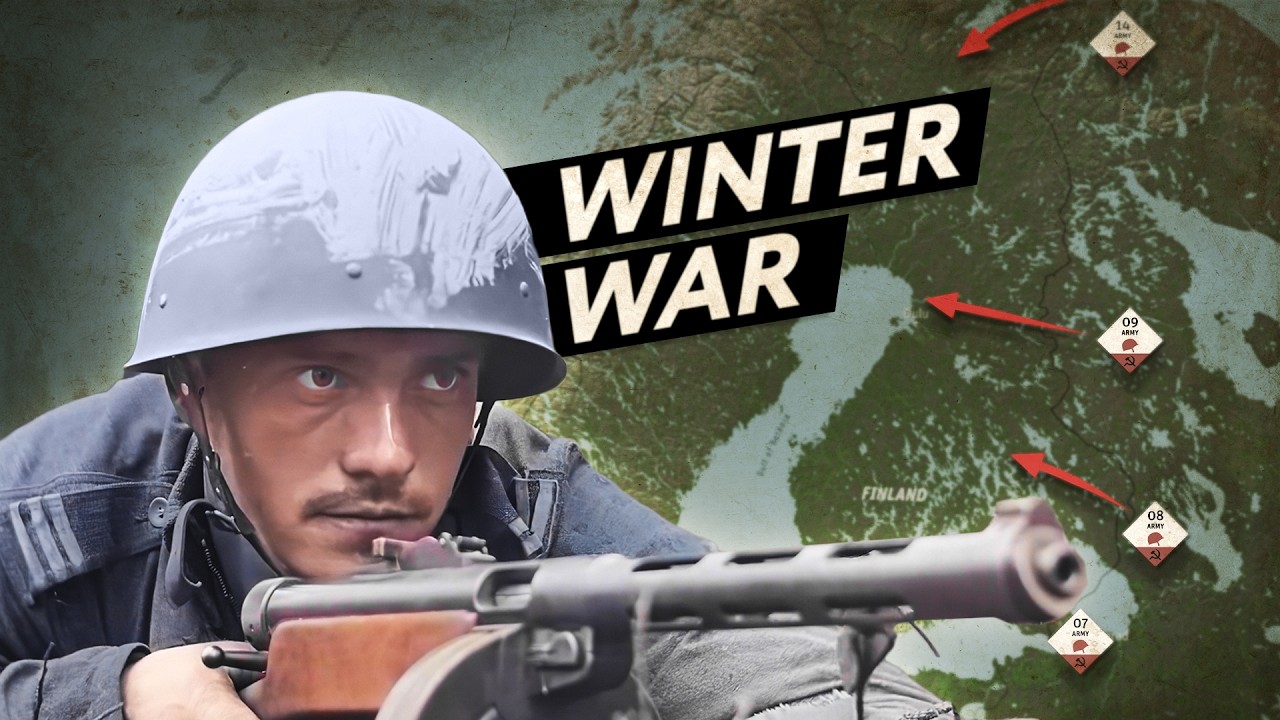
The Soviet invasion of Finland during the Winter War of 1939-40 represents a significant chapter in the annals of military history, characterized by unexpected challenges and profound losses. As tensions escalated following previously established territorial ambitions, the Soviet Union sought to assert its dominance over Finland, which had declared independence from Russia in 1917. This article will examine the context and objectives behind the invasion, the military dynamics at play, and the subsequent reactions—including the mobilization of both Finnish defensive strategies and international responses.
The narrative unfolds with the initial Soviet aggression marked by air raids, transitioning into a protracted conflict that defied their anticipations of a swift victory. Finnish forces, despite being outmatched in numbers and resources, utilized tactical ingenuity and an intimate knowledge of their terrain to mount a formidable defense. The exploration of this war reveals the complexities of national identity, the brutal consequences of military confrontation, and the long-lasting impact on Finnish society and its geopolitical landscape.
Historical Context of the Winter War
Overview of World War II Timeline
In the late 1930s, Europe was engulfed in tensions that were to evolve into one of the most brutal conflicts in history: World War II. Following the signing of the Molotov-Ribbentrop Pact in August 1939, which clandestinely divided Eastern Europe into spheres of influence, the wheels of war were set in motion. With Germany invading Poland in September 1939 and the Soviet Union subsequently occupying the eastern part of the region, these aggressive maneuvers signified a broader ambition for domination that would affect neighboring nations, particularly Finland. The Soviet Union, emboldened by a perception of invulnerability in the wake of its German alliance, began to cast its eyes hungrily toward Finland, leading to the fateful Winter War beginning on November 30, 1939.
The Soviet Union and Finland’s Pre-War Relations
Relations between Finland and the Soviet Union had been tumultuous ever since Finland declared independence from Russia in 1917. Although initially promising, the path to diplomatic mutualism was marred by historical conflicts, ideological differences, and the echoes of civil war. The Soviet regime harbored ambitions of reclaiming lost territories and perceived Finland as a potential threat to its stability, particularly given its strategic location bordering Leningrad. In the 1930s, accusations against Finland included support for anti-Soviet sentiments, further escalating tensions. Thus, the pre-war relations were fraught with mutual mistrust, setting the stage for conflict.
Significance of Finland’s Independence
Finland’s declaration of independence in December 1917 was a crucial turning point, as it marked the transition from Russian imperial control to self-determination. This independence was fervently fought for, particularly during the Finnish Civil War (1917-1918), which saw the Red Guards, aligned with the Bolshevik movement, contend against the White Guards, who sought to establish a capitalist framework. Despite military and ideological differences, the spirit of national identity was forged in the fires of these conflicts. Thus, Finland’s independence was not merely a political milestone; it represented a struggle for autonomy and self-identity that would invigorate its resolve during the forthcoming Winter War.
Soviet Objectives and Territorial Demands
Strategic Aims of the Soviet Invasion
In contemplating the invasion of Finland, the Soviet Union operated under the strategic philosophy of expanding its borders for perceived security and territorial reunification. The USSR sought to firmly establish itself as a dominant regional power by incorporating Finland into its sphere. Stalin viewed Finland not simply as a neighbor but as a strategic asset in his broader imperial ambitions to reconstruct the former Russian Empire. Such objectives encompassed not merely military gains but also the imposition of an ideological buffer against capitalist influences from the West.
Specific Territorial Claims Made by the USSR
The demands made by the Soviet Union were multifaceted, seeking significant territorial concessions from Finland. In particular, Stalin’s government requested that Finland relinquish the strategically vital Hanko Peninsula for a Soviet naval base, portions of the Karelian Isthmus for military fortifications, and several islands in the Gulf of Finland. Additionally, the Soviet Union pushed to demolish Finnish border fortifications alongside the country’s western frontier. In exchange for these substantial concessions, the USSR offered Finland land in Eastern Karelia, which was largely uninhabited; however, the Finnish government perceived these concessions as a violation of its sovereignty and an existential threat to its independence.
Finnish Government’s Rejection of Demands
Faced with these demands, the Finnish government under President Kyösti Kallio engaged in intense deliberations, weighing the implications of acquiescing to Soviet pressure against the responsibility to uphold national integrity. While certain military advisors advocated for compromise, fearing the likely consequences of resistance, many officials and citizens resoundingly rejected the dictation of Soviet terms. This rejection was compounded by a history of mistrust towards Stalin’s motives, as the Finnish government correctly surmised that compliance would only invite further demands. The conversations culminated in a hardline refusal that marked the definitive rupture in Finnish-Soviet relations, laying the groundwork for the impending invasion.
Military Preparations Prior to Invasion
Finnish Military Mobilization and Strategy
As tensions reached boiling point, Finland mobilized its military in anticipation of potential conflict. The initial deployment comprised approximately 250,000 troops, equipped primarily for defense rather than offensive capabilities. Finnish military strategy pivoted around maximizing the advantages afforded by their intricate terrain, which was characterized by dense forests, numerous lakes, and harsh winter conditions. Moreover, the Finnish forces honed a philosophy of utilizing guerilla tactics, knowing they would need to rely on ingenuity and elusiveness when faced with Soviet numerical superiority.
Number of Soviet Troops and Initial Expectations
The Soviet Union, meanwhile, prepared an impressive force of around 425,000 troops, along with significant artillery, air support, and armored units—outnumbering Finnish forces substantially. Soviet military planners anticipated a swift victory, informed by previous rapid campaigns in Poland. The expectation was that Finnish resistance would crumble under the pressure of overwhelming force. This gross underestimation of the Finnish defense and resolve would soon prove to be a calamitous misjudgment for the Red Army.
Comparative Analysis of Military Resources
A comparative assessment of military resources reveals stark contrasts between the two nations. Finland’s army was characterized by spirited personnel, deeply familiar with their homeland’s geography. However, their resources were limited: a mere 30 tanks, a small number of artillery pieces, and only 114 aircraft. In contrast, the Soviets deployed an expansive array of weaponry, including 2,500 tanks and more than 2,800 artillery pieces. This disparity underlined a critical dynamic of the Winter War: despite unfavorable conditions, Finland’s preparation, strategic foresight, and ingenuity would fuel a fierce resistance against a seemingly indomitable adversary.

Outbreak of the Winter War
Timeline of Events Leading to War
Tensions culminating in the Winter War began to escalate sharply by late November 1939, as diplomatic channels between Finland and the Soviet Union closed. On November 26, the Soviets provoked an incident by falsely alleging Finnish shelling of one of their positions. This manufactured casus belli acted as a pretext for military action, obstructing Finnish hopes for diplomatic resolution. Within mere days, the invasion commenced with Soviet bombers targeting Finnish cities on November 30, marking the ignominious onset of the Winter War.
Initial Soviet Air Raids and Claims of Aggression
The Soviet air raids targeted vital infrastructure and civilian areas, ostensibly framed as a response to Finnish aggression, despite clear evidence to the contrary. The Soviet government’s rhetoric portrayed their actions as a defensive maneuver rather than an outright invasion, seeking to justify their military intervention to both international audiences and their domestic population. This propaganda would serve as a façade for the brutal reality of invasion, designed to obscure the intentions of a totalitarian regime determined to assert dominance.
Finnish Response: Mobilization & Defense Strategies
In stark contrast to Soviet claims, the Finnish response was marked by a rapid and fervent mobilization of its military forces. Utilizing the Mannerheim Line—a series of fortifications along the Finnish-Soviet border—Finnish commanders laid out defensive strategies aimed at leveraging the natural landscape as an ally. The Finnish populace, despite their limited resources, demonstrated remarkable resilience, evoking a strong sense of national unity rarely seen in times of foreign aggression. As the invasion began, the foundational tenets of national identity coalesced around the shared goal of defending the homeland.
The Mannerheim Line: A Key Defensive Strategy
Construction and Importance of the Mannerheim Line
The Mannerheim Line represented Finland’s foremost defensive fortification against a potential Soviet incursion. Named after Field Marshal Carl Gustav Emil Mannerheim, who served as a symbol of Finnish military leadership, the line was a combination of earthworks, concrete bunkers, and a variety of obstacles designed to hinder enemy advances. Built from the late 1920s and bolstered prior to the war, the line became an emblem of Finnish military resolve and ingenuity. Its strategic value lay not merely in its physical barriers but also in its capacity to fortify Finnish morale.
Tactical Advantages of Guarding the Line
Guarding the Mannerheim Line conferred vital tactical advantages to Finnish forces. The fortifications granted cover and enhanced defensive capabilities, allowing Finnish troops to create bottlenecks and ambush Soviet forces advancing through the limited gaps. Moreover, the challenging Finnish winter terrain was inherently conducive to defensive warfare, as the natural obstacles complicated Soviet troop movements and logistical support. This reality stymied Soviet march towards victory and highlighted the effectiveness of Finnish defensive tactics in a protracted conflict.
Stalemate Scenarios and Impact on Soviet Progress
Despite initial exuberance from Soviet commanders regarding a swift victory, the Mannerheim Line proved a formidable obstacle, giving rise to conditions of stalemate along the front. Sandy soil from the winter freeze made movement treacherous, while a lack of preparation for the bitter cold conspired against Soviet troops, undermining their morale and operational readiness. The inability to penetrate Finnish defenses dampened the early Soviet momentum, compelling Stalin’s generals to reevaluate their strategies while at the same time fostering Finnish determination to assert their independence against a much larger foe.
Combat Dynamics and Tactics
Finnish Guerrilla Warfare Techniques
Finnish forces adopted a variety of guerrilla warfare techniques to counter the vastly superior Soviet army. Utilizing their intimate knowledge of the rugged and snowy terrain, Finnish skiers became adept at rapid movement, launching surprise attacks and then retreating into the wilderness before the Soviets could organize a counter-offensive. Techniques such as the use of improvised weapons—including the now-famous Molotov Cocktail—emphasized innovation amidst resource constraints. Such tactics effectively disrupted Soviet supply chains, leading to significant casualties among Russian soldiers and contributing to the Finns’ psychological edge.
Soviet Challenges and Early Struggles
The initial Soviet advances encountered severe difficulties, influenced by a combination of strategic underestimations and logistical inefficiencies. Soviet troops, who had prepared for a swift campaign, faced heavy casualties as they trudged through surprisingly complex terrain. Cold-weather gear was insufficient for the harsh conditions they encountered, contributing to operational ineffectiveness. Low morale soon became pervasive among Soviet forces, being exacerbated by heavy losses that exceeded their expectations. The earlier assumption of Finnish capitulation was swiftly overturned in light of Finnish resolve and ingenuity.
The Role of Weather and Terrain in Combat
The unforgiving physical environment of Finland played a crucial role in shaping the dynamics of combat throughout the Winter War. As temperatures plummeted to extremes—sometimes sinking to -40 degrees Celsius—combatants on both sides were challenged by the enduring cold. However, for Finnish troops, who were acclimated to such conditions, the landscape served as an ally. They utilized the dense forests and snow-covered expanses to mastermind defensive operations, while Soviet forces were frequently hindered by environmental conditions. The interplay of weather and terrain ultimately reinforced Finland’s advantage as the war continued.
Major Battles and Key Victories
The Sausage War and Its Implications
The early skirmish known as the “Sausage War” epitomized the fierce spirit of Finnish resistance. Occurring shortly after the onset of the Winter War, Finnish forces successfully ambushed a Soviet convoy, inflicting heavy casualties while suffering relatively few losses themselves. This event became emblematic of Finland’s tactical superiority during the early phases of the conflict. The term “Sausage War” stemmed from the troops’ accounts of capturing Soviet rations, including sausages, thus embedding this battle in the cultural narrative of the Finnish resistance. The implications were profound: the victory galvanized Finnish morale and showcased the vulnerabilities of the Soviet military machine.
Impact of the Battle of Suomussalmi
The Battle of Suomussalmi, fought over the course of December 1939 into January 1940, marked a significant and crucial turning point in the Winter War. Finnish forces adeptly utilized guerilla tactics, isolating and engaging Soviet units within the dense forests, ultimately achieving a devastating victory that resulted in approximately 25,000 Soviet casualties against merely 2,700 Finnish losses. The triumph at Suomussalmi solidified Finland’s reputation as an indomitable defender and undercut Soviet morale, proving that a smaller, determined force could contest a more powerful adversary when guided by an understanding of terrain and tactics.
Analysis of Casualties and Tactical Outcomes
The disparity in casualties throughout the Winter War underscored the ferocity of the conflict. While Finland sustained approximately 25,000 military deaths, Soviet fatalities surpassed 126,000, alongside significant losses in equipment and morale. This stark imbalance not only emphasized the effectiveness of Finnish military strategy but also highlighted the strategic failures within the Soviet command structures. As the war progressed, casualties on both sides began embedding a profound psychological divide, leading to lasting animosities and marking the Winter War as a significant event influencing future conflict dynamics in the region.
International Reactions and Support
Response of the League of Nations
The League of Nations viewed the Soviet invasion with condemnation, leading to the expulsion of the USSR from the organization. This pivotal decision was indicative of the broader global recognition of the Soviet Union’s aggressive expansionism and further isolated Stalin on the international stage. The condemnation underscored the ethos of collective security that the League sought to uphold, while also portraying Finland as a victim of unprovoked aggression. The expulsion served as a rallying point for Finland, garnering sympathy internationally even though tangible assistance would prove limited.
Foreign Aid and Volunteer Support for Finland
Despite being geographically and politically distant from the conflict, various countries expressed solidarity with Finland during the Winter War. Approximately 12,000 international volunteers, equipped with a strong sense of ideology and desire to combat Soviet oppression, flocked to Finland. Countries like Sweden and the United States facilitated some military aid, including weapons and supplies, yet the assistance remained modest in the face of overwhelming Soviet resources. Nonetheless, the presence of foreign volunteers underscored a collective rejection of Soviet imperialism, creating a narrative of resistance that spread beyond Finland’s borders.
Global Perception of the Winter War
The Winter War captured the attention of global audiences, influencing public opinion in favor of Finland’s plight. Early reports of Finnish resilience in the face of overwhelming odds painted a narrative of courage and determination that transcended borders. Articles and broadcasts highlighted the stark contrasts between Finnish tenacity and perceived Soviet brutality, thus garnering sympathy for their cause. This phenomenon cultivated a legacy of support that would reverberate through the years, shaping both international diplomacy and the perception of the Soviet Union’s actions in subsequent conflicts.
The End of the Winter War
Breakthrough of the Mannerheim Line
As the Winter War unfolded, Soviet forces renewed their efforts, ultimately culminating in a concerted offensive in February 1940 that succeeded in breaching the Mannerheim Line. This breakthrough was facilitated by an expansive artillery bombardment alongside coordinated infantry assaults, capitalizing on any weakened defensive positions following months of intense combat. The event marked a turning point, as the Soviet Union, despite suffering heavy losses, adopted a more aggressive posture. The breach of this fortification shattered the foundation of Finnish defense, compelling the Finnish government to re-evaluate its military strategy amidst approaching adversities.
Signing of the Treaty of Moscow
On March 12, 1940, the conflict concluded with the signing of the Treaty of Moscow, through which Finland ceded approximately 10% of its territory to the Soviet Union. This loss, although framed as a compromise to end hostilities, produced significant repercussions for Finland’s national psyche and territorial integrity. The treaty embodied a harsh reality for the Finns, marking a moment of painful defeat amid their valiant efforts. Nevertheless, this carving of sovereignty did not extinguish Finnish resolve but rather marinated it in the bitter experience of resistance, where the populace became resolute in facing the undercurrents of Soviet expansionism.
Consequences of Territorial Loss for Finland
The territorial concessions outlined in the Treaty of Moscow reverberated through Finnish society, leaving an indelible mark on the national identity. Displacement, suffering, and losses experienced during the Winter War fostered a profound sense of bitterness toward the Soviet regime, shaping Finland’s subsequent security policies and international relations. While the war concluded militarily, it instilled a lasting perception of vulnerability and resilience, prompting Finland to chart a unique course through the tumultuous geopolitical landscape of the 20th century.
Conclusions and Reflections
Summary of Key Events and Outcomes
In summation, the Winter War represented a complex interplay of national identity, military strategy, and geopolitical ambitions exacerbated by historical grievances. Beginning with the initial Soviet invasion and progressing through key engagements, the conflict highlighted Finnish ingenuity in the face of overwhelming odds and significantly impacted the global perception of the USSR. The eventual signing of the Treaty of Moscow, albeit marked by territorial losses, underscored a journey embedded in a struggle for autonomy and national integrity.
Lessons Learned from the Winter War
The Winter War imparted several critical lessons, both for military strategists and geopolitical observers. The importance of understanding terrain and maximizing local resources in the face of superior adversarial capabilities takes a prominent place in military doctrine. Furthermore, the conflict emphasized the significance of national unity and identity amidst foreign aggression, illuminating the symbiotic relationship between warfare and collective determination. The war also showcased the complexities of diplomatic relations during times of crisis, compelling a reassessment of international alliances and regional security considerations.
Final Thoughts on the Impact of the Conflict
The echoes of the Winter War resonate through the annals of history, serving as a pivotal chapter in Finland’s narrative of independence and resilience. The conflict encapsulated a fervor for self-determination that transcended military engagements, thriving in the hearts and minds of its people. Finland’s experiences during the Winter War cultivated a sense of unity and resilience that would continue to shape its identity in battles to come, leaving an indelible mark on its national psyche and altering the course of its relations within the broader global context. As history reflects on this significant moment, it is vital to recognize that the narratives of conflict are often inextricably tied to the persistent human spirit unwilling to surrender in the face of adversity.