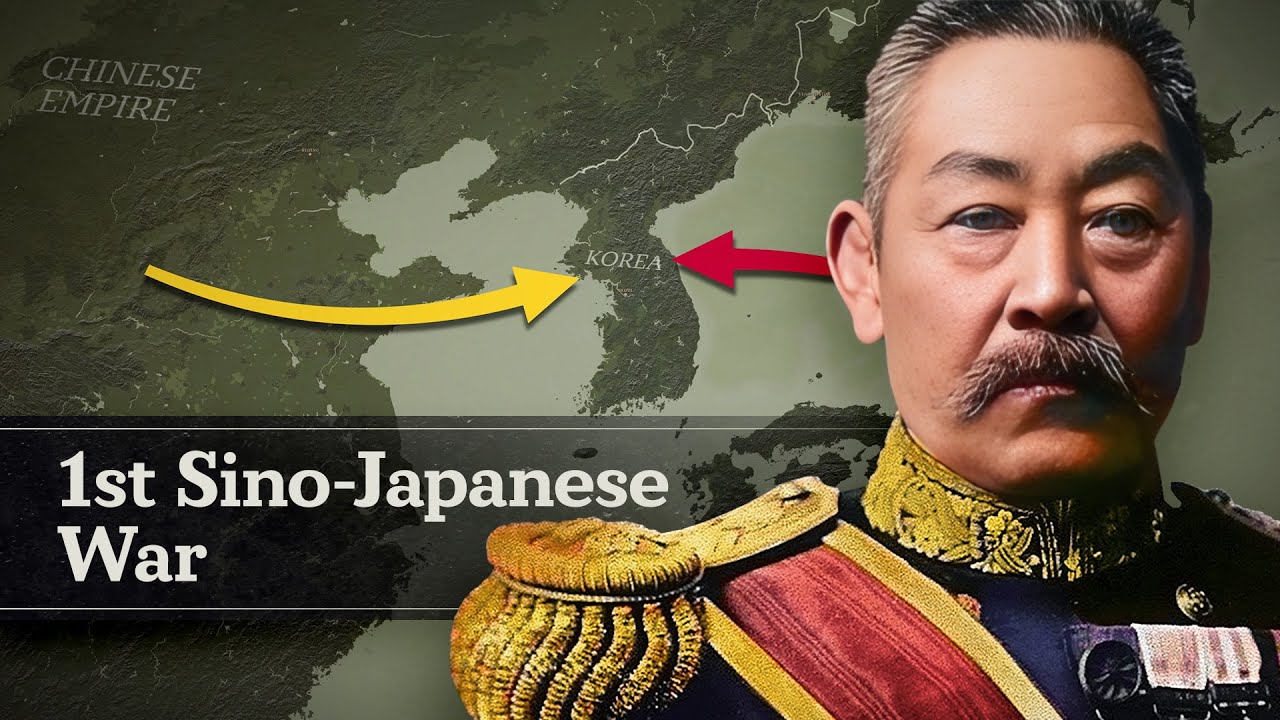
In the late 19th century, the Kingdom of Korea became a focal point of escalating geopolitical tensions between Japan and China, driven by their imperial ambitions and the desire to assert dominance over the region. This documentary explores the first Sino-Japanese War (1894-95), illustrating how internal instability within Korea, specifically under King Kojong’s reign, catalyzed external intervention. With both Japan and China seeing the Korean peninsula as critical to their national interests, the situation rapidly deteriorated, leading to conflict that would reshape the power dynamics of East Asia.
You will encounter the series of events that ignited this war, examining Japan’s military modernization efforts against China’s lagging military readiness. Through a careful analysis of both military engagements and the socio-political ramifications of the war, this documentary highlights Japan’s ascendance as a new power in Asia, juxtaposed with the significant repercussions faced by the Qing dynasty. The narrative also addresses the complexity of international relations during this period, which ultimately set the stage for future conflicts in the region.
Rise of Japan: The First Sino-Japanese War (1894-1895)

Context and Tensions
Late 19th Century Geopolitical Landscape
In the late 19th century, significant geopolitical tensions emerged as the Great Powers began vieing for dominance in East Asia, particularly in Korea. The kingdom, long known as the “Hermit Kingdom,” found itself caught between the imperial ambitions of Japan and China, each perceiving control of Korea as integral to their national security and regional prestige. With the decline of the Qing dynasty marked by internal strife, Korea’s future became a focal point of rivalry, transforming it from a place of relative tranquility to a battleground of international interests. Meanwhile, the global stage was increasingly marked by imperial competition, leading to an escalation of conflicts that would shape the modern landscape of Asia.
Korea as a Focal Point of Rivalry
The strategic importance of Korea became evident as both Japan and China sought to expand their influence over the peninsula. For Japan, Korea represented a critical component of its drive toward modernization and imperial expansion, spurred by the Meiji Restoration. Conversely, for China, Korea’s status as a tributary state was essential to its traditional worldview and sense of superiority. The tensions culminated in a complex interplay of motivations and ambitions, as external pressures were compounded by internal conflicts within Korea itself, effectively thrusting the nation into the spotlight of great power rivalries.
Internal Conflicts within the Korean Monarchy
Internally, Korea was grappling with a severe crisis, as the Joseon dynasty faced persistent challenges from various factions vying for power. King Kojong found himself embroiled in a power struggle with his father, the Taewongun, and Queen Min. This internal discord weakened the monarchy and stifled effective governance, leading to civil unrest and rebellions fueled by widespread dissatisfaction with corruption and foreign influence. The emergence of the Tonghak movement, an uprising against corrupt governance, further undermined King Kojong’s authority and pushed Korea toward external intervention.
Korean Crisis
King Kojong’s Request for Chinese Aid
As the Tonghak Rebellion intensifying, King Kojong’s plea for assistance from China marked a critical juncture in the unfolding crisis. The King, facing an insurmountable domestic threat, viewed China as a necessary ally despite the implications of Korean sovereignty. His request was not only a call for military aid but also an admission of weakness that would draw the attention of Japan, who saw China’s involvement as a direct challenge to its own ambitions in Korea.
The Tonghak Rebellion and Its Implications
The Tonghak Rebellion, emerging from a confluence of religious, social, and political grievances, reflected the deep-seated frustrations of the Korean populace. Fueled by dissatisfaction with corrupt local governance and foreign intervention, the rebellion demonstrated the precariousness of the Korean state’s stability. The King’s inability to pacify domestic unrest ultimately laid the groundwork for external intervention, creating a domino effect that would escalate into a full-blown confrontation between Japan and China.
Escalation of Military Presence by China
In response to King Kojong’s appeal, China dispatched a small military force to Korea. This action ignited alarm in Tokyo, leading Japan to intervene under the guise of upholding the 1885 China-Japan Agreement on troop movements in Korea. Perceiving China’s military presence as a breach of agreement, Japan escalated its military mobilization, positioning itself for conflict. Thus began a series of provocations that stripped away the veneer of diplomacy and thrust both nations toward war.
International Rivalries
The Influence of Russia and Britain in Korea
Amidst the clashes between China and Japan, external powers, particularly Russia and Britain, complicated the geopolitical landscape. Russia, asserting its interests aligned with burgeoning nationalism and imperial ambitions, began to actively engage in Korea, thereby augmenting the already tense situation. Simultaneously, Britain sought to curtail Russian expansionism while promoting its own commercial interests in the region. These entangled foreign interests exacerbated Korea’s precarious situation and underscored the complexity of international relations in the late 19th century.
Complicating Factors of Foreign Interests
The involvement of Russia and Britain in Korean affairs acted as a catalyst, further entrenching the power struggle between Japan and China. Each nation perceived itself as a counter to the others’ influence, managing a precarious balance while overlooking Korea’s aspirations. The dynamics of external interference complicated any prospects for peaceful resolution and essentially set the stage for inevitable conflict, emphasizing the fragile nature of sovereignty in the face of imperial determination.
Geopolitical Maneuvering Leading Up to War
As tensions mounted, the strategies employed by each power effectively highlighted the interwoven complexities of the period. Diplomatic overtures, military posturing, and the clear delineation of spheres of influence marked the lead-up to hostilities. The interplay between these international rivalries ultimately determined the course of events, culminating in Japan’s decision to fulfill its imperial aspirations through military action, while China grappled with its identity as an empire in decline.
Military Readiness
Japan’s Military Modernization Post-Meiji Restoration
Japan’s transition into a modern military power was largely attributed to the Meiji Restoration, which catalyzed unparalleled structural changes within its armed forces. Following decades of isolation, the nation undertook sweeping reforms that translated into significant advancements in military organization, training, and technology. These efforts not only instilled a sense of national pride but established Japan as a formidable contender on the global stage, positioning it to challenge established powers like China.
China’s Lag in Military Organization
In contrast to Japan’s military modernization, China exhibited profound weaknesses in its military organization and strategies. Despite possessing vast resources, the Qing dynasty struggled to centralize control over its military forces, which were fragmented and under the purview of local warlords. These divisions impeded effective coordination and undermined military readiness, heralding a significant disadvantage in the face of a more unified Japanese fighting force.
Comparative Readiness of Forces
The striking disparity in military preparedness between Japan and China played a critical role in shaping the outcomes of the conflict. While Japan had effectively harnessed modern military technology and adopted Western military strategies, China’s reliance on outdated practices severely hampered its ability to respond. This comparative lack of readiness would prove decisive, culminating in a series of catastrophic losses for Chinese forces in the ensuing conflict.
Outbreak of War
Events Leading to Japan’s Declaration of War
The hostilities that erupted into the First Sino-Japanese War can be traced to a sequence of escalatory events that eroded any façade of peace. The Japanese government, supported by nationalist fervor, recognized that a war with China was imminent following the initial skirmishes triggered by military confrontations in Korea. Situational factors, combined with overwhelming domestic pressure, propelled Japan toward a declaration of war, effectively altering the course of Asian history.
Initial Skirmishes and Their Significance
In the advance toward war, initial skirmishes, such as the Battle of P’ung-Do, highlighted the fundamental disparities between the two nations’ military capabilities. The confrontation resulted in Japanese naval forces decisively sinking multiple Chinese vessels, revealing the vulnerabilities within the Chinese command structure and asserting Japan’s growing dominance at sea. These early engagements established a pattern that would reflect throughout the war, with Japan quickly demonstrating superior strategic prowess.
Formal Declaration Date and Its Impact
The official declaration of war on August 1, 1894, marked a watershed moment, solidifying Japan’s military position and signaling its ambitions in East Asia. The initial reception of the declaration within Japan was one of enthusiasm, bolstered by nationalistic sentiments that framed the conflict as a confrontation between progress and tradition. This fervor galvanized public support for the war and underscored the implications of Japan’s newfound confidence as it sought to assert itself as a leading power.
Initial Battles
Major Engagements and Victories for Japan
As the war commenced, the Japanese forces rapidly initiated a series of major engagements, achieving remarkable victories against Chinese troops. One particularly notable success unfolded during the Battle of Pyongyang, where Japanese forces leveraged their modern weaponry and cohesive command structure to overwhelm Chinese defenses. These early victories not only showcased Japan’s military modernization but also served to boost morale and reinforce the narrative of Japan’s ascendancy in the region.
Casualties Suffered by Chinese Forces
The heavy casualties incurred by Chinese forces during early battles highlighted the stark difference in military efficacy between the two nations. While Japan suffered relatively minor losses due to its improved tactics and preparedness, China faced significant fatalities and damage, exacerbating the sense of crisis within the Qing command. Such losses spurred calls for urgent military reforms, yet fluctuating internal politics continued to hinder efficient responses.
Strategic Implications of Early Battles
The early successes of Japanese forces drastically shifted the strategic landscape of the war, emboldening Japan and laying the groundwork for its subsequent territorial ambitions. Each victory further demonstrated Japan’s capacity to operate effectively on the battlefield, thereby undermining Chinese claims to regional hegemony. In the broader context of international perception, these outcomes fundamentally altered how regional dynamics would unfold, realigning allegiances and provoking critical responses from foreign powers.
Naval Engagements
Key Naval Battles and Their Outcomes
Naval engagements played a crucial role in the war as Japan sought to establish maritime supremacy. The Battle of the Yellow Sea catalyzed Japan’s naval achievements, culminating in victories that systematically dismantled the remnants of the Chinese Beiyang Fleet. This triumph not only underscored Japan’s maritime capabilities but also facilitated the control of critical supply routes, allowing for sustained military operations during the conflict.
Japanese Naval Supremacy Demonstrated
The efficacy of Japanese naval power became glaringly apparent, illuminating a central tenet of modern warfare: control of the seas equates to control over strategic initiatives. Japan’s victories in naval battles enabled the projection of force onto the continental mainland, facilitating land campaigns and drastically amplifying its capacity to wage war. The demonstration of naval supremacy similarly instilled a sense of urgency in China, igniting urgent calls for military reform that were ultimately stymied by bureaucratic inertia.
Failures in Chinese Naval Command and Strategy
Conversely, the failures in Chinese naval leadership and strategic planning starkly contrasted Japan’s agility. The Qing dynasty’s military miscalculations highlighted the entrenched systemic weaknesses that plagued its command structure. Local warlords often undermined national unity, leading to disjointed and ineffective responses in the face of adversity. This lack of coherent naval strategy and execution proved costly, resulting in the crippling of China’s maritime capabilities, further entrenching Japan’s advantages in the war.
Propaganda and Public Sentiment
War Framed as a Struggle Between Modernity and Tradition
The conflict was adeptly framed by Japanese leaders as a battle between modernity symbolized by Japan, and an antiquated order represented by China. This narrative not only served as a rallying call for national unity but also allowed the Japanese populace to coalesce around a shared vision of progress and international recognition. Such sentiments resonated deeply amidst Japan’s rapid modernization efforts, fostering a sense of destiny that drove many to embrace the war enthusiastically.
The Role of National Enthusiasm in Japan
National enthusiasm was a powerful engine propelling Japan’s wartime efforts, as ideological and emotional motivations intermingled to generate widespread support for military endeavors. The populace engaged fervently, with patriotic media campaigns portraying the conflict as essential to Japan’s advancement on the global stage. As ordinary citizens rallied to support troops, the war morphed into an expression of national identity, ultimately shaping public perceptions of both their own nation and their adversary.
Public Perceptions of the Conflict
Internationally, the conflict captured the attention of outside observers, particularly in Western nations. Japan’s victories were often framed through an orientalist lens that decried Chinese inefficiency and heralded Japan’s modernization as setting a positive example for the “less developed” Asian nations. This framing, while reductive and problematic, lent additional gravitas to Japan’s aspirations for recognition and legitimacy amid the broader context of evolving geopolitical dynamics.
Outcome Determinants
Factors Leading to Japanese Success
The war’s outcome was heavily influenced by Japan’s superior military preparedness, which stemmed from a combination of effective modernization policies, cohesive strategies, and national support. Japanese forces were well-organized and equipped with contemporary weaponry, while their operational planning showcased decisive unity and adeptness on the battlefield. This amalgamation of factors allowed Japan to strike swiftly and effectively, capitalizing on their advantages before their adversary could mobilize effectively.
Fragmentation of Chinese Command Structure
In stark contrast to Japan’s relative organizational finesse, the fragmentation of China’s military command was a critical liability. The decentralization of authority and localized control over military units resulted in inconsistencies that undermined collective operations. The inability of Qing leadership to efficiently coordinate forces was compounded by internal dissent, further exacerbating losses and fostering a climate of despair that pervaded the Chinese military hierarchy.
Impact of Military Advancements on the War’s Outcome
The significance of technological and tactical advancements cannot be overstated in explaining the war’s trajectory. Japan’s strategic acumen and proficiency in mobilizing modern weaponry allowed them to capitalize on Chinese vulnerabilities, achieving swift victories that changed the course of the conflict. Furthermore, the initial successes catalyzed further military innovation, cementing Japan’s status as a burgeoning power while simultaneously deepening China’s vulnerabilities in the face of imperial ambitions.
Conclusion
Summary of Key Points Discussed
The First Sino-Japanese War, occurring from 1894 to 1895, stands as a pivotal moment marked by the intersection of domestic strife, international rivalries, and military preparedness. Japan’s success was facilitated by its comprehensive modernization efforts and organizational cohesion, contrasting sharply with China’s disjointed command structure and inadequacies in military adaptation. The conflict not only underscored Japan’s ascendancy as a regional power but also revealed critical vulnerabilities within Qing China, marking a significant turning point in the histories of both nations and the broader landscape of Asia.
Reflections on the War’s Legacy
The enduring legacy of the First Sino-Japanese War reverberated beyond its immediate aftermath, fundamentally reshaping regional power dynamics and creating avenues for future conflict. The war prompted a collective re-evaluation among Asian nations regarding sovereignty, modernization, and diplomatic relations, while also prompting a broader awakening of national consciousness among colonial subjects across the region.
Implications for Japan and China in the 20th Century
The war laid the groundwork for Japan’s emergence as a prominent global power, yet it also foreshadowed looming challenges, including confrontations with Russia and the eventual need to navigate the complexities and contradictions of imperial governance. China, on the other hand, was thrust into a period of introspection and reform born out of defeat, paving the way for significant movements, including the 1911 Revolution and the ascendance of nationalism amidst growing discontent with imperial rule.
In this intricate tapestry of history, the First Sino-Japanese War exemplifies the interplay of ideology, power, and identity that shapes the trajectory of nations, reminding us that the past continues to inform present and future engagements within a constantly evolving geopolitical landscape.