
The Napoleonic Wars, particularly the Retreat from Moscow in 1812, stand as a monumental chapter in military history, reflecting the intricate dynamics of warfare, leadership, and human endurance. This article examines the sequence of events that led to one of the most tragic retreats in history, initiated by Napoleon’s ambitious but ultimately flawed invasion of Russia. Key elements, such as the impact of harsh winter conditions, logistical failures, and the strategic maneuvers of Russian forces, will be analyzed to understand how the Grande Armée was decimated during this ill-fated campaign.
Your exploration highlights Napoleon’s initial triumphs, including his costly victory at Borodino and the subsequent capture of Moscow, contrasted starkly with the ensuing calamity of the retreat. As the once-mighty army faced relentless attacks, starvation, and extreme cold, the narrative reveals the harsh realities of military might confronted with underestimation of both the environment and the tenacity of the Russian forces. This article aims to provide a comprehensive overview of these pivotal historical events, contributing to the broader understanding of the Napoleonic Wars and their enduring legacy.
Overview of the Napoleonic Wars
Background of the Napoleonic Wars
The Napoleonic Wars, spanning from 1803 to 1815, marked a pivotal era in European history. Born out of the French Revolutionary Wars, these conflicts were characterized by the struggle for power, ideological clashes, and the quest for national dominance. Napoleon Bonaparte, the military genius and political leader who ascended to prominence during this tumultuous period, sought to expand the French Empire. His vision was to create a hegemonic Europe under French influence, driven by revolutionary principles and a dedication to the ideals of liberty and equality. However, his ambitions ignited widespread resistance and led to a coalition of powers determined to curtail his expansionist policies.
Key players involved
The hostilities engaged various significant players, including France, led by Napoleon, and a series of coalitions representing multiple European powers. Principal adversaries included Great Britain, Russia, Prussia, Austria, and Sweden, each wielding their military might to counteract the French advances. The wars saw shifting allegiances and the rise of iconic military leaders such as the Duke of Wellington and Tsar Alexander I of Russia. Each nation’s involvement was shaped by a mixture of strategic interests, geographical considerations, and the overarching goal of curtailing Napoleon’s growing influence.
Significance of the wars in European history
The Napoleonic Wars fundamentally altered the political landscape of Europe. By dismantling the old feudal order and sparking nationalistic sentiments, they paved the way for the rise of modern nation-states. The aftermath of the wars led to the Congress of Vienna in 1815, which aimed to restore stability by redrawing the map of Europe. Additionally, the conflicts stimulated significant military innovations and strategic thinking, contributing to the evolution of military doctrine in the 19th century. In a broader context, the wars influenced global politics, as the repercussions of Napoleon’s campaigns reverberated across continents, shaping colonial policies and international relations for decades to come.
Napoleon’s Invasion of Russia
Strategic objectives behind the invasion
Napoleon’s invasion of Russia in 1812 unfolded from a combination of strained diplomatic relations and strategic imperatives. With the Continental System aiming to weaken British economic power, Napoleon sought to exert pressure on Russia, which, under Tsar Alexander I, had withdrawn from these economic sanctions. The ensuing rift escalated into a full-scale invasion, motivated by the desire to enforce compliance and demonstrate French hegemony. This military endeavor was also rooted in Napoleon’s ambitions to secure the eastern front of his empire, thus consolidating control over Europe.
Composition of the Grande Armée
The Grande Armée, the formidable military force that Napoleon assembled for the Russian campaign, was unprecedented in size and diversity, comprising approximately 600,000 troops from various nations under French control. This multinational army included not only seasoned French soldiers but also contingents from allied states such as Italy, Poland, and the Confederation of the Rhine. This diverse composition symbolized Napoleon’s vision of a united European front but also presented logistical and coordination challenges that would later become critical in the unfolding chaos of the invasion.
Initial successes in the campaign
The campaign commenced with early victories enabling Napoleon’s forces to advance deep into Russian territory. Following a series of engagements, the French army achieved significant tactical victories, including the Battle of Smolensk, where they effectively outmaneuvered Russian forces. However, this initial success belied the problems that would emerge as the campaign progressed. Overextended supply lines and the scorched earth tactics employed by retreating Russian forces would soon jeopardize the French advance, highlighting the precariousness of their position.

The Battle of Borodino
Overview of the battle’s significance
The Battle of Borodino, fought from September 5 to 7, 1812, emerged as one of the bloodiest encounters of the Napoleonic Wars. Often regarded as a pivotal moment in the campaign, it featured fierce combat between the French Grande Armée and the Russian forces under General Mikhail Kutuzov. The battle was marked by relentless artillery exchanges and brutal hand-to-hand combat, reflecting the determination of both sides. Although Napoleon secured a tactical victory, the high casualties sustained by both armies foreshadowed the dire consequences of the campaign moving forward.
Casualties and outcomes
The toll of the Battle of Borodino was staggering, with estimates suggesting that French and Russian casualties numbered more than 70,000 combined. The French army advanced but was unable to deliver a decisive blow to the Russian forces, leading to the preservation of Russian military capability. This paradox of victory underscored the limitations of Napoleon’s grand strategy, raising questions about his ability to sustain such heavy losses in an already overstretched campaign.
Impact on the campaign
The consequences of the battle rippled through the campaign, impacting both French morale and Russian strategies. While Napoleon boasted a tactical win, his forces suffered debilitating attrition that diminished their operational effectiveness. Additionally, the Russian army’s ability to retreat and regroup allowed them to continue resisting the French advance. The battle served as a crucial turning point, as it marked the end of the initial phase of the campaign and set the scene for the eventual catastrophic retreat from Moscow.
Occupying Moscow
Entrance into the city
After the bloodshed at Borodino, Napoleon’s forces entered Moscow on September 14, 1812, anticipating a triumphant reception. The capital, however, lay in stark silence, offering a disconcerting welcome rather than the anticipated celebrations. The absence of its inhabitants revealed the effectiveness of the Russian strategy of withdrawal, as most of the populace had evacuated the city, leaving it largely desolate and devoid of resources necessary for sustaining the French army.
Expectations of occupation
Napoleon had envisioned the occupation of Moscow as a pivotal moment that would compel Tsar Alexander I to negotiate peace. He believed that the occupation would yield substantial material resources and demonstrate the futility of resisting French authority. However, the expected strategic advantage began to unravel as the realities of occupying a deserted city became apparent. Supplies were limited, and the morale of the troops faltered amidst uncertainty about the next steps.
Fire and destruction in Moscow
As the French took control, a devastating fire engulfed large parts of Moscow, wreaking havoc on the city’s infrastructure and demoralizing the occupying forces. This fire, attributed to various causes including arson by Russian partisans, served to further cripple French logistical capabilities. The destruction of Moscow symbolized not just physical ruin but also the failure of Napoleon’s campaign, as the city, once a powerful emblem of Russian pride, became a graveyard for French hopes of a swift resolution to the war.
The Invitation for Peace
Napoleon’s proposal to Alexander
In the aftermath of the occupation, Napoleon sought a diplomatic solution to the conflict. He extended an invitation for peace to Tsar Alexander I, proposing negotiations that would stabilize relations and secure a withdrawal from the lengthy conflict. Perceiving himself as a pragmatic leader willing to consider a compromise, Napoleon anticipated that the devastation in Moscow would compel the Russian emperor to acquiesce to his terms.
Lack of response from the Russian Emperor
Contrary to Napoleon’s expectations, Tsar Alexander remained resolute in his refusal to negotiate. The absence of a response from the Russian emperor underscored a critical miscalculation on Napoleon’s part. Alexander’s determination was fortified by the spirit of Russian nationalism and the belief that the war could ultimately be won through sustained defiance. This stalemate demonstrated the futility of Napoleon’s diplomatic overtures and marked a significant turning point in the campaign.
Consequences of diplomatic failure
The diplomatic failure had profound consequences for the Grande Armée, leading to critical repercussions for its future operations. With no immediate resolution in sight, Napoleon’s situation became increasingly untenable. Resource shortages escalated, and the looming threat of winter added a sense of urgency to the need for a strategic retreat. The decision to withdraw, compounded by the collapse of meaningful diplomatic engagement, ultimately placed the French forces in a precarious position fraught with uncertainty and impending disaster.
Challenges During Occupation
Supply issues and logistics
As the duration of the occupation extended, the logistical challenges mounted for the Grande Armée. The operational framework that had initially supported Napoleon’s campaign began to fracture under the strain of supply shortages. French troops found themselves grappling with inadequate provisions, illness, and the relentless demands of sustaining a large army in hostile territory. The ongoing lack of resources strained morale and exacerbated tensions within the ranks, contributing to feelings of despair among the soldiers.
Withdrawal of support from allies
Compounding the logistical issues was the withdrawal of support from allied nations. As the prospect of victory faded, various contingents within the Grande Armée began to reconsider their commitments to Napoleon. The erosion of trust and confidence among these allied forces further isolated the French army and undermined any potential for reclamation or reinforcement. This withdrawal reflected broader shifts in the geopolitical landscape, as countries reassessed their priorities in light of the campaign’s deteriorating trajectory.
Rising Russian resistance
Notably, as French forces occupied Moscow, Russian resistance only strengthened. The successful implementation of guerrilla warfare tactics by Russian partisans became increasingly effective and aggressive. Ensuing harassment of French supply lines and ambushes further depleted the morale and resources of Napoleon’s army. This sophisticated resistance effort underscored the resilience of Russian nationalism and solidified the conflict’s momentum against French ambitions, marking the beginning of the end for Napoleon’s campaign in Russia.
The Decision to Retreat
Factors leading to the retreat decision
Recognizing the deteriorating circumstances, Napoleon ultimately faced the sobering reality of a failed campaign. Among the key factors influencing the decision to retreat were the sustained attrition of his forces, unyielding Russian resistance, and the impending onset of the harsh Russian winter. These elements combined to create an untenable situation, compelling the French leader to consider a withdrawal as the last viable option for preserving his remaining forces.
Planning the withdrawal
In a calculated but frantic bid to extricate his remaining troops from an increasingly dire situation, Napoleon initiated plans for a strategic withdrawal. He sought to retrace the army’s path, moving back toward Smolensk to find safety, resources, and potential reinforcements. However, the intricacies of effectively executing such a withdrawal proved challenging, with logistical issues and a hostile environment presenting monumental barriers to a safe retreat.
First signs of winter’s approach
As October progressed, early signs of the harsh Russian winter began to manifest, compounding the urgency of the retreat decision. Unseasonably cold temperatures and sporadic snowfall became increasingly pronounced, creating additional strain on Napoleonic forces already beset by exhaustion and dwindling supplies. This atmospheric shift marked the beginning of a desperate race against time, leaving little room for error as the army faced the formidable reality of survival against the elements.
The Harrowing Retreat Begins
Initial retreat from Moscow
On October 19, 1812, the Grande Armée commenced its treacherous retreat from Moscow, marked by despair and disarray. As the soldiers began their march back, they were heavily laden with substantial material losses and diminished morale. The advance of approximately 100,000 men was characterized by confusion as soldiers grappled with the emotional weight of their recent battlefield experiences while confronting the new menace of widespread starvation and exposure.
Encounters with Cossack forces
Compounding the turmoil of the retreat were the relentless encounters with Russian Cossack forces. These mounted warriors, skilled in guerrilla tactics, unleashed a series of ferocious attacks against the retreating French, inflicting damages that compounded the deteriorating situation of the Grande Armée. The Cossacks engaged in systematic harassment, ambushing stragglers and cutting off supply routes, thus amplifying the sense of chaos and desperation experienced by Napoleon’s retreating troops.
Conditions faced by soldiers
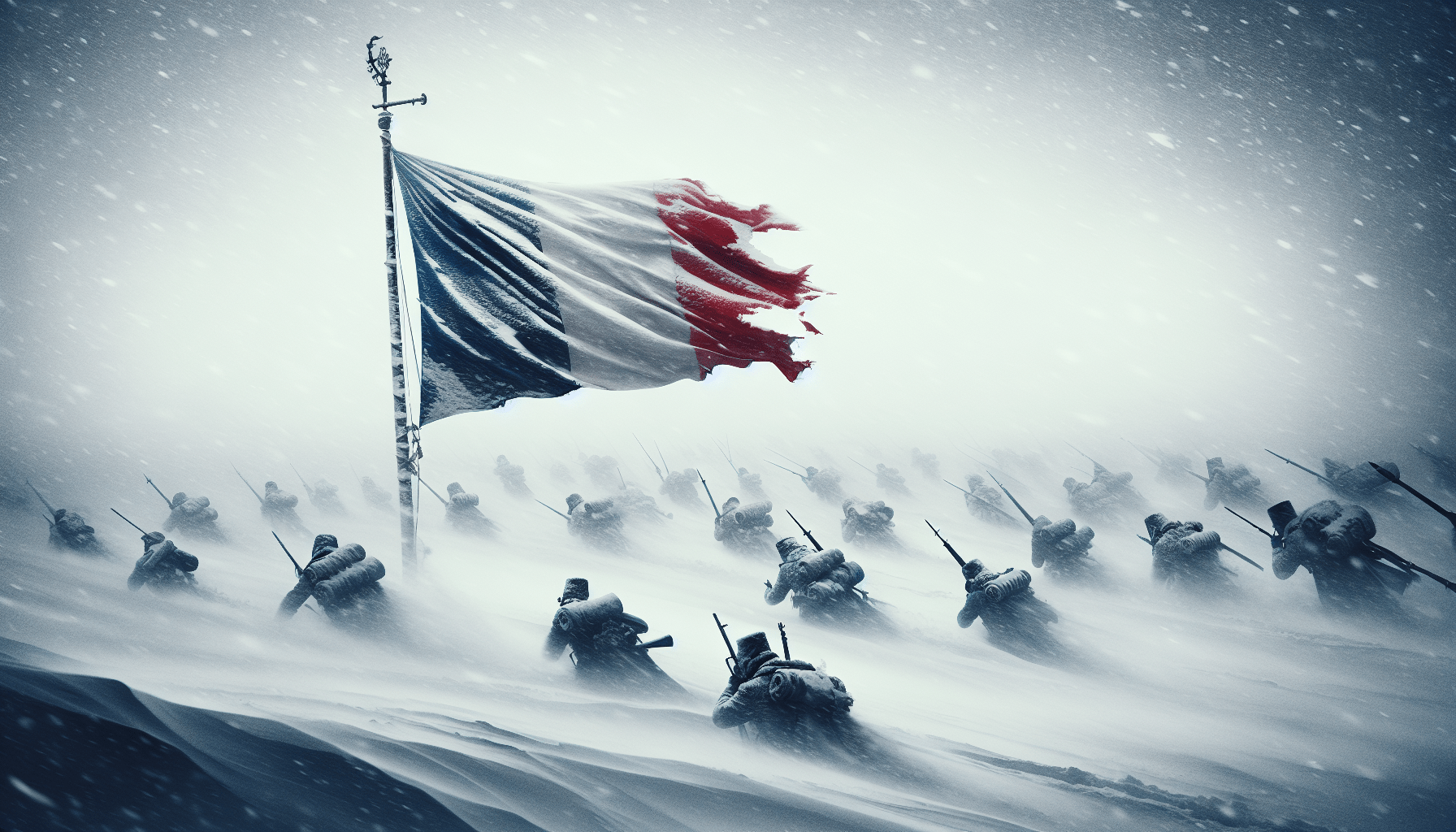
The conditions faced by the soldiers during the retreat were harrowing, exacerbated by the onset of winter and the relentless Russian counteroffensive. Troops struggled to navigate through treacherous terrain, with many succumbing to exhaustion, malnutrition, and frostbite. As they trudged through snow-laden paths, the combination of physical and psychological strain began to exact a toll that rapidly eroded the ranks of the once-mighty Grande Armée.
The Impact of Winter
Subzero temperatures and harsh weather
The Russian winter, fierce and unforgiving, descended swiftly upon the retreating remnants of the Grande Armée. Subzero temperatures and biting winds transformed the landscape into a frozen desolation, exacerbating the plight of Napoleon’s forces. With minimal winter gear and insufficient provisions, soldiers faced life-threatening challenges as they contended with freezing conditions. The uncompromising weather conditions became an enemy unto themselves, imposing a catastrophic impact on troop survival.
Adaptation challenges for the army
Adaptation to the harsh winter proved an insurmountable challenge for the unprepared French army. Many soldiers lacked appropriate clothing, and their fatigued bodies struggled against the elements, resulting in significant hardship and loss of life. As hypothermia and frostbite became rampant, the morale of the troops plummeted. The colossal scale of their retreat contrasted starkly with the strategic assurances Napoleon had once provided, manifesting increasingly dire forecasts for the campaign’s future.
Deaths due to exposure and starvation
The retreat yielded staggering loss of life, as thousands succumbed to exposure, starvation, and violence. Grievous conditions led to a grim reality where soldiers were abandoned due to illness, unable to endure the punishing march through the icy landscape. Many fellow soldiers were forced to make the heartbreaking choice to leave their comrades behind. Ultimately, as the weather intensified, the specter of death shadowed the retreating forces, profoundly mark the narrative of Napoleon’s ill-fated campaign.
Conclusion
Summary of key points
The retreat from Moscow represents a catastrophic chapter in the Napoleonic Wars, illustrating the consequences of overambitious military strategy and the unforgiving nature of warfare in extreme conditions. Napoleon’s initial successes were ultimately overshadowed by strategic miscalculations, logistical failures, and the indomitable resilience of Russian resistance. The subsequent retreat unfolded as a tragic saga of hardship, exacerbated by the onset of winter, resulting in devastating losses.
The legacy of the Retreat from Moscow
The legacy of the Retreat from Moscow resonates through military history as a cautionary tale of the dangers inherent in overextension and the lack of comprehensive logistical planning in warfare. It illustrates how environmental factors, combined with strategic misjudgments, can transform a celebrated campaign into a calamitous defeat. This retreat fundamentally altered the balance of power in Europe and marked the beginning of the end of Napoleon’s reign.
Relevance in contemporary military history
In contemporary military discourse, the lessons derived from the Retreat from Moscow remain pertinent. Modern military strategists recognize the significance of logistics, adaptability, and the environmental context in operations, reflecting an enduring relevance of the lessons drawn from Napoleon’s ill-fated campaign. Understanding historical precedents like the retreat encourages a comprehensive approach to military planning, ensuring that the blunders of the past are not repeated and emphasizing the importance of adapting to dynamic conditions on the battlefield.