
The article titled “HMS Victory in 3D: Total Guide (1/2)” provides a comprehensive examination of one of the most iconic warships in naval history. It details HMS Victory’s storied past as the flagship of Vice Admiral Nelson during the pivotal Battle of Trafalgar in 1805, a conflict that solidified British naval dominance and marked a significant victory against the combined French and Spanish fleets. The discussion encompasses the ship’s design, construction, specifications, and historical significance, alongside the vital role of the Royal Navy in the Napoleonic Wars.
In this exploration, you will gain insights into the ship’s advanced armament, structural features, and the organized composition of its crew, which was crucial for effective naval operations. A meticulous deck-by-deck breakdown reveals the intricate rigging, masts, and tactical capabilities that made HMS Victory a formidable force on the high seas. Additionally, the article touches upon current conservation efforts aimed at preserving this maritime legacy for future generations.

HMS Victory Overview
Significance in British Naval History
You hold in your mind’s eye the image of the HMS Victory, a vessel that transcends mere engineering—a maritime icon whose significance in British naval history is both profound and enduring. Launched in 1765, she served as a first-rate ship-of-the-line, setting the standard for naval might during an age where the control of the seas dictated the fate of empires. You witness her not just as a warship but as a powerful symbol of Britain’s naval supremacy. Her design reflects the strategic innovations of maritime warfare, allowing British fleets to maintain their dominance over challengers both near and far.
Role as Flagship During the Battle of Trafalgar
When you dive deeper into her storied past, you cannot overlook the crucial role she played as Admiral Horatio Nelson’s flagship at the Battle of Trafalgar in 1805. On that momentous day, Victory spearheaded an audacious assault against the combined French and Spanish fleets, a culmination of daring tactics and sheer naval prowess. As you imagine the tumultuous clash of cannon fire and the cries of sailors, you realize that Victory not only triumphed in battle but became an enduring part of the national consciousness, epitomizing the British spirit of resilience and courage in the face of adversity.
Legacy as a Symbol of Naval Supremacy
The legacy of HMS Victory extends far beyond the confines of her hull. You contemplate how she has become a lasting symbol of naval supremacy, a notion that would inspire generations of sailors and strategists. Her iconic status is reinforced by her continued presence at Portsmouth, where she stands as a preserved testament to a bygone era—a tangible reminder of Britain’s maritime heritage and its historical importance on the global stage.
Royal Navy’s Role
Importance in the Napoleonic Wars
As you explore the broader context, the Royal Navy’s pivotal role in the Napoleonic Wars unfolds before you. The Royal Navy was not merely a component of the British military; it was a powerful entity that ensured Britain’s survival in an era marked by revolutionary upheaval and imperial ambition. With the threat of Napoleon looming large over Europe, the Navy became the bulwark against invasion and a facilitator of Britain’s global interests.
Contribution to Britain’s Maritime Dominance
The contributions of the Royal Navy to Britain’s maritime dominance during this tumultuous period cannot be overstated. With an extensive fleet, including the HMS Victory, Britain maintained a formidable presence on the seas. Maritime trade flourished under this aegis, allowing Britain to project power and influence across continents. You ponder how this dominance translated into economic prosperity, allowing Britain to finance its military endeavors while undermining the economies of adversarial powers.
Impact on the Defeat of Napoleon
In illuminating the impact of the Royal Navy on the defeat of Napoleon, you realize that military engagements on land were paralleled by epic naval confrontations. The Navy’s ability to control trade routes and enforce blockades significantly hampered Napoleon’s strategies and resource mobilizations. Victory’s involvement in key battles, including Trafalgar, fundamentally shifted the tide against Napoleon’s ambitions, securing Britain’s position as the preeminent naval power of the time.
Specifications
Armament Details: 104 Guns
To adequately evaluate the might of HMS Victory, you look at her formidable armament. With a staggering total of 104 guns, she was one of the most powerfully armed vessels of her time. The configuration of these cannons, which included 30 12-pounders on the upper gun deck, 28 24-pounders on the middle deck, and 30 32-pounders on the lower deck, allowed her to unleash a devastating barrage upon opposing fleets, thus solidifying her reputation as a true leviathan of the seas.
Crew Size and Composition
You also consider the sheer scale of her operations, comprised of approximately 820 crew members. This diverse composition included officers, sailors, and specialized personnel, each integral to maintaining the ship’s functionality during the rigors of battle and the demands of life at sea. Hierarchically structured, every member contributed to the collective mission, underscoring the collaborative nature of naval warfare as you picture the camaraderie and shared purpose that defined their daily existence.
Comparison to Contemporary Warships
In juxtaposing HMS Victory with contemporary warships, you begin to understand her significant advantages in terms of firepower and strategic capability. Her size, armament, and crew exceeded those of many of her rivals, marking her as an exemplar of naval engineering in the late 18th century. As you reflect on advances in ship design since then, you acknowledge that while technology and tactics may have evolved, the principles of naval warfare remain fundamentally unaltered.
Construction
Materials Used: British Oak and Others
Understanding the construction of HMS Victory offers further insights into her greatness. Built predominantly from British oak—an enduring material renowned for its strength and resilience—her construction involved approximately 6,000 trees, revealing the dedication and resources devoted to her creation. This extensive use of timber underscores the era’s reliance on natural materials in shipbuilding, highlighting the symbiotic relationship between maritime technology and the environment.
Design Insights from Sir Thomas Slade
You find yourself intrigued by the design insights contributed by Sir Thomas Slade, the ship’s architect, whose vision shaped Victory’s layout and capabilities. His innovative designs included features that enhanced stability and navigation, traits essential for a first-rate ship-of-the-line tasked with leading naval engagements. As you reflect on Slade’s influence, you recognize that it is not merely the ship’s materials that signified her greatness, but also the ingenuity behind her design.
Construction Timeline and Challenges
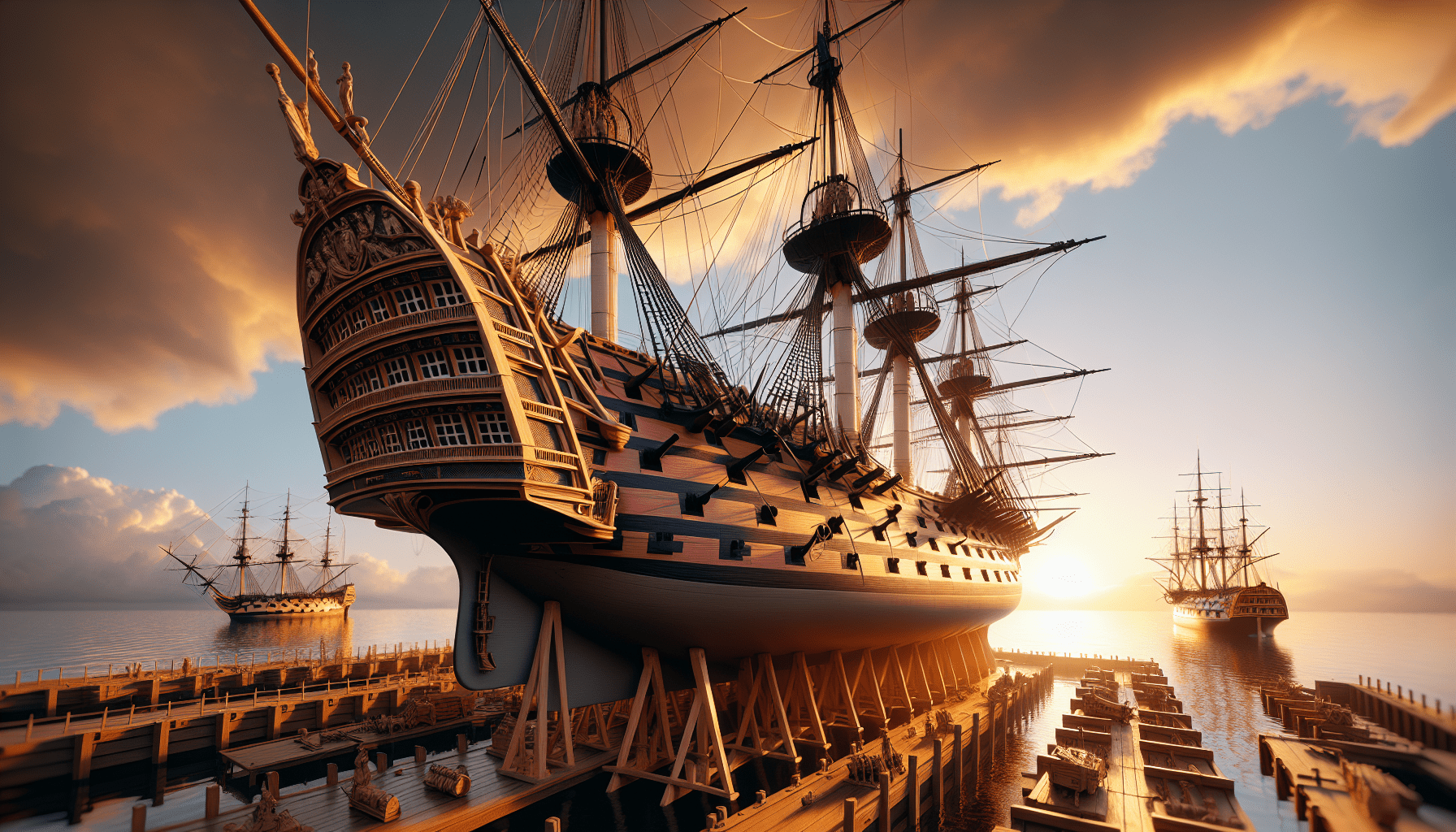
Constructed at the Royal Dockyard in Chatham, you trace the ship’s journey, noting that her building timeline spanned several years, filled with challenges and ambitions. In 1765, the completion of Victory marked a significant achievement in British shipbuilding, though she was initially rendered unavailable for immediate service due to the delay in shipyard projects. You absorb how such obstacles were not uncommon, yet they illuminate the monumental effort required to fortify Britain’s naval empire.
Historical Combat
Engagements During the American War of Independence
The historical significance of HMS Victory burgeons when you examine her engagements during the American War of Independence. Though her operational debut was delayed, she soon took part in actions that shaped the maritime landscape of the late 18th century. As you envision the ship demanding respect amidst turbulent waters, you understand how her presence influenced the dynamics of naval combat at a time when Britain faced growing colonial unrest.
Participation in the French Revolutionary Wars
In the series of conflicts that followed, particularly the French Revolutionary Wars, Victory emerged as a pivotal player. As part of the British blockade of Toulon, her stature grew alongside the historical narrative of a nation confronting revolutionary fervor. You imagine sailors hanging onto her rigging, their eyes set on the horizon—are they braced for conflict or longing for peace? The ship became a fortress of resolve in a world teetering on the brink of chaos.
Significance of the Trafalgar Victory
You come back to the Battle of Trafalgar, and the entirety of Victory’s historical legacy crystallizes into a singular point in time. The victory secured not only British supremacy at sea but also established Admiral Nelson as a legendary figure in naval history. The decisive encounter not only obliterated the Franco-Spanish fleet but fundamentally altered the trajectory of the Napoleonic Wars. When you reflect on this moment, you grasp how the clash of cannons echoed beyond the battle, shaping national identity and pride.
Ship’s Structure
Description of Rigging and Masts
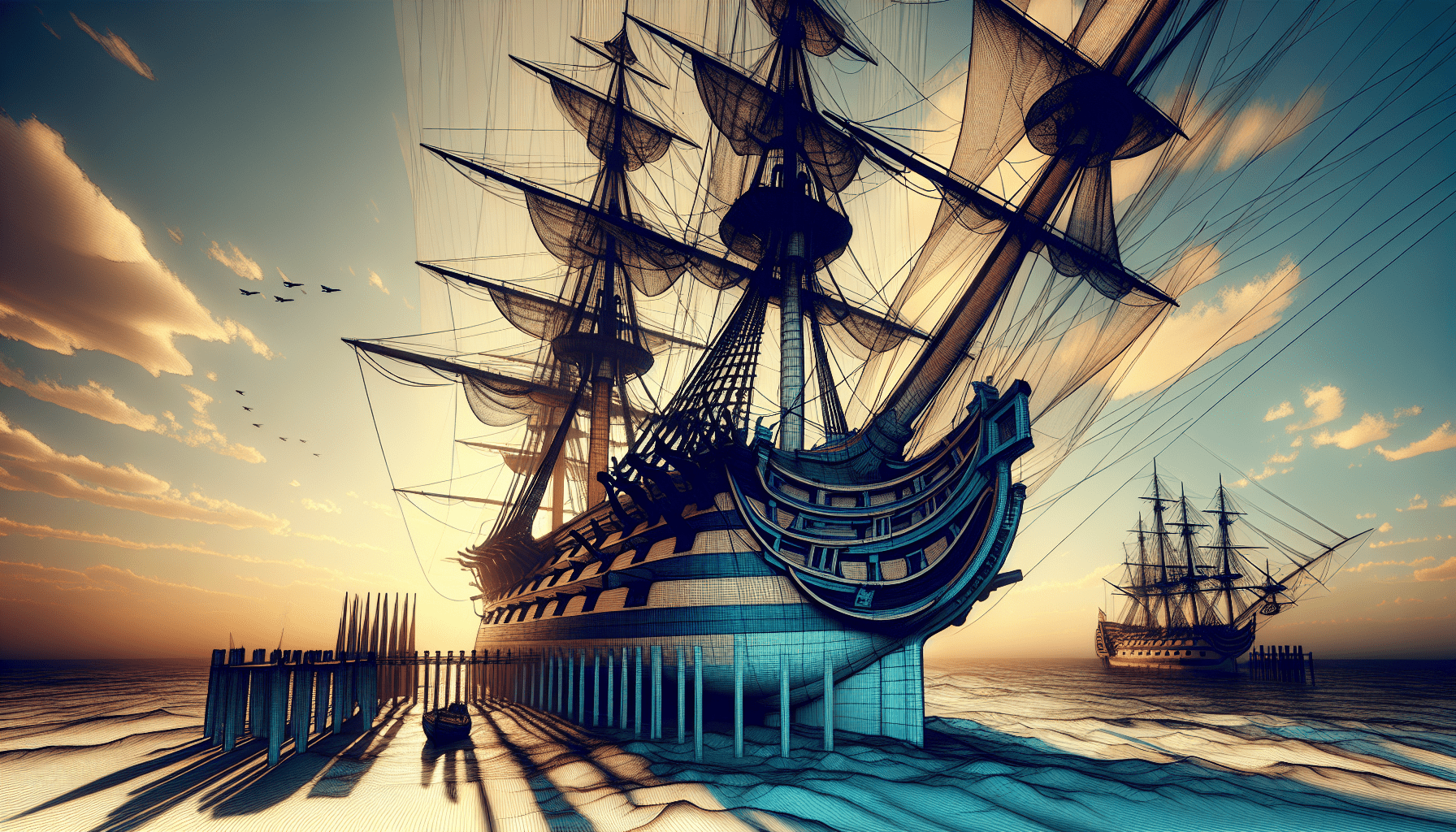
As you visualize the HMS Victory, an array of masts and rigging rises majestically, a testament to the ship’s complexity. Equipped with three main masts—fore, main, and mizzen—the rigging forms a labyrinthine structure, essential for navigation. You consider how the configuration of her sails allowed for unparalleled adaptability in shifting winds, crucial to both evasion and assault during skirmishes.
Sail Configurations for Maneuverability
By meticulously examining her sail configurations, you appreciate the paramount importance of maneuverability in combat scenarios. Victory’s design incorporated multiple sails, allowing her to harness the wind effectively. The versatility in sail adjustments encompassed not only battle tactics but also routine navigation, solidifying her as a changeable combatant on the tumultuous ocean surface.
Firepower and Strategic Advantages
Turning towards firepower, you recognize that the strength of HMS Victory lay not just in her armament but in how she was deployed in battle scenarios. The ship’s capacity to unleash havoc while remaining agile was a strategic advantage that set her apart from her contemporaries. You muse over the orchestration of movement and fire—synchronized actions that would ultimately determine the fates of battles.
Eligibility for Battle
Innovative Features Like Copper Sheathing
You delve into the technological innovations within HMS Victory, revealing the significance of features like copper sheathing. Introduced in 1780, this revolutionary advancement protected the ship’s hull from marine pests and erosion, allowing her to maintain structural integrity over extended periods. You resonate with the forward-thinking nature of such innovations and their profound impact on naval warfare.
Conditioning the Ship for Combat Readiness
The realm of naval warfare demands not just firepower but relentless preparedness. You ponder how maintaining combat readiness required meticulous conditioning of the ship and her crew. Routine drills, inspections, and repairs formed a crucial part of daily life aboard Victory, ensuring that she remained a lethal force amidst the evolving dynamics of naval conflict.
Maintenance and Operational Protocols
Tracing back the operational protocols, you uncover a rigorous system of maintenance that sustained Victory’s high standards. In times of battle, you could envision crews working tirelessly to ensure the ship’s armaments were primed and functioning, that sails were in perfect condition, and that the atmosphere aboard reflected both discipline and camaraderie. This ethos was fundamental to Victory’s success and longevity.
Crew Composition
Hierarchy of Officers and Sailors
To appreciate the intricate workings aboard HMS Victory, you consider the crew’s hierarchical structure. From the esteemed Admiral Nelson, overseeing grand tactics, to the seasoned crewmen executing intricate maneuvers, you see a well-orchestrated ensemble working toward common objectives. The complexity of relationships and responsibilities reflects a microcosm of society set against the canvas of the open seas.
Specialized Roles on the Ship
As you explore specialized roles, the variety within the crew comes into focus. Gunner mates, carpenters, and medical officers, each skilled in their trades, contribute to the overall efficiency and success of the ship. You envision the delicate balance of expertise that would prove vital not only during combat but also in navigating social dynamics aboard a moving vessel.
Daily Life and Duties of the Crew
When you turn your thoughts to daily life on the ship, you indulge in the routine and rituals that defined existence aboard Victory. Sailors operated under demanding conditions: maintaining the ship, performing drills, and securing provisions. You picture shade under the rigging, the laughter mingling with the stern calls of command, a blend of hard work and adolescent camaraderie that solidified bonds amidst the backdrop of formidable challenges.
Upper Decks
Functions of the Fo’c’sle and Quarterdeck
As you ascend to the upper decks, the distinct functions of the fo’c’sle and quarterdeck become apparent. The fo’c’sle served as a space for the crew’s basic functions and lodging, while the quarterdeck emerged as a ceremonial hub, reserved for officers and the ship’s command. You envision this duality—one serving the pragmatic demands of daily life, while the other embodied the pride and nobility of naval service.
Ceremonial Aspects of the Upper Decks
The ceremonial aspects on these decks evoke a sense of tradition and honor. Salutes, colors, and displays of flags reflect the rich tapestry of naval heritage, a contrast to the grueling daily tasks. You are drawn to the aura of solidarity that enveloped these moments, reinforcing the identities of both the crew and the ship as they upheld the values that shaped British naval tradition.
Crew Accommodations and Provisions
Finally, you consider the crew accommodations within the upper decks, where provisions such as rations were meticulously organized to sustain the crew. You reflect on how, beneath the sprawling rigging and sails, life aboard Victory was predicated on careful logistics and communal interdependence, epitomizing the need for harmony amidst the chaos of life at sea.
Conclusion
Summary of HMS Victory’s Significance
In concluding your exploration, a sense of comprehensive understanding envelops you. HMS Victory, with her storied past, serves as a symbol of a pivotal era in British naval history. Her influence extended beyond the mere mechanics of warships; she embodied the spirit of a nation and its indomitable determination to succeed.
Future Outlook for Preservation and Education
Looking ahead, the future of HMS Victory as a preserved historic ship is a beacon of hope and aspiration. As conservation efforts increase, you feel assured that this maritime treasure will continue to educate future generations about the complexities of naval warfare and the valor that once surged through her decks.
Encouragement for Public Interest and Support
Finally, as you ponder her continued relevance, you recognize the vital need for public interest and support. Through the preservation of HMS Victory, you envision a connection to history that can inspire curiosity and understanding. The narratives she encapsulates are not merely relics; they are strands in the ongoing tapestry of maritime heritage, calling upon you and society at large to uphold the legacy of this extraordinary vessel.