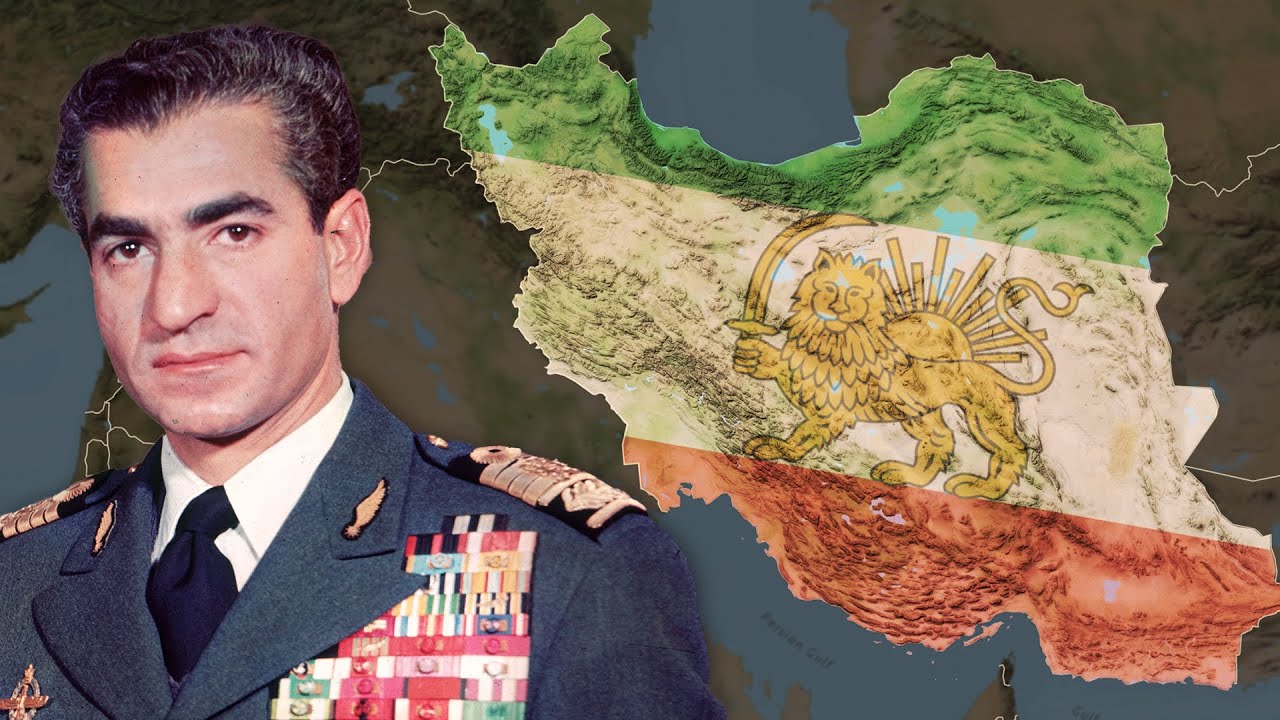
In 1953, Iran faced a pivotal moment as its government sought to reclaim control over its oil resources, long exploited by foreign powers. The nationalization of the oil industry became the focal point of a highly charged political environment, amidst Cold War tensions, where both British and American interests converged to influence the outcome. The rise of Prime Minister Mohammad Mossadegh, whose reforms and nationalist agenda resonated with many, sparked significant internal conflict, attracting numerous factions that either supported or opposed his vision for Iran. This ensuing turmoil culminated in a CIA-backed coup, Operation Ajax, that would drastically reshape Iran’s political landscape.
This article will explore the complex interplay of domestic and international factors that enabled the United States to transform Iran into a dictatorship during the early Cold War. It will analyze the motivations behind the coup, the roles of key political figures like the Shah and Mossadegh, and the subsequent imposition of authoritarian rule that followed the overthrow. By examining the consequences of this intervention, you will gain insight into the long-lasting repercussions that continue to influence U.S.-Iran relations and the broader geopolitical climate in the region.
Historical Context of Iran’s Oil Nationalization

Post-World War II Landscape in Iran
In the aftermath of World War II, Iran found itself grappling with significant political and economic upheaval. The war had not only altered global power dynamics but had also allowed foreign powers, particularly Britain and the Soviet Union, to increase their influence in the region. The 1941 invasion by these two nations highlighted Iran’s strategic importance, particularly due to its vast oil reserves. The exile of Reza Shah Pahlavi and the ascension of his son, Mohammad-Reza Pahlavi, ushered in a new era fraught with challenges. The new Shah faced mounting public discontent regarding foreign intervention and the mismanagement of the economy, which left many Iranians questioning their nation’s sovereignty.
The Impact of Foreign Exploitation on Iranian Resources
The exploitation of Iranian oil resources by foreign companies, particularly the Anglo-Iranian Oil Company (AIOC), set the stage for a protracted conflict over national sovereignty. The agreements that favored foreign interests substantially limited what Iranians could claim from their natural resources, fostering resentment and a sense of injustice among the populace. As the vast wealth generated from oil flowed out of Iran, socioeconomic inequalities widened, intensifying the calls for reform and a re-evaluation of these exploitative arrangements.
The Drive for Nationalization and Sovereignty
Amidst the turmoil, a growing sentiment for nationalization began to take root. Various political factions, primarily driven by nationalistic fervor, argued that restoring control over oil resources was crucial for Iran’s dignity and survival as a nation. They aimed to reclaim the state’s wealth from the clutches of foreign companies and use it to address pressing issues such as poverty and underdevelopment. It was this undercurrent of nationalism and the desire for self-determination that paved the way for significant political change, culminating in the election of Mohammad Mossadegh as Prime Minister in 1951.
The Rise of Mohammad Mossadegh
Mossadegh’s Political Ideology and Goals
Mohammad Mossadegh emerged as a prominent figure during this period of national awakening, embodying the aspirations of a diverse coalition that included both leftists and conservatives united against foreign dominance. His political ideology embraced democratic principles, emphasizing civil liberties, social justice, and, importantly, the notion of using Iran’s oil revenues for national development. Mossadegh’s vision resonated with the Iranian populace, making him a figure of hope amid widespread dissatisfaction with foreign exploitation.
Initial Support and Advocacy for Oil Nationalization
As Prime Minister, Mossadegh wasted no time in advocating for the nationalization of Iran’s oil industry. His efforts were widely supported by the populace, and the nationalization campaign quickly gathered momentum. On April 1, 1951, Mossadegh’s government formally announced the nationalization of the AIOC, stating that the Iranian state would take control of its oil resources to combat corruption and promote national development. This declaration was met with both acclaim and fierce opposition, marking a pivotal moment in Iran’s struggle for sovereignty.
Conflict with Foreign Powers and Internal Factions
Mossadegh’s nationalization policy triggered an immediate backlash from foreign powers, particularly Britain, which had significant financial interests in Iranian oil. Additionally, the nationalization led to a fracturing of political support within Iran itself. While many citizens rallied behind Mossadegh, various groups—ranging from the hardline Tudeh party to religious conservatives—sought to undermine him for different reasons. This multifaceted resistance to Mossadegh’s reforms eventually created an unstable political environment that would further complicate Iran’s quest for autonomy.
Political Instability and Economic Challenges
Deteriorating Economic Conditions Post-Nationalization
Despite initial optimism surrounding the nationalization of the oil industry, the years that followed proved to be economically challenging. The British, enraged by the loss of their lucrative oil interests, imposed sanctions that drastically reduced oil exports. Consequently, Iran saw a significant drop in revenue, plunging the nation into a fiscal crisis. As economic conditions deteriorated, discontent among the populace began to build, leading to calls for more comprehensive reforms beyond just the nationalization of oil.
The Role of the Communist Tudeh Party and Other Factions
The Tudeh Party, Iran’s Communist faction, began to leverage the economic hardships to expand its influence, presenting itself as a champion of the working class against perceived capitalist exploitation. However, their alignment with Soviet interests made them unpopular among many Iranians who were wary of communism. Various internal factions, including religious extremists from the Fadaiyan-e Islam, sought to capitalize on the unrest, highlighting the fragmented political landscape in which Mossadegh operated.
Public Dissatisfaction and Calls for Reform
As the economic situation worsened, public dissatisfaction with Mossadegh’s government intensified. Many citizens who had initially supported nationalization began to express their discontent over high inflation, unemployment, and a lack of reform measures beyond the oil sector. This growing disillusionment was further exacerbated by a lack of political unity, with diverse factions vying for power and influence, leaving Iran vulnerable to external manipulation.
The British Reaction to Mossadegh’s Policies
Military Maneuvers and Political Pressures on Iran
In response to Mossadegh’s assertiveness, the British government resorted to military maneuvers and a series of political pressures aimed at destabilizing his administration. They initiated covert operations and military exercises in the region, laying the groundwork for a more aggressive approach to regain control over Iranian oil. The stakes were high for Britain, whose economic recovery was heavily tied to the profits generated from Iranian oil.
Turning the Shah Against Mossadegh
Recognizing the untenable situation, British officials began to turn Mohammad Reza Shah against Mossadegh, portraying him as a threat to the monarchy and a destabilizing force in Iran. This manipulation took advantage of the Shah’s fears regarding his own position and future, instilling a sense of urgency for the need to curb Mossadegh’s influence. Britain pressed the Shah to appoint a more compliant prime minister who could reinstate favorable agreements that would benefit British interests.
The Significance of the Anglo-Iranian Oil Company’s Interests
The Anglo-Iranian Oil Company (AIOC) had significant political, economic, and strategic implications for both Britain and Iran. London viewed the AIOC as essential to its national interests, and its loss to nationalization was seen as an existential crisis. The British government’s fervent attempts to reclaim control illustrated not only the importance of Iranian oil but also how the imperial mentality still governed British foreign policy in the post-war era.
US Involvement and the Growing Fear of Communism
Initial Hesitations and Concerns Over British Motives
Initially skeptical of British plans to restore control over Iran, U.S. officials engaged in deliberations to understand both Mossadegh’s motives and British ambitions. U.S. policymakers were concerned that a heavy-handed intervention could provoke significant anti-American sentiment in Iran. Truman’s administration recognized that intervening to support Britain might inadvertently bolster communism in the region, particularly given that many Iranians saw the U.S. as a counterbalance to British imperialism.
The Cold War Context and Fears of Soviet Influence
The rising tensions of the Cold War intensified the complexities of the situation in Iran. As the U.S. sought to promote democracy and contain communism, policymakers began to view Mossadegh’s government with suspicion. The fear that a successful leftist regime in Iran might align with the Soviet Union prompted a shift in U.S. attitudes, distancing them from the initial reluctance to act against Mossadegh. As Iran’s oil wealth became a critical asset in the geopolitical landscape, fears of communist expansion grew increasingly pronounced.
The Shift Towards Collaboration with British Intelligence
Consequently, the U.S. began collaborating with British intelligence on a plan to oust Mossadegh. The urgency of the Cold War context forced American officials to reconcile their earlier hesitations and align with British interests for the sake of broader strategic stability. This shift underscored a significant turn in U.S. foreign policy, marking a willingness to engage in covert operations, undermining the principles of democracy that they rhetorically championed.
Operation Ajax: The Coup Plan
Planning and Execution of Operation Ajax
Operation Ajax was the culmination of extensive planning between British and American intelligence services, designed to remove Mossadegh from power. The operation involved leveraging various factions opposed to Mossadegh and using media propaganda to influence public perception. The plan sought to paint Mossadegh as a dangerous leader whose policies endangered Iran’s stability. The collaboration between the CIA and MI6 was a watershed moment, demonstrating the lengths to which superpowers would go to maintain influence over critical regions.

Key Figures: Kermit Roosevelt and Fazlollah Zahedi
Kermit Roosevelt, a CIA operative and the grandson of Theodore Roosevelt, emerged as a pivotal figure in orchestrating the coup. His network of contacts within Iran, along with the support of local military officers, became essential to the plot’s success. Meanwhile, Fazlollah Zahedi was positioned as a puppet leader who could replace Mossadegh and placate Western interests. The roles played by these individuals illustrated the intricate web of alliances and betrayals that characterized the operation.
The Role of Propaganda in Shaping Public Perception
Propaganda played a crucial role throughout Operation Ajax. The orchestrated campaign sought to undermine Mossadegh while simultaneously elevating the image of Zahedi as the savior of the nation. Newspapers in Iran were utilized to spread disinformation and discredit Mossadegh’s government, stirring public unrest. This manipulation of media narratives demonstrated the profound impact of information warfare in shaping political outcomes during the Cold War era.
The Execution of the Coup
Initial Failure and Military Allegiance to Mossadegh
The initial execution of the coup, set in motion on August 15, 1953, encountered unforeseen resistance. The military units loyal to Mossadegh thwarted attempts by coup plotters to seize control, showcasing the popular support he still retained among significant segments of the Iranian populace. This initial failure underscored the fragility of the coup’s plans and highlighted the complexities of loyalty within Iran’s military apparatus.
Reorganization and the Significance of Media Support
In the wake of the failed coup, American and British operatives regrouped, recognizing the need for a stronger psychological operation to win over Iranians. The role of media became paramount once again; Roosevelt orchestrated a series of propaganda rallies that portrayed Zahedi as the rightful leader and rallied public sentiment against Mossadegh. By controlling the narrative, they aimed to galvanize support among the populace and military alike, ultimately looking to reverse the initial setback.
The Eventual Success on August 19, 1953
On August 19, 1953, the coup culminated in the successful ousting of Mossadegh as military units loyal to the Shah mobilized against him. Clashes erupted, but they quickly turned in favor of the coup plotters, leading to Mossadegh’s arrest. The restoration of the Shah marked a significant turning point in Iran’s history, as it not only reinstated foreign influence but also set the stage for future authoritarian rule.
Aftermath of the Coup: Establishing Dictatorship
The Return of the Shah and Political Consolidation
Upon his return, the Shah began to consolidate his power, imposing strict controls over political life in Iran. He sought to eradicate all remnants of opposition that dared challenge his rule or the interests of foreign powers. This transition marked the beginning of an era characterized by authoritarian governance, relying on a combination of coercion and propaganda to maintain stability.
Establishment of SAVAK and Repression of Dissent
The establishment of SAVAK, the Shah’s secret police, epitomized the regime’s ruthless approach to dissent. Supported by American expertise, SAVAK engaged in widespread surveillance, intimidation, and repression of those who opposed the government. This clampdown on civil liberties further alienated segments of Iranian society and fostered a climate of fear, ultimately sowing the seeds of future resistance movements.
Impact on Iranian Society and Political Culture
The legacy of the coup and subsequent dictatorship significantly altered Iranian society and political culture. Disillusionment with the regime’s reliance on authoritarianism and foreign interference grew swiftly. Personal freedoms were curtailed, and a punitive political atmosphere stifled democratic aspirations, contributing to the development of radical opposition movements that would seek to reclaim sovereignty in the years to come.
Long-term Implications for US-Iran Relations
Shift in US Foreign Policy Towards Iran
The 1953 coup had profound and far-reaching implications for U.S.-Iran relations. It marked a shift towards an approach rooted in direct intervention to support autocratic regimes that aligned with U.S. interests. This model of foreign policy would influence America’s subsequent engagements not only in Iran but throughout the Middle East, often to disastrous effect.
Lessons Learned from Operation Ajax
The lessons learned from Operation Ajax would reverberate throughout U.S. foreign policy for decades. The consequences of prioritizing immediate geopolitical interests over the promotion of democracy revealed the complexities of supporting authoritarian regimes. The coup taught policymakers about the intricate interplay of local dynamics and international politics, shaping future engagements across the globe.
Impact on Future US Interventions in the Middle East
The events of 1953 reinforced a cycle of U.S. interventionism in the Middle East, with American intelligence agencies employing similar tactics to influence or disrupt political movements throughout the region. The repercussions of these clandestine actions would be felt for generations, culminating in a legacy of mistrust and resentment that continues to affect U.S. relations with various nations today.
Conclusion
Summary of the Impact of US Actions on Iran’s Political Landscape
The actions taken by the U.S. and its allies in 1953 irrevocably reshaped Iran’s political landscape, fostering a legacy of authoritarianism and anti-Western sentiment that would simmer for decades. The restoration of the Shah dimmed hopes for democracy and set the stage for further upheaval, as societal grievances grew increasingly pronounced beneath the surface.
Reflections on the Evolution of Dictatorial Regimes
The evolution of dictatorial regimes in Iran post-coup underscores the fragility of democracy when subjected to external manipulation. The historical lessons serve as a stark reminder of how foreign interests can alter the trajectory of nations, often hindering genuine movements for autonomy and reform. Dictatorial regimes, born out of interventions like Operation Ajax, faced their own contradictions, ultimately leading to unrest and calls for change.
The Ongoing Effects of Historical Interventions in Contemporary Geopolitics
The legacy of historical interventions remains palpable in contemporary geopolitics, where the ramifications of the 1953 coup resonate in U.S.-Iran relations and inform the broader discourse surrounding interventionism. As nations grapple with the complexities of sovereignty, democracy, and external influence, the lessons learned from Iran’s experience provide a crucial framework for understanding the balance of power in an increasingly interconnected world.