
The narrative of Alexander the Great unfolds as a testament to ambition and innovative leadership in the ancient world. Born in 356 BC and ascending to the throne of Macedon, Alexander exemplified military prowess and strategic genius. His bold action in slicing the Gordian Knot serves not only as a defining moment of his character but also as a symbolic prelude to his subsequent military conquests, culminating in the establishment of an expansive empire.
This article explores the dual facets of Alexander’s legacy: his remarkable military campaigns across Asia and the enduring cultural impacts of his conquests. From his decisive victories against the Persian Empire to his foundation of cities that merged Greek and Eastern cultures, the narrative traces how Alexander’s endeavors reshaped the historical landscape. Such a legacy, marked by both glory and tragedy, invites contemplation on the complexities of power and influence.
The Early Life of Alexander the Great
Birth and Noble Heritage
You are entering the world of Alexander the Great, a figure whose very name evokes visions of grandeur and ambition. Born in 356 BC in Pella, the ancient capital of Macedon, you find yourself in the company of nobility from the outset. Alexander was the son of King Philip II, a ruler noted for his military prowess and political acumen. Your upbringing was steeped in privilege, surrounded by the luxury and expectations of royal life, but it was also marked by the looming shadow of your father’s legacy. Philip II had not only united the fragmented city-states of Macedon but had also established a formidable army that was rapidly becoming the envy of the ancient world. As you took your first steps in the palace, the weight of expectation rested heavily upon your shoulders; you were destined to be more than a mere heir—rather, you were to be a legend in your own right.
Education under Aristotle
With the reign of your childhood firmly anchored in heritage, your education became a fundamental cornerstone of your development. Not merely a royal prerogative, your schooling was dictated by the imperative need to mold you into a capable leader. It was your mother, Olympias, who sought the best for you, and this pursuit culminated in your tutelage under the great philosopher Aristotle. You immersed yourself in a world of learning, where philosophy, science, and rhetoric collided against the backdrop of Macedon’s vibrant culture. Under the watchful eye of Aristotle, you developed a keen intellect and a critical worldview, shaping the very tenets of your future leadership. This period laid the foundation for your beliefs in virtue, a just rule, and the essential role of education in governance. As you engaged in debates, you honed not only your mind but your moral compass, which would guide you amid the complexities of war and diplomacy in your later years.
Military Training and Early Experiences
In addition to your scholarly pursuits, military training was equally pivotal during your formative years. Surrounded by warriors and scholars, you participated in numerous campaigns alongside your father. It was through these early military experiences that you grasped the intricacies of strategy and command. You trained rigorously, learning the discipline and tactics needed to lead an army. By the age of sixteen, you had already demonstrated exceptional prowess on the battlefield during campaigns against the Thracians, establishing a reputation for bravery and tactical acumen. In these experiences, you cultivated a striking combination of intellect and strength, traits that would eventually characterize your legendary leadership in battle. The discontent faced by your father, together with your martial training, gradually laid the groundwork for your imminent ascension to power.
The Ascension to Power
Inheriting the Throne from Philip II
The unexpected assassination of King Philip II in 336 BC altered the course of history, thrusting you into the limelight as the new King of Macedon. At merely twenty years of age, you inherited not just a kingdom but a sprawling empire built on the backs of soldiers who fanatically revered your father. Your ascent was marked by uncertainty, yet you demonstrated a resolute commitment to maintaining and expanding your father’s legacy. You were acutely aware that loyalty was not guaranteed; therefore, your immediate focus was twofold: consolidate your power and stabilize your influence across the Macedonian territories.
Establishing Control Over Macedon
Establishing your reign was no simple task. You faced immediate challenges from rival factions and discontented nobles. However, you intricately maneuvered through political landscapes with tremendous skill. You began by eliminating dissent among the nobility, capturing the strongest of your enemies and executing them in a swift show of strength. Additionally, your campaigns into Greece, specifically against the city-state of Thebes, were decisive. Your military might allowed you to reclaim control and send a clear message: rebellion would not be tolerated. Thus, you solidified your rule, ensuring that any thought of insurrection was swiftly extinguished.
Eliminating Rivals and Threats
One cannot overlook the strategic brilliance you exhibited during this tumultuous period. Even as you sought to eliminate immediate threats, you understood the necessity of strategic alliances. By marrying Roxana of Bactria and forming alliances with local leaders, you ensured that your expansionist goals would be met with fewer obstacles. Your consciousness of power dynamics became a hallmark of your leadership style. You were setting the stage not just for the battles of the present but for the expansive campaigns that were destined to unfold, all while curating a reputation that would precede you.
The Gordian Knot Legend
Understanding the Myth of the Gordian Knot
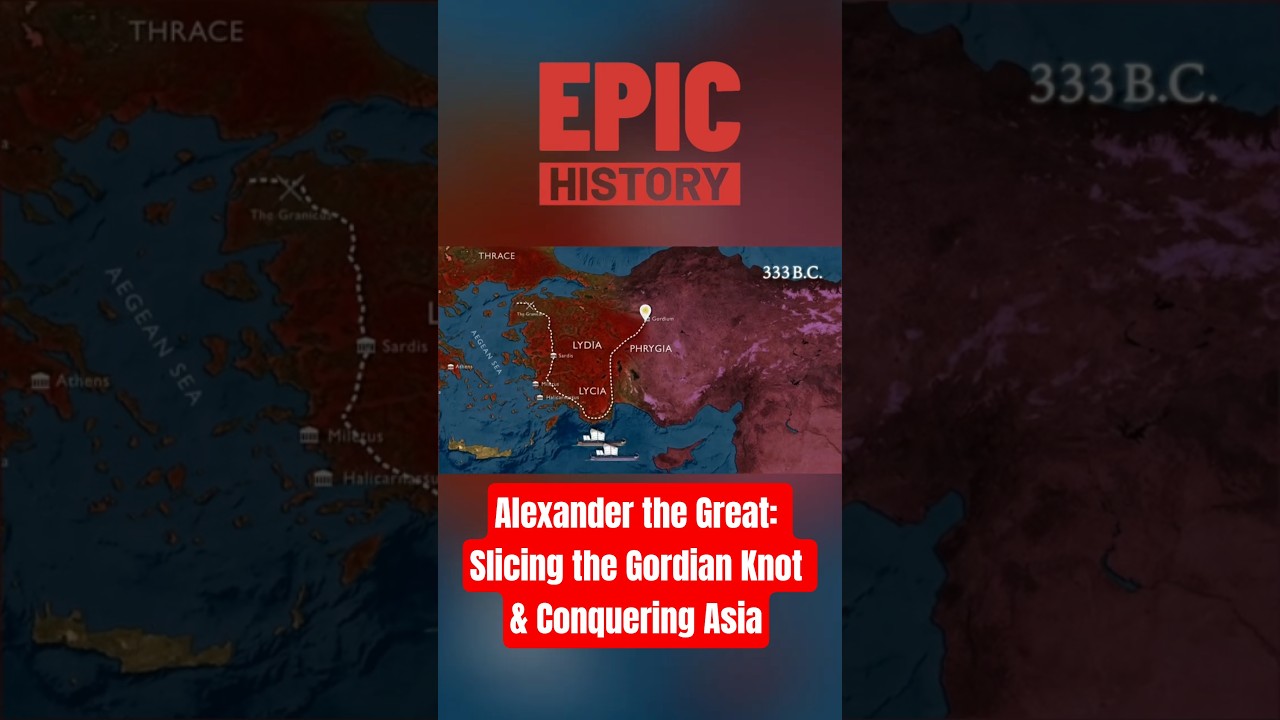
As you journeyed further into Asia Minor, you encountered the famed Gordian Knot in the city of Phrygia. The knot, a complex entanglement tied by Gordius, an ancient king, had long been interpreted as a symbol of an unsolvable puzzle. The prophecy surrounding it spoke of a hero who would untie the knot being destined to rule Asia. You recognized this as a pivotal moment, an opportunity not just for conquest but also for prophecy. The question lay before you: how does one approach such a riddle? Rather than allow the knot to become a source of uncertainty, you decided to confront it head-on.
Significance of the Knot in Ancient Prophecy
The significance of the Gordian Knot extended beyond mere legend; it represented the broader themes of destiny and divine favor. As you stood before the knot, you understood its implications in the context of your own ambition. It was not merely a test of physical strength or intellectual dexterity but rather a challenge that echoed the very essence of leadership: the ability to overcome seemingly insurmountable obstacles. In the eyes of your contemporaries, untangling this knot would signify that you were indeed chosen by the fates to achieve greatness. You felt the weight of history upon your shoulders, pressing you to make a decisive choice.
Alexander’s Decision to Cut the Knot
With fervor, you drew your sword and sliced through the Gordian Knot, opting for an audacious display of decisiveness rather than futile mental exertion. In this one moment—an act that could be perceived either as rash or brilliant—you transformed a longstanding enigma into a testament of your leadership style. You leapt from the constraints of intricate thinking to a realm wherein action and conviction reign supreme. The act was symbolic of your character: a leader willing to carve his own destiny, unbound by traditional expectations. Indeed, that singular choice would become a defining anecdote in your legacy, casting a long shadow as your story unfolded.
Symbolism of the Gordian Knot Incident
Innovative Leadership and Decisiveness
In choosing to cut the knot, you showcased a brand of leadership that transcended convention. The very act of slicing through the heralded puzzle spoke volumes about your character; you were innovative and decisive—qualities emblematic of great leaders. This incident heralded the beginning of an unorthodox approach in the art of war, where traditional thinking often fell short. You had set a precedent; decisions need not be encumbered by dogmas, but rather shaped by opportunity and instinct. Such decisive action would be a hallmark of your military campaigns to come.
Impact on Alexander’s Reputation
The legend of the Gordian Knot would grow into a defining story for your legacy. You transformed a challenge into a symbol of your character, stirring public imagination and drawing admiration from both allies and adversaries alike. With one act, you refined your public persona, not as merely a conqueror but as a visionary leader who relied on forceful intuition rather than fearsome intellect. This would only serve to elevate your standing among your contemporaries and elevate the expectations that came with your title. Quickly, your reputation was no longer anchored solely in the lineage of your father but in the innovative spirit you exuded.
Foreshadowing Future Conquests
As you stood before the assembled crowds, the cutting of the knot served as a prophetic foreshadowing of your future endeavors. It was a harbinger of the audacity that would shape your military campaigns. This attitude, marked by direct confrontation and unyielding resolve, would define your approach as you prepared to face the vast Persian Empire. The tale of the knot, laden with significance, also served to establish a connection between your fate and that of an ancient prophecy, framing your future as one intertwined with destiny.
The Invasion of the Persian Empire

Initial Campaigns and Strategy
With your principles intact and your reputation growing, you directed your sights toward the Persian Empire. In 334 BC, you commenced your invasion, an act that would irrevocably alter the course of history. Your strategy was multi-faceted; it was not merely a show of military might but also a calculated move involving propaganda and psychological warfare. By short-circuiting the overwhelming scale and power of your opposition with swift, decisive strikes, you aimed to disorient and demoralize. Your initial campaigns in Asia Minor unfolded with remarkable success, as you unleashed the robust Macedonian phalanxes against the Persian forces.
Key Battles: Issus and Gaugamela
Two battles stand out during this formative phase of your campaign: Issus and Gaugamela. At Issus, you faced the Persian army led by Darius III, and through innovative tactics, you managed to secure a stunning victory despite being outnumbered. This victory was not merely a tactical triumph but a significant psychological blow to your enemies. The subsequent battle of Gaugamela a year later would become a landmark in military history—a testament to your genius. Employing the element of surprise, fluid maneuvering, and an understanding of the terrain, you decimated Darius’s forces, solidifying your position as the leading force in the ancient world.
Overcoming Darius III and the Persian Forces
Your triumph over Darius III was monumental, transforming you into a figure of legend. With the Persian army shattered, you seized control of their heartland, gaining not just military victory but also considerable loot and resources. This success resulted in the rapid expansion of your empire and the establishment of a new political order in regions once governed by Persia. Yet, your achievements extended beyond the battlefield; you understood the necessity of integrating conquered peoples into your empire, combining cultures rather than imposing dominance through brute force.
Key Conquests Across Asia
Capturing Asia Minor
Your campaigns throughout Asia Minor paved the way for an ambitious operational theater that showcased your military ingenuity and vision. Capturing its key city-states, you leveraged these victories to consolidate your influence. You transformed the political landscape, effectively dismantling any remnants of Persian power in the region. However, you were not merely a conqueror; you also established cities, spread Hellenistic culture, and laid the foundation for future governance.
The Founding of Alexandria in Egypt
Among your most notable achievements was the founding of Alexandria in Egypt in 331 BC. This city quickly became a symbol of your vision for a multicultural empire, blending Greek and Egyptian cultures seamlessly. Alexandria would soon evolve into a hub of knowledge, commerce, and transnational discourse, reflecting your aspirations to create a legacy that transcended mere military conquest. Your decision to establish such an intellectual and cultural beacon illustrated your understanding of the importance of cultural diplomacy in governance.
Advancing Through Mesopotamia and into India
Your ambitions did not stop at Asia Minor and Egypt; you pressed further into Mesopotamia and toward India. Each of these territories brought with them unique challenges, yet you demonstrated remarkable adaptability and strategy. By adjusting your tactics according to the unfamiliar terrain and local customs, you continued to expand the Macedonian realm. As you crossed the Hindu Kush into India, the challenges multiplied, yet it was here that you honed your reputation as both a warrior and a statesman. Each conquest solidified your dominance, but it was also a process of cultural exchange that integrated various ideologies and philosophies into your expanding empire.
Cultural Impacts of Alexander’s Conquests

Spreading Greek Culture and Language
You were not solely focused on military conquest; your ambitions included the dissemination of Greek culture and language across your territories. In each city you established or conquered, Hellenistic ideals twined themselves into local practices. The adoption of the Greek language, art, and philosophy would set the stage for the spread of Hellenistic culture across vast regions, creating a milieu where East and West could coexist. It is interesting to note how your expeditions propelled the ancient world toward a cultural amalgamation, thereby enhancing trade and dialogue among diverse peoples.
Hellenistic Age: A Blend of East and West
The period known as the Hellenistic Age emerged as a direct consequence of your conquests. You catalyzed a blend of Eastern and Western cultures that would shape the ancient world for centuries. Philosophies and art from Greece began to intermingle with local customs, giving rise to a vibrant tapestry of cultural expression. You instilled philosophies encouraging inquiry and enlightenment, creating a legacy that encouraged the pursuit of knowledge. The ramifications of this era would reverberate through history, influencing societies long after your death.
Cultural Exchanges and Conflicts
While your conquests brought about vast cultural exchanges, they were not without their conflicts. The imposition of Greek culture often clashed with age-old traditions and practices, leading to tensions and resistance in some regions. As you navigated this cultural landscape, you were continually faced with the delicate balance between integration and imposition. Understanding the need to adapt to local customs became essential, yet your ambition frequently encountered pushback from communities reluctant to abandon their heritage. Though difficult, these moments contributed to a broader narrative of cultural evolution in the ancient world.
The Military Genius of Alexander
Tactics and Innovations in Warfare
Understanding the genius of your military strategies provides vital insight into your character as a leader. You redefined the very nature of warfare, introducing innovations such as the use of the phalanx formation and integrating various military units to achieve tactical superiority. Your ability to anticipate enemy moves and adapt your strategy accordingly set you apart from other leaders of the time. Analysis of terrain, resource management, and troop logistics became essential lessons for future military leaders.
Use of Siege Warfare and Cavalry
Your mastery of siege warfare further demonstrated your tactical brilliance. You regarded each conquest as an opportunity to refine military strategies, developing methods to overcome fortifications and mounted conflicts. The employment and integration of cavalry added another layer of complexity to your military approach. The Macedonian cavalry, under your command, executed maneuvers that astounded opponents and led to quick victories. This combination of ground troops and cavalry ensured your dominance on the battlefield.
Psychological Warfare and Leadership
Moreover, your unique approach to psychological warfare enhanced your military conquests. You understood the importance of instilling fear and decisiveness in both your enemies and your own troops. Through bold actions, such as the cutting of the Gordian Knot, you created an aura of invincibility. Demonstrating your capacity for speed and surprise not only garnered the loyalty of your troops but instilled uncertainty in your enemies. Your leadership style, characterized by audacity and charisma, originated from this blend of psychological manipulation and tactical acumen.
The Downfall and Legacy of Alexander
Mysterious Death at 32
Tragically, as with many figures of immense ambition, your life was marked by an early demise. Dying at the age of 32, the circumstances surrounding your death remain shrouded in mystery. Scholars speculate about possible causes ranging from natural illness to poisoning. Regardless of the cause, your untimely death abruptly ended a conquest that had reshaped the ancient world, leading to widespread mourning among subjects and soldiers alike.
Fragmentation of the Empire After His Death
In the wake of your death, the sprawling empire you had built faced immediate upheaval. Without your unifying presence, your generals and satraps engaged in power struggles, leading to fragmentation. The lands you conquered were fragmented into competing territories, resulting in immense political instability. Conflicts arose among former allies, and a series of civil wars plagued your empire’s legacy. The promise of a unified realm diminished, leaving a historical crossroads that reflected what could have been.
Enduring Legacy as a Historical Icon
Despite these tumultuous outcomes, you remain an enduring icon in history. Your accomplishments, strategic mind, and cultural impact resonate through the annals of time. From the spread of Hellenistic culture to the enduring principles of leadership you exemplified, generations have sought to emulate your qualities. Scholars, military strategists, and political leaders alike regard you as a format for ideal leadership, symbolizing the quest to extend one’s influence beyond one’s homeland.
Conclusion
Summarizing Alexander’s Achievements
The saga of your life is one of unparalleled achievement and ambition. From your noble roots to your military genius, you shaped the ancient world in ways that reverberate through subsequent centuries. You not only conquered vast territories but also bore witness to cultural exchanges that contributed to the Hellenistic Age—a period of unprecedented dialogue between East and West.
Reflections on Your Leadership Style
Your leadership style, characterized by bold decisions, innovative tactics, and an intricate understanding of cultural dynamics, provides enduring lessons for future generations. You exemplified the notion that greatness is not just about conquest but about the interplay of ideas, philosophy, and governance. Your decisive nature, as illustrated in the tale of the Gordian Knot, sets a precedent for how one might approach challenges and make their mark on history.
The Eternal Impact of Your Conquests on World History
Ultimately, the impact of your conquests extends far beyond your lifetime. They laid the foundation for the Hellenistic world, a blend of cultures and ideas that would influence subsequent civilizations. In contemplating your legacy, one realizes that your ambition not only reshaped geography but also bridged divides between peoples, paving the way for an interconnected world. As you reflect on the arc of your life, it becomes evident that you are more than a mere historical figure; you are an enduring symbol of humanity’s relentless pursuit of greatness.