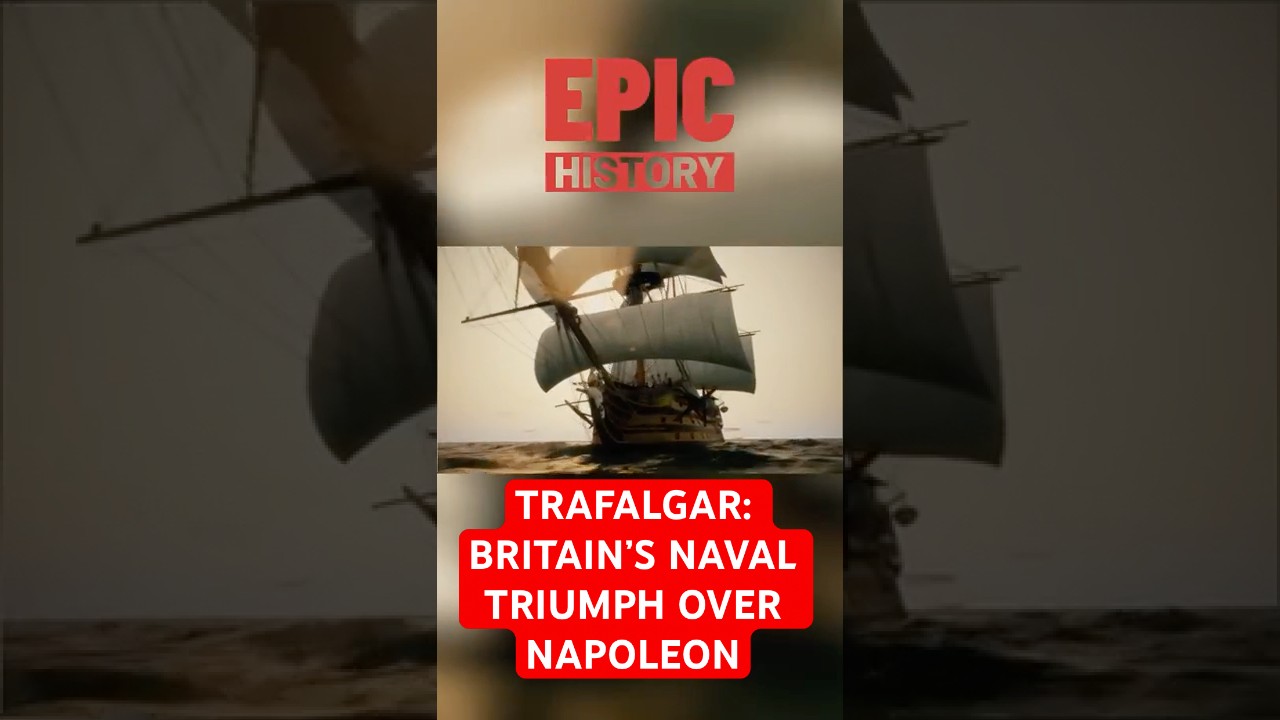
The Battle of Trafalgar in 1805 remains a pivotal event in the annals of maritime history, marking a definitive assertion of British naval dominance during the Napoleonic Wars. This battle not only thwarted Napoleon’s aspirations for invading Britain but also redirected the course of warfare towards land engagements. Under the command of Admiral Horatio Nelson, the British fleet executed innovative tactics that resulted in a significant defeat of the Franco-Spanish forces, allowing Britain to secure vital sea routes and maintain its imperial interests.
This article will explore the strategic importance of Trafalgar and the lasting implications of Britain’s naval supremacy on European geopolitical dynamics. By examining Admiral Nelson’s leadership and tactical ingenuity, one can appreciate how this confrontation shaped the trajectory of the Napoleonic Wars and established fundamental doctrines of naval warfare that influenced Britain’s maritime policy for decades to come.
Historical Context of the Napoleonic Wars

Overview of Napoleon’s ambitions in Europe
You must appreciate that Napoleon Bonaparte’s ambitions were not merely a personal quest for glory but represented a transformative vision for Europe. Rising to power in the aftermath of the French Revolution, Napoleon sought to establish a French Empire that would extend beyond its borders, fundamentally reshaping the European political landscape. His campaigns reflected aspirations to spread revolutionary ideals while simultaneously consolidating his authority over a continent that had been struggling with monarchical absolutism. This pursuit of hegemony prompted a series of coalitions and conflicts, as nations increasingly aligned against him, each threatened by his expansive designs.
Britain’s position prior to Trafalgar
Before the Battle of Trafalgar in 1805, Britain stood at a pivotal juncture in its history. With its distinct maritime prowess, the kingdom had established itself as a leading naval power on the global stage. However, the threat posed by Napoleon was tangible. British policymakers understood that if Napoleon succeeded in taking control of the seas, he would not only dominate continental Europe but also threaten Britain’s very existence. The British public, governmental leaders, and naval commanders alike recognized the dire need for a strategic response that would counterbalance the formidable French army.
Significance of naval power in the early 19th century
During the early 19th century, naval power was a critical determinant of national strength and global influence. You should consider that control of the seas ensured the protection of trade routes, colonial possessions, and the ability to project military force over vast distances. For Britain, the Royal Navy was not merely a military asset; it represented a robust economy that supported trade and commerce. In this era, naval battles were often decisive, as the outcome had far-reaching implications for national security and colonial ambitions.
Prelude to the Battle of Trafalgar
The formation of the Franco-Spanish alliance
The years leading up to Trafalgar witnessed the formation of a formidable Franco-Spanish alliance, which was pivotal for Napoleon’s strategic plans. In 1804, Spain and France joined forces, largely motivated by mutual interests against British dominance. This coalition was not merely based on political alignment but also reflected shared military objectives. Napoleon aimed to amass a fleet capable of challenging British naval supremacy, thereby laying the groundwork for a possible invasion of Britain itself. You should recognize that this alliance marked a significant shift in maritime power, culminating in the mobilization of an impressive combined fleet.
Previous naval engagements leading up to Trafalgar
Prior to Trafalgar, several naval engagements highlighted the weaknesses and growing tensions between the British Royal Navy and the Franco-Spanish fleet. Notably, the defeats at the hands of British forces in battles such as the Battle of the Nile underscored British superiority at sea but also revealed vulnerabilities in the Franco-Spanish joint command. Each engagement served as a precursor, sharpening tactics and strategies on both sides while solidifying the expectation that a decisive confrontation was on the horizon.
Strategic importance of the Mediterranean and Atlantic
The Mediterranean and Atlantic Oceans were not mere bodies of water; they were vital thoroughfares for trade, military expeditions, and communication between Europe, the Americas, and beyond. Control over these regions was critical for both the British and the Franco-Spanish alliance. For Napoleon, securing dominance in the Mediterranean would provide troop reinforcements and supplies, while for Britain, safeguarding shipping lanes was paramount to maintaining its empire. As such, the strategic geographic importance of these waters shaped military planning and led to the inevitable clash of fleets at Trafalgar.
The Key Figures in the Battle
Admiral Horatio Nelson’s background and leadership style
Admiral Horatio Nelson emerged as one of Britain’s most celebrated military leaders, a status earned through a combination of personal courage, innovative tactics, and an indomitable spirit. His naval career was marked by a series of notable victories, shaped by an understanding of maritime warfare that emphasized aggressive action and unorthodox strategies. You may find it compelling that Nelson’s leadership style was characterized by his ability to inspire his crew and instill a sense of loyalty and purpose. His famous motto, “England expects that every man will do his duty,” galvanized his sailors and underscored his belief in the importance of personal responsibility in achieving collective victory.
Vice-Admiral Pierre-Charles Villeneuve’s command decisions
Contrasting Nelson, Vice-Admiral Pierre-Charles Villeneuve represented a military leadership burdened by external pressures and conflicting objectives. Appointed to command the Franco-Spanish fleet, Villeneuve faced the daunting task of aligning French and Spanish naval strategies, often exacerbated by interference from Napoleon himself. His command decisions were marred by indecision and a lack of cohesion among the fleet, ultimately sealing his fate on that fateful day at Trafalgar. The complexities of coalition warfare were starkly illustrated in Villeneuve’s inability to capitalize on his fleet’s numerical superiority and the profound implications that decision-making can carry in warfare.
Roles of other notable commanders in the battle
Beyond Nelson and Villeneuve, other commanders played crucial roles during the Battle of Trafalgar. Vice-Admiral Federico Gravina led the Spanish contingent with a degree of valor but was constrained by the operational challenges his fleet faced. Captain Cuthbert Collingwood, Nelson’s second-in-command, displayed exceptional bravery and leadership. Following Nelson’s mortal wounding, Collingwood took charge and executed the final phases of the battle with remarkable composure. Each figure at Trafalgar contributed to the intricate tapestry of naval leadership that characterized this decisive moment in history.
Strategic Planning and Tactics Employed
Nelson’s innovative tactics: the ‘Nelson Touch’
Central to Nelson’s success at Trafalgar was his renowned tactical acumen, known colloquially as the “Nelson Touch.” This approach was characterized by aggressive engagement and an unwillingness to adhere to conventional naval tactics, which often relied heavily on formal line formations. Instead, Nelson opted for a bold strategy that involved breaking the enemy’s line of ships, thereby allowing his forces to engage at close range and maximize the effectiveness of their broadsides. This unorthodox method not only demonstrated Nelson’s deep understanding of naval warfare but also highlighted his audacious approach to combat, a hallmark of his career that ultimately redefined naval engagements.
The formation of the British fleet at Trafalgar
The British fleet’s formation at Trafalgar was a meticulous culmination of strategic planning and a reflection of Nelson’s innovative mindset. Rather than conforming to standard tactics that relied on a straight line of ships, Nelson ordered a two-column attack designed to break through the Franco-Spanish line. This formation allowed British ships to engage multiple adversaries simultaneously, reaping the benefits of concentrated firepower. You must appreciate how this strategic deployment gave the British a significant tactical advantage and contributed to the overall success of the battle.
Analysis of Franco-Spanish strategies
The strategy employed by the Franco-Spanish fleet, while initially formidable due to its numerical superiority, ultimately faltered under the weight of poor command decisions and lack of coordination. Villeneuve’s leadership was complicated by competing goals; while he sought to defend against the British, he also aimed to maintain cohesion among his forces, which often conflicted. The tactical decisions made to avoid confrontation in favor of conservatism were indicative of a defensive mindset that failed to recognize the momentous opportunities for offense. This hesitancy severely undermined the effectiveness of the coalition against the more aggressive British tactics.
The Day of the Battle: Key Events
Timeline of the battle’s major phases
The Battle of Trafalgar unfolded with a series of key phases, each marked by intensity and critical decision-making. Starting on the morning of October 21, 1805, the British fleet spotted the Franco-Spanish formation. Nelson signaled his famous message “England expects that every man will do his duty” before engaging the enemy. The first phase involved the splitting of the enemy line, a decisive tactical maneuver. The subsequent phases saw exchanges of devastating broadsides, boarding actions, and ultimately, the sinking of numerous enemy vessels, leading to the dramatic conclusion of the day.
Critical moments that shifted the tide in favor of Britain
Several critical moments during the battle undoubtedly shifted the tide in favor of the British. Nelson’s bold command to attack the enemy’s line directly led to chaos amongst the Franco-Spanish ranks, as ships became isolated and susceptible to combined assaults. The moment when Nelson himself was mortally wounded was bittersweet; however, it galvanized the British forces. Under Collingwood’s command, the British continued to execute flawlessly, showcasing their tactical superiority. These moments underscored the exceptional leadership and the desperate resolve that characterized the battle’s ensuing dynamics.
Casualties and losses for both sides
The aftermath of Trafalgar resulted in significant casualties for both the British and the Franco-Spanish fleet. Approximately 460 British sailors lost their lives, with many more wounded. In contrast, the Franco-Spanish fleet suffered catastrophic losses, with about 4,400 men lost and numerous ships captured or sunk. Such staggering losses on the part of the enemy solidified Britain’s maritime dominance, while simultaneously marking a dark chapter for the Franco-Spanish alliance. You must acknowledge that these casualties reflected not just numerical losses but also the very essence of military might and the stakes involved in this iconic naval engagement.
The Aftermath of Trafalgar
Immediate consequences for the Franco-Spanish fleet
In the immediate aftermath of Trafalgar, the repercussions for the Franco-Spanish fleet were devastating. The defeat not only decimated their naval strength but also dismantled the momentum that Napoleon had built leading to the battle. The loss of ships and personnel crippled their ability to challenge British dominance at sea and dashed any hopes Napoleon harbored for launching an invasion of Britain. Moreover, this defeat instilled a sense of despair in the ranks of the Franco-Spanish forces, leading to questions about the viability of their alliance and the effectiveness of their military strategies moving forward.
Impact on British naval strategy and morale
Conversely, Trafalgar served as a rallying point for British naval strategy and morale. The overwhelming victory cemented Britain’s status as the world’s preeminent naval power and validated the investments made in naval capabilities. Furthermore, the triumph at Trafalgar galvanized the British public and instilled a profound sense of national pride. You should recognize that the psychological boost experienced following the battle led to the strengthening of naval recruitment efforts and the assertion of Britain’s ability to protect its interests, both at home and in its far-reaching empire.
Reactions in France and Spain following the defeat
In France and Spain, the aftermath of Trafalgar was characterized by profound disillusionment. Napoleon’s ambitions were curtailed, leading to a reassessment of military strategies and alliances. In Spain, the defeat exacerbated existing political tensions, and popular support for the war waned. French naval policy also faced scrutiny, as debates emerged regarding command structure and military efficacy. The loss at Trafalgar became emblematic of the broader struggle against British maritime supremacy and highlighted the vulnerabilities of the Franco-Spanish alliance in the face of an increasingly assertive enemy.
Significance of the Battle in Naval Warfare

How Trafalgar shaped future naval tactics
The Battle of Trafalgar left an indelible mark on the evolution of naval warfare tactics. It showcased the effectiveness of breaking enemy lines and engaging directly, strategies that would later inform naval engagements well into the 19th and early 20th centuries. You must recognize that Nelson’s tactics became a cornerstone of naval doctrine, emphasizing a proactive approach to combat. Navies around the world studied the events of Trafalgar, leading to fundamental shifts in ship design, fleet organization, and engagement strategy in subsequent conflicts.
Establishment of British naval dominance
Trafalgar effectively established British naval dominance well into the 19th century, functioning as the keystone in maintaining the empire’s far-reaching trade networks and global interests. The Royal Navy’s capacity to defend against potential threats on the high seas allowed Britain to pursue imperial ambitions unchallenged. This dominance fostered a period known as the “Pax Britannica,” during which British naval power ensured relative peace in the maritime domain, shaping international relationships and trade systems for generations to come.
Long-term implications for maritime conflicts
The implications of Trafalgar extended far beyond immediate military consequences, as it set a precedent for how maritime conflicts would be waged. It led to a greater emphasis on naval power in strategic planning and military doctrine worldwide. Future navies learned the importance of striking decisively and maintaining an operationally flexible fleet capable of adapting to dynamic battle conditions. The lessons from Trafalgar resonate in modern military doctrine, influencing contemporary naval engagements and shaping the way nations perceive and deploy maritime resources.
Trafalgar’s Role in the Napoleonic Wars
Impact on Napoleon’s plans for invasions
The defeat at Trafalgar represented a critical turning point for Napoleon’s war efforts. It thwarted his plans for the invasion of Britain, a primary objective that had driven much of his military strategy. Without fleet supremacy, his ambitions for cross-Channel operations were rendered futile. The strategic calculus shifted perilously for Napoleon, leading him to reconsider his priorities and redirect his efforts towards land-based battles, which would ultimately define the latter part of the Napoleonic Wars.
Transition from naval to land-based conflict in the war
Across the Napoleonic Wars, the Battle of Trafalgar signaled a transition from predominately naval conflict to land-based engagements. Following the defeat, Britain increasingly focused on coordinating land campaigns against French forces in Europe, leveraging its naval dominance to support military operations on the continent. The Royal Navy’s ability to transport troops and supplies became instrumental in facilitating land battles, reinforcing the interconnectedness of maritime and terrestrial strategies in warfare.
Contributions of Trafalgar to the overall defeat of Napoleon
The ripple effects of Trafalgar contributed significantly to the broader defeat of Napoleon. The British naval blockade that ensued after the battle severely hindered French supply lines, crippling the operational capacity of the French Army. Moreover, the established naval strength allowed Britain to forge and maintain alliances with other European powers dissatisfied with Napoleon’s expansionist policies. Over time, these alliances, coupled with Britain’s relentless naval pressure, became instrumental in orchestrating campaigns against Napoleon, ultimately culminating in his defeat at the Battle of Waterloo in 1815.
Legacy of the Battle of Trafalgar
Cultural and historical commemorations of Trafalgar
The legacy of the Battle of Trafalgar is not only enshrined in military history but has also become deeply woven into the cultural fabric of Britain. Commemorative events, literature, and artworks celebrating Nelson and the battle reflect a national narrative that exalted bravery, heroism, and sacrifice. Monuments, such as Nelson’s Column in Trafalgar Square, stand as testaments to the enduring memory of the battle, embodying a sense of identity and national pride for generations of Britons who recall this defining moment in history.
Influence on British naval policy and global dominance
The triumph at Trafalgar profoundly shaped British naval policy, reinforcing the philosophy of maintaining a robust navy capable of projecting power worldwide. You should understand that the British Empire’s expansion in the 19th century was directly linked to the supremacy established at Trafalgar. The ideals of naval strength became synonymous with the very essence of British identity, influencing diplomatic strategies and colonial pursuits in an era characterized by intense global rivalry.
Nelson’s enduring legacy and public perception
Admiral Horatio Nelson’s legacy extends beyond the confines of military achievements; he became a symbol of British resilience and tenacity. His public perception transformed him into a national hero, celebrated for his strategic genius and undeterred spirit. The narrative surrounding Nelson encapsulated not just the execution of his military duties but also his personal sacrifice—a multifaceted figure whose legend endures in the annals of history. His leadership continues to serve as a case study in military academies worldwide, manifesting the enduring lessons of courage and innovation in leadership.
Conclusion
Summary of Trafalgar’s importance to British history
In conclusion, the Battle of Trafalgar stands as a watershed moment in British history, epitomizing a pivotal shift in military strategy and national identity. It encapsulated Britain’s emergence as a global maritime power, redefining the balance of power in Europe. The victory prevented a potential invasion, solidifying British dominance at sea and allowing for an expansive imperial agenda. The historical significance of Trafalgar continues to resonate through Britain’s national consciousness, serving as a touchstone for patriotism and maritime prowess.
Enduring lessons on leadership and strategy
You must reflect on the enduring lessons on leadership and strategy that arise from the Battle of Trafalgar. Nelson’s ability to inspire and innovate reminds us of the importance of adaptability in military leadership. His bold tactics illustrate the necessity of seizing opportunities in the face of adversity, while the collaboration and command strategies evident in the battle highlight the importance of cohesive teamwork. In a broader context, the battle prompts contemporary leaders to recognize the interplay between strategy and execution in achieving success.
Reflection on the battle’s relevance in the context of modern maritime conflict
Ultimately, the Battle of Trafalgar remains relevant in understanding modern maritime conflict. The principles of naval power and strategy forged during this clash echo throughout history, informing contemporary debates on naval policies and defense strategies in an increasingly interconnected world. You are invited to consider how the lessons learned—regarding decisive leadership, innovation, and the importance of maritime control—continue to inform how nations navigate the complexities of modern conflicts at sea, ensuring that the legacy of Trafalgar remains a vital part of maritime discourse today.