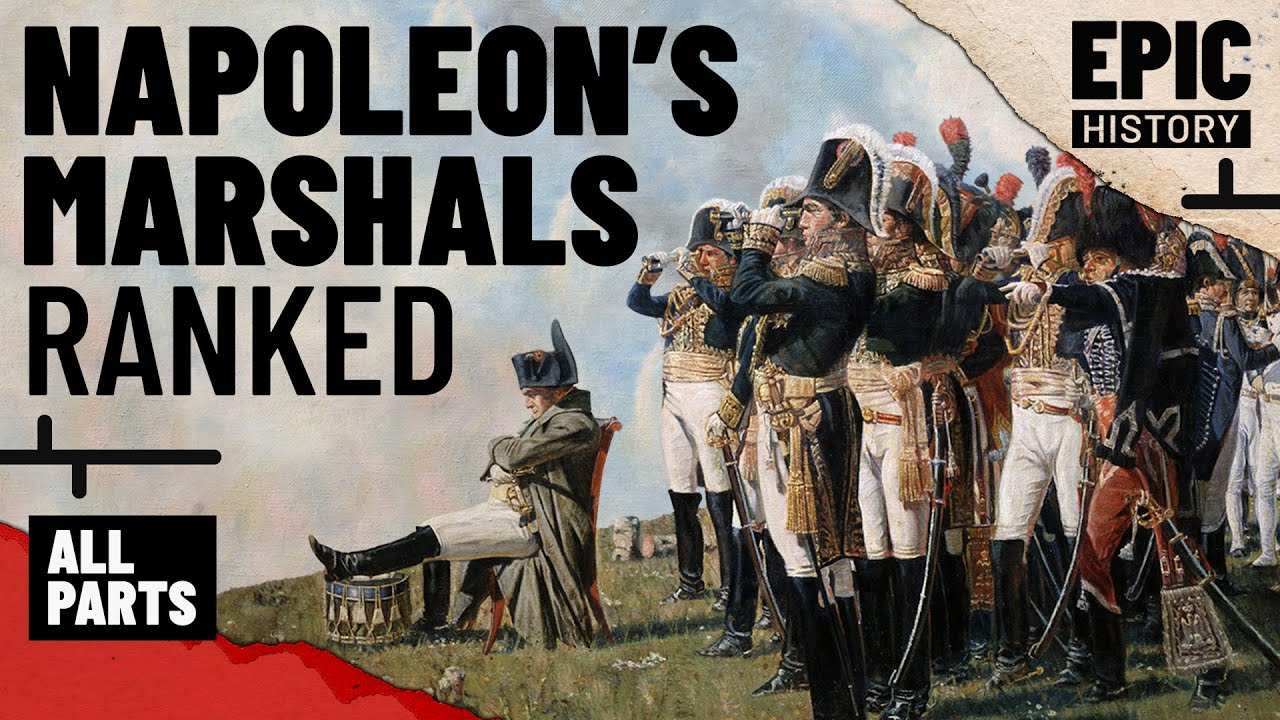
The examination of the marshals of Napoleon’s Grande Armée reveals a complex tapestry of military leadership that transcended social boundaries. From their inception in 1804, when Napoleon established the ranks of “Marshals of the Empire,” to the end of his reign in 1814, a total of 26 individuals emerged from diverse backgrounds, including aristocrats and commoners. Each marshal’s story contributes to a broader understanding of the dynamics and challenges faced by military leaders during the Napoleonic Wars, highlighting their varied fates—some achieved lasting glory, while others encountered tragic downfalls.
This article provides a thorough assessment of each marshal, supported by insights from retired Colonel Rémy Porte, who contextualizes their achievements and failures within the tumultuous landscape of the time. By exploring both the prominent figures, such as Lannes and Ney, alongside lesser-known marshals like Moncey and Pérignon, the analysis emphasizes the rich variety of experiences and decisions that characterized the military hierarchy under Napoleon. Overall, the insights reveal not only the extraordinary nature of military leadership during this period but also the broader implications for understanding loyalty, ambition, and the diversity of the individuals who shaped French military history.
Overview of Napoleon’s Grande Armée
Formation and Significance of the Grande Armée
Napoleon Bonaparte’s Grande Armée was not merely a military formation; it represented the embodiment of the ideals and aspirations of the French Revolutionary era. Established in the early 1800s, it became a formidable force, drawing personnel from various backgrounds and regions across France and its territories. This grand army was significant not only for its military might but also for its organizational structure and discipline, aspects that Napoleon meticulously honed. The Grande Armée became instrumental in executing Napoleon’s ambitions of expansion and dominance over Europe. Its formation marked a departure from traditional military practices, integrating innovative tactics and mobility that would redefine modern warfare.
Initial Military Campaigns and Successes
The early campaigns of the Grande Armée, particularly in Austerlitz (1805) and Jena-Auerstedt (1806), emerged as decisive victories that underscored the army’s operational superiority. Napoleon’s tactical genius was on full display; he effectively utilized corps and divisions to outmaneuver larger enemy forces. These successes not only solidified his power in France but also facilitated the rapid expansion of French influence across Europe, leading to the establishment of several satellite states loyal to Napoleonic ideals. The victories served to enhance the morale of the troops and the civilian populace, further embedding the legacy of the Grande Armée in French national identity.
Role of Marshals Within the Army Structure
Commanding the troops of the Grande Armée were the Marshals, an elite group responsible for executing Napoleon’s strategic vision on the battlefield. Each Marshal held a significant degree of authority and autonomy in command, yet their effectiveness was closely linked to Napoleon’s overarching strategies. Marshals like Michel Ney and André Masséna played critical roles in engaging enemy forces and rallying their divisions; they were instrumental in maintaining the tempo of campaigns and ensuring that Napoleon’s orders were followed. Yet, the relationship between Napoleon and his Marshals was complex—not merely one of hierarchy but also personal loyalty and ambition, often resulting in rivalries that could impact the unity and success of the army.
Appointment of Marshals
Establishment of the Marshals of the Empire in 1804
In 1804, amidst the maelstrom of war and ambition, Napoleon formalized the creation of the Marshals of the Empire. This decree elevated military leaders who had proven their mettle in prior conflicts, establishing a new rank that would carry both prestige and responsibility. This action was more than simply rewarding loyal generals; it served as a strategy to consolidate power, embedding loyalty within the army’s command structure that would be pivotal to his military successes. As the Grande Armée expanded, the Marshals became integral to sustaining momentum in wars against various coalitions in Europe.
Criteria for Selection and Promotion
The selection of Marshals was dictated by a blend of meritocracy and Napoleonic favoritism. While battlefield success and leadership qualities were paramount, personal loyalty to Napoleon and political considerations influenced appointments. Those who demonstrated exceptional courage during battles or exceptional strategic qualities were often promoted quickly, regardless of their social standings. This unique meritocratic system allowed individuals such as Jean-de-Dieu Soult and Louis-Nicolas Davout to rise from humble beginnings to high ranks, exemplifying the transformative nature of the military during this period.
Additional Appointments Before 1814
By the time of Napoleon’s abdication in 1814, an additional eight Marshals had been appointed, expanding the cadre to include a diverse mix of leaders. This growing body of military commanders reflected the evolving complexities of European warfare during the Napoleonic era. Each newly appointed Marshal brought their own experiences and backgrounds to the French military apparatus, further enriching the strategic options available to Napoleon. The dynamics of these appointments illustrated the shifting nature of authority within the military, indicating challenges of loyalty and command that would surface as the Empire began to falter.
Diverse Backgrounds of the Marshals

Aristocrats vs. Commoners in Military Leadership
The Marshals of the Empire presented a dazzling array of backgrounds, where nobles and commoners melded into one formidable military leadership. The contrast between these two groups encapsulated the societal changes wrought by the Revolution. While some Marshals, like Marmont and Murat, came from the aristocracy, others such as Kellermann and Oudinot hailed from humble origins. This melding of social classes within the ranks allowed for a more dynamic and innovative approach to military leadership, as individuals brought different perspectives shaped by their unique experiences.
Impact of Social Status on Military Careers
Social status undeniably influenced the careers trajectory of these Marshals. Noble lineage often brought immediate recognition, opportunities for advancement, and the benefit of established connections. However, for commoners, the pathway was one of grit and talent, emphasizing merit over privilege. This dynamic fostered an atmosphere wherein capability and loyalty emerged as essential traits, with individuals like Ney attaining renown and respect through their steadfast service. The subsequent elevation of some commoners to the rank of Marshal did not merely signify personal achievement; it symbolized the potential for social mobility inherent in the Revolutionary spirit.
Case Studies: From Sergeant to Marshal
Individual narratives illuminate the remarkable journeys of several Marshals who ascended from modest beginnings to the upper echelons of military authority. For instance, François Lefebvre started his military career as a sergeant and, through remarkable skill and bravery, earned his promotion to Marshal. His rise demonstrates the transformative potential of the revolutionary ethos—a meritocratic system that permitted individuals to rise through ranks based on performance rather than birthright. Similarly, Mortier’s transition from a middle-class volunteer to a distinguished Marshal signified the fluidity of status during this historical juncture. These case studies epitomize the broader trends that defined the military’s response to the challenges of the Napoleonic Wars.
Key Figures Among the Marshals
Profiles of Notable Marshals: Lannes, Ney, Soult, and Davout
Several Marshals stood out due to their exceptional leadership and contributions to Napoleonic campaigns. Jean Lannes, known for his audacity and tactical genius, played a crucial role in the Battle of Austerlitz, earning accolades and loyalty from soldiers. Michel Ney, hailed as “the bravest of the brave,” showcased exceptional prowess on the battlefield, yet his overzealousness often bordered on recklessness. Soult and Davout, meanwhile, emerged as indispensable commanders, with Soult’s strategic foresight complemented by Davout’s unyielding discipline. Each of these figures not only advanced their military careers but also shaped the fate of entire battles through their decisions and actions.
Lesser-Known Marshals: Pérignon, Brune, and Moncey
While prominent figures often overshadowed lesser-known Marshals, individuals like Pierre Pérignon, Jean-Antoine Brune, and Maréchal Moncey played vital roles in sustaining the Napoleonic cause. Moncey, for instance, distinguished himself during the Spanish campaigns, navigating complex terrain and political challenges with remarkable skill. Similarly, Brune’s campaigning laid the groundwork for future successes, showcasing the importance of joint operations and cohesive strategy. Their contributions, although not as widely celebrated, formed an essential part of the machinery that propelled the Grande Armée across Europe, highlighting the need to recognize every player in the tapestry of history.
Contrasting Leadership Styles and Achievements
The Marshals of the Empire exhibited a breadth of leadership styles that reflected their personalities and backgrounds. For instance, while Lannes’ direct approach often led to rapid victories, it could also result in high troop casualties—illustrating the dual-edged nature of military command. In contrast, the more cautious and methodical Soult prioritized strategic planning, which allowed for sustainable success over the long term. The variance in style underscores the complexity of command within the Grande Armée and serves as a reminder that, despite their training, the human element significantly influenced each Marshal’s effectiveness on the battlefield.
Military Achievements and Failures
Analysis of Key Battles Involving the Marshals
The analysis of key battles reveals the intricate interplay between individual Marshals’ skills and the broader strategies employed by Napoleon. The unfettered success of the Grande Armée in battles such as Austerlitz and Borodino can be traced back to the leadership displayed by Marshals. Conversely, the setbacks faced in campaigns like the ill-fated invasion of Russia highlight how complacency and strategic miscalculations can lead to catastrophic results. These battles serve as focal points for understanding the highs and lows that defined both the Marshals’ careers and the fate of the Emperor.
Successes and Failures: Who Excelled, Who Faltered?
While some Marshals etched their names into military history through commendable successes, others faltered amidst adverse conditions. Figures like Davout emerged as exemplary leaders, with his defense during the Battle of Austerlitz earning him great respect. Mu cigarettes on the other hand, suffered criticisms for their failure to coordinate effectively, especially during the Iberian campaigns, which laid bare the challenges of divisive command structures. The contrasting trajectories of these leaders illuminate the complexity of military command, emphasizing how victories often masked deeper issues within the army.
Lessons Learned from Individual Marshal Campaigns
The experiences of individual Marshals during campaigns reveal critical lessons about resilience, adaptability, and the importance of cohesive command. For example, the downfall of Murat is instructional; his flamboyance and desire for glory became detrimental during crucial engagements in wartime. His experience emphasizes the need for humility in military leadership and the understanding that victories come not just from valiant efforts but from effective collaboration and strategy. Similarly, the lessons drawn from their failures have become central to military studies today, offering timeless insights into command dynamics and strategic thinking.
The Impact of Personal Backgrounds on Leadership
Kellermann’s Rise from Suspicion to Heroism
Kellermann’s trajectory offers a compelling story of suspicion transforming into heroism. Commanding a border army, Kellermann faced accusations of royalism during a time of intense political strife. However, his decisive role in the Battle of Valmy became integral to the Revolutionary cause. He emerged not only as a soldier but as a symbol of resilience against adversity. His journey underscores how backgrounds steeped in doubt can lead to remarkable redemption through valor.
Poniatowski’s Tragic Fate and Polish Aspirations
The story of Józef Poniatowski is a profound reminder of personal ambitions tied to national identity. As a Polish prince and military leader, his aspirations for the revival of Poland drove his service under Napoleon. However, his tragic death during the retreat from Leipzig underscored the high price of ambition in an era defined by shifting allegiances and devastating wars. Poniatowski’s legacy serves as a testament to the interplay of personal aspirations and broader historical currents.
Bernadotte’s Transition to Swedish Royalty
The transformation of Jean-Baptiste Bernadotte from General to Crown Prince of Sweden epitomizes the unpredictability of fate during the Napoleonic era. Initially a close associate of Napoleon, his political maneuvering set him on a divergent path toward aristocracy. His ascent to royal status came with a complex legacy of loyalty and treachery, illustrating how military careers can be altered by political tides. Bernadotte’s reign as King Charles XIV John offers a unique lens through which to examine the lasting effects of the Napoleonic Wars on European politics.
Issues of Command and Authority
Leadership Challenges Faced in Spain
The French expedition into Spain presented myriad leadership challenges that tested the resolve of Napoleonic Marshals. Initial victories soon morphed into quagmires, as guerrilla warfare and local resistance undermined French authority. The conflicting priorities and ambitions of Marshals stationed in Spain created a fractured command structure, hindering strategic coherence. This disunity among leaders exemplified the trials of maintaining authority in a foreign land embroiled in resistance, showcasing the delicate balance between military action and political strategy.
Consequences of Disobedience Among Marshals
Disobedience among the Marshals considerably complicated Napoleon’s military operations. Their divergent opinions and unwillingness to collaborate often resulted in discord and failure. Notably, Victor’s disregard for Jourdan’s command during the Battle of Talavera contributed to a significant French defeat. Such incidents challenge the traditional narrative of unified command under Napoleon, revealing operational vulnerabilities born from personality clashes and conflicting tactical philosophies within the ranks.
Jourdan’s Health Issues and Command Struggles
Marshal Jourdan’s struggles with health issues manifested challenges in command during crucial campaigns. As a seasoned general from the Revolutionary Wars, his leadership fell short during pivotal moments, as his declining health hampered operational decision-making. His temporary retreat to recuperate during the Battle of Vitoria marked a critical juncture for the French forces, leading to consequences that reverberated through the hierarchy of command. Jourdan’s narrative illustrates how personal fragility can influence military leadership and alter the course of campaigns.
Marshals and Political Maneuvering
Interplay Between Military and Political Roles
The dual role of Marshals—both military leaders and political figures—exemplified the interplay of power during the Napoleonic Wars. Many Marshals navigated the treacherous waters of political intrigue, using their military standing to shape the political landscape of their time. This overlap between the military and politics often led to internal strife and ambition-driven rivalries, as seen in the cases of Ney and Bernadotte. The complexities of these roles further complicated strategic decision-making, reflecting the inherent tensions between loyalty, ambition, and governance.
Augereau’s Turbulence and Loyalty Dilemmas
Augereau’s career was marked by turbulence, reflecting the challenges of maintaining loyalty amid shifting allegiances. His initial successes were overshadowed by disorganization and questionable command during later sorties. Despite his initial fervor in support of Napoleon, Augereau’s invocation of a broader morality, wherein he highlighted the cost of blind loyalty, raised questions about the nature of allegiance and duty within the military. His decline serves as a cautionary tale regarding the volatility of personal loyalty in the face of political realities.
Victor’s Shifting Allegiances During Regime Changes
Victor’s political maneuvering illustrates another complex dimension of loyalty in Napoleonic leadership. Once a staunch supporter of Napoleon, Victor’s ultimate disgrace in 1814 led him to navigate the shifting political landscape amid regime changes. During his rapid ascension and fall from favor, Victor exemplified the uneasy balance a Marshal must maintain between military and political identity. His trajectory underscores both the human tendency toward survival in chaos and the often tenuous thread of loyalty woven through military service.
The Fate of the Marshals
Honor and Dishonor: Marshals’ Ultimate Outcomes
The fates of Napoleon’s Marshals spanned the spectrum of honor and dishonor, with some achieving lasting acclaim while others met tragic ends. Figures such as Davout maintained their prestige through unwavering loyalty and tactical brilliance, while others like Murat faced execution due to political misjudgment. The disparate outcomes reflect the convergence of military and political fortunes during this period, emphasizing how the shifting allegiances and fortunes of war could culminate in honor or disgrace.
Injuries, Executions, and Political Exiles
The injuries faced by various Marshals during campaigns often mirrored the broader narrative of conflict and upheaval of the time. For example, Oudinot’s multiple wounds marked him as a symbol of military endurance. In stark contrast, the execution faced by Murat after his failed attempts to secure his power in Italy elucidates the grave consequences of ambition, where former allies could quickly become enemies. These personal tragedies highlight not merely individual fates but also the broader implications of war and the politics intertwined with military leadership.
Impact of the Napoleonic Wars on Individual Lives
The Napoleonic Wars left an indelible mark upon the lives of the Marshals, shaping their destinies in ways they could scarcely have imagined. The remarkable transformations experienced by these men—through nobility, tragedy, or exile—highlight their intricate connections to the broader historical currents shaping Europe. Their careers encapsulate how warfare can irrevocably alter individual lives, serving as a microcosm of the sweeping changes that defined the early 19th century. The legacies they left may emphasize valor and ambition, but they also unveiled the fragility and unpredictability inherent in military command.
Conclusion
Summary of the Diversity and Impact of Marshals
The Marshals of the Empire embodied a remarkable tapestry of military leadership that drew from various backgrounds and experiences. These men, united under Napoleon’s banner, transformed the battlefield through their distinctive styles, strategies, and the tenuous relationships among themselves. Collectively, they shaped the trajectory of the Grande Armée while navigating the complexities of loyalty and ambition amid the chaos of war.
Reflections on Their Historical Significance
As we reflect upon the roles and fates of these Marshals, it becomes evident that their stories reveal essential truths about leadership, loyalty, and the complexities of human ambition. Beyond their military accomplishments, the Marshals stand as symbols of the transformative potential simmering within the backdrop of revolutionary fervor—a heady mix of aspiration and pragmatism that continues to resonate in military history.
Legacy of the Marshals in Military History
The legacy of Napoleon’s Marshals extends far beyond their immediate military contexts. Their experiences, actions, and outcomes demonstrate the intricate interplay between personal ambition, militaristic drive, and political machinations that defined a pivotal period in European history. Through their narratives, they invite deeper inquiry into the nature of leadership itself, establishing themselves as enduring figures within the annals of military history, inspiring future generations to grapple with the complexities of power and authority on the battlefield.