
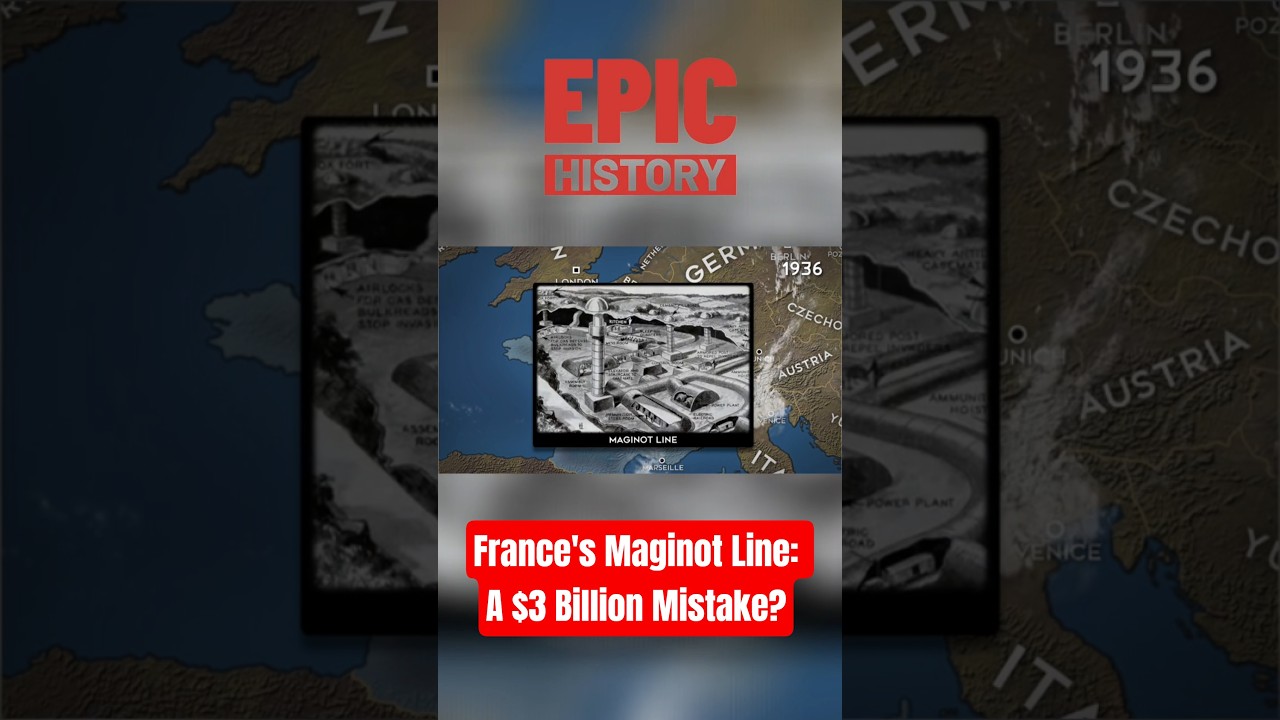
The Maginot Line, a monumental feat of military engineering conceived in the early 20th century, represented France’s response to rising threats from Germany in the lead-up to World War II. Envisioned as an indomitable fortress stretching along France’s eastern border, this elaborate defensive structure was constructed with considerable investment, estimated at $3 billion. Despite its impressive technological advancements and fortifications, the line ultimately demonstrated critical shortcomings that rendered it ineffective during the rapid and dynamic warfare of the Blitzkrieg in 1940.
Examining the strategic decisions behind the Maginot Line reveals a deeper narrative of miscalculations that characterized France’s military planning. The decision to bypass the Ardennes region, along with an overreliance on static defenses, resulted in a defensive mindset that neglected the importance of mobility and adaptability. Critics, including the influential Lieutenant Colonel Charles de Gaulle, argued that such financial resources would have been better allocated toward mechanization and mobile units, emphasizing the need for a modernized military approach in an era of evolving warfare. This analysis underscores not only the flaws inherent in the Maginot Line but also the broader implications of strategic errors that effectively emboldened aggressors in a volatile European landscape.
Historical Context of the Maginot Line
Overview of Pre-World War II Europe
As you reflect on the European landscape leading up to World War II, it is essential to recognize the intense political and social tensions that characterized this era. The aftermath of World War I left many nations with unresolved grievances, particularly in France and Germany, where the Treaty of Versailles imposed significant reparations and territorial losses. During the early 1930s, the clouds of fascism began to gather in various countries, with Adolf Hitler’s rise to power in Germany representing a particularly menacing threat. In this atmosphere of distrust and impending conflict, nations began reevaluating their military strategies, seeking to safeguard their sovereignty through various means of defense and alliances.
The Impact of the Great Depression
The Great Depression, which began in 1929, further complicated the geopolitical landscape of Europe. The economic downturn strained national budgets, undermining public faith in existing governments and stoking nationalist sentiments. For France, the economic crisis exacerbated fears surrounding German intentions and reinforced the prevailing sentiment that heavy fortifications were necessary to deter aggression. The shortfall in military funding led to a reallocation of resources that prioritized static defenses, epitomized by the ambitious Maginot Line project. As national economies crumbled under the weight of economic despair, the prevailing belief in sturdy fortifications became ingrained in the French military ethos.
Franco-German Relations Leading Up to the War
Historically fraught with conflict, Franco-German relations soured significantly in the years leading up to World War II. The memory of World War I, coupled with the loss of Alsace-Lorraine, perpetuated mutual animosities. France’s desire for security transformed into paranoia regarding German expansionism, and diplomatic efforts to achieve a stronger alliance with Britain yielded limited results. As Germany began rearming and violating the terms of the Treaty of Versailles, the French government opted for a largely isolationist strategy, focusing its efforts on constructing the Maginot Line as a bastion against the threat of a resurgent Germany.
Construction of the Maginot Line
Timeline and Funding of the Project
The construction of the Maginot Line began in the early 1920s, following years of deliberation and strategic planning. France allocated considerable financial resources, with funding growing increasingly prioritized as the specter of German militarism became more pronounced. By 1938, the investment had reached approximately $3 billion, a staggering amount for the period. This extensive project took more than six years to complete and was emblematic of France’s commitment to creating an impenetrable barrier designed to deter incursions along its eastern border.
Engineering Marvel: Design and Features
The Maginot Line represented an engineering triumph, characterized by its sophistication and ingenuity. The fortifications spanned 450 kilometers along the eastern border, from Switzerland to Luxembourg. This elaborate construction comprised 142 massive forts, approximately 5,000 blockhouses, and extensive underground infrastructure, including railways and tunnels. Many of the forts were equipped with retractable turrets and sophisticated artillery casemates. The design incorporated thoughtful features such as armored observation points, troop living quarters, and supply depots, creating a fortified network poised to withstand assaults.
Key Components: Forts, Blockhouses, and Infrastructure
Integral to the Maginot Line’s defensive posture were its key components: fortified positions, interconnected blockhouses, and comprehensive infrastructure. The forts housed heavy artillery, anti-tank weaponry, and personnel, arranged in a geometric pattern to provide overlapping fields of fire. Blockhouses served as smaller, strategically placed shelters that offered increased mobility and rapid-response capabilities. The supporting infrastructure—such as reinforced roads and railways—was meticulously engineered to facilitate troop movement and logistical support, enhancing the effectiveness of the entire defensive complex.
Strategic Goals of the Maginot Line
Defensive Strategy Against Germany
The Maginot Line was conceived as an unwavering bulwark against potential German aggression. By creating a formidable barrier fortified with advanced weaponry, the French leadership believed they could effectively stall any offensive push by the German military. This strategy hinged on the assumption that a passive defensive posture could sufficiently deter invasion, buying France valuable time to bolster its military capacities. The hope was that such a line would make a repeat of past invasions significantly less likely, granting France both security and confidence in the face of potential threats.
The Concept of an ‘Impregnable’ Fortress
The philosophy behind the Maginot Line revolved around the concept of an ‘impregnable’ fortress. French military strategists believed that with sufficient fortifications, they could neutralize the threat of a German offensive. The psychological weight of this perception was equally significant, providing a false sense of security that led to complacency within the French command. The strong belief in the line’s efficacy fostered misconceptions about the evolving nature of warfare, blinding military planners to alternative strategies that would better address the challenges posed by an increasingly mobile and dynamic battlefield.
Plans for Troop and Supply Logistics
To ensure that the Maginot Line was more than merely a defensive structure, French military planners included detailed logistics to support troop movements and supply chains. Integral to this planning was the development of an underground network that facilitated rapid deployment and resupply operations. Although this focus on logistics was a positive aspect of the Maginot Line, the heavy reliance on static defenses ultimately hampered the ability of the French military to engage in offensive maneuvers or rapidly adapt to shifting battlefield conditions.
Critical Flaws of the Maginot Line
Neglecting the Ardennes Frontier
Despite its grandeur, the Maginot Line exhibited significant strategic shortcomings, most notably the glaring omission of the Ardennes Frontier. French military planners made a critical error in assessing this region, which they deemed too rugged and forested for a large-scale mechanized assault. This misjudgment proved disastrous when German forces executed a rapid invasion through the Ardennes in 1940 following the line’s established fortifications. By overlooking this critical vulnerability, the French inadvertently facilitated the very incursion they sought to prevent.
Implications of Static Defenses
A considerable flaw of the Maginot Line was its reliance on static defenses, which inherently limited tactical flexibility. By fortifying certain positions without commensurate investments in mobile warfare strategies or mechanization, the French military mindset became entrenched in defensive postures. When faced with the Blitzkrieg tactics employed by the German Wehrmacht, which emphasized speed and coordination, the static nature of the Maginot Line quickly became irrelevant. The reliance on fortifications robbed the French military of the adaptability required to respond to a rapidly evolving battlefield.
Misjudgment of Modern Warfare Tactics
The French high command struggled to recognize the transformative shifts taking place in modern warfare and their implications for national defense. A prevalent belief that heavily fortified lines could withstand modern military engagements stifled innovative thinking and marginalized military leaders advocating for mechanization, like Lieutenant Colonel Charles de Gaulle. The failure to adapt to new tactics, particularly in terms of mobility, left the French military vulnerable and ill-prepared for the realities of blitzkrieg warfare.

The Blitzkrieg and Its Exploitation
Overview of the German Invasion Strategy
In May 1940, the German military executed its invasion strategy—Blitzkrieg—characterized by speed, surprise, and the element of dislocation. By coordinating air power, mechanized infantry, and armored divisions, the Wehrmacht aimed to break through enemy defenses before they could effectively mobilize. The rapid pace of advancement, coupled with an emphasis on encircling key positions, typified this strategy’s effectiveness against static defenses like the Maginot Line.
How the Maginot Line was Rendered Ineffective
In less than a month, the Maginot Line—once regarded as the epitome of military engineering—was rendered largely ineffective. As German forces bypassed the extensive fortifications by launching a surprise attack through the Ardennes, they proved that the assumptions underpinning the Maginot Line were fundamentally flawed. The inability to adapt quickly to changing battlefield dynamics left the French militarily and psychologically vulnerable, highlighting the limitations of static defensive strategies in the face of modern warfare.
Case Studies of Key Battles in 1940
The fall of France in 1940 is often encapsulated by various key battles that exposed the weaknesses of the Maginot Line. The Battle of Sedan, which occurred in mid-May, exemplified the success of the German strategy. The swift and organized German movements rendered French defenses impotent, with the penetrative thrust effectively bypassing the fortified line entirely. Additionally, the Battle of Dunkirk further underscored the disarray within French military ranks as the remnants of the French and British armies attempted a desperate retreat, ultimately leading to the collapse of the French defense and occupation by German forces.
Military Doctrine and the French Mindset
Shift Toward Defensive Postures
The construction and reliance on the Maginot Line symbolized a broad shift in French military doctrine towards a more defensive posture. The obsession with creating an impenetrable barrier fostered a mindset that heavily favored static defense strategies over agility or adaptability. This collective mentality was evidenced at various command levels and remotely influenced the decision-making process in critical moments, stifling innovative approaches to mobilization and engagement.
Impact on Military Tactics and Readiness
As the French military pivoted toward a static defensive framework, this transition had ripple effects on operational readiness and tactical capabilities. Forces became trained and equipped for static defense, diverting financial and human resources from achieving a dynamic and offensive military posture. Consequently, this approach left many French commanders ill-prepared to confront the realities of modern warfare, which consistently demanded agility, coordination between different arms, and rapid tactical maneuvers.
Contrast with Other Nations’ Military Strategies
The burgeoning militarism of other nations, particularly Germany, contrasted sharply with France’s approach to warfare. As Germany embraced the principles of mobility and mechanization, France’s adherence to static defenses rendered them strategically isolated. This divergence emphasized not only the limitations of French military doctrine but also underscored the urgent need for a reevaluation of defensible strategies across Europe, one that balanced both static and mobile warfare capabilities.

Criticism and Opposition to the Maginot Line
Insights from Lieutenant Colonel Charles de Gaulle
Lieutenant Colonel Charles de Gaulle emerged as a vocal critic of the static military strategy embodied by the Maginot Line. His innovative ideas emphasized the need for a mechanized army capable of swift operations, capable of striking decisively against potential aggressors. In his influential work “Vers l’Armée de Métier,” de Gaulle championed the principles of flexibility and mobility, advocating for the allocation of resources toward mechanization rather than static fortifications. His prescient warnings cast a spotlight on the vulnerabilities inherent in the French military approach, positioning him as a pivotal figure in the discourse surrounding military reformation.
Debates on Mechanization vs. Static Defense
Debates surrounding the merits of mechanization versus static defense were prevalent among military thinkers and strategists in the years leading up to World War II. While de Gaulle and forward-thinking contemporaries argued for mobility and mechanized operations, conventional military leadership largely embraced the security of static defenses. This ideological battle ultimately culminated in an inability to adapt to the changing nature of warfare, resulting in disarray and defeat as Germany adeptly capitalized on the weaknesses of static fortifications.
Consequences of Ignoring Innovative Military Thought
The dismissal of de Gaulle’s arguments and the resistance to innovative military thought had dire consequences for France during the war. By adhering to static defense strategies, French military planners failed to anticipate the rapid and mechanized approaches of modern warfare, resulting in significant territorial losses and a swift collapse of their defensive measures. The shortcomings of the Maginot Line became emblematic of a broader failure to adapt to evolving military realities, inadequately preparing France for the challenges of World War II.
Financial Implications of the Maginot Line
Cost Breakdown of the Construction
Constructing the Maginot Line represented one of the most significant financial commitments in French military history. The project’s costs, estimated to be around $3 billion, included not just the fortifications themselves but also extensive infrastructure designed to support troop movements and logistics. This expenditure consumed a considerable portion of the French military budget, impeding investments in other critical areas such as mechanization, training, and offensive capabilities, ultimately constraining the French military’s overall readiness.
Arguments Around the $3 Billion Mistake
Critics of the Maginot Line engaged in heated debates surrounding its cost versus its strategic utility. Many labeled the project a “$3 billion mistake,” contending that the funds could have been more effectively utilized to develop an agile and mechanized military. Critics argued that the blind faith in static defenses misallocated military resources and undermined broader military readiness. This intense scrutiny of the line’s financial implications amplified discussions surrounding military strategies and defense allocations, questioning the efficacy and justification for such an extensive investment.
Opportunity Cost of Military Investment
The establishment of the Maginot Line held significant opportunity costs for French military investment. Instead of focusing on modernization and mechanization of the army, vast resources were poured into static fortifications. This imposed trade-offs, ultimately limiting France’s capacity to adapt to modern warfare. By prioritizing defensive constructions over a comprehensive reevaluation of military strategy, the French military ultimately compromised its ability to react to the Blitzkrieg tactics that would prove effective for aggressors, culminating in a dire lack of preparedness.
Legacy of the Maginot Line
Long-term Implications for French Military Strategy
The Maginot Line left a lasting impact on French military strategy, shaping perceptions of national defense for decades to come. While the fortifications themselves were rendered ineffective during the war, the line became emblematic of strategic miscalculations and the challenges posed by static defenses in modern warfare. The failures of the line urged military leadership to reassess strategies, pivoting toward mobility and modernization in the latter stages of the war and into future military planning.
Influence on Later Fortifications
The engineering marvel of the Maginot Line had a direct influence on subsequent fortifications and designs after World War II. While many nations recognized the inherent vulnerabilities of static defenses, the innovative technologies and concepts deployed in the Maginot Line inspired further developments in fortification planning and defensive structures. The dichotomy between static and mobile warfare continued to inform military strategies in the years that followed, leading to an informed approach when contemplating national security.
Cultural Significance and Historical Memory
The Maginot Line occupies a unique place in cultural history and memory. Symbolic of France’s tragic defeat during World War II, it stands as a reminder of the fragility of perceived strength and security. The fortifications serve not only as a historical landmark but also as a cautionary tale about the perils of complacency and the need for adaptive strategies in the face of changing warfare dynamics. Art, literature, and popular discourse continue to evoke the Maginot Line as a potent symbol of failed judgment in military planning.
Conclusion
Summary of the Maginot Line’s Impact
In reflective contemplation of the Maginot Line’s historical significance, it is apparent that this ambitious project symbolized the vulnerability of static defenses in an era of rapidly advancing military tactics. Despite its extensive engineering achievements, the line ultimately fell short of its objectives, highlighting critical flaws in military doctrine that resonated throughout the unfolding events of World War II.
Reflection on Strategic Miscalculations
Despite the noble intentions behind the construction of the Maginot Line, the project represents a deep-seated failure to adapt to the realities of modern warfare. France’s emphasis on static defenses, against a backdrop of changing military needs, reflects strategic miscalculations that contributed to its demise. Understanding these historical lessons is vital in examining the intricate relationship between military strategy and national security.
Broader Implications for Current Military Planning
The legacy of the Maginot Line urges contemporary military planners to embrace adaptive strategies while carefully assessing their own assumptions and vulnerabilities. As modern warfare continues to evolve, the emphasis must remain on flexibility, mobility, and innovation—lessons learned from a defensive line that ultimately fell short of expectations. Only through critical evaluations of past failures can military planners hope to ensure their readiness for future conflicts while safeguarding national and international security interests.