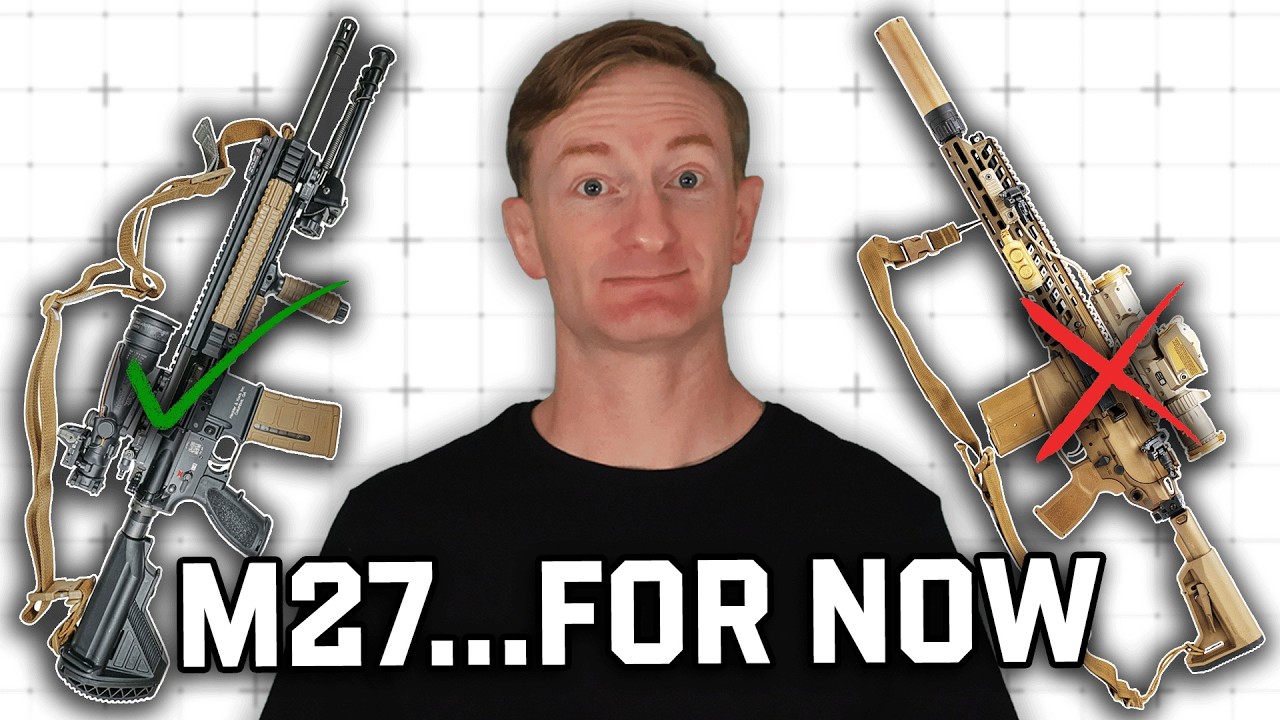
The ongoing debate regarding the United States Marine Corps’ decision to retain the M27 rifle rather than adopt the Army’s newer M7 rifle merits closer examination. This article discusses the multifaceted reasons behind the Marines’ choice, focusing on doctrine, logistical considerations, and the specific operational needs that underscore their preference for the M27 and its associated 5.56mm ammunition.
Key factors impacting this decision include the differing roles of the Marine Corps and the Army, as well as the implications of ammunition compatibility and overall firepower. By exploring the unique attributes of the M27 and the operational priorities of the Marines, insights into this decision-making process reveal the complexities inherent in military equipment standardization.
Overview of Current Marine Firearms
Description and Functionality of the M27
The M27 Infantry Automatic Rifle (IAR) represents the latest evolution of infantry firearms within the United States Marine Corps. Functionally, the M27 serves dual roles: it is a rifle optimized for both semi-automatic and fully automatic firing modes, enabling versatility in combat scenarios. Utilizing a 5.56 mm cartridge, the M27 is designed to provide sustained fire support while being lightweight and maneuverable. Its gas-operated mechanism ensures reliable cycling, even under adverse conditions, while an improved ergonomics profile aligns the weapon with the operational needs of Marines. With an effective range of up to 800 meters, this weapon is engineered to enhance firepower without compromising mobility.
Historical Context of Marine Rifle Choices
Historically, the Marine Corps has consistently sought firearms that resonate with its warfighting ethos, prioritizing adaptability and effectiveness over sheer firepower. From the M14 to the M16, each transition signified a response to evolving combat conditions and technological advancements. The shift to the M27 is emblematic of an attempt to marry the rapid fire capabilities of the Automatic Rifle with the reliability expected from infantry combat weapons. Each progression highlights not only changes in warfare but also introspection about the Marine Corps’ identity, continuously pushing for adaptability that respects long-held traditions.
Comparison with Other Military Firearms
When juxtaposed with other military firearms, the M27 showcases a blend of features that distinguish it from contemporaneous weapons. For instance, while the Army’s M4 carbine also utilizes the 5.56 mm round, it is tailored more towards conventional engagements rather than the squad-level automatic support provided by the M27. Other examples, such as the FN SCAR and H&K G36, although robust, lack the specific adaptations made for Marine Corps tactics. These comparisons illustrate that the M27 is not merely another firearm but rather a purpose-built solution that meets distinct Marine requirements for versatility in combat.
Introduction to the Army’s M7 Rifle
Key Features of the M7
Introduced to complement the Army’s evolving battlefield requirements, the M7 rifle stands as an advancement over its predecessors. Classified as a modular, multi-caliber weapon, the M7 is capable of delivering a high volume of fire while maintaining accuracy through an advanced optical sighting system. Notably, it integrates improvements such as reduced weight and enhanced materials that ensure durability without sacrificing portability. The M7’s ergonomic design facilitates ease of use, allowing soldiers to adapt swiftly across various combat situations.
Intended Use and Design Goals
The M7 was conceived with an emphasis on modularity and adaptability to meet the Army’s diverse mission profiles. From urban warfare to open-field engagements, its design goals revolve around enhancing the soldier’s effectiveness while minimizing individual load burdens. This versatility is paramount in fostering a quick-twitch response in combat, where the ability to transition between roles rapidly can make a critical difference in operational success.
Advantages of the M7 Over Previous Models
Compared to earlier models, the M7 offers significant advantages, notably in fire control and tactical flexibility. Key enhancements such as an integrated suppressor option reduce signature while allowing for greater stealth in operations. Additionally, compatibility with various calibers opens pathways for logistics efficiencies. This increased range of application signifies a paradigm shift in firearm utility, aiming to meet contemporary combat challenges head-on without the need for multiple platform changes.
Reasons for the Marine’s Preference for the M27
Alignment with Marine Corps Doctrine
The preservation of the M27 as the infantry’s primary weapon highlights an alignment with Marine Corps doctrine, which emphasizes aggression and rapid response. The M27’s design integrates seamlessly with the Marine Corps’ operational strategies, ensuring that troops can maintain a high degree of lethality while maneuvering through diverse terrain. The focus on direct engagement tactics necessitates a weapon that bolsters this aggressive posture, making the M27’s capabilities indispensable within this framework.
Proven Performance in Diverse Conditions
The M27 demonstrates its reliability through rigorous field testing and real-world applications under varying environmental conditions. Its performance in diverse terrains—from arid deserts to mountainous areas—has established a trust within the ranks. This proven reliability reassures Marines that their weapon will perform as needed, irrespective of the challenges presented by environmental factors or operational urgency.
Established Training and Familiarity
Familiarity with the M27 further solidifies its position within the Marine Corps. Training regimens have been developed specifically around this platform, optimizing proficiency and operational readiness. Transitioning to a new weapon system would necessitate extensive retraining, consuming valuable resources and time, which could detract from current operational commitments. The existing familiarity fosters confidence among Marines, enhancing overall effectiveness in combat.
Ammunition Considerations
Current Use of 5.56 mm Ammunition
The standardization of 5.56 mm ammunition across the Marine Corps presents various operational advantages, as it simplifies logistics and enhances ammunition compatibility among units. This caliber not only meets specific operational demands, including low recoil and high velocity, but also serves as a well-established choice supported by a vast supply chain. This standardization fortifies operational readiness, as Marines can confidently engage knowing that their ammunition supply meets consistent quality standards.
Logistical Challenges with New Ammunition Types
Transitioning to a new ammunition type, such as the larger caliber that may accompany the M7, poses significant logistical challenges. The need for new storage solutions, transportation methods, and supply chain adaptations could lead to delays and inefficiencies. Moreover, introducing incompatible ammunition types complicates inter-unit support and resupply efforts, posing risks during high-tempo operations where ammunition availability is critical.
Impact of Ammunition Compatibility on Operations
Ammunition compatibility serves as a linchpin for operational success. The reliance on 5.56 mm rounds simplifies planning and execution during joint operations, allowing for shared resupply and cross-unit support. This emphasis on standardization is not merely logistical; it underpins operational efficacy, ensuring that every Marine remains equipped with readily available firepower, contributing to cohesive mission execution.
Volume of Fire and Tactical Needs
Fire Rate Comparisons Between the M27 and M7
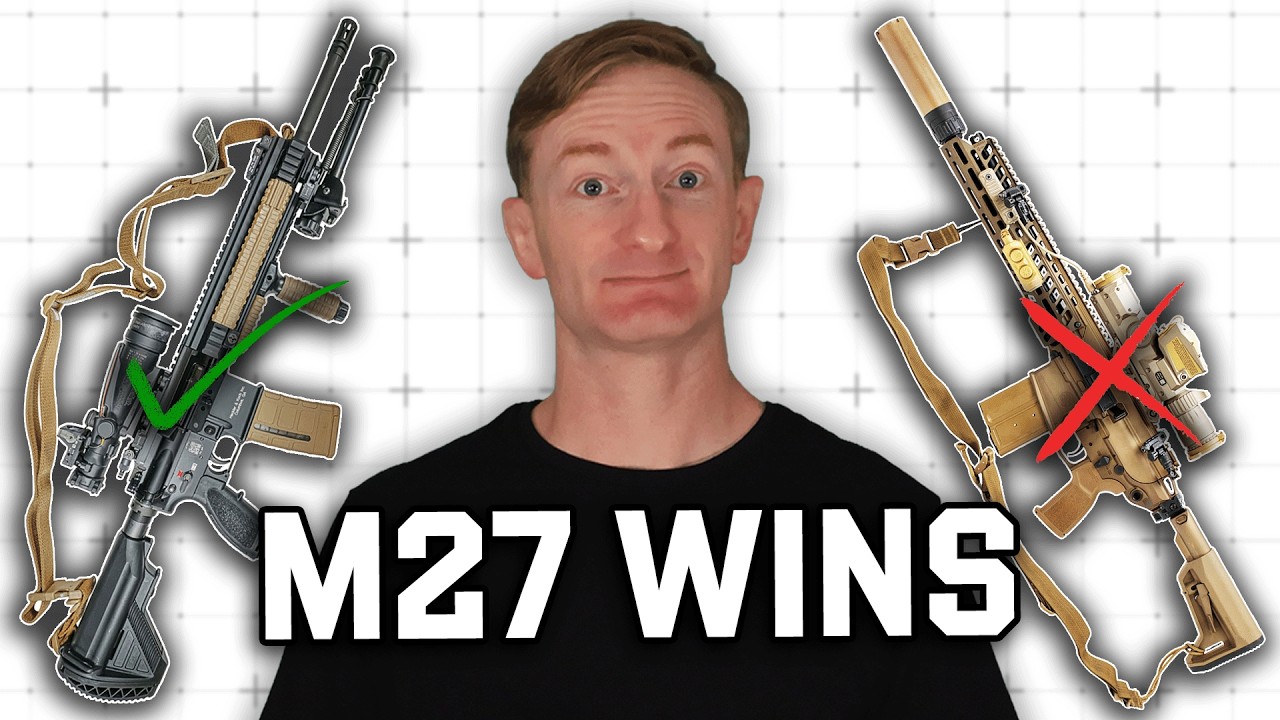
In assessing fire rates, the M27 holds a distinct advantage with its ability to sustain a high level of automatic fire capability while remaining controllable. While both the M27 and M7 deliver impressive performance, the M27’s design prioritizes a balance between volume and accuracy. The continuous fire option is essential in modern combat scenarios where suppressive fire can dictate the pace of engagement, providing critical cover for maneuvering units.
Importance of Sustained Fire in Marine Operations
Sustained fire is indispensable within Marine operations, enabling units to suppress enemy positions and maintain tactical initiative. The M27 is engineered specifically for this role, with features that enhance rate of fire stability and ammunition capacity. This capability not only serves as a force multiplier but it also aligns with the Marine Corps’ emphasis on aggressive engagement patterns, allowing units to dictate the battlefield tempo.
Tactical Advantages Offered by the M27
The tactical advantages of the M27 extend beyond sheer firepower. Its adaptability in urban and open environments, coupled with its suppression capabilities, gives Marine leaders the flexibility required to respond dynamically to unfolding situations. This adaptability ensures that Marines can effectively counter threats while minimizing risk to their forces, further embedding the M27 within the Marine combat philosophy.
Logistical Challenges in a Transition
Supply Chain Dynamics for Transitioning Units
Transitioning from the M27 to the M7 would necessitate a comprehensive reevaluation of supply chain dynamics. Proper planning would be essential, as any misalignment could lead to shortages or delays in deployment readiness. Such a transition must be meticulously managed to ensure that units remain operationally effective during the change, underscoring the importance of maintaining existing systems that have been optimized over time.
Training Implications and Transition Costs
Cost implications associated with a transition cannot be disregarded. The investment in new training programs, coupled with the financial outlay for the procurement of the M7 and supporting equipment, could be substantial. Furthermore, the opportunity cost of diverting focus from mission execution to training may exacerbate readiness issues, particularly in a climate where operational demands remain high.
Maintenance and Support Considerations
The complexity of maintaining a new platform such as the M7 introduces further challenges. The M27’s well-established maintenance protocols have become entrenched within Marine Corps practices, ensuring effective sustainment in the field. Adopting a new rifle would require careful consideration of these protocols, necessitating clear guidelines for maintenance and potentially complicating logistics during deployments.
Projected Future Developments
Potential Upgrades to the M27
As military engagement evolves, the potential for future upgrades to the M27 remains significant. Emerging technologies, including improved optics, enhanced stabilization systems, and smarter ammunition systems, may augment the M27’s capabilities. Considering the continual arms race in military advancements, one can anticipate that staying ahead with incremental upgrades will keep the M27 relevant in modern combat scenarios.
Innovation in Marine Corps Firearms
Within a broader context, the Marine Corps is actively seeking innovations that align weaponry with contemporary battlefield requirements. Emphasizing research and development initiatives not only promotes modernization but also instills confidence in Marines that the Corps remains at the forefront of military effectiveness. Such innovations may address any limitations that surface over time, allowing the M27 to adapt to new combat scenarios without losing its functional integrity.
Long-term Development of the M7
Simultaneously, the long-term development of the M7 will play a critical role in shaping future Army engagement strategies. As technological advancements emerge and battlefield dynamics shift, feedback loops from operational units will be essential in guiding iterative improvements to the M7. Collaboration between the Army and the Marines may yield innovative breakthroughs that harmonize both forces’ firearm capabilities, ultimately benefiting from shared insights and resources.
Inter-service Relations and Rivalry
Historical Cooperation Between Marines and Army
Historically, the U.S. Marine Corps and Army have garnered a reputation for inter-service cooperation that has yielded successful joint operations, particularly in times of war. Collaborative training exercises, technology transfers, and mutual support provide a level of synergy that bolsters overall military readiness. This teamwork underscores a commitment to national defense that transcends individual service rivalries.
Impact of Service Rivalry on Equipment Decisions
However, underlying tensions between the Marine Corps and the Army can impact equipment decisions. Each service branch maintains unique operational philosophies that guide their respective investments in technology and weapons systems. This rivalry may foster reluctance to adopt one another’s equipment based on compatibility issues, service identity, and leadership priorities, thereby influencing choices regarding firearms like the M27 and M7.
Collaborative Efforts in Military Weaponry Development
In the realm of weaponry development, recent collaborative efforts signify a movement toward shared innovation. Joint research programs and partnerships with defense contractors may yield advancements that benefit both services. Through collaboration, both the Marines and Army can leverage their distinct expertise while fostering a shared vision for the future of military engagement, creating opportunities for collective advancement in firearms development.
Feedback from Marines on the M27 and M7
Surveys and Interviews with Active Duty Marines
Feedback from active-duty Marines regarding the M27 has been overwhelmingly positive, as surveys and interviews reflect a high degree of satisfaction with its performance and reliability. The consistent feedback applauds its suitability for varying combat scenarios, directly confirming the decision to retain this platform. Anecdotal evidence from the field affirms the weapon’s effectiveness during engagements, shaping the narrative around its continued utilization.
Expert Opinions from Military Analysts
Military analysts and experts have increasingly weighed in on the benefits of the M27, highlighting its engineering excellence within the context of modern warfare. Opinions align around the notion that the weapon supports critical Marine Corps strategies, effectively lending credence to the decision not to transition to the M7 at this time. Their perspectives underscore both the M27’s adaptability and the challenges associated with unifying a force under a singular firearm system.
Personal Accounts from Combat Veterans
Personal accounts from combat veterans add a rich layer to understanding the dynamics at play regarding weapon preference. Many veterans recount experiences with the M27 that accentuate its reliability under fire, correlating their survival with the weapon’s performance in high-stress scenarios. These narratives not only emphasize the weapon’s importance in combat but also highlight the deeply rooted relationships that Marines develop with their equipment over the years.
Conclusion
Summarizing the Current Stance of the Marines
In conclusion, the Marine Corps’ decision to maintain the M27 over the Army’s M7 rifle underscores a profound alignment with its operational doctrine, historical precedence, and current battlefield needs. This steadfast choice is driven by the operational realities that prioritize reliability, adaptability, and tactical effectiveness in diverse combat settings.
Anticipating Future Innovations and Changes
As the landscape of military engagement continues to evolve, it is crucial to anticipate future innovations in weapon systems, including potential upgrades to the M27 and long-term developments of the M7. The Marine Corps must remain vigilant in exploring technological advancements that promise to bolster effectiveness without disrupting efficient supply chains or operational readiness.
The Importance of Operational Needs in Firearm Selection
Ultimately, the ongoing dialogue between service branches and the focus on operational needs will dictate future decisions regarding firearm selection. As each branch endeavors to meet the challenges of modern warfare, the interplay of individual service identities and shared objectives will inform the evolution of military firearms, ultimately shaping the course for the future of the U.S. Armed Forces.