
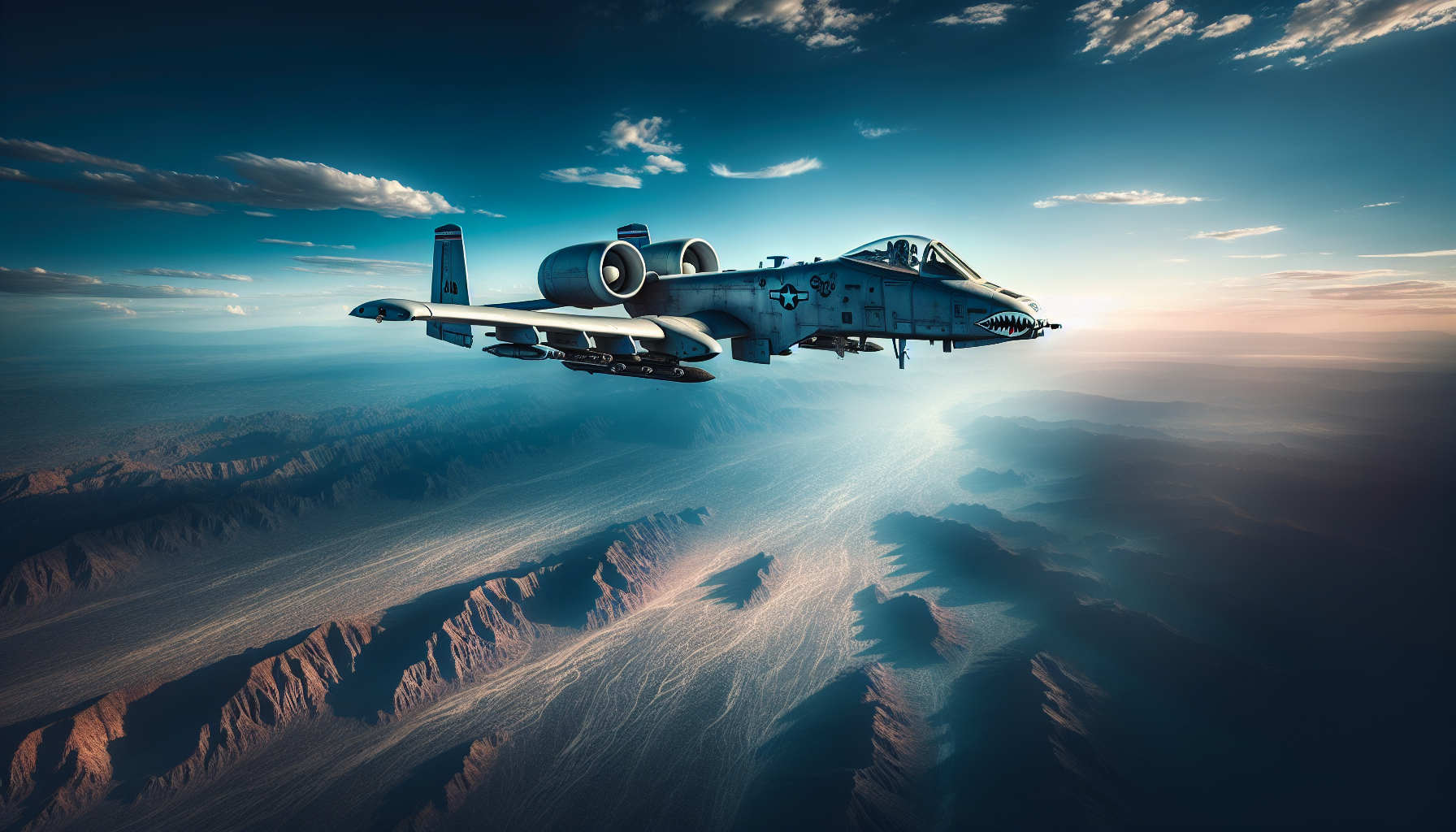
The discourse surrounding the A-10 Warthog reveals significant complexities within military operations and interservice relationships. Although this aircraft was designed to support ground troops, the Army’s acquisition of the A-10 remains a topic of perennial discussion. The analysis will explore the impediments that prevent the Army from acquiring the Warthog, including longstanding agreements, logistical challenges, and strategic disagreements between the Army and Air Force.
In examining these obstacles, attention will be given to the broader implications for military strategy, particularly as technology evolves. The article will address alternative solutions both services are pursuing, such as drones and loitering munitions, indicating a shift towards new forms of close air support. Understanding these dynamics is crucial for grasping future developments in military efficacy and interservice cooperation.

Historical Context of the A-10 Warthog
Development of the A-10
The development of the A-10 Thunderbolt II, commonly known as the Warthog, was a response to the increasing need for effective close air support during the late 1960s and into the 1970s. Designed by Fairchild Republic, the aircraft emerged from a military doctrine that prioritized ground forces’ requirements for direct aerial assistance in combat. The A-10 was officially introduced into service in 1977 and was engineered to withstand significant damage while providing precise and effective firepower against armored vehicles and ground forces, utilizing its iconic Gatling gun and a variety of munitions. You must recognize that the Warthog was not simply a technological achievement; it represented a functional shift in how air support was conceptualized, moving towards a platform explicitly tailored to meet the needs of troops on the ground.
Role in the Cold War
During the Cold War, the A-10’s utility became evident as tensions between the United States and the Soviet Union escalated. It was primed for potential engagements in Europe, particularly in light of NATO’s strategy of deterrence against a possible Warsaw Pact invasion. The A-10’s role was firmly established as an aircraft capable of attacking and destroying enemy armored divisions. Its low-altitude, slow-speed capabilities distinguished it from high-speed jets, allowing it to perform effective ground support in a variety of environments. Therefore, understanding its development necessitates an appreciation of its intended strategic role in countering the Soviet military buildup during this era, while ensuring the protection of friendly ground forces.
Operational successes in Desert Storm
The true operational prowess of the A-10 manifested during the Gulf War in 1991, where it played a crucial role in Operation Desert Storm. The Warthog executed thousands of sorties, targeting and destroying enemy tanks, artillery, and other armored vehicles, demonstrating unparalleled effectiveness in close air support. Its ability to loiter over the battlefield, combined with its precision munitions, led to significant tactical advantages for coalition ground forces. As you assess the A-10’s operational successes, it is clear that these experiences cemented its legacy as an indispensable asset in the U.S. military arsenal, raising questions about its future relevance in modern warfare.
The Key West Agreement and its Implications
Overview of the Key West Agreement
In 1948, the Key West Agreement was established to delineate responsibilities among the U.S. military services, particularly in the realms of air support and ground operations. Central to this agreement was the principle that the Air Force would retain control over all air capabilities, including close air support. Consequently, this agreement set forth a framework that would govern how air and ground forces interacted and operated in integrated combat scenarios. You should consider the Key West Agreement as foundational to understanding the sustained contention between the U.S. Army and Air Force over close air support roles, particularly with regard to the A-10.
Division of Air and Ground Support Roles
The implications of the Key West Agreement were vast, creating a rigid division between the Air Force and the Army concerning air support. The Air Force was tasked with operational control over air assets, asserting a monopoly on air operations while delineating clear boundaries for ground forces. This bifurcation has persisted through decades of evolving military strategy, often to the detriment of operational effectiveness. For you as the reader, it’s essential to grasp how this structure has fostered inter-service rivalries, complicating the coordination that is vital for successful military operations when close air support is required.
Impact on inter-service relationships
The Key West Agreement significantly impacted inter-service relationships, creating longstanding tensions between the Air Force and Army that continue to shape military interactions today. The Army’s dependence on Air Force assets for close air support has led to a perception of inadequacy, particularly regarding the Army’s capability to advocate for its own air support requirements. You might observe that this dynamic has often resulted in frustration within the Army, as they frequently conclude that air support does not align effectively with ground operations.
Interservice Rivalries
Air Force vs. Army: A Historical Overview
The historical rivalry between the Air Force and Army has roots that trace back to the establishment of the separate Air Force as a distinct service branch in 1947. This bifurcation of command and control functions led to competing interests regarding air support capabilities. As you delve into this historical context, recognize that the Air Force has often positioned itself as the sole authority on air operations, further reinforcing the rivalry with the Army. The competition for resources, strategic influence, and operational priorities continues to define the relationship between these two branches.
Effects on military procurement
These interservice rivalries have profound effects on military procurement processes. The competition between the Army and Air Force influences decisions regarding the development, acquisition, and deployment of aircraft suitable for close air support. As a consequence of this rivalry, the procurement landscape has historically favored projects that align with Air Force objectives, often at the expense of a comprehensive evaluation of the Army’s needs. To you, this should highlight the challenges of determining the most effective close air support systems given the lack of unified service coordination.
Turf wars over close air support capabilities
The ongoing ‘turf wars’ over close air support capabilities have created a fractious environment characterized by increasingly convoluted operational policies and fierce budgetary disputes. Continuous disagreements over the role of the A-10, particularly as the discussion of retirement persists, reflect deeper strategic disagreements. You should consider how these turf wars complicate efforts to establish a coherent strategy for close air support, resulting in operational inefficiencies and missed opportunities to enhance joint military effectiveness.
Logistical Challenges of the A-10
Operational costs and maintenance
One significant challenge surrounding the A-10 lies in its operational costs and maintenance requirements. Although the aircraft is revered for its effectiveness, the financial and logistical demands associated with sustaining its fleet are considerable. As a reader, you should note that the costs of training, maintenance, and support can be substantial, leading to concerns regarding the cost-effectiveness of the A-10 in an era of tightening defense budgets. Additionally, ongoing maintenance needs result in potential downtimes that complicate readiness assessments.
Requirements for support infrastructure
The A-10’s operational viability is intrinsically linked to the support infrastructure needed to deploy and maintain the aircraft effectively. This includes aspects such as base operations, logistical supply chains, and specialized maintenance capabilities. Understanding the complexity and breadth of these infrastructural requirements is crucial for appreciating the challenges associated with integrating the A-10 into military operations, particularly as modernization efforts push for more streamlined approaches to combat readiness.
Challenges of integrating the A-10 into the Army
The A-10 was designed primarily for Air Force operations, creating inherent challenges in integrating it into the Army’s operational framework. Unlike the aviation units that the Army traditionally utilizes, the A-10’s attributes and requirements create friction points in coordination and logistical considerations. As you evaluate the challenges of integration, you must recognize that even if the Army expressed interest in the A-10, significant adaptation and restructuring would be necessary to accommodate a platform primarily designed for another branch.
Tactical Considerations
The role of close air support in modern warfare
In the modern conflict landscape, the role of close air support remains critical, although its applications are evolving rapidly. The need for accurate, timely aerial intervention in support of ground troops is undeniable, especially as threats become increasingly sophisticated. For you, it is vital to appreciate that close air support not only enhances battlefield effectiveness but also serves to mitigate risks faced by ground forces. The evolving nature of conflicts necessitates re-evaluating how close air support is executed.
Why the Army prefers other platforms
Despite the historical significance of the A-10, the U.S. Army has increasingly favored other platforms that better align with its operational visions and requirements. Drones, for example, offer remarkable flexibility, lower operational costs, and the ability to carry out missions with reduced risk to personnel. As you analyze this preference, consider how evolving technologies and tactics influence the Army’s decision-making process regarding its close air support capabilities, thereby reducing reliance on legacy systems like the A-10.
Limitations of the A-10 in contemporary combat scenarios
The A-10, while historically effective, also faces limitations in today’s contemporary combat scenarios. The strategic landscape has shifted towards rapid, highly mobile engagements where air support may require more advanced integration with various platforms, including unmanned systems. As you examine these limitations, reflect on how the aircraft’s slow speed and reliance on older technologies may pose challenges when juxtaposed against modern adversaries employing sophisticated air defenses and tactics.
Political Considerations
Budget allocations and funding influences
As you delve into the political context surrounding the A-10, budget allocations play a critical role in determining the aircraft’s future within the military. The ongoing efforts to retire or preserve the A-10 often arise from conflicting budgetary priorities, where funding is increasingly diverted toward cutting-edge technologies and platforms. Understanding these budgetary intricacies is essential for assessing the sustainability of the A-10, especially as lawmakers weigh competing interests in defense spending.
Congressional support and opposition
The A-10 enjoys both fervent support and staunch opposition within Congress. Advocacy groups and military enthusiasts frequently rally for its preservation, emphasizing its combat effectiveness and historical importance. However, detractors argue for a strategic pivot toward modern platforms aligned with emerging warfare technologies. When exploring congressional dynamics, you should be aware of how these divided opinions translate into political maneuvering that ultimately affects the A-10’s operational future.
Air Force lobbying against the A-10
Within this political landscape, the Air Force actively lobbies for the retirement of the A-10, often presenting arguments centered around cost-effectiveness and modernization. The lobbying efforts reflect a broader strategy to streamline air resources toward what the Air Force perceives as more advanced aircraft. For you, it is essential to consider how this lobbying further complicates the situation, as it shapes the narrative surrounding the A-10 and influences legislative actions that could dictate the aircraft’s fate.

Future of Close Air Support
Emerging technologies in warfare
Emerging technologies are fundamentally reshaping the nature of warfare and, by extension, the concept of close air support. Innovations such as drones, advanced targeting systems, and artificial intelligence are heralding a transformative era in military operations. You should regard these advancements as pivotal in redefining how aerial support is executed, presenting opportunities for enhanced coordination and operational effectiveness on the battlefield.
Role of drones and loitering munitions
Drones and loitering munitions are increasingly being adopted for close air support missions. Unlike traditional platforms, these systems offer versatility and the ability to operate in environments that may be perilous for manned aircraft. Their rapid deployment capabilities mean they can provide near-real-time support to ground forces while minimizing risks to human pilots. As you consider the impact of these technologies, reflect on how they challenge the relevance of legacy systems like the A-10, potentially signaling a shift in how the military approaches air support.
Concept of Sky Warden and its implications
The proposed concept of Sky Warden seeks to integrate multi-domain operations where air, land, and even space capabilities connect seamlessly. This initiative carries implications for close air support, envisioning a networked approach to military operations that diminishes reliance on traditional air-to-ground platforms. For you, as an observer of military evolution, it is imperative to recognize how the Sky Warden concept embodies a fundamental shift in thinking about air support, potentially rendering the A-10 less relevant in future combat scenarios.
Current Army Strategies
Focus on multi-domain operations
The U.S. Army is increasingly engaging in multi-domain operations, emphasizing an integrated approach across land, air, maritime, and cyber domains. This strategy highlights the importance of synchronization among services to achieve operational objectives. For you, understanding the Army’s shift toward multi-domain strategies is crucial, as it shapes their decision-making processes regarding future air support capabilities, further distancing itself from traditional reliance on specific aircraft like the A-10.
Integration of unmanned systems
Unmanned systems have become a cornerstone of the Army’s contemporary strategy, providing significant advantages in reconnaissance, surveillance, and direct support. These systems are capable of performing roles that were previously reserved for manned aircraft, enabling enhanced operational flexibility. In this context, you should appreciate how the Army’s integration of unmanned systems reflects a broader transition towards efficiency and responsiveness in contemporary military operations that may render platforms like the A-10 obsolete.
Development of new tactics for ground support
As the Army develops new tactics for ground support, there is a palpable shift towards leveraging advanced technologies and enhancing combat effectiveness. This reflects a fundamental understanding that adaptation is vital in rapidly evolving theaters of conflict. For you, this evolution represents an acknowledgment that effective ground support must encompass a range of integrated capabilities that traditional close air support platforms like the A-10 may not adequately fulfill.
The Role of Public Opinion
The influence of military enthusiasts and advocacy groups
Public opinion surrounding the A-10 influences decisions made at high levels of military command and legislation. Military enthusiasts and advocacy groups passionately advocate for the preservation of the aircraft, emphasizing its historical success and utility in battle. For you, considering the perspectives of these groups illustrates the complexities inherent in navigating public sentiment versus strategic military needs in shaping decisions about the A-10’s future.
Social media’s impact on defense discussions
In the digital age, social media serves as a powerful tool for public discourse regarding military assets like the A-10. Advocacy campaigns often circulate through various platforms, amplifying discussions about defense spending and the relevance of specific aircraft. As you analyze the role of social media, recognize its capacity to influence public perception, leading to greater pressure on political and military leaders to weigh popular opinion against strategic considerations.
Rallying cries for the preservation of the A-10
The A-10’s reputation endures thanks to rallying cries from advocates who highlight its unmatched capabilities in close air support. These voices contend that its unique features provide indispensable support for ground troops. To you, it is evident that public advocacy plays a crucial role in the ongoing debates surrounding the aircraft, which may affect future military strategies and decisions regarding close air support platforms.
Conclusion
Summary of key arguments
In summary, the discourse surrounding the A-10 Warthog is multifaceted, encompassing historical context, interservice rivalries, logistical challenges, and evolving tactical considerations. While its legacy as a close air support platform is undeniable, emerging technologies and changing military strategies prompt critical discussions about its future relevance.
Final thoughts on the A-10’s future
As you reflect on the A-10’s future, recognize that its survival hinges on the intersection of political will, public advocacy, and evolving military doctrine. The shifting landscape of warfare suggests that the A-10 may no longer align with the strategic vision that the Army and Air Force are pursuing.
The evolving landscape of military aviation
Ultimately, the evolving landscape of military aviation underscores the necessity for adaptability and innovation. The potential obsolescence of the A-10 aligns with broader shifts towards unmanned systems, advanced technologies, and integrated warfare strategies. For you, this should evoke curiosity about how future military operations will be conducted, particularly as they evolve beyond reliance on traditional manned aircraft in close air support roles. The overarching narrative is one of transformation, urging a reevaluation of historical assets in the context of defining modern military effectiveness.