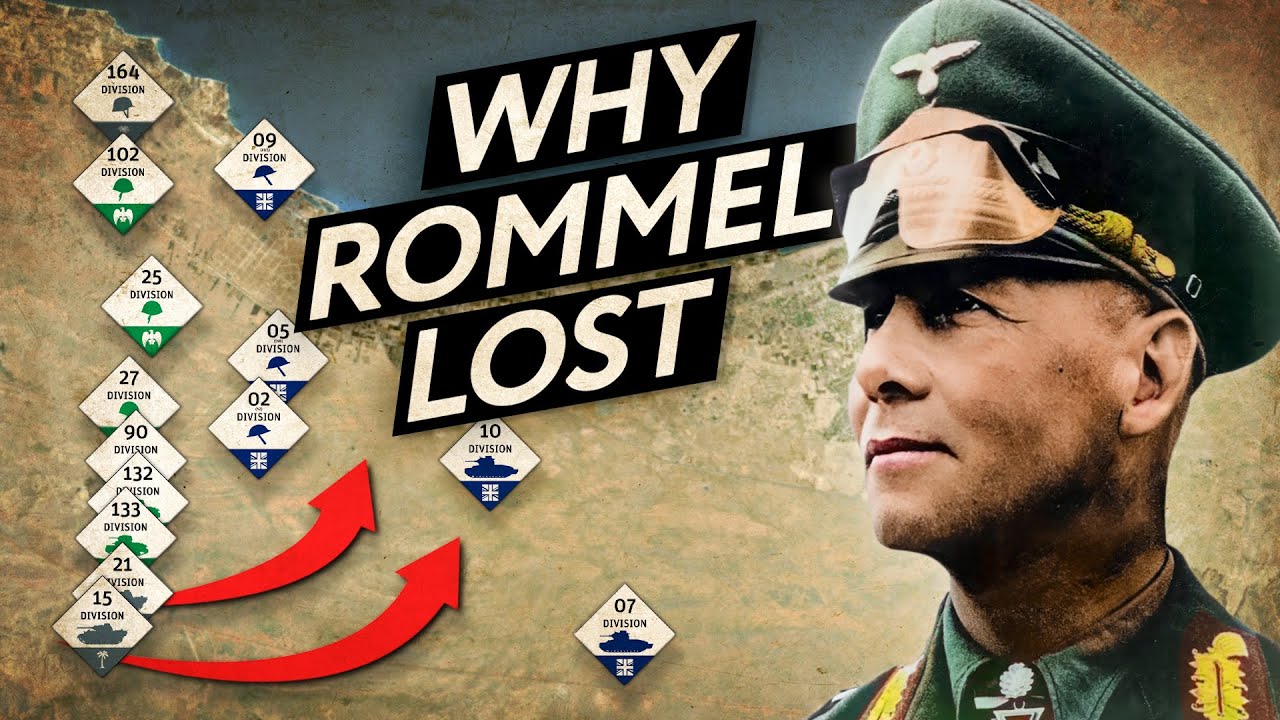
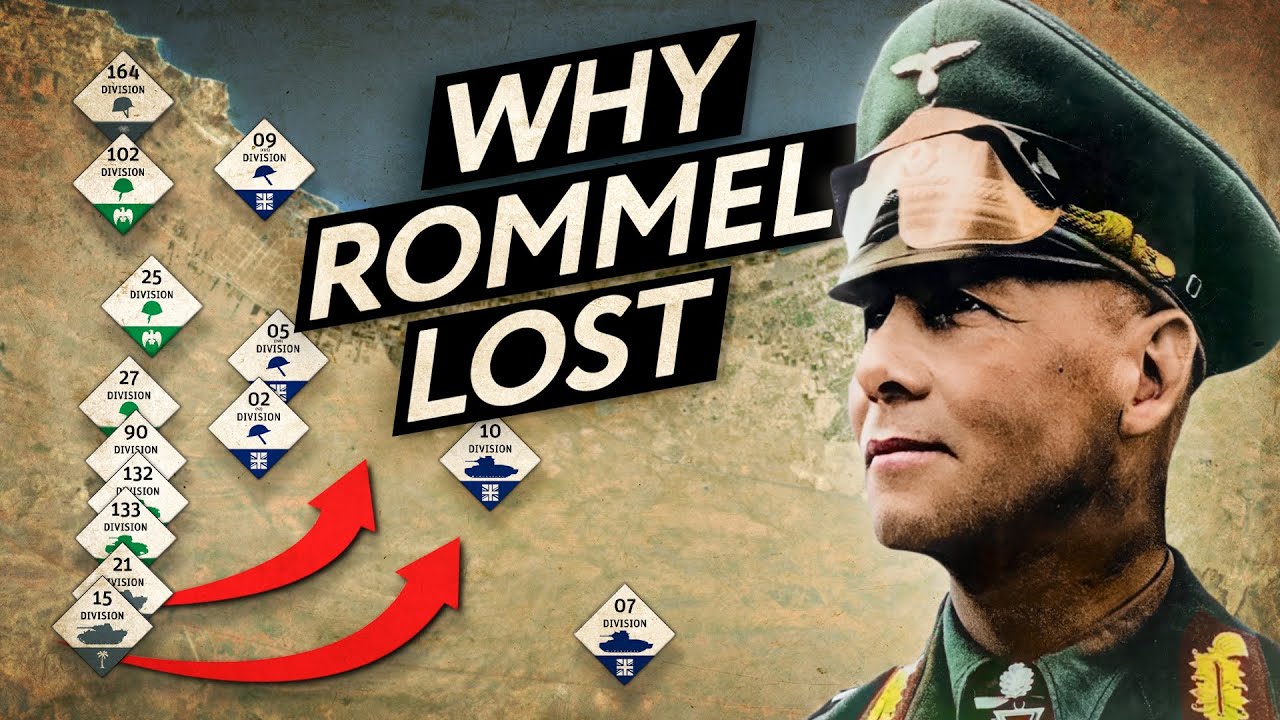
The North African campaign during World War II represented a significant struggle marked by the fierce confrontations between the British forces, dubbed the “Desert Rats,” and the Afrika Korps led by General Erwin Rommel. This analysis examines the multifaceted reasons behind Germany’s eventual defeat in this theater, exploring key events such as Rommel’s initial successes, the underpinnings of command structure, logistical failures, and the pivotal Allied counteroffensive. The documentary provides an in-depth overview of the strategic miscalculations and operational challenges that contributed to the shifting tides in favor of the Allies.
In highlighting the limitations faced by Rommel, the discussion illuminates crucial aspects such as the impact of supply chain deficiencies, Allied tactical adaptations, and the significance of intelligence breakthroughs. Additionally, the narrative emphasizes how initial perceptions of a less intense conflict contradicted the harsh realities of warfare in North Africa, underscoring the complexities of both military strategy and ideological motivations. Ultimately, the campaign serves as a stark reminder of the intricate interplay of factors that influenced the outcomes of key battles in World War II.
Campaign Overview
Overview of North African Campaign
You find yourself navigating the complexities of the North African Campaign, a significant theater in World War II that highlighted the intense struggle between Axis and Allied forces. Beginning in 1940, this campaign was primarily characterized by clashes between British Commonwealth forces, famously dubbed the “Desert Rats,” and General Erwin Rommel’s Afrika Korps. The vast deserts and rugged terrains of North Africa served not only as a backdrop but also demanded innovative military strategies, which would deeply impact the course of the war. The campaign evolved from Italy’s initial military engagements to Germany’s direct involvement, significantly influencing Allied and Axis strategies moving forward.
Key Players and Forces Involved
In this gripping narrative, key players include various military leaders and forces. On the Axis side, your attention is drawn to Erwin Rommel, who commanded the German Afrika Korps, alongside Italian forces that were often characterized by their precarious organization. The Allies saw leadership from figures such as General Claude Auchinleck, who led the British Eighth Army, and later General Bernard Montgomery, whose strategies aimed to stabilize and ultimately reclaim the initiative against Rommel. The interaction of these players on this stage would lay the groundwork for pivotal battles and shifting fortunes.
Significance of the Campaign in WW2
You understand that the significance of the North African Campaign transcends mere territorial gains or military victories. It is in this crucible of warfare that crucial political and strategic implications emerge. The outcomes here directly influenced the broader dynamics of World War II, impacting supply routes, colonial aspirations, and overall morale on both sides. The eventual Allied victory in North Africa not only marked a turning point in their fortunes but also set the stage for invasions of Europe, thereby altering the course of the conflict fundamentally.
Rommel’s Arrival
Context of Rommel’s Deployment in January 1941
As you delve deeper into the narrative, January 1941 emerges as a crucial moment. The Italian forces were floundering in North Africa, unable to cope with the challenges posed by the British Eighth Army. Seeking to stabilize the situation, Adolf Hitler dispatched Rommel, a rising star in the Wehrmacht whose prior exploits in France had earned him renown. This moment represented a shift not just in leadership but in strategic approach, as Rommel embodied a more aggressive, daring style of warfare that contrasted sharply with Italian efforts.
Initial Objectives and Strategy
You observe that Rommel’s initial objectives were constrained. Though ostensibly under Italian command, his orders limited him to a defensive posture. Yet, recognizing the potential for decisive action, Rommel adopted a rapid, psychological warfare-driven strategy. His audacity in advancing beyond mere reconnaissance, framing his actions as necessary for holding off British advances, revealed not only a tactical shift but his ability to leverage command dynamics to his advantage.
Impact of Rommel on Italian Forces
As Rommel arrived and commenced operations, your analysis indicates a significant psychological and tactical impact on Italian forces. His emergence restored a semblance of morale among demoralized troops, who perceived in Rommel’s command an opportunity for more aggressive maneuvers. However, this reliance on a single dynamic leader also exposed the Italian forces’ inherent weaknesses, as they found themselves frequently dependent on German command and logistical support.
Initial Success
Tactics Leading to Early Victories
You turn your focus to the tactics employed by Rommel and the Afrika Korps, which led to initial victories that set the stage for his legendary status. Utilizing blitzkrieg tactics, Rommel adeptly maneuvered his armored units to outflank and surround British positions, creating chaos among the ranks of his adversaries. The combination of speed, surprise, and tactical innovation allowed him to exploit weaknesses and achieve victories against numerically superior forces.
Capture of Tobruk and its Significance
The capture of Tobruk in June 1942 stands out as a pivotal event in the campaign. Rommel’s forces successfully besieged the strategically essential port, leading to the surrender of approximately 35,000 Allied troops. You recognize Tobruk not merely as a military objective but as a symbol of Axis power in North Africa. The fall of Tobruk significantly hampered British logistics and communication, granting Axis forces a fleeting upper hand and marking Rommel’s rise to fame.
Rommel’s Rise to Fame
You witness how these triumphs catapulted Rommel into the limelight, earning him both accolades and notoriety. His bold strategies and apparent invincibility on the battlefield established him as a hero in Nazi propaganda. However, you also sense the underlying tension that would accompany such success, as the stakes of warfare and the expectations placed upon him continued to grow exponentially.
Command Structure
Initial Italian Command and Its Limitations
As the campaign unfolds, the limitations of the initial Italian command structure become evident to you. The Italian military, plagued by inefficiencies and an outdated command ethos, struggled to adapt to the rapid pace of modern warfare. This handicap not only affected their operational effectiveness but also hampered their relationship with German forces, who were frequently left to compensate for Italian shortcomings.
Rommel’s Independent Decision-Making
You analyze how Rommel’s independent decision-making became a defining characteristic of his command style. Often disregarding orders and directives from his superiors in the Wehrmacht, Rommel displayed an aggressive initiative that yielded immediate results. This insubordination proved effective in the short term but sowed discord and highlighted a potential rift between his command and the broader German strategic objectives.
Effectiveness of Command under Pressure
In the face of adversity, Rommel’s command effectiveness stands out. You note that the pressure of the desert environment, coupled with the relentless advance of Allied forces, forced Rommel to innovate and adapt. His ability to maintain morale and organize his units under dire logistical constraints demonstrated a tactical flexibility that became vital as the campaign progressed.
Supply Limitations
Logistical Challenges Faced by the Axis Powers
You uncover the pressing logistical challenges that the Axis powers faced during the campaign. Despite a series of initial victories, the supply lines supporting Rommel’s operations were severely stretched, hampered by the vast distances and the Allied control of key maritime routes. As the campaign continued, sustaining supplies of fuel, ammunition, and food became increasingly arduous, compromising Rommel’s operational capabilities.
Impact of Supply Shortages on Rommel’s Forces
As supply shortages worsened, you find the effects palpable on Rommel’s forces. Despite their tactical prowess, the lack of adequate resources limited his ability to maintain a sustained offensive. The Germans witnessed a deterioration in combat effectiveness, as exhaustion and the inability to replenish necessary materials began to wear down troop morale.
Comparison of British and German Supply Lines
In juxtaposing the British supply lines with those of the Germans, the advantages enjoyed by the Allies become strikingly clear. While Rommel grappled with slow and limited resupply options, the British managed to establish more robust and readily accessible logistics, particularly after setbacks at Tobruk. This discrepancy ultimately contributed to shifts in momentum on the battlefield, highlighting the critical role that logistics played in determining the campaign’s outcomes.
Allied Counteroffensive
Launch of Operation Crusader
By November 1941, your attention shifts to the Allied counteroffensive: Operation Crusader. You observe how this meticulously planned operation aimed to relieve the besieged Tobruk garrison and cut off Rommel’s advances. The multi-pronged assault incorporated seaborne units and reinforcements to create a formidable challenge for the Afrika Korps.
British Regaining of Momentum
As you analyze the unfolding events, a tide begins to shift. The British Eighth Army, now reinforced and emboldened by fresh resources and strategic coordination, regained momentum. Rommel, caught off guard by the scale and ferocity of this counteroffensive, struggled to adapt to the rapidly changing battlefield dynamics, ultimately leading to a realignment of power in North Africa.
Aftermath of Rommel’s Retreat
The retreat from the positions once confidently held by Rommel signals more than just a tactical withdrawal; it foreshadows a series of setbacks that would reverberate throughout the German command structure. You perceive the demoralization among troops, who had previously thrived on victories, only to find themselves facing the stark reality of dwindling supplies and an increasingly skilled adversary.
Turning Point
Factors Leading to the Turning Point
You draw your focus to the various factors contributing to the turning point in the campaign. The combination of deteriorating logistics, declining troop morale, and fortified Allied positions converged to create a perfect storm that would ultimately shape the campaign’s trajectory. The strategic miscalculations and overreaching aspirations of the Axis powers now became starkly apparent.
Declining Morale among German Troops
As you delve into the psyche of Rommel’s forces, you recognize a growing sense of disillusionment. The initial euphoria of triumph gave way to fatigue and frustration as the relentless pressures of combat warfare began to take their toll. These factors severely undermined the fighting spirit of the German troops, compelling them to face the harsh realities of a protracted engagement.
British Adaptation to Rommel’s Strategies
Finally, you arrive at the realization that the British, having learned from their engagements with Rommel, began to adapt their tactics advantageously. Enhanced intelligence and coordination among Allied forces allowed them to engineer more successful responses to the once-formidable strategies employed by the Afrika Korps. This adaptability epitomized a crucial shift in the balance of power on the battlefield.
El Alamein Battles
Importance of the Second Battle of El Alamein
You now turn to the significance of the Second Battle of El Alamein, a landmark event which represents a pivotal moment in the North African Campaign. This battle established a strong defensive line for the Allies and became a key junction in the war where the tide decisively turned in favor of the British forces, marking the beginning of Germany’s persistent retreat from Africa.
British Fortifications and Strategies
You closely examine the British fortifications and strategies employed during the battle, noting the extensive planning that characterized their approach. The integration of intelligence, artillery, and armored units into a coherent strategy allowed the Allies to effectively counteract Rommel’s maneuverability. The resilience demonstrated by the Eighth Army showcased a marked evolution in British military capabilities.
Consequences of the El Alamein Battles for Axis Powers
The aftermath of the El Alamein battles delivers powerful consequences for the Axis powers. You recognize that the defeat not only marked the loss of key territory but also represented a fundamental psychological blow against the mythos surrounding Rommel and the Afrika Korps. This retreat began to crystallize the notion that the Axis could be defeated, galvanizing Allied forces for the challenges that lay ahead.
Strategic Failures
Inadequate Strategic Support from Hitler
In examining the broader strategic failures, you identify inadequate support from Adolf Hitler as a critical factor in the campaign’s decline. While Rommel demonstrated tactical ingenuity and daring, he lacked the necessary strategic backing, reflecting both Hitler’s priorities and a misunderstanding of the North African theater’s significance. The decision-making process at the highest level increasingly disconnected from the exigencies of ground warfare.
Misallocation of Resources
Linked closely with these failures is the misallocation of resources that plagued the German war effort. You perceive how critical units and supplies were diverted elsewhere, exacerbating the supply issues faced in North Africa. This highlights a systemic challenge within the German military structure—a failure to adequately assess and respond to the unique demands of this campaign.
Impact of Intelligence Breakthroughs on the Campaign
You recognize that intelligence breakthroughs played a transformative role in the North African campaign. The Allies, through improved reconnaissance and espionage efforts, were able to anticipate and counteract Axis movements more effectively. The shift in intelligence balance revealed the inherent vulnerabilities in Rommel’s operations and laid the groundwork for successful counteroffensives.
Conclusion
Reflection on Tactical Decisions and Outcomes
In closing, you reflect upon the myriad tactical decisions that shaped the outcomes of the North African Campaign. The interplay of leadership, logistics, intelligence, and evolving military strategies reveal a complex tapestry of warfare where each decision bore profound consequences. Rommel’s initial successes, undercut by later failures, encapsulate the challenges inherent in war and the unpredictable nature of military engagements.
Long-term Impact of the North African Campaign
You further consider the long-term impacts of this campaign on the trajectory of World War II. The Allied victory in North Africa not only solidified their position but also served as a catalyst for future operations in Europe. It marked a critical juncture wherein the tide began to shift away from the Axis powers, shaping subsequent military strategies and engagements.
Significance of the Campaign in the Broader WW2 Context
Finally, you contemplate the broader significance of the North African Campaign within the context of World War II. It exemplifies the intricate dynamics of global conflict, where the interplay of strategic foresight, military innovation, and logistical prowess ultimately determined the victors. This campaign stands as a testament to the importance of adaptability and resilience in warfare, lessons that would resonate throughout the remainder of the war.