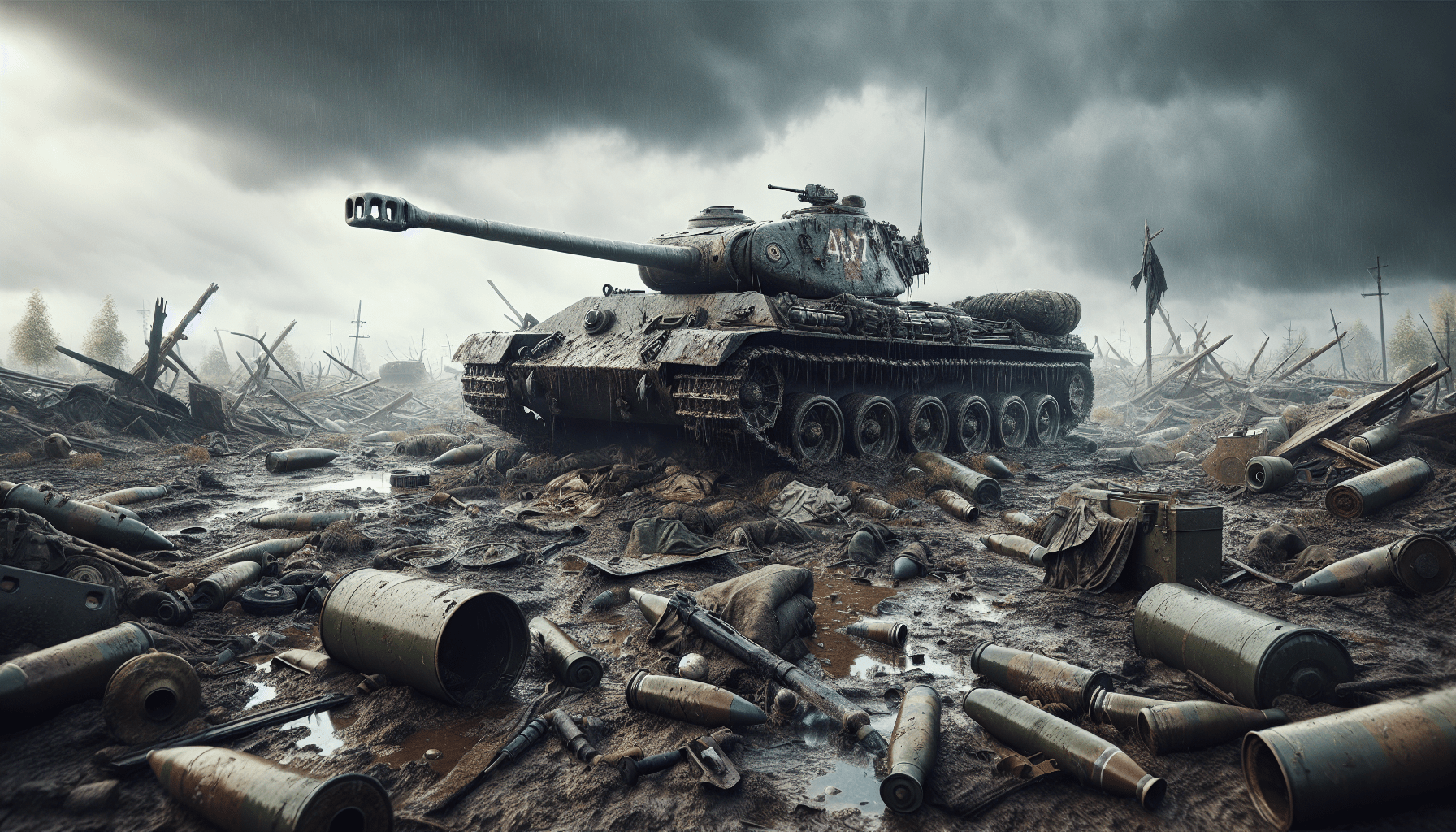
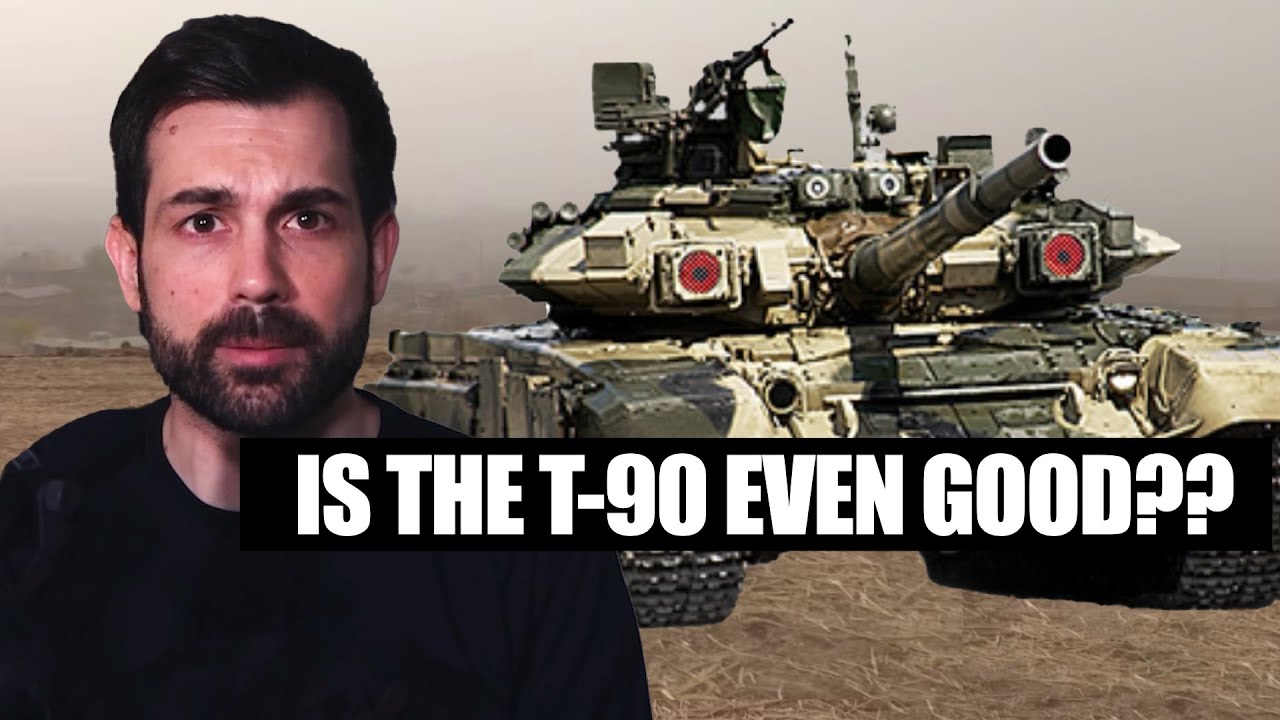
The T-90 series represents Russia’s most sophisticated main battle tank, particularly prominent during its military operations in Ukraine. Despite its advanced design and latest variant, the T-90M, the tank’s combat performance has raised concerns about its effectiveness compared to older models like the T-72. This article explores the origins and technological evolution of the T-90, highlighting significant upgrades that have been implemented over the years. Furthermore, it addresses the tank’s challenges in modern warfare, especially against advanced anti-tank weaponry.
You will learn about the evolution of the T-90 from its inception in the early 1990s, its selective deployment in the Ukraine conflict, and the operational feedback that has emerged. The discussion encompasses enhancements in armor, fire control systems, and the incorporation of modern technologies designed to improve survivability. Ultimately, the analysis aims to provide insights into the T-90’s role in contemporary military engagements and the implications of Russia’s reliance on this armored vehicle amidst ongoing hostilities.
Overview of the T-90 Tank Series
History and Development of the T-90
You should begin your understanding of the T-90 tank series with its historical roots in the Soviet Union’s tank evolution during the late 20th century. The T-90 was developed as a response to the need for a more modern battlefield asset, consolidating features from earlier models, notably the T-72, T-80, and enhanced armor systems. Production commenced in the early 1990s, around the time when the Soviet Union faced significant political upheaval. Initially, prototypes emerged in 1991, but with the dissolution of the USSR, the Russian Federation experienced delays in mass production due to limited manufacturing facilities. Despite these challenges, the tank underwent several iterations leading to the deployment of the T-90A in 2005 and later, the T-90M variant in 2020, which incorporates numerous technological advancements.
Comparison with Older Tank Models
In comparing the T-90 to older tank models, especially the well-known T-72, it becomes evident that while the T-90 features significant technological upgrades, its battlefield performance has shown variability. The enhancements in the T-90 series, such as advanced armor configurations and fire control systems, contrast starkly with the simpler constructions of its predecessors. However, reports from the field during various combat operations indicate that the T-90’s performance does not greatly outclass that of the T-72 under certain conditions, highlighting a nuanced perspective on the advancements made.
Types of T-90 Variants and Their Features
The T-90 tank series comprises several variants, including the T-90A and T-90M models, each showcasing various upgrades and specific combat capabilities. The T-90A ameliorated multiple aspects relative to the T-72, integrating modern reactive armor and enhanced optics. On the other hand, the T-90M has been outfitted with further improvements like a more sophisticated gun stabilization system, contemporary fire control systems, and better targeting technologies. Each version reflects a step in military evolution, responding to changing threats and battlefield dynamics.
Technical Specifications of the T-90M
Main Armament and Ammunition Types
The T-90M features a robust armament system, predominantly equipped with a 125mm smoothbore gun capable of firing various types of munitions, including HEAT (High-Explosive Anti-Tank) and APFSDS (Armor-Piercing Fin-Stabilized Discarding Sabot) rounds. Additionally, the tank can utilize programmable airburst ammunition, theoretically designed to be effective against infantry and light vehicles. This versatility in armament allows for effective engagement across a wide range of combat scenarios.
Modern Upgrades and Features
In light of contemporary warfare demands, the T-90M underwent numerous upgrades to enhance its combat effectiveness. You will find that these upgrades include an advanced composite armor system, state-of-the-art optics, and enhanced defensive mechanisms such as the Arena active protection system. These modifications aim to improve the tank’s survivability while simultaneously optimizing combat performance through better firepower handling and greater accuracy during engagements.
Fire Control Systems and Targeting Capabilities
The T-90M is equipped with advanced fire control systems that significantly improve targeting accuracy and acquisition capabilities. Its system features auto-stabilization and target tracking, allowing the tank to engage moving targets effectively while on the move. Enhanced thermal imaging capabilities are also critical; they grant the crew the ability to operate effectively under various environmental conditions, including reduced visibility scenarios.
Deployment of T-90 Tanks in Ukraine
Operational Use and Combat Performance
Reports and analyses suggest that the deployment of T-90 tanks in Ukraine has often been selective rather than uniform, indicating operational challenges in integrating these advanced systems into combat. While the T-90 is designed for combined arms operations, its actual performance has revealed mixed results during engagements, where it encountered various forms of modern anti-tank weaponry.
Variability of Deployment Across Different Fronts
The T-90’s deployment across different fronts in Ukraine demonstrates variability in both operational strategies and efficiency. Certain units have reported effective use of the T-90, while others experienced limitations, highlighting the complexities of battlefield dynamics. Variations in training and the tactical environment may account for the inconsistent performance of these tanks.
Reported Issues and Tactical Limitations
You must consider the reported issues affecting T-90 tanks in operations, including their highlighted vulnerabilities against advanced anti-tank systems. The slow reverse speed of the T-90 complicates tactical maneuverability, making the tank less adaptive in fast-paced situations. Such limitations pose significant challenges during engagements, with crews potentially vulnerable to flanking maneuvers.
Challenges Faced by the T-90 in Combat
Mobility and Maneuverability Limitations
Mobility represents a critical aspect of tank warfare, and the T-90’s slow reverse speed has emerged as a notable limitation. The optimal strategy of backing into cover to avoid incoming fire becomes increasingly challenging when the vehicle can only reverse at a sluggish pace. This characteristic could lead to detrimental situations, especially during high-intensity combat scenarios.
Vulnerability to Modern Anti-Tank Weaponry
The T-90 has faced increasing vulnerability due to the proliferation of modern anti-tank weaponry on the battlefield. These weapon systems have evolved rapidly, incorporating advanced targeting and penetration capabilities that challenge even the T-90’s advanced armor technologies. Reports from the Ukrainian conflict indicate high instances of T-90 losses attributed to these threats, raising concerns about its effectiveness in prolonged engagements.
Impact of Slow Reverse Speed on Combat Strategy
A tank’s operational strategy heavily relies on its ability to maneuver rapidly in combat. The T-90’s slow reverse speed has implications for its overall combat strategies. Soldiers must compensate for this limitation through planning and coordination, which can lead to risks if enemy movements are swift and unpredictable. Such weaknesses necessitate alternative tactics that may not align with the tank’s expected operational framework.
Effectiveness of the T-90 in the Ukraine Conflict
Mixed Combat Performance Reports
You will find that analysis of the T-90’s performance in Ukraine illustrates a mixed outcome, with some units achieving tactical success while others report significant setbacks. In instances of direct engagement with modern forces, reports indicate that while the T-90 has some advantages, its effectiveness in countering advanced weapons systems remains debatable.
Statistical Analysis of Losses and Survivability
Statistical assessments reveal alarming statistics regarding T-90 losses during the conflict. By early 2025, Russia had lost a significant number of T-90 tanks, indicating vulnerabilities in design and operational use against modern adversarial tactics. The ongoing conflict poses unique challenges that have led to questioning the long-term survivability of the T-90 in frontline engagements.
Comparison with Other Modern Tanks in the Field
When comparing the T-90 to other modern tank designs within the battlefield, it becomes evident that while the T-90 exhibits advanced features, its effectiveness may not currently surpass some rival systems. Analyzing performance data against Western counterparts indicates that certain tank models could offer enhanced survivability or combat capabilities, prompting discussions about the relative strengths and weaknesses of various platforms.
Recent Losses and Production Challenges
Increased Loss Rates of T-90M Tanks
Notably, between September and October 2023, there was a marked increase in the loss rates of T-90M tanks as the terrain and combat dynamics evolved. Such an uptick highlights significant challenges faced by Russian forces, culminating in higher attrition rates than anticipated due to modern anti-tank responses.
Production Adjustments and Upgrading Strategies
To counteract ongoing losses, the Russian military has initiated production adjustments aimed at revitalizing T-90 manufacturing capabilities. The modernization and upgrading of existing T-90A models to the M variant have become a favored strategy, focusing on efficiency and combat readiness without requiring extensive, time-consuming new builds.
Impact of Sanctions on Parts Supply
You must also consider the adverse effects of international sanctions on the T-90’s production and maintenance. Restrictions on critical components impede the flow of necessary technologies, particularly electronics, thereby affecting overall operational effectiveness. These challenges further complicate Russia’s efforts to produce and sustain its armored units in the field.
Strategic Importance of the T-90 in Russian Military Doctrine
Role of Tanks in Ground Warfare
You will recognize that tanks hold a pivotal position within Russian military doctrine, acting as both frontline assault vehicles and symbols of national power. The T-90, as the flagship of modern Russian tank design, encapsulates the strategic emphasis on armored warfare as a means of achieving rapid territorial gains and overwhelming adversaries.
Shift in Military Strategy Due to Modern Threats
The emergence of asymmetric warfare and the proliferation of anti-tank technologies have required a reevaluation of conventional military strategies. In light of these threats, the Russian military must adapt, integrating the T-90 within broader operational frameworks that consider evolving battlefield dynamics, including the coordination of infantry and mechanized units.
Integration of T-90 with Other Military Assets
The T-90’s operational effectiveness is also dependent on its integration with other military assets, such as support from infantry, artillery, and aerial reconnaissance. Coordinated operations can enhance its combat capabilities, allowing for a more effective and survivable approach on the battlefield when deployed in conjunction with other force elements.
Future Prospects for the T-90 Series
Expected Upgrades and Modifications
The future of the T-90 series will likely involve a continuous cycle of upgrades aimed at enhancing resilience against modern challenges. Expected modifications may include improvements in armor technology, electronic warfare capabilities, and increased automation in fire control systems, allowing the T-90s to adapt better to evolving warfare environments.
Potential Challenges in Future Conflicts
You should pay attention to potential challenges that the T-90 series may face in future conflicts, particularly as adversarial threats continue to evolve. Increased reliance on drone technologies and sophisticated missile systems could further marginalize the effectiveness of traditional armored vehicles unless significant innovations are implemented.
Long-Term Viability in Modern Warfare
The long-term viability of the T-90 in contemporary warfare remains in question. While the tank series offers substantial capabilities, its ability to remain relevant amid rapidly advancing military technology necessitates ongoing innovation and adaptation. Future conflicts will likely test the mettle of the T-90, making its continued relevance a subject of significant military analysis.
Financial Implications of T-90 Usage
Cost Analysis of T-90 Tanks
The T-90, with an estimated cost of approximately $4.5 million per unit, represents a significant investment in Russian military assets. Each loss incurred not only reflects operational setbacks but also results in considerable financial ramifications for sustaining the military’s armored forces.
Economic Impact of Tank Losses on Russia
The economic implications of sustained T-90 losses in warfare create ripples across the Russian defense budget. The increasing demand for replacements coupled with the costs of upgrades and retrofitting impact overall military expenditure, diverting resources from other critical areas of defense modernization.
Budget Considerations for Future Military Spending
As the Russian military evaluates its future spending patterns, the ramifications of ongoing conflicts and equipment losses necessitate a redesign of budgetary priorities. Future allocations will likely reflect a focus on maximizing existing resources, promoting efficiencies in production and maintenance, and enhancing the combat-readiness of the T-90 series.
Conclusion
Summary of T-90’s Role in Current Conflict
In summary, the T-90 series occupies a complex role in the current conflict unfolding in Ukraine. Its advanced design features are juxtaposed against real-world performance metrics that reveal vulnerabilities and limitations on the battlefield. As an asset intended for rapid mechanized warfare, it has encountered challenges that have tested its operational assumptions.
Evaluation of Its Future on the Frontlines
Looking ahead, the T-90’s future on the frontlines hinges upon its adaptability to modern threats and battlefield requirements. While its design reflects significant advancements, the user experience and pending combat scenarios will ultimately dictate its operational effectiveness in continuation of the conflict.
Final Thoughts on the Viability of the T-90 Series
In conclusion, while the T-90 series remains a cornerstone of Russian armored capabilities, ongoing developments in warfare emphasize the necessity for continuous evolution in design and operational strategy. Understanding both the strengths and weaknesses of the T-90 will remain vital as the dynamics of military engagements continue to evolve in the coming years.