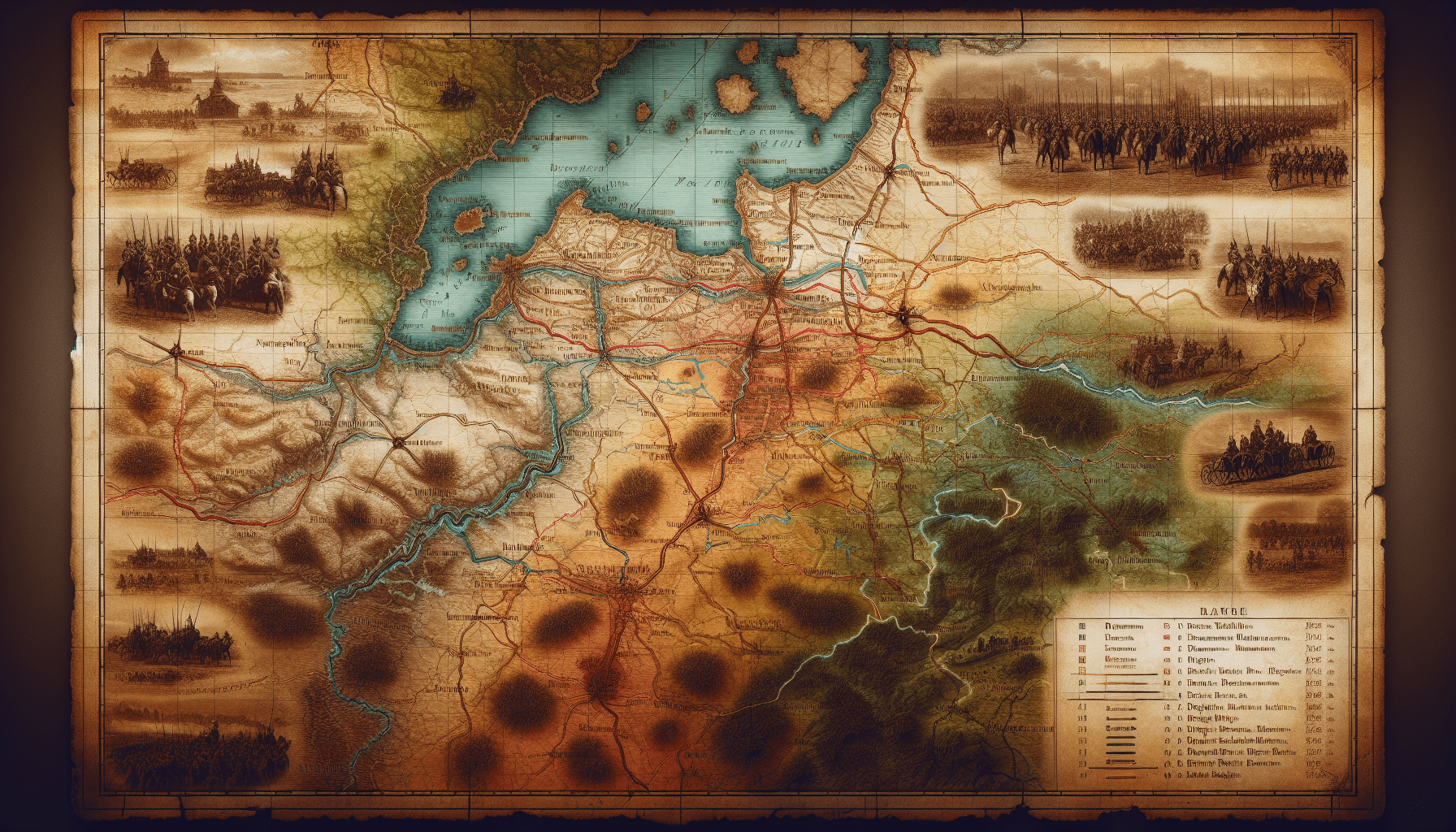
The Battle of Leipzig in October 1813 represented a pivotal moment in the Napoleonic Wars, marking a significant turning point in European history. You will examine how Napoleon, confronted by the formidable forces of the Sixth Coalition—comprising Russia, Austria, Prussia, and Sweden—adopted a high-risk strategy to maintain his grasp on power. Despite being outnumbered and nearly encircled, he initiated a bold offensive against the Army of Bohemia, leading to a protracted and bloody conflict. Over four crucial days, the battle unfolded as not only the largest in Europe before the First World War but also one that irreversibly altered the trajectory of the continent.
This analysis will explore the strategic choices made by both Napoleon and the coalition forces, the intense military engagements that characterized the battle, and the outcomes that ultimately contributed to the downfall of the French Empire. You will gain insights into the complexities of coalition warfare and the evolving tactics that both sides employed in the face of escalating adversity. Additionally, the discussion will highlight the human cost of the conflict, revealing the profound impact the Battle of Leipzig had on soldiers and civilians alike during this tumultuous period in history.
Overview of the Battle of Leipzig
Historical context leading up to the battle
The Battle of Leipzig, fought from October 16 to 19, 1813, is pivotal within the timeline of the Napoleonic Wars. By this time, Napoleon Bonaparte had suffered significant defeats, particularly in the Peninsular War, which had drained France’s resources and morale. The invasion of Russia in 1812 had exacerbated these issues, resulting in catastrophic losses. As you analyze these events, it is vital to consider the shifting alliances in Europe. The Sixth Coalition—a united effort comprising Russia, Austria, Prussia, and Sweden—sought to curb Napoleon’s expansionist aspirations. The Coalition’s formation was influenced by a collective recognition of the need to confront the French Empire, which had previously demonstrated formidable military power. The Battle of Leipzig thus emerged as a critical confrontation, showcasing not only military might but also the restoration of political balances reshaped by Napoleon’s prior conquests.
Significance of the battle in the Napoleonic Wars
The significance of the Battle of Leipzig extends beyond mere military engagement. It marked the first major defeat of Napoleon in a large-scale confrontation and served as a catalyst for his decline. With Leipzig, you witness a convergence of destiny for both the French Empire and the Coalition forces. The battle illustrates the growing confidence among Napoleon’s adversaries, who had previously suffered under his campaigns, showcasing a shift toward a unified European resistance against his rule. Resulting in devastating casualties on both sides, the battle set the stage for subsequent withdrawals of French forces from Germany and ultimately contributed to Napoleon’s abdication in 1814. Understanding this battle is integral to comprehending the broader narrative of the Napoleonic Wars and its lasting impact on European geopolitics.
Forces Involved
Composition of Napoleon’s Grande Armée
At the heart of the confrontation was Napoleon’s Grande Armée, a formidable yet beleaguered force comprising approximately 200,000 troops. You should note that while this number seems substantial, many of these soldiers were relatively inexperienced, recruited from the lower ranks following previous losses. The army included seasoned veterans, particularly in the Imperial Guard, which played a critical role during key engagements. The composition reflected a mix of nationalities, including French, Poles, and various allies, yet a significant proportion comprised newly conscripted soldiers, exacerbating issues of discipline and cohesion.
Structure and leadership of the Sixth Coalition
In contrast to Napoleon’s army, the Sixth Coalition combined the military powers of several nations, totaling an estimated 360,000 troops. The Coalition’s leadership, particularly under Austrian Field Marshal Karl Schwarzenberg, exemplified a diverse command structure that sought to harmonize different military traditions and strategies. The united command, although facing challenges in coordination, managed to exploit their numerical advantages effectively. This aspect of the Coalition’s composition reflects an evolution in military collaboration against a common foe, highlighting the maturation of diplomatic and military relationships among European powers.
Numerical strengths and weaknesses of each side
The numerical dichotomy between the two forces represents a critical factor influencing the battle’s outcome. Napoleon’s 200,000 men were encircled and outmatched by the Coalition’s 360,000, presenting a stark challenge to his operational strategy. You should also consider that while numbers were in favor of the Coalition, the cohesive strategy and morale among Napoleon’s troops were notable advantages he often leveraged in past victories. Yet, the mixture of fatigued veterans and new recruits within the French ranks contrasted sharply with the more unified and battle-tested Coalition forces, foreshadowing the stakes of upcoming engagements.

Strategic Movements
Initial positioning of Napoleon and the Coalition armies
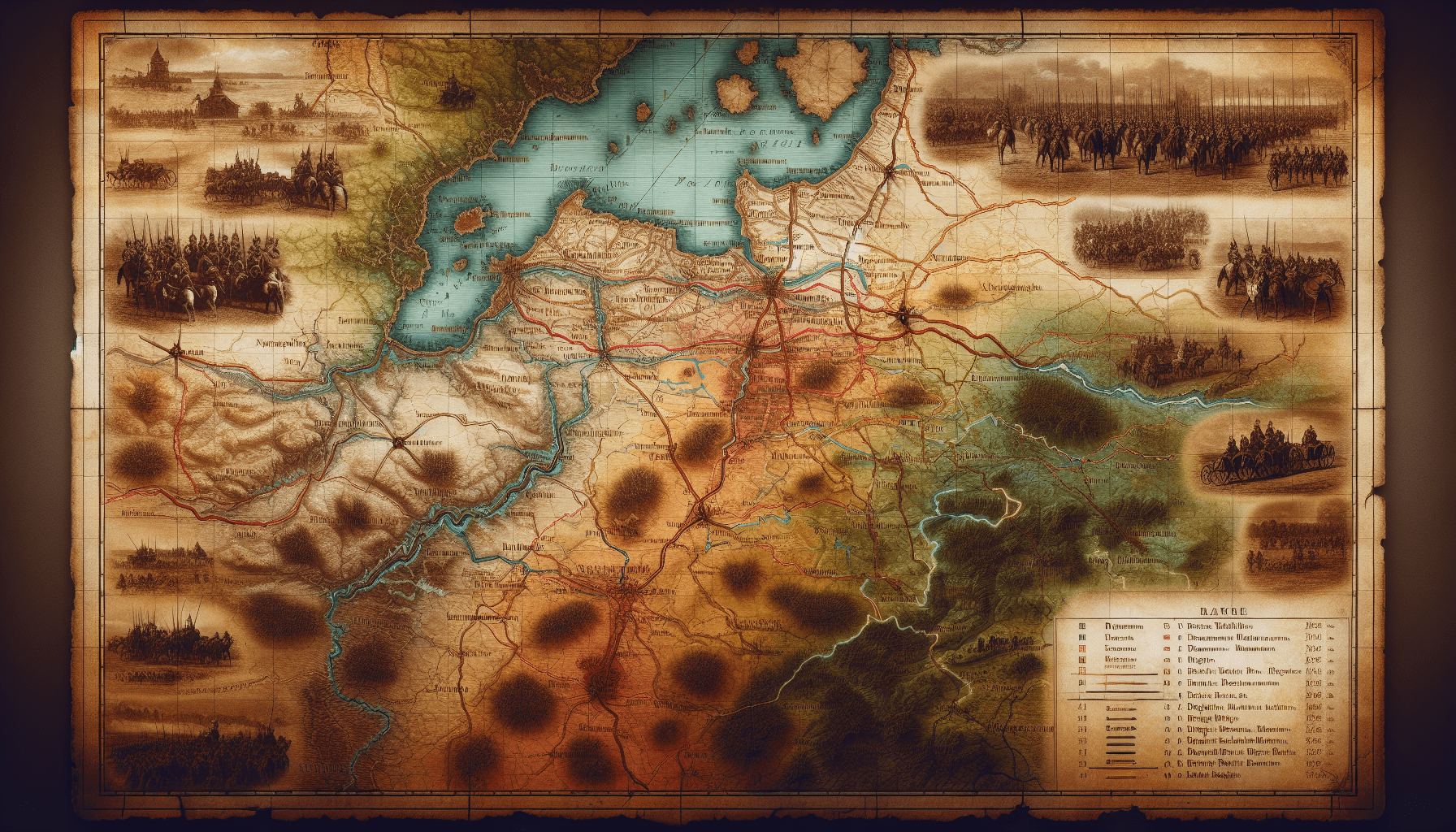
As October 16 dawned, the positioning of the armies around Leipzig became pivotal. You can visualize Napoleon’s forces strategically arrayed to confront the advancing Coalition troops, but with one critical disadvantage: his troops were scattered across multiple fronts. The Coalition, benefitting from superior numbers, began maneuvering to encircle Napoleon’s forces. The initial deployments of each side represented a tactical chess game where mobility played an essential role. The Coalition adopted a strategy aimed at converging on Napoleon’s rear, aiming to cut off his avenues of retreat, thereby maximizing the pressure on his forces.
Key maneuvers employed by both sides
In the ensuing days of the battle, both sides engaged in complex maneuvers tailored to exploit the battlefield’s geography. Napoleon aimed to strike decisively at the Army of Bohemia, commanded by Schwarzenberg, hoping to disrupt the Coalition’s unity before they could effectively coordinate their efforts. Conversely, the Coalition sought to leverage their overwhelming numbers, executing flanking maneuvers to envelop the French positions. The engagement of artillery units early on created pivotal opportunities, marking a battlefield dynamic where the ability to adapt rapidly could dictate the course of the conflict.
Battlefield terrain and its impact on tactics
The terrain surrounding Leipzig played a fundamental role in shaping the dynamics of battle. You should note that the marshy land, interspersed with villages and elevations, constrained movement and dictated the effectiveness of cavalry and artillery. The rivers, particularly the Pleisse and Elster, became natural barriers, complicating the Coalition’s plans for a cohesive assault. Napoleon’s tactical use of these geographical features, particularly in deploying artillery, was pivotal in shaping engagements, revealing the intrinsic connection between terrain and military strategy.
The First Day of Battle (October 16, 1813)
Opening skirmishes and engagements
On the first day, the battlefield erupted with skirmishes as both sides tested each other’s lines. The opening encounters showcased the determination of the Coalition forces to reclaim territories lost to Napoleon’s campaigns. You can almost hear the thunderous percussion of cannon fire as the Coalition forces pushed forward, capturing crucial positions. The French responded vigorously, adhering to strategic formations that sought to capitalize on local knowledge and the leadership of seasoned commanders. Yet, despite their initial tactical advantages, the French found themselves increasingly strained as Coalition forces began to apply more pressure.
Preliminary tactical advantages
In these opening exchanges, the French exhibited notable tactical responses, including counterattacks aimed at regaining lost ground. However, the Coalition forces, buoyed by unity and overwhelming numbers, managed to secure several key positions. Notably, the village of Wachau became a flashpoint for ferocious fighting, illustrating the brutal nature of the engagements. Understanding the interplay of tactics during this initial stage is crucial for grasping the broader narrative of the battle, as it set the tone for subsequent days of intense conflict.
Key locations: Wachau and Möckern
Wachau and Möckern emerged as significant locations during the first day, embodying the vicious struggle for control. Your analysis of these sites reveals how controlling terrain would dictate future maneuvers. The persistence of skirmishes in Wachau indicated the strategic importance of these villages, which both sides recognized as vital to maintaining supply lines and staging future assaults. You could perceive the battlefield as alive, with echoes of gunfire marking the desperation and chaos of war, reflecting the emotional toll on soldiers caught in the tide of combat.
The Second Day of Battle (October 17, 1813)
Coalition’s offensive strategies
As the second day unfolded, the Coalition commanders mobilized their forces with renewed vigor, launching a series of aggressive offensives. You would observe a coordinated effort to pressure the French defenses, particularly around key strategic points like Mishen and Markkleeberg. The Coalition’s offensive strategies were underpinned by careful reconnaissance and a commitment to overwhelming Napoleon’s flanks, recognizing that maintaining offensive momentum could fracture the French lines.
French counterattacks and their effectiveness
In response, Napoleon ordered counterattacks to reclaim the initiative. During this phase, you would witness the audacity of Napoleon’s command style, as he sought to exploit any perceived vulnerabilities within the Coalition’s formations. However, despite valiant efforts, many of these counterattacks proved less effective than intended due to the Coalition’s numerical superiority and logistical coordination. The operational tempo on both sides indicated an escalating battle rhythm that reflected the mounting stakes.
Significant battles for control of key villages
The day saw fierce engagements for control over villages, notably Möckern and Markkleeberg, which became symbols of the grinding contest for dominance. Each position gained or lost came at a heavy toll in casualties, hinting at the grueling nature of the conflict. You should recognize that the struggle for these strategic locations was not merely about ground but represented a test of wills between two giant military forces, underscoring the human element present in all wars. Each soldier’s determination infused the battlefield with a visceral tension palpable even in contemporary analyses.
The Third Day of Battle (October 18, 1813)
Heightened intensity and casualties
Entering the third day, the intensity of combat escalated dramatically, with both forces suffering catastrophic casualties. The engagement became emblematic of attrition warfare, where both sides aimed for destruction rather than maneuver. As you analyze casualty reports, it becomes evident that while both forces faced losses, the French were notably strained, causing morale to falter. This rising tide of casualties foreshadowed the impending outcome, as each side leveraged their remaining resources to secure fleeting victories.
Critical decision-making by Napoleon
In these high-stress moments, Napoleon’s decision-making became increasingly fraught with pressure. Faced with the evolving battlefield landscape, he needed to balance offensive strategies with the grim reality of dwindling resources. The decisions made during this phase would later be scrutinized for their immediate consequences on the battle’s progress. You observe how adaptations in real time reflect a commander’s psychological burden and the dilemma of leading a beleaguered army.
The role of cavalry in the engagement
The cavalry’s role surged into prominence on this day, with units deployed for rapid assaults aimed at outflanking Coalition positions. You would recognize the significance of cavalry charges not just as tactical maneuvers but as morale boosters, infusing the soldiers with a sense of urgency and purpose. However, the effectiveness of these cavalry maneuvers dimmed against the backdrop of attrition, with many units suffering substantial losses, ultimately serving as a reflection of the desperate stakes at hand.
The Fourth Day of Battle (October 19, 1813)
Final assaults and retreat strategies
As the battle bleeds into its fourth day, both sides braced for final, desperate assaults. The Coalition forces, emboldened by their prior gains, sought to decimate the remaining French lines. Conversely, Napoleon, aware of the precariousness of his situation, initiated retreat strategies, aiming to preserve as many troops as possible for future engagements. The culmination of strategy and will at this point illuminates the desperate calculus military leaders must navigate in warfare.
Role of reinforcements and reserves
The role of reinforcements became crucial as the day progressed, influencing the pace of engagement. Coalition commanders were able to shift reserve units into crucial gaps, leveraging their numbers more effectively than their French counterparts. You should analyze how these reinforcing actions fashioned the flow of the battle, revealing strategic foresight. Napoleon’s failure to appropriately redistribute his own reserves led to impacts felt in every subsequent engagement, underscoring the importance of mobilizing backups during pressing encounters.
Involvement of newly improved artillery
Artillery emerged as another critical factor during the final confrontation. You would note the deployment of newly improved artillery pieces, which played a decisive role in rupturing Coalition formations and inflicting severe damage. Napoleon’s historical affinity for artillery was evident, as he emphasized its integration within tactical frameworks, enabling it to serve as a force multiplier on the battlefield. This technological advancement signified the evolving nature of combat and tactics during the Napoleonic Wars.
Casualties and Losses
Comparison of casualties: French vs Coalition
The Battle of Leipzig resulted in staggering casualties, with estimates suggesting the French experienced losses of around 25,000 men, while Coalition forces sustained approximately 30,000 casualties. You should delve into the implications of these figures—not merely as statistics but as indicators of the human toll war exacts on both combatants and starkly revealing the limits of endurance. The comparative analysis illustrates a tangible sense of suffering and loss shared between the two sides.
Impact of losses on morale and future engagements
The ramifications of these losses rippled through both armies’ morale. For the French, suffering defeat alongside significant casualties initiated a crisis of confidence that jeopardized future military endeavors. As Scotland’s poet Robert Burns once suggested, “For a’ that, and a’ that,” the human spirit is tested in the face of adversity. The Coalition, while experiencing its own substantial losses, felt buoyed by their collective experiences, nurturing a burgeoning sense of unity and purpose. Your analysis of these morale shifts offers profound insight into the psychological dimensions of warfare.
Long-term effects of battlefield attrition
Beyond the immediate impact of these casualties, the long-term effects of battlefield attrition altered the landscape of European geopolitics. The attrition experienced at Leipzig not only crippled Napoleon’s capability in the short term but also sowed the seeds for subsequent coalitions drawing upon their shared experiences in battling the French. Thus, this struggle at Leipzig became a historical fulcrum, leading to shifts in military, political, and social structures across Europe.
Consequences of the Battle
Immediate aftermath for Napoleon and his forces
The immediate aftermath of the battle left Napoleon reeling. With his army that was once renowned for its rapid movements now suffering from serious morale and cohesion issues, he was forced into retreat. The defeat at Leipzig marked a watershed moment, leading to a reevaluation of strategies within his command and the bitter recognition that his empire was faltering. The illusion of indomitable power began to crack, and you can feel the weight of this acknowledgment pressing down on Napoleon and his commanders.
Political repercussions for the Coalition powers
The victory for the Coalition had immediate political repercussions as it emboldened their resolve against Napoleon. Countries that had once hesitated to oppose his rule began to reassess their positions, joining the Coalition and shifting the balance of power across Europe. Internally, this success revitalized Austria and Prussia’s military ambitions, leading to a coordinated effort to dismantle the remnants of French control. Your understanding of these dynamics is pivotal as they reflect the shifting allegiances and power struggles critical to European history.
The shift in power dynamics in Europe
In the grand tapestry of European history, the outcome of Leipzig marked a decisive shift away from the Napoleonic Era towards a reconfiguration of power dynamics. The defeat signaled the emergence of new alliances and a concerted effort to define a post-Napoleonic Europe. You should pay careful attention to how these realignments influenced territorial claims and national identities, culminating in the Congress of Vienna, which sought to achieve a durable peace in Europe—a legacy forged in the crucible of conflict.
Conclusion
Summary of the battle’s significance
In concluding your exploration of the Battle of Leipzig, it is clear that this engagement carries profound significance. It not only marked a high point for the Coalition but also served as a turning point in the Napoleonic Wars, undermining the perception of Napoleon’s military invincibility. The scale of the battle, paired with its casualties and strategic implications, renders it one of history’s most consequential military encounters.
Reflection on its influence on the Napoleonic Wars
Furthermore, as you reflect on the broader implications of the Battle of Leipzig, you will notice its enduring influence on the trajectory of the Napoleonic Wars. It catalyzed the unraveling of Napoleon’s empire and laid the groundwork for subsequent alliances formed in direct opposition to French ambitions. This reflection elucidates how singular battles can reverberate through time, altering the social and political fabric of nations.
Lasting lessons from the Battle of Leipzig
Lastly, the lessons drawn from the Battle of Leipzig extend beyond the battlefield. They offer insights into the dynamics of leadership, coalition-building, and the resilience of nations in the face of adversity. Understanding these themes enables you to appreciate the complexity of historical narratives, underscoring the perpetual cycle of conflict and resolution that shapes human history. The Battle of Leipzig, thus, stands as a testament not only to the brutality of war but also to the indomitable spirit of collective resistance against a common adversary.