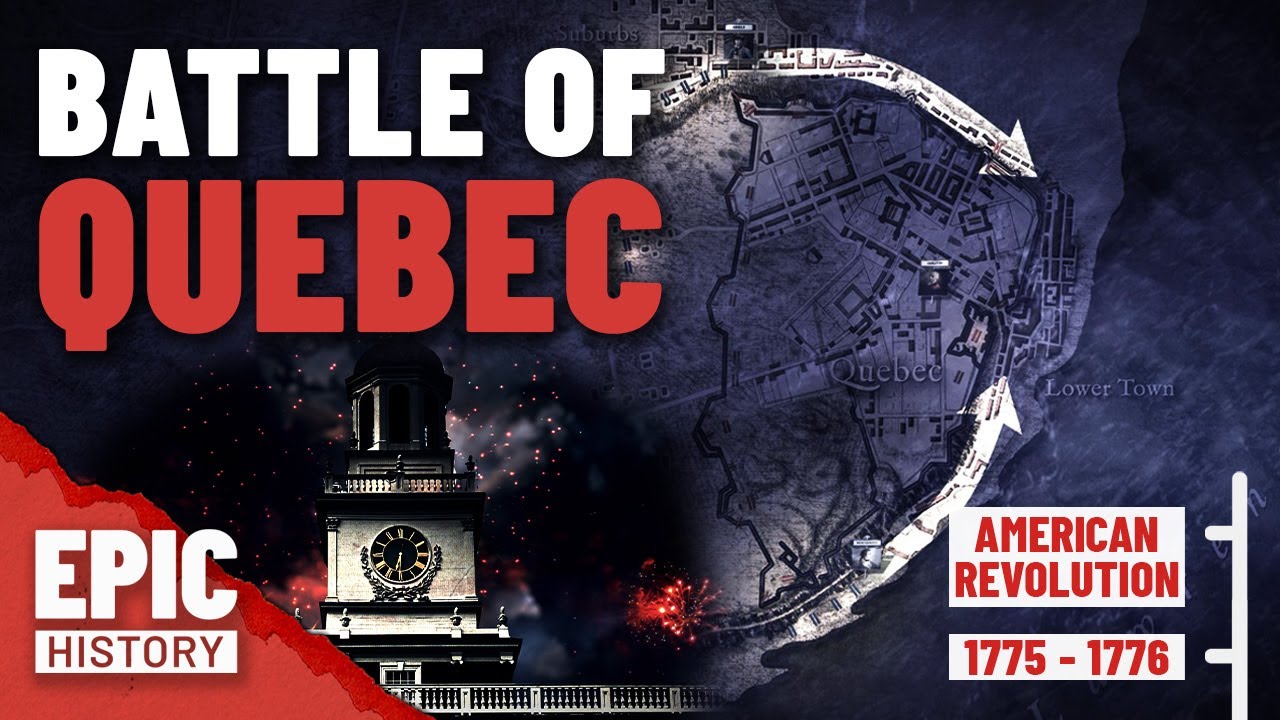
The Battle of Quebec during the American Revolution represents a pivotal moment in the struggle for independence. In the winter of 1775, an ambitious campaign led by Patriot forces sought to capture Quebec, aiming to extend revolutionary fervor into Canada. This military endeavor coincided with significant victories in Boston, which invigorated the Patriot cause and set the stage for the Declaration of Independence in 1776. However, the British response was swift and formidable, initiating a dramatic escalation as they mobilized the largest military expedition in their history to reclaim control and suppress the rebellion.
This article explores the strategic implications of the Battle of Quebec and its influence on the unfolding conflict between the American colonies and British forces. It examines the motivations behind the Patriot invasion and the subsequent British counteroffensive, providing insights into the broader context of the American Revolution. By analyzing the events surrounding this crucial battle, one can better understand the dynamics that shaped not only the immediate outcomes but also the trajectory of the quest for American independence.
Overview of the Battle of Quebec
Significance in the American Revolution
The Battle of Quebec, fought in December 1775, marked a pivotal moment in the American Revolutionary War. This audacious invasion of British-held Quebec by American Patriot forces aimed to rally French-Canadian support against British rule. The failure of this campaign had far-reaching implications for the American cause. It not only curtailed aspirations of capturing Canada but also demonstrated the determination of British forces to retain their grip on the North American territories. The battle resulted in a loss for the Patriots, which fostered a sense of vulnerability and reassessment of strategy leading into the subsequent phases of the war.
Timeline of events leading to the battle
The events leading up to the Battle of Quebec unfolded in a complex web of political tensions and military maneuvers. After the Intolerable Acts were enacted in 1774, colonial resentment burgeoned, prompting the First Continental Congress in 1774. In response to increased hostilities following the battles of Lexington and Concord in April 1775, the Continental Congress approved a military expedition to seize Quebec. On September 12, 1775, General Richard Montgomery initiated this campaign, marching towards Canada with approximately 1,000 men. Meanwhile, Colonel Benedict Arnold led a separate contingent through the wilderness, aiming to arrive in Quebec simultaneously. This orchestration set the stage for the ill-fated encounter in December.
Key players involved
The key players in this battle included General Richard Montgomery, who led the American forces and had formerly served in the British army; Colonel Benedict Arnold, known for his daring tactics and leadership skills; and Governor Guy Carleton, the British military leader charged with defending Quebec. Their contrasting objectives and strategies would come to define the confrontation, with the Americans aiming to persuade Canadian support while the British sought to thwart this initiative.
Background of the American Revolution
Causes of colonial unrest
The roots of colonial unrest sprouted from a landscape of oppression and overreach by British Parliament. Policies such as the Stamp Act, the Townshend Acts, and the Tea Act collectively ignited a spirit of rebellion among the colonists, who perceived these impositions as violations of their rights as Englishmen. The rhetoric of “no taxation without representation” gained traction as colonists began to consider the ramifications of a centralized power that disregarded their voices and local governance.
Impact of earlier conflicts
Earlier conflicts, such as the French and Indian War (1754-1763), sowed the seeds for the Revolutionary War by exacerbating colonial mistrust towards British military and political intent. Following their victory, the British sought to recoup war debts through colonial taxation, further alienating colonists. The war had also fostered a sense of American identity, as colonial militia fought alongside British regulars; this shared experience helped galvanize the notion of unity in the colonies.
Declaration of Independence
The crescendo of colonial discontent reached a peak with the adoption of the Declaration of Independence in July 1776. This seminal document not only articulated the grievances against King George III but also established the philosophical underpinnings of a new nation centered on democratic principles. It underscored the desire for self-governance and enshrined the pursuit of life, liberty, and happiness as fundamental rights. Although the Declaration was brought forth after the Battle of Quebec, the failed invasion illustrated the urgent need for unified and strategic action as the colonies forged a path towards independence.

The Invasion of Canada
Planning the invasion
The planning for the invasion of Canada was both ambitious and fraught with challenges. Organized by the Continental Congress, the expedition was predicated on the belief that a successful assault on Quebec would unify the colonies and encourage Canadian collaboration against British rule. The strategy included two prongs: Montgomery’s forces coordinated from the south while Arnold’s group would traverse the harsh wilderness from the east. This dual approach aimed to catch the British garrison off guard, but the inherent difficulties of logistics and terrain were underestimated.
Forces and leaders involved
Montgomery commanded a mix of Continental soldiers and local militia, amounting to around 1,000 men. His forces consisted mainly of New Yorkers and New Englanders, displaying a ragtag composition indicative of the early war efforts. Arnold, commanding approximately 600 troops, faced adverse conditions as he led his men through rugged terrain under a grueling winter, emphasizing his resolve and leadership. Guy Carleton, the British commander tasked with defending Quebec, possessed a smaller but better-trained army, bolstered by local supporters and loyalists committed to British rule.
Challenges faced during the march
The march towards Quebec was riddled with a multitude of challenges that would ultimately hinder the Patriots’ effectiveness. Both contingents faced the brutal Canadian winter, characterized by biting cold and deep snow, which decreased morale and physical endurance. Supplies dwindled, and the men grew weary, with many succumbing to illness or discontent. Navigation through uncharted wilderness presented its own hazards, complicating their march and straining the unit’s cohesion. Upon arrival near Quebec, the forces found themselves ill-prepared to mount an effective siege.
The Siege of Quebec
Initial conflict and tactics
The siege of Quebec commenced on December 5, 1775, when Montgomery initiated his attack, hoping to quickly capitalize on surprise. The initial skirmishes were marked by aggressive assaults, but as the Americans approached, they encountered well-fortified British defenses, particularly along the city walls. Montgomery’s decision to group forces and attack simultaneously from various points aimed to overwhelm the British garrison, yet this approach ultimately proved ineffective against disciplined British artillery.
British defenses
British defenses in Quebec were formidable, comprising both natural geographic advantages and well-prepared military fortifications. Governor Carleton utilized the city’s high walls, artillery placements, and local terrain to develop a defensive strategy, thwarting the advancing Patriot forces. The combination of an organized military and resupply efforts bolstered British confidence, even as the American soldiers, hampered by winter conditions, struggled to maintain their offensive momentum.
The role of weather and terrain
The weather and terrain played a crucial role in shaping the battle’s outcome. Severe winter cold and snow limited visibility while diminishing combat effectiveness; troops were often immobilized or forced to fight in deteriorating conditions. Additionally, urban architecture posed a challenge for American forces accustomed to open-field engagements. This combination of environmental factors severely hampered coordination and movements, contributing to the Americans’ inability to capitalize on strategic advantages.

Major Figures in the Battle
General Richard Montgomery
General Richard Montgomery emerged as a prominent figure in the Battle of Quebec, possessing substantial military experience from his service in the British Army prior to his alignment with the Continental forces. His leadership was characterized by tactical initiative, yet his decisions during the siege ultimately culminated in his death, which served to demoralize and disarray the American troops. His vision of a liberated Canada and a united front against British oppression would have profound implications for the American struggle.
Colonel Benedict Arnold
Colonel Benedict Arnold was another significant player in this siege, revered for his audacity and determination in leading his force through arduous terrain to engage the British. His leadership showcased immense valor, yet his initial successes were overshadowed by the subsequent failures at Quebec. Arnold’s experiences during the battle would lead him towards a controversial legacy, as he eventually became synonymous with acts of betrayal later in the war.
Governor Guy Carleton
Governor Guy Carleton, the British commander, demonstrated formidable defensive capability during the siege. His military acumen allowed him to capitalize on the strengths of his positions and muster local support, potentially influencing the outcome of the confrontation. His commitment to defending Quebec not only preserved British control but also reinforced the resolve of loyalists within Canada, complicating American aspirations for territorial expansion.
The Course of the Battle
Key skirmishes and strategies
The course of the Battle of Quebec was punctuated by a series of skirmishes resulting from both sides’ strategies. The Americans attempted to implement coordinated attacks while capitalizing on their speed and surprise. However, the British countered with disciplined firepower and efficient use of defensive maneuvers. Key moments, such as the assault on December 31, where American forces required decisive leadership, proved fraught with chaos, culminating in failure and retreat.
Turning points in the battle
The turning points of the battle emerged from the dynamics between American fervor and British resolve. Montgomery’s death was a significant blow, as it dismantled the command structure and left the American forces without a cohesive strategy. As the siege continued into January, dwindling supplies compounded the challenges for the Americans, marking a transition from an initial offensive mindset to that of retreat and survival.
Outcome of the engagement
The engagement ultimately ended in the withdrawal of American troops after sustaining heavy casualties—estimates suggest that nearly 400 Patriots were killed, wounded, or captured while the British suffered comparatively fewer losses. The failed siege became a symbolic loss for the American cause, reflecting the complexities of warfare and the realities of coalition-building in a revolutionary context. Despite this failure, the legacy of the siege would resonate throughout the war, shaping future strategies and aspirations.

Aftermath and Consequences
Immediate impact on the Patriot cause
The immediate aftermath of the Battle of Quebec was marked by disappointment among Patriot supporters and a critical examination of military strategies. The loss challenged the notion of successfully expanding the revolution into Canada, leading to a reassessment of goals and alliances. This campaign’s failure punctured the fervor that had gripped the American colonies after victories in Boston, as a sense of vulnerability set in.
Strategic shifts in the Revolutionary War
The results of the Battle of Quebec prompted significant strategic shifts within the Revolutionary War. The American leadership recognized the need for enhanced organizing capabilities and logistics as they advanced further into the conflict against British forces. Consequently, the focus galvanized around securing strongholds within the original Thirteen Colonies rather than embarking on expansive missions that risked overextension and overcommitment.
Long-term effects on Canadian-American relations
In the long term, the experience of the Battle of Quebec influenced Canadian-American relations, fostering a complex dialogue around identity, governance, and national aspirations. The failure to capture Quebec reinforced British ties within Canada while simultaneously nurturing a shared narrative among Americans regarding their pursuit of liberty. These events would set the stage for contemporary Canadian-American relations, colored by historical memory and evolving geopolitical realities.
Historical Interpretations
Different perspectives on the battle
Historical interpretations of the Battle of Quebec vary significantly, reflecting broader debates over the American Revolution itself. Some historians view the battle as a critical initiative that could have altered the trajectory of Canadian history, while others argue it encapsulated the disorganization and miscalculations that were prevalent in early American military efforts. These discussions illustrate the complexity of understanding battles as singular events within a larger historical context.
Role in the broader context of the Revolution
The role of the Battle of Quebec within the broader context of the American Revolution serves as a lens through which to examine the struggles of the early revolutionary movement. It highlighted the disparate strengths and weaknesses within the Patriot cause and exemplified the challenges of building momentum across diverse colonial landscapes. This battle’s failure shaped the rhetoric and philosophy underpinning later conflicts and the eventual pursuit of independence.
Contemporary historical debates
Contemporary debates surrounding the battle often focus on leadership, military strategy, and the effects on Canadian identity formation. Scholars continue to dissect the actions and decisions of key figures while interrogating the influences of nationalism and loyalty amid the turbulent landscape of colonial governance. Such discussions enrich historiographical narratives, allowing a nuanced understanding of the battle’s lasting implications on both sides of the border.
Cultural Representations
Art and literature inspired by the battle
Cultural representations of the Battle of Quebec have found expression in various artistic mediums since its conclusion. Artists and writers have incorporated elements of the confrontation into depictions of American perseverance and the costs of conflict. These works often highlight themes of bravery, sacrifice, and the shifting dynamics of power, creating emblematic portrayals that resonate through popular consciousness and historical memory.
Memorials and commemorations
Memorials and commemorations of the Battle of Quebec serve to honor those who fought and provide a platform for reflection on the complexity of freedom struggles. Various institutions and historical societies have erected monuments to commemorate the event and its key figures, illuminating their roles within the broader narrative of the American Revolution. These memorials act as focal points for education, facilitating dialogue regarding shared histories and legacies.
Portrayal in films and documentaries
The portrayal of the Battle of Quebec in modern media, including films and documentaries, has contributed to the public’s understanding of historical events surrounding the American Revolution. Such representations examine the motivations and battles of the era while delving into personal narratives of courage and resilience. Although artistic liberties are often taken, these portrayals foster engagement with history, inviting contemporary audiences to consider the implications of the Revolutionary struggle.
Conclusion
Summarizing the significance of the battle
In summation, the Battle of Quebec stands as a consequential and telling episode in the American Revolution. It encapsulated the audacity of Patriot efforts to unify colonies and expand the fight for independence while simultaneously offering insights into the vulnerabilities that defined early military campaigns.
Reflecting on its relevance to American history
Reflecting on the relevance of this battle to American history evokes themes of ambition, sacrifice, and the complexities of revolution. The engagement not only elucidated the challenges faced by the nascent United States but also underscored the intertwined fates of the American and Canadian frontiers.
The legacy of the Battle of Quebec in modern understanding
The legacy of the Battle of Quebec continues to reverberate within historical discourse, serving as both a cautionary tale and a testament to the pursuit of liberty. As scholars and students of history engage with this pivotal event, they unearth vital lessons that speak to the broader narratives of wartime resilience, identity formation, and relational dynamics in the evolving landscape of North America.