
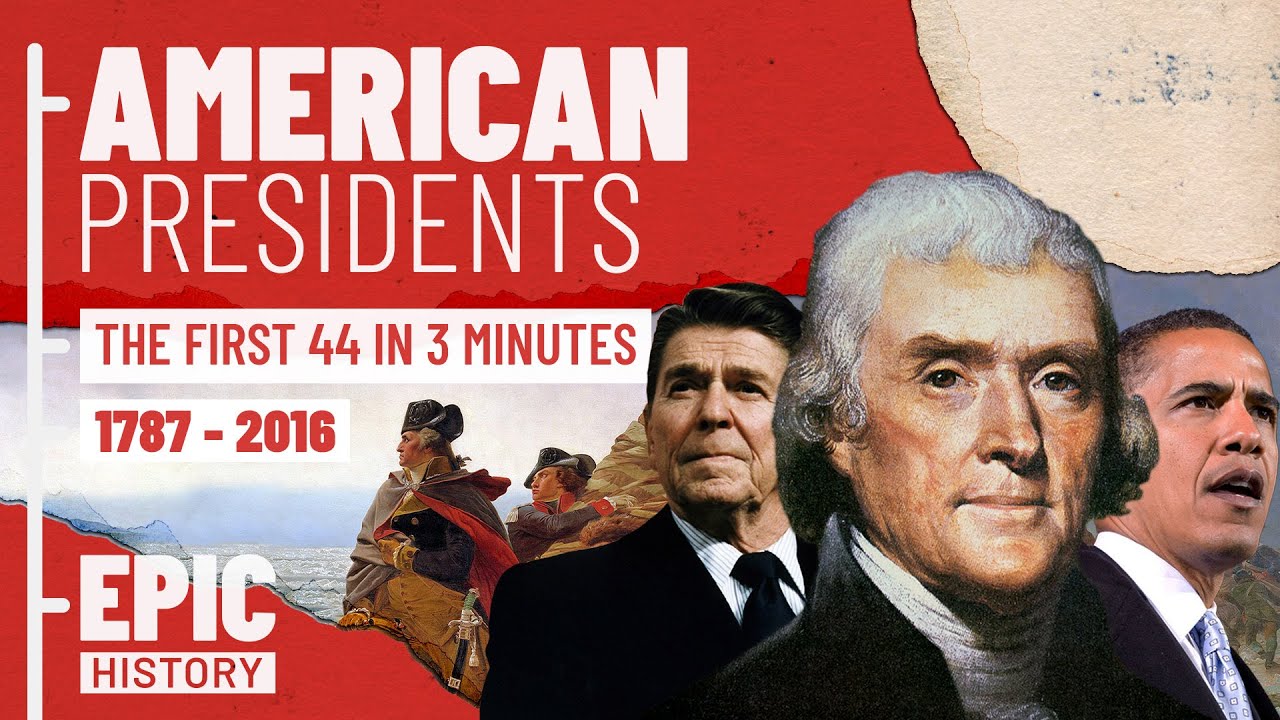
The history of American leadership is defined by the distinctive narratives of its 44 presidents, each contributing to the evolving story of the nation. This article provides a concise timeline that captures the chronological progression of presidential terms, highlighting the significant events and milestones associated with each leader. It also discusses the subjective nature of presidential rankings based on a 2010 survey of historians, underscoring the diverse perspectives that exist regarding their impacts.
You will learn about key figures, from George Washington to Barack Obama, as well as the intricate web of historical context surrounding their presidencies. The exploration of this timeline not only serves as an educational resource but also invites critical engagement with the legacies of these leaders, encouraging you to examine and question the narratives presented.
Overview of American Presidents
Definition and significance of a president
The president of the United States, as defined by the U.S. Constitution, is the head of state and government, serving as the Commander-in-Chief of the Armed Forces and the principal representative of the nation in international affairs. Significantly, the president is responsible for executing and enforcing federal laws, overseeing the executive branch of the government, and has the authority to veto legislation presented by Congress. The position is ennobled not merely through formal authority but through cultural and historical significance, representing the ideals and aspirations of the nation itself.
The role of a president in American governance
In the context of American governance, the role of the president extends beyond administrative duties. The president serves as a symbol of national unity and leadership, often tasked with guiding the country through crises and advocating for public policy. The president also possesses unique powers, including the ability to negotiate treaties and appoint federal judges and ambassadors, reflecting a blend of political and legal authority. As the public face of government, the president articulates and shapes the nation’s values and priorities, reinforcing their role in democratic governance.
Historical context of the presidency
Historically, the presidency has evolved in response to changing societal needs and political challenges. From the colonial struggle for independence to contemporary global diplomacy, the office has been shaped by and has shaped the trajectory of the nation. The founding fathers debated the contours of this role, concerned about the concentration of power and the potential for tyranny. Over time, historical events such as wars, economic crises, and civil rights movements have influenced the presidency, compelling incumbents to adapt and redefine their responsibilities.
Timeline of Presidents
Chronological list from George Washington to Joe Biden
The presidency of the United States began with George Washington in 1789 and has continued through to Joe Biden, who took office in 2021. The list includes:
- George Washington (1789-1797)
- John Adams (1797-1801)
- Thomas Jefferson (1801-1809)
- James Madison (1809-1817)
- James Monroe (1817-1825)
- John Quincy Adams (1825-1829)
- Andrew Jackson (1829-1837)
- Martin Van Buren (1837-1841)
- William Henry Harrison (1841)
- John Tyler (1841-1845)
- James K. Polk (1845-1849)
- Zachary Taylor (1849-1850)
- Millard Fillmore (1850-1853)
- Franklin Pierce (1853-1857)
- James Buchanan (1857-1861)
- Abraham Lincoln (1861-1865)
- Andrew Johnson (1865-1869)
- Ulysses S. Grant (1869-1877)
- Rutherford B. Hayes (1877-1881)
- James A. Garfield (1881)
- Chester A. Arthur (1881-1885)
- Grover Cleveland (1885-1889)
- Benjamin Harrison (1889-1893)
- Grover Cleveland (1893-1897)
- William McKinley (1897-1901)
- Theodore Roosevelt (1901-1909)
- William Howard Taft (1909-1913)
- Woodrow Wilson (1913-1921)
- Warren G. Harding (1921-1923)
- Calvin Coolidge (1923-1929)
- Herbert Hoover (1929-1933)
- Franklin D. Roosevelt (1933-1945)
- Harry S. Truman (1945-1953)
- Dwight D. Eisenhower (1953-1961)
- John F. Kennedy (1961-1963)
- Lyndon B. Johnson (1963-1969)
- Richard Nixon (1969-1974)
- Gerald Ford (1974-1977)
- Jimmy Carter (1977-1981)
- Ronald Reagan (1981-1989)
- Bill Clinton (1993-2001)
- George W. Bush (2001-2009)
- Barack Obama (2009-2017)
- Donald Trump (2017-2021)
- Joe Biden (2021-present)
Major events during each presidency
Each presidency reflects the backdrop of significant national and international events. For instance, the Revolutionary War’s conclusion in 1783 set the tone for George Washington’s leadership in establishing the newly formed government. The War of 1812, the Civil War, and both World Wars brought dramatic shifts in policy and approach under their respective commanders. Economic recessions, civil rights movements, and technological advancements varied impacts across different administrations, culminating in crises and opportunities that shaped the nation’s course.
Notable achievements and failures
Every president has experienced notable achievements and failures during their tenure. For example, Franklin D. Roosevelt’s New Deal programs fundamentally transformed the American economic landscape, while Richard Nixon’s presidency was marred by the Watergate scandal, ultimately leading to his resignation. Similarly, Barack Obama’s landmark healthcare reform represented a significant legislative achievement, amid ongoing polarizing political discourse. These instances demonstrate the dual nature of presidential legacies, marked by triumphs and missteps alike.
The First Five Presidents
George Washington: Leadership and legacy
George Washington, often referred to as the “Father of His Country,” served as the first president from 1789 to 1797. His leadership was characterized by a commitment to national unity, laying the foundation for the new republic. Washington emphasized the importance of a nonpartisan approach to governance and established precedents for future presidents, including the two-term limit. His legacy is one of integrity and dedication, crucial in a fledgling democracy facing division and uncertainty.
John Adams: Political philosophy and impact
John Adams, serving from 1797 to 1801, was pivotal in defining the role of the presidency within a constitutional framework. His political philosophy was shaped by Enlightenment ideals, emphasizing reason and law. Adams faced significant challenges, including conflicts with France and internal political strife, particularly with the Alien and Sedition Acts, which were controversial and reflected partisan tensions. Despite these challenges, his commitment to republicanism and promotion of the rule of law left an enduring impact on American political thought.
Thomas Jefferson: Expansion and the Louisiana Purchase
Thomas Jefferson’s presidency (1801-1809) is notably recognized for the Louisiana Purchase, whereby the United States acquired vast territories, significantly expanding its borders. Jefferson’s vision of an agrarian republic aligned with his principles of individual liberty and limited government. The purchase doubled the nation’s size and facilitated westward expansion, changing the course of American history. However, his presidency also faced challenges, including the Embargo Act, which ultimately had mixed results on national interests.
James Madison: War of 1812 and the Constitution
James Madison, serving from 1809 to 1817, is sometimes called the “Father of the Constitution” for his central role in its drafting and promotion. His leadership during the War of 1812 tested the nation’s resilience against British aggression, reflecting the growing pains of a young republic. The war’s outcome bolstered American nationalism, yet exposed vulnerabilities in the nation’s preparations and infrastructure. Madison’s legacy also includes advocating for a Bill of Rights, underscoring his commitment to protecting individual freedoms.
James Monroe: Monroe Doctrine and foreign policy
James Monroe’s presidency (1817-1825) is symbolized by the Monroe Doctrine, a cornerstone of American foreign policy that asserted opposition to European colonialism in the Americas. This doctrine reflected a broader shift towards asserting American influence and independence on the global stage. Monroe’s time in office was also marked by the Era of Good Feelings, characterized by a temporary decline in partisan conflict and an emerging sense of national identity. His legacy emphasizes the importance of American sovereignty and diplomatic engagement.
Middle Period Presidents
John Quincy Adams: Controversial presidency and policies
John Quincy Adams, serving from 1825 to 1829, faced a tumultuous presidency. Elected under contentious circumstances known as the “Corrupt Bargain,” his administration struggled to gain popular support. Adams advocated for an ambitious national agenda, promoting infrastructure improvements and educational initiatives, yet faced significant opposition from a rival Congress. His foreign policy successes, including securing the Adams-Onís Treaty, illustrated a keen diplomatic approach despite domestic challenges.
Andrew Jackson: Democracy and Indian Removal
Andrew Jackson, known for his populist approach, served as president from 1829 to 1837. He championed the “common man” and expanded the electorate to encompass more white males, promoting democratic ideals. However, Jackson’s presidency is marred by the Indian Removal Act, leading to the forced relocation of Native American tribes, exemplified by the Trail of Tears. Jackson’s complex legacy reflects both the democratization of American politics and grave injustices against indigenous populations.
Martin Van Buren: Economic troubles and legacy
Martin Van Buren’s presidency (1837-1841) was plagued by the Panic of 1837, a major financial crisis that resulted in widespread economic hardship. Despite his efforts to address the crisis, policies such as the Independent Treasury faced criticism, and he struggled to maintain the support of a troubled electorate. Van Buren’s legacy is often overshadowed by economic challenges, but he played a crucial role in establishing the Democratic Party and shaping the dialogue about American political identity.
William Henry Harrison: Shortest presidency
William Henry Harrison served the shortest presidential term, lasting only 31 days in 1841 before succumbing to pneumonia. His campaign symbolized a rise of populism in American politics, characterized by the slogan “Tippecanoe and Tyler Too.” However, his untimely death opened debates about succession and presidential power, leading to significant interpretations of the presidency’s continuity through the Tyler administration. Harrison’s brief tenure is a reminder of the fragility of political leadership.
James K. Polk: Expansionist policies and Mexican-American War
James K. Polk’s presidency (1845-1849) is noted for its expansionist zeal, advocating for Manifest Destiny. Under his leadership, the Mexican-American War occurred, resulting in significant territorial acquisitions, including California and New Mexico. Polk’s policies reflected a fervent nationalism, yet also ignited debates on slavery that would culminate in civil conflict. His presidency demonstrated a strategic balance between war and diplomacy, fundamentally altering the geographic and political landscape of the nation.
Civil War and Reconstruction
Abraham Lincoln: Leadership during Civil War and Emancipation Proclamation
Abraham Lincoln, serving from 1861 to 1865, faced the nation’s gravest crisis: the Civil War. His leadership in a fractured nation underscored a commitment to preserving the Union. The Emancipation Proclamation transformed the war into a moral struggle against slavery, redefining the purpose of the conflict. Lincoln’s legacy is one of resolute leadership during adversity and a profound commitment to human rights, culminating in the passage of the 13th Amendment, which abolished slavery.
Andrew Johnson: Reconstruction and impeachment
Andrew Johnson, who assumed the presidency after Lincoln’s assassination (1865-1869), struggled with the Reconstruction era’s complexities. His leniency towards the Southern states and opposition to radical Republican policies led to tensions within Congress, culminating in his impeachment. Although acquitted, Johnson’s presidency is defined by conflict and impasse regarding civil rights and reintegration of Southern states. His legacy reflects the contentious and often tumultuous nature of post-war America.
Ulysses S. Grant: Post-war challenges and scandals
Ulysses S. Grant served as president from 1869 to 1877, known for his leadership as a Union general during the Civil War. However, his presidency was marked by significant corruption scandals, overshadowing his achievements in civil rights and Reconstruction efforts. The administration’s efforts to enforce civil rights legislation are notable, yet rampant corruption among his associates tarnished the legacy of a presidency focused on reconciliation and moral governance.
Rutherford B. Hayes: Ending Reconstruction
Rutherford B. Hayes, president from 1877 to 1881, is often identified with the controversial end of Reconstruction following the Compromise of 1877. His administration aimed to heal the nation post-Civil War, yet the withdrawal of federal troops from the South facilitated the resurgence of white supremacy and Jim Crow laws. Hayes’ legacy involves navigating the tension between progressivism and the realities of Southern governance, underscoring the era’s complex socio-political dynamics.
James A. Garfield: Assassination and its impact
James A. Garfield’s presidency was tragically cut short; he served only from March to September 1881 before being assassinated. His administration stressed civil service reform and advocated for modernization of government practices. Garfield’s assassination ignited public outrage and intensified calls for systemic reforms, ultimately leading to the Pendleton Civil Service Reform Act. His death left an indelible mark on American society and the movement for governmental integrity.
The Progressive Age
Theodore Roosevelt: Progressive reforms and conservation
Theodore Roosevelt, serving from 1901 to 1909, emerged as a transformative leader in the Progressive Era. His policies aimed at social justice and economic reform targeted corporate monopolies, leading to substantial antitrust lawsuits. Roosevelt’s commitment to conservation established national parks and forests, reflecting a deep concern for environmental preservation. His populist approach framed the presidency as a vehicle for social reform, cementing his legacy as a champion of the common citizen.
William Howard Taft: Split in the Republican Party
William Howard Taft’s presidency (1909-1913) marked a divergence within the Republican Party, as his administration struggled with internal disagreements over the direction of progressive policies. Taft advocated for trust-busting and tariff reform yet faced criticism from Roosevelt supporters, ultimately leading to a rift between the two factions of the party. His presidency also witnessed significant judicial appointments, influencing the interpretation of progressive reforms. Taft’s legacy reflects the complexities of American political evolution during a time of reform.
Woodrow Wilson: World War I and League of Nations
Woodrow Wilson, president from 1913 to 1921, navigated America through World War I, advocating for neutrality before entering the conflict. His Fourteen Points outlined a vision for post-war peace and led to the establishment of the League of Nations, emphasizing collective security and international cooperation. However, his inability to rally domestic support for the League highlighted the challenges of global engagement in American governance. Wilson’s presidency left a profound impact on international relations and foreign policy discourse.
Impact of industrialization on U.S. presidents
The Progressive Age was a direct response to the profound changes brought by industrialization, impacting both the nature of governance and the expectations of leadership. Industrial growth catalyzed social discontent, labor movements, and calls for reform, prompting presidents to adapt to a rapidly evolving society. Consequently, presidents became instrumental in addressing the challenges of worker rights, economic inequality, and regulating industries, shaping a new understanding of the government’s role in American life.
Social changes during this era
The societal transformations during this period included growing urbanization, advances in women’s rights, and a rising labor movement. These changes challenged traditional norms and compelled leaders to confront issues such as suffrage, child labor, and economic disparity. The social fabric of America underwent a radical shift, culminating in significant reforms aimed at improving living conditions, labor rights, and civil liberties, effectively redefining the parameters of American democracy.
The Great Depression and WWII
Herbert Hoover: Response to the Great Depression
Herbert Hoover, president from 1929 to 1933, faced the onset of the Great Depression, which tested his commitment to free-market principles. His initial response focused on voluntary measures and limited government intervention, though this proved inadequate in the face of widespread economic collapse. The public’s perception of Hoover’s ineffectiveness significantly impacted his political legacy, leading to a call for more innovative government solutions.
Franklin D. Roosevelt: New Deal policies
Franklin D. Roosevelt’s presidency (1933-1945) represented a transformative era marked by bold government intervention through the New Deal. His policies aimed at economic recovery, social welfare, and reform established a safety net for millions facing hardship. Roosevelt’s leadership prompted an expansion of presidential powers and introduced a new paradigm for the role of government in addressing systemic economic challenges. His legacy is deeply intertwined with the creation of key social programs, reshaping the American social contract.
Harry S. Truman: Post-war decisions and the atomic bomb
Harry S. Truman, who succeeded Roosevelt (1945-1953), navigated complex post-war challenges, including the decision to drop atomic bombs on Japan. Truman’s administration faced critical decisions regarding the emergence of the Cold War, NATO formation, and the Marshall Plan for European recovery. His leadership during this transformative period reflected a commitment to containment and rebuilding efforts, significantly shaping U.S. foreign policy in a bipolar world.
Impact of World War II on U.S. leadership
World War II profoundly reshaped presidential leadership, transitioning the United States into a global superpower. The war necessitated unified national efforts, elevating the presidential role in mobilizing public sentiment and coordinating vast military resources. The subsequent engagement in international affairs prompted presidents to adopt more proactive stances, influencing the development of international institutions and establishing the U.S. as a key player in global governance.
Transition to a global superpower
The aftermath of World War II marked the ascension of the United States as a preeminent global power, altering the dynamics of international relations. The establishment of the United Nations and the Bretton Woods system showcased America’s commitment to maintaining peace and stability while promoting economic cooperation. This transition reshaped the presidency into a global leadership role, demanding strategic thinking and diplomatic finesse in addressing complex international challenges.
The Cold War Era
Dwight D. Eisenhower: Containment policy and civil rights
Dwight D. Eisenhower’s presidency (1953-1961) was marked by the Cold War’s ongoing tensions, navigating containment policy aimed at curbing the spread of communism. His administration adopted a more nuanced approach, balancing military readiness with diplomatic efforts, reflected in the establishment of the Middle Eastern and Southeast Asian alliances. Additionally, Eisenhower’s discretionary use of federal authority in civil rights, including the enforcement of school desegregation, underscored the evolving landscape of American social structures.
John F. Kennedy: Cuban Missile Crisis and New Frontier
John F. Kennedy, president from 1961 to 1963, confronted existential crises, notably the Cuban Missile Crisis, which tested his leadership and diplomatic skills. His vision for a “New Frontier” emphasized economic and social reforms, advocating for civil rights progress and engaging with global issues such as poverty and education. Kennedy’s presidency is defined by monumental challenges and aspirations, culminating in a legacy of inspiration and tragedy following his assassination in 1963.
Lyndon B. Johnson: Great Society and Vietnam War
Lyndon B. Johnson (1963-1969) sought ambitious reforms to eradicate poverty and promote civil rights through his Great Society programs. Legislative achievements such as Medicare and the Civil Rights Act underscored his commitment to social justice. However, Johnson’s escalation of the Vietnam War overshadowed domestic achievements, leading to dissent and political upheaval, illustrating the inherent tensions within presidential priorities during periods of conflict and reform.
Richard Nixon: Watergate and foreign relations
Richard Nixon’s presidency (1969-1974) is marked by significant foreign policy achievements, including the normalization of relations with China and détente with the Soviet Union. However, his administration was ultimately jeopardized by the Watergate scandal, revealing abuses of power and leading to his resignation. Nixon’s complex legacy includes both diplomatic accomplishments and the tarnished image of presidential integrity, highlighting the critical interactions between leadership, governance, and accountability.
Gerald Ford: Pardoning Nixon and domestic issues
Gerald Ford, who served from 1974 to 1977, faced the challenge of healing a nation grappling with the aftermath of Watergate. His controversial decision to pardon Nixon was aimed at fostering national reconciliation but drew widespread criticism. Ford’s administration dealt with economic woes, including inflation and recession, while seeking to restore trust in government. His presidency represented a transitional period marked by efforts to stabilize and unify the nation following political turmoil.
Modern Presidents
Jimmy Carter: Human rights focus and energy crisis
Jimmy Carter, president from 1977 to 1981, emphasized human rights in foreign policy, reflecting a moral vision for America on the global stage. His administration faced significant challenges, including the energy crisis and rising inflation, which hindered domestic progress. Despite efforts to promote peace, notably the Camp David Accords, Carter’s presidency is often viewed as struggling to address pressing socio-economic issues, ultimately leading to a challenging re-election campaign.
Ronald Reagan: Conservative revolution and the economy
Ronald Reagan, president from 1981 to 1989, symbolized a conservative resurgence in American politics, promoting deregulation and tax cuts. His administration sought to revive the economy and strengthen national defense amidst Cold War tensions. Reagan’s charismatic leadership and optimistic vision resonated with many Americans, yet significant questions arose regarding social issues, income inequality, and the implications of his economic policies. His tenure remains influential in shaping contemporary American conservatism.
Bill Clinton: Economic boom and scandals
Bill Clinton’s presidency (1993-2001) experienced economic prosperity marked by low unemployment and a budget surplus. His administration focused on welfare reform and the expansion of trade agreements, enhancing global economic integration. However, personal scandals and impeachment proceedings over perjury diminished public trust, complicating his legacy. Clinton’s time in office reflects the interplay of economic triumphs and political controversies within modern governance.
George W. Bush: 9/11 and the War on Terror
George W. Bush, serving from 2001 to 2009, faced unprecedented challenges following the September 11 attacks. His leadership during this crisis defined a new era in American foreign policy, ushering in the War on Terror and military engagements in Afghanistan and Iraq. Bush’s administration grappled with the balance between national security and civil liberties, highlighting the profound implications of global conflict on American society and leadership.
Barack Obama: Healthcare reform and foreign policy
Barack Obama, who served from 2009 to 2017, presided over a period of economic recovery and significant domestic policy achievements. The Affordable Care Act represented a landmark advancement in healthcare reform, aiming to expand access to medical services. On the international front, his leadership emphasized diplomacy and multilateralism, as evidenced by the Iran nuclear deal. Obama’s presidency embodied aspirations for inclusivity and progress, yet faced persistent challenges, including partisan divisions and ongoing social issues.
Conclusion
Summary of notable presidencies
The history of U.S. presidents encompasses a wide array of leadership styles, policies, and historical contexts that have collectively shaped American governance and identity. From Washington’s foundational role to Obama’s innovative approaches, each presidency has contributed to a complex narrative of challenges and triumphs.
The evolving role of the presidency
The office of the presidency has evolved dramatically over the centuries, adapting to societal changes and geopolitical realities. As leaders navigate crises, economic shifts, and moral imperatives, the presidency remains a reflective mirror of the nation’s values and aspirations.
Reflections on American leadership through history
Through the lens of history, the paths taken by American presidents offer lessons on leadership, resilience, and accountability. Analyzing these presidencies highlights the continual balancing act of governance, the dynamic relationship between power and the citizenry, and the enduring quest for justice and equality within the American narrative. The presidency, complex and multifaceted, reflects both the successes and the failures of a nation striving for greater ideals.