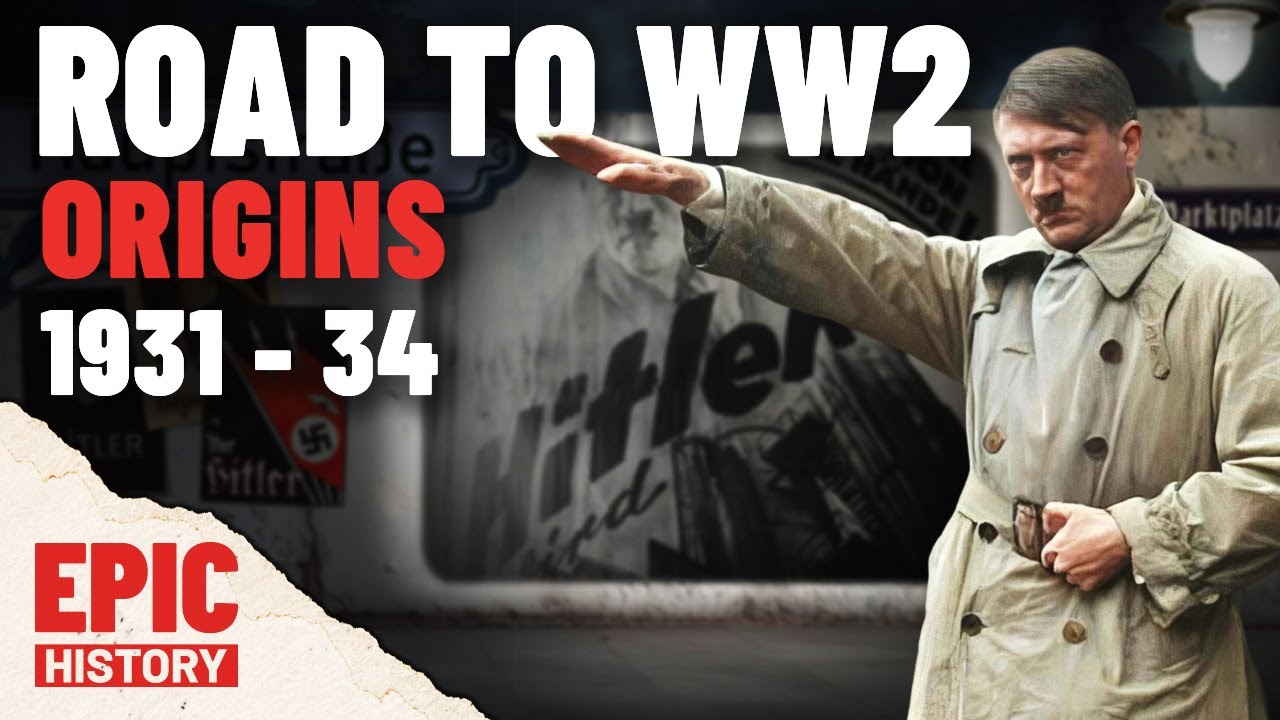
The period from 1931 to 1934 serves as a crucial prelude to the outbreak of World War II, marked by significant geopolitical shifts and rising tensions. As nations like Italy and Japan sought to enhance their global standing through territorial expansion, Germany faced its own profound challenges, primarily the aftermath of the Great Depression and the burdens imposed by the Treaty of Versailles. This landscape of unrest allowed figures such as Adolf Hitler to rise to prominence, promising revitalization for a nation yearning for stability and pride.
Amidst the turmoil, the victors of World War I grappled with their internal crises, lacking the resolve to confront resurgent nationalism and militarism. The inability to effectively counter these forces fostered an environment in which aggression became increasingly normalized. This article explores the intricate dynamics of this era, revealing how the interplay of ambition, despair, and failure set the stage for the eventual eruption of global conflict.
The Aftermath of World War One
Impact on Global Politics
In the aftermath of World War One, a seismic shift occurred within global politics, leading to a landscape of instability and uncertainty. The devastating conflict not only redrew the boundaries of various nations but instigated an era characterized by a power vacuum. Europe, once dominated by established empires, found itself rife with new nations, all vying for recognition and influence. The Treaty of Versailles (1919) bore significant implications, particularly for Germany, which was subjected to crippling reparations, territorial losses, and military restrictions. These outcomes inadvertently laid the groundwork for extreme nationalist movements that sought to overturn the post-war order.
Your understanding of this political upheaval requires an acknowledgment of the intricate interplay between domestic politics and international relations. The victors of the war, primarily the Allies, grappled with their own economic challenges while attempting to impose a punitive structure upon the Central Powers. As these nations retreated into isolationism, they left a void that would soon be filled by totalitarian regimes that promised national rejuvenation and prestige.
Changes in National Boundaries
The war’s conclusion forced a dramatic reconfiguration of national boundaries, resulting in newly formed states and altered borders that bred resentment and discontent. The Austro-Hungarian Empire’s collapse birthed nations like Czechoslovakia and Yugoslavia, while the Ottoman Empire’s dissolution granted independence to Turkey and numerous Arab states. For you, this realignment represents not merely a geographical change but a shift in identity for many ethnic groups who found themselves minorities in newly established nations.
This reconfiguration created a realm of ethnic tensions, as borders often ignored historical and cultural realities. Minorities in the newly constituted countries frequently sought autonomy or even secession, fostering an environment rife with conflict. You should recognize how these tensions set the stage for future nationalistic fervor and disputes, which would play a critical role in international relations leading up to World War II.
Economic Repercussions Across Nations
The economic consequences of World War One were felt acutely in various nations, leading to a significant decline in living standards and a sense of collective resentment. In particular, Germany was subjected to economic ruin due to the reparation payments imposed by the Versailles Treaty. Hyperinflation ensued, eroding the value of the German mark and leading to widespread poverty. It is essential for you to understand that these economic hardships were not confined to Germany alone; many European nations experienced severe economic downturns as they struggled with war debts, unemployment, and inflation.
The economic instability served as a breeding ground for extremist ideologies proposing radical solutions. Your examination of this period reveals that economic strife acted as a catalyst for political change, as people turned to authoritarian figures who promised to restore national pride and stability. Consequently, the economic repercussions of World War One played a pivotal role in the events that unfolded in the lead-up to World War II.
The Rise of Nationalism
Definition and Significance of Nationalism
Nationalism, in this context, can be defined as a political ideology advocating for the interests and culture of a particular nation, often in opposition to foreign influence and control. For you, understanding nationalism is crucial as it encapsulated the aspirations and grievances of various ethnic groups who sought self-determination following the war. This sentiment became a potent force, mobilizing entire populations to pursue territorial expansion and national revival.
The significance of nationalism extends beyond mere political ideology; it represents a longing for identity and belonging in a rapidly changing world. As you contemplate this phenomenon, consider how nationalism not only unified disparate groups within nations but also sowed division, leading to xenophobia and conflict.
Nationalist Movements in Europe and Asia
Following World War One, nationalist movements surged across Europe and Asia, fueled by the desire for independence from colonial or imperial rulers. In Europe, nations like Hungary and Poland reclaimed their sovereignty, while in Asia, movements against European colonial powers began to gain traction. You must appreciate how these movements were often characterized by varying degrees of militancy and political engagement; from peaceful protests to armed revolutions, the quest for self-determination manifested in diverse forms.
In this environment, you would witness the emergence of influential leaders who mobilized populations based on nationalistic rhetoric, promising redemption from foreign oppression. The disillusionment with international governance post-Versailles further exacerbated these sentiments, creating fertile ground for mass mobilization.
Impact of the Versailles Treaty on National Sentiments
The Versailles Treaty, albeit aimed at establishing lasting peace, instead exacerbated national tensions and fueled feelings of betrayal among the nations involved. For Germany, the treaty was met with outrage and resentment, perceived as a national humiliation. This collective discontent among German citizens enabled radical groups, including the nascent Nazi Party, to exploit nationalist sentiments by promising to restore Germany’s former glory.
Similarly, other nations faced grievances. Ethnic minorities found themselves at odds with dominant national narratives, heightening tensions within newly formed states. You should consider how the repercussions of the treaty, intended to foster stability, instead ignited fires of nationalism that would soon blaze across Europe, culminating in catastrophic conflict.
The Economic Crisis: The Great Depression

Overview of the Great Depression
The Great Depression, which began with the stock market crash in 1929, presents a crucial turning point in global economics and politics. As economies worldwide faltered, the repercussions were felt deeply within the social fabric of nations. This catastrophic economic downturn led to widespread unemployment, a drastic decline in industrial output, and an overall loss of confidence in capitalist systems.
For you, the Great Depression should be understood not merely in economic terms but as a social crisis that fostered extreme ideologies. Discontent and despair created a fertile ground for radical political movements to gain traction, as citizens became desperate for solutions that promised relief from their dire conditions.
Economic Conditions in Germany
Germany, still reeling from the impacts of World War One, was uniquely devastated by the Great Depression. The ill effects of hyperinflation combined with mass unemployment led to a catastrophic economic landscape. As you analyze this period, recognize the psychological toll of poverty and instability on the German populace, which made them susceptible to extremist ideologies.
The economic conditions also facilitated the rise of Adolf Hitler and the Nazi Party, who promised economic revival and national rejuvenation. The narrative of victimization fueled by the reparations imposed by the Allied powers resonated deeply among citizens, thereby consolidating support for the Nazi agenda.
Responses of Various Governments to the Economic Crisis
In response to the Great Depression, different governments adopted varying approaches that reflected their ideological leanings. Some nations, particularly those leaning towards socialism and communism, sought to implement state-directed interventions to provide relief and recovery. Conversely, in countries like the United States, the response involved gradual reforms, exemplified by President Franklin D. Roosevelt’s New Deal.
You must comprehend that the collective failure to adequately address the crisis led to a decline in faith in democratic institutions. Authoritarian regimes leveraged the turmoil to consolidate power, often promoting militarism and aggressive nationalism as solutions to economic strife. Hence, the multifaceted responses to the depression were pivotal in shaping the political landscape leading up to World War II.
Japan’s Expansionist Policies
Military Influence on Japanese Politics
In the wake of World War One, Japan transitioned from a military ally to an aggressor on the international stage, adopting expansionist policies premised on national pride and economic necessity. For you, it is essential to recognize that military influence permeated Japanese politics during this period, as the military establishment sought to assert Japan’s dominance and secure resources in Asia.
The rise of militarism began to overshadow democratic governance within Japan, leading to an increasingly aggressive foreign policy. Military leaders, driven by a desire for empire and resources, often positioned themselves at the helm of political decision-making, sidelining traditional statecraft in favor of expansionist agendas.
Invasion of Manchuria in 1931
The invasion of Manchuria in 1931 marked a significant escalation in Japan’s aggressive expansionist policies. Motivated by the need for resources and space, Japan invaded and established a puppet state known as Manchukuo. For you, this event illustrates the tensions in the region, as Japan’s actions directly challenged both American and European interests in Asia.
The invasion drew international condemnation, but it also highlighted the impotence of the League of Nations to respond effectively. This failure showcased the deterioration of collective security mechanisms and foreshadowed further Japanese aggression in the Pacific, culminating in broader conflict.
Consequences for Regional Stability
Japan’s expansionist policies profoundly impacted regional stability, creating animosity and encouraging militarization among neighboring countries. The invasion of Manchuria, along with subsequent territorial ambitions, sowed the seeds of conflict that would eventually lead to a cascade of military confrontations in the Asia-Pacific region.
As you analyze this development, consider the implications of unchecked aggression and the international community’s reluctance to confront Japan, which emboldened militaristic tendencies further afield, ultimately contributing to the eruption of World War II.
Italy’s Fascist Agenda
Rise of Mussolini and the Fascist Party
Italy’s post-World War One landscape was characterized by disillusionment and economic strife, a situation that facilitated the rise of Benito Mussolini and his Fascist Party. As you explore this era, it is imperative to understand how Mussolini capitalized on national grievances, portraying himself as a savior capable of restoring Italy’s former glory.
Mussolini’s ascent to power, catalyzed by the social turmoil of the time, underscores the appeal of authoritarian regimes during periods of crisis. For you, this phenomenon exemplifies how charismatic leaders can manipulate nationalistic sentiments to gain popular support and dismantle foundational democratic principles.
Military Campaigns in Africa
Italy’s militaristic ambitions under Mussolini manifested through aggressive campaigns in Africa, particularly in Ethiopia. This venture was emblematic of Italy’s drive to establish itself as a colonial power, compensating for perceived inadequacies compared to other European nations. For you, this brutal campaign serves as a manifestation of Mussolini’s fascist agenda to expand Italian territory and influence.
The military campaigns not only showcased Italy’s ambitions but also illustrated the broader trend of European imperialism. The violent suppression of resistance in Ethiopia brought international condemnation, highlighting the complexities of the geopolitical environment of the time.
Relations with Other European Powers
Italy’s aggressive foreign policy under Mussolini changed the dynamics of its relations with other European powers. Initially, Italy sought alliances that would bolster its international status; however, as conflicts escalated, relationships grew strained. For you, this is indicative of the inherent contradictions in fascist diplomacy, which oscillated between seeking partnerships and pursuing unilateral aggression.
Italy’s rise as a military power complicated the balance of power in Europe, heightening tensions with nations such as France and Britain. As you navigate this territory, consider how such relations set the stage for broader conflicts, as alliances and rivalries began to crystallize in anticipation of the storm that would follow.
Germany’s Political Transformation
Adolf Hitler’s Rise to Power
Adolf Hitler’s ascent to power represents a pivotal moment in 20th-century history, illustrating how a combination of socio-economic distress and nationalistic fervor can propel an extremist leader to prominence. The conditions in post-war Germany, particularly the disillusionment with the Weimar Republic and the economic hardships stemming from the Great Depression, played a crucial role in facilitating his rise.
You must acknowledge how Hitler’s charismatic oratory resonated with the populace, offering a vision of national revival that effectively capitalized on prevailing fears and resentments. His ability to galvanize a fragmented society into a unified movement underscores the complexities of political transformation during times of crisis.
Nazi Ideology and Its Appeal
At the core of Hitler’s political strategy lay a structured ideology predicated on notions of racial superiority and the quest for a pure Aryan state. For you, comprehending Nazi ideology is crucial as it elucidates the values and beliefs that captivated the German populace, ingraining themselves into the national psyche.
The appeal of Nazi ideology extended beyond mere rhetoric; it provided individuals with a sense of purpose and identity amid profound uncertainty. Hitler’s focus on national pride, coupled with the scapegoating of minorities, forged a collective identity that justified increasingly aggressive policies both domestically and abroad.
Rearmament and Violation of the Treaty of Versailles
Rearmament marked a significant turning point in Germany’s political trajectory, as Hitler systematically dismantled the constraints imposed by the Treaty of Versailles. For you, this serves as a critical moment illustrating how the international community’s failure to address these violations created an environment conducive to further aggression.
The rearmament facilitated not only a revival of German military might but also served as a rallying point for nationalistic fervor. By reclaiming military strength, Hitler sought to instill a sense of optimism and resurgence among German citizens, paving the way for an increasingly aggressive foreign policy.
The Response of the League of Nations
League’s Formation and Purpose
The League of Nations was established in the aftermath of World War One with the objective of promoting peace and cooperation among nations. For you, understanding the League’s formation is crucial, as it symbolizes the international community’s collective desire to prevent another cataclysmic conflict.
However, the League faced inherent challenges, primarily stemming from a lack of enforcement mechanisms and the absence of key powers, including the United States. This deficiency weakened the League’s capacity to address escalating conflicts and aggression exhibited by nations such as Japan and Italy, ultimately undermining its foundational purpose.
Criticism and Failures of the League
The League of Nations has been criticized for its inability to prevent aggression and resolve conflicts, particularly during the interwar period. You should consider how its failure to respond effectively to crises, such as the Japanese invasion of Manchuria, contributed to its reputation as an ineffective body.
This ineffectiveness further encouraged aggressive expansion by militaristic regimes, emboldening countries like Italy and Japan. The League’s struggle to maintain order reflection of the broader challenges facing global governance during this tumultuous era.
Case Studies: The Manchurian Crisis and Abyssinia
Two case studies exemplify the League’s shortcomings: the Manchurian Crisis and the conquest of Abyssinia. In both instances, the League’s responses were inadequate, calling into question its effectiveness as a peacekeeping organization.
In Manchuria, Japan’s blatant violation of international law went unchecked, which spotlighted the League’s impotence. Similarly, Italy’s invasion of Abyssinia demonstrated the failure to enforce collective security and hold aggressive nations accountable. These events serve as vital lessons in understanding the fragility of international cooperation during periods of geopolitical tension.
Military Build-Up and Aggression
Arms Race in Europe and Asia
The interwar period was marked by a significant arms race in Europe and Asia, driven by escalating tensions and nationalistic fervor. Countries began to prioritize military expansion as a means of asserting their power and influence, viewing rearmament as essential for national security. For you, understanding the arms race is crucial as it indicates a broader trend toward militarization.
This race resulted in a proliferation of advanced weaponry and technological advancements that would later shape the conflicts of World War II. The mounting stockpiles of arms demonstrated the prevailing belief that military might equated to national strength, further entrenching the cycle of aggression and instability.
Key Military Alliances Forming
As nations fortified their military capabilities, strategic alliances emerged in an attempt to deter potential aggression. For you, this development highlights the complexities of international relations in the lead-up to World War II, as countries began to form coalitions based on mutual interests.
The formation of alliances, such as the Axis Powers, signified a troubling shift away from collective security toward confrontation. These alliances not only solidified the divisions in international politics but also created counterbalancing forces that exacerbated tensions and paved the way for conflict.
Incidents of Aggression Leading to Conflict
The interwar period witnessed numerous incidents of aggression that signaled an impending global conflict. You should consider how these incidents, from Japan’s invasion of Manchuria to the Italian invasion of Ethiopia, punctuated the fragility of international peace.
Each aggressive act eroded the prospects for dialogue and negotiated settlements, as nations increasingly turned to militaristic solutions. In this landscape of escalating tension, war seemed inevitable, raising critical questions about the efficacy of diplomacy and international governance in maintaining peace.
Crisis in the International Community
Impact of Isolationism on Major Powers
Many major powers adopted isolationist policies in the wake of World War One, aiming to shield themselves from the tumult of international affairs. This retreat into isolationism had profound implications, as it diminished the willingness of nations to engage actively in collective security measures.
For you, this shift reflects the disillusionment experienced by many nations in the aftermath of the war. Such an approach hampered the ability of the international community to address conflicts, leaving a power vacuum that militaristic regimes were all too eager to fill.
Failure of Collective Security
The failure of collective security mechanisms during the interwar period underlines the fragility of the international order. For you, it is essential to recognize how the League of Nations struggled to maintain stability in the face of aggressive actions, signifying a fundamental breakdown in cooperative security.
As nations prioritized their national interests over mutual security commitments, collective efforts to prevent conflict faltered. This failure not only emboldened aggressive powers but also highlighted the limitations of diplomatic solutions in an increasingly militarized world.
Emerging Conflict Zones
As isolationism reigned and collective security faltered, conflict zones began to emerge across the globe. From Europe to Asia, nations grappled with rising tensions and unresolved disputes, creating a volatile environment conducive to war.
For you, analyzing these conflict zones provides crucial insight into the complexities of international relations during this tumultuous period. Each flashpoint served as a reminder that unchecked aggression risked spiraling into broader warfare, ultimately culminating in the outbreak of World War II.
Conclusion
Summary of Key Factors Leading to World War II
The events leading up to World War II were shaped by complex interactions of nationalism, economic instability, and aggressive foreign policies. The aftermath of World War One laid the groundwork for extreme ideologies and militaristic ambitions, while the Great Depression exacerbated societal grievances.
In understanding these factors, you can recognize how the failures of international governance, exemplified by the League of Nations, contributed to the descent into conflict. Each nation’s struggle with identity and pride manifested in various nationalist movements, further complicating the geopolitical landscape.
Reflection on the Lessons Learned
The path to World War II imparts critical lessons regarding the dangers of isolationism, the significance of international cooperation, and the vulnerabilities associated with unchecked aggression. The struggles of the interwar years remind you of the cyclical nature of history, where unresolved grievances may resurface with dire consequences.
The rise of authoritarianism in response to economic despair illuminates the importance of safeguarding democratic institutions and fostering inclusive governance. Your reflection on this tumultuous period underscores the necessity of dialogue and diplomacy in mitigating conflict.
Implications for Future International Relations
As you conclude your study of the events leading up to World War II, consider the implications for contemporary international relations. The failures of the past necessitate a vigilant approach to diplomacy, collective security, and global governance in addressing the complexities of current geopolitical challenges.
Understanding the lessons of history equips us to navigate the intricacies of today’s interdependent world, emphasizing the need for collaboration and mutual respect in pursuit of lasting peace. As the global community continues to evolve, the importance of learning from history becomes increasingly clear in fostering cooperation and averting future conflicts.