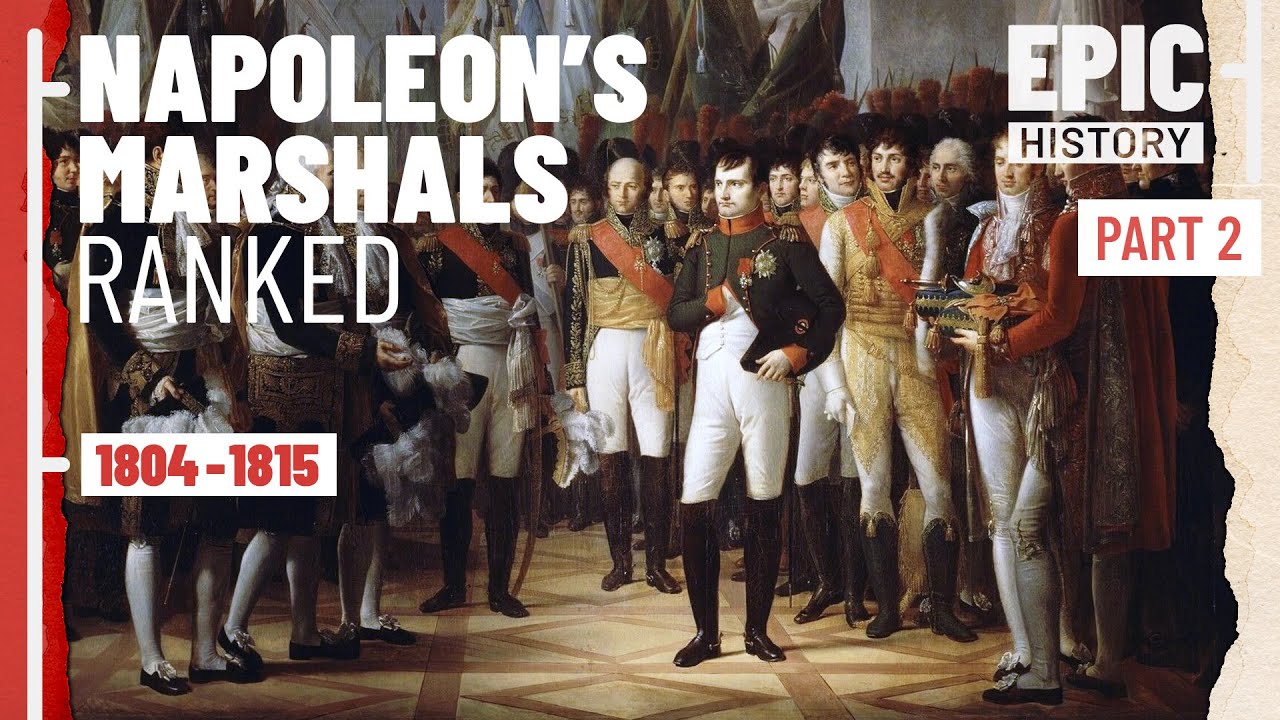
The legacy of Napoleon Bonaparte’s marshals presents an intriguing perspective on military leadership and its consequences in shaping European history. Each marshal, including the often overlooked figure of Jean-Baptiste Bernadotte, offers a unique narrative intertwining personal ambition, wartime strategy, and the larger political landscape of the Napoleonic era. This article will explore the journeys of notable marshals, such as Augereau, Lefebvre, Mortier, and Marmont, while emphasizing Bernadotte’s distinctive path that ultimately led him to become the King of Sweden.
The examination of Bernadotte’s career unveils the complexities of loyalty, ambition, and the shifting allegiances during chaotic times. A soldier from humble beginnings, Bernadotte’s rise through the ranks of the Grande Armée culminated in both military success and political intrigue, reflecting the profound impact of individual choices in historical narratives. By analyzing the careers of these marshals, you will gain insight into their contributions to both the Napoleonic Wars and the broader context of European political developments, offering a comprehensive understanding of their enduring legacies.
Overview of Napoleon’s Marshals
Introduction to the Concept of Marshals
The designation of ‘Marshal’ holds a significant status in military history, particularly within the context of the Napoleonic Wars. A Marshal served as a senior officer, tasked with leading troops and orchestrating military strategies. This rank, reinstated by Napoleon in 1804, reflected not only military prowess but also the consolidation of political power. The position commanded respect, authority, and a degree of responsibility that extended beyond mere battlefield operations, intertwining military leadership with the machinations of governance.
Roles and Responsibilities within the Grande Armée
Within the Grande Armée, Marshals were entrusted with a multitude of roles, including strategic command, troop mobilization, and tactical execution. They were responsible for overseeing large corps of the army, coordinating movements during engagements, and ensuring the well-being and discipline of their soldiers. The Marshals operated as a critical link between Napoleon and the thousands of men under their command. Their effectiveness in these positions was paramount to the success of the Grand Armée in various campaigns across Europe.
Distribution of Titles Among Various Societal Classes
Interestingly, the ranks of the Marshals drew from diverse backgrounds, reflecting the social mobility that characterized the Napoleonic era. While some Marshals hailed from aristocratic origins, many were commoners, born into families of modest means such as shopkeepers or artisans. This democratization of military rank epitomized Napoleon’s vision of meritocracy, where talent and bravery could elevate individuals irrespective of their social standing. As a result, the list of Marshals included both noblemen and men who had risen through the ranks, embodying the revolutionary ideals of the time.
Bernadotte: Early Life and Military Career
Background and Early Influences
Jean-Baptiste Bernadotte, born in 1763, emerged from humble beginnings in a middle-class family in Pau, France. The son of a lawyer, his early life was marked by the ideals sparked by the French Revolution. Influenced by the turbulent sociopolitical climate of his youth, Bernadotte became attracted to military life as a means of advancing his fortunes and making a difference. His early experiences instilled in him a sense of discipline that would characterize his later military career.
Military Enlistment at 17 Years Old
At the age of 17, Bernadotte enlisted in the French Army. His immediate transition from civilian life to military service provided him with essential insights into the workings of the military apparatus. Over the next decade, he navigated the ranks with remarkable speed, showcasing an affinity for leadership and discipline that distinguished him from his contemporaries. It was within this period that he became acquainted with the intricacies of military operations, further developing the skills that would eventually earn him the helm of command.
Rapid Promotion and Demonstration of Skills in Military Engagements
Bernadotte’s military career blossomed amidst the chaos of the Revolutionary Wars. His steadfastness and tactical acumen caught the attention of commanding officers, leading to rapid promotions within his unit. He was noted for his role during the pivotal campaigns in Italy, where his strategic insight contributed significantly to French victories. His first major test came at the Battle of Fleurus, where he showcased his capacity for innovative tactics and leadership, laying the groundwork for his future acclaim.
Rise to Prominence
Key Battles During the French Revolutionary Wars
Bernadotte’s emergence as a prominent military figure was shaped significantly by his participation in key battles during the Revolutionary Wars. His contributions to the French campaigns against monarchist forces revealed his aptitude for managing troop movements and tactics under pressure. Notably, during the Battle of Hohenlinden in 1800, Bernadotte’s strategic decisions played a vital role in securing a decisive victory for the French, further solidifying his reputation as an effective leader within the military establishment.
Influence of Napoleon on Bernadotte’s Career
Napoleon’s ascent to power marked a pivotal shift in Bernadotte’s trajectory. The relationship they forged during the late 18th and early 19th centuries was instrumental in linking Bernadotte to the upper echelons of military command. As Napoleon’s campaigns unfolded, Bernadotte was recognized for his dedication, swift decision-making, and willingness to engage in pivotal battles. However, the unique dynamics between the two leaders, characterized by camaraderie and conflict, would eventually shape Bernadotte’s path.
Achievements Leading Up to the Title of Marshal
By 1804, Bernadotte had distinguished himself sufficiently to be named one of the original Marshals of the Empire. His achievements leading up to this elevation were a testament to his relentless work ethic and effectiveness in military engagements. His leadership during the War of the Third Coalition, in which he commanded significant forces against the Austrians and Russians, demonstrated his strategic capabilities and made him one of Napoleon’s most trusted generals.
Complex Relationship with Napoleon
Initial Camaraderie and Mutual Respect
In the early years of their association, Bernadotte and Napoleon shared a relationship marked by mutual respect. Napoleon recognized Bernadotte’s talents and significant contributions to the military; conversely, Bernadotte respected Napoleon’s strategic genius. This camaraderie was foundational, enabling both men to collaborate effectively on various military campaigns, fostering a powerful alliance that contributed to initial successes within the Grande Armée.
Conflicts Arising from Differing Leadership Styles
However, as their careers progressed, fundamental differences in leadership style began to surface, leading to tension in their relationship. Bernadotte’s commitment to discipline and hierarchical structure often clashed with Napoleon’s more autocratic approach. These discrepancies occasionally manifested during military operations, where disagreements over tactics and troop management created strain. Such conflicts not only challenged their partnership but also foreshadowed the eventual dissolution of their alliance.
Bernadotte’s Political Aspirations and Their Impact
Bernadotte’s ambitions transcended the military realm. His political aspirations became increasingly apparent as he navigated the intricacies of the French political landscape. In seeking to solidify his status and extend his influence, Bernadotte’s political maneuvers began to create friction with Napoleon, who viewed these ambitions as a potential threat. The complexity of their relationship became increasingly apparent as Bernadotte sought a position of higher authority, leading to a reshaping of their interactions.
Political Ventures and Transition to Sweden
Marriage to Désirée Clary and Implications
In 1798, Bernadotte’s marriage to Désirée Clary—a former fiancée of Napoleon—complicated his relationship with the Emperor. This union not only solidified his ties within elite circles but also created a familial nexus that positioned Bernadotte closer to the inner workings of political power. Désirée’s connections aided Bernadotte’s ascent, underscoring the importance of social networks in navigating the post-revolutionary landscape of France.

Invitation to Become Crown Prince of Sweden
In an unexpected turn of events, Bernadotte received an invitation in 1810 to become the Crown Prince of Sweden. This opportunity arose due to Sweden’s desire for a strong leader amid political tumult and national uncertainty. The timing of this transition was fortuitous; Bernadotte’s military experience made him an appealing candidate for the role at a time when Sweden needed stability and leadership. His acceptance of this royal position marked a dramatic shift in his career from military formidable to a figure of governance.
Challenges Faced in the Transition from Military Leader to Royal Duties
Transitioning from military commander to royal duties proved challenging for Bernadotte. He had to navigate the complexities of Swedish politics, court life, and international diplomatic relations, which contrasted starkly with his previous military experience. The demands of his new role often conflicted with his military instincts, challenging his adaptability and requiring him to cultivate a different set of skills to govern effectively in his new position.
Involvement in the Coalition Wars
Strategic Military Maneuvers During the Napoleonic Wars
As the tide turned against Napoleon in the wake of his disastrous invasion of Russia, Bernadotte’s insights and experience became invaluable. His strategic maneuvers during the Coalition Wars proved pivotal in reshaping the landscape of European power dynamics. Working alongside former adversaries, he was tasked with orchestrating strategies aimed at undermining Napoleon’s military grip, representing a crucial shift from his former allegiance.
Leadership in Significant Battles Against Napoleon
Bernadotte’s military leadership was prominently displayed during the pivotal Battle of Leipzig in 1813. As a key commander of the allied forces, he played an instrumental role in orchestrating maneuvers that led to one of Napoleon’s first significant defeats. His ability to harness the diverse skills of various factions to create a unified strategy exemplified his profound understanding of military pragmatism while cementing his transition from Marshal to a principal figure in European warfare.
Contributions to the Allied Victory in Leipzig
The Allied victory at Leipzig is often regarded as a turning point in the Napoleonic Wars, and Bernadotte’s contributions were essential to this success. His tactical foresight allowed for the effective coordination of troops, leading to a significant undermining of Napoleon’s forces. This victory not only bolstered his reputation but also catalyzed further shifts in alliances across Europe, demonstrating the impact he had as a leader on the grand stage of European politics.
Legacy of Bernadotte as a Marshal
Comparison with Other Marshals of the Empire
Bernadotte’s legacy as a Marshal is often measured against the backdrop of illustrious peers such as Marshals Soult and Davout. While many of these renowned tactics and battlefield heroics have remained central to the annals of military history, Bernadotte’s unique trajectory set him apart. His successful transition from military leadership to political royalty distinguishes him in the pantheon of Napoleonic Marshals, illustrating an evolution that few of his contemporaries experienced.
Critical Reception of His Military Leadership
Though revered for his tactical insights, Bernadotte’s military leadership received mixed reviews. His critics often attributed his successes to circumstance rather than innate prowess, questioning his decisiveness and tactical instincts in certain operations. Comparatively, while other Marshals garnered acclaim for field victories, Bernadotte’s military strategy often fluctuated between success and perceived failure, leading to a legacy complicated by both admiration and criticism.
Impact on Swedish Royalty and European Politics
Bernadotte’s transition to the Swedish monarchy fundamentally altered the landscape of European politics, extending his influence far beyond military engagement. His establishment of the House of Bernadotte initiated a lasting connection between France and Sweden, thereby fostering a nuanced diplomatic relationship informed by his previous experiences. This legacy remains pertinent, as the Bernadotte dynasty continues to play a role in contemporary European politics, illustrating the enduring impact of his decisions.
The Historical Context of Bernadotte’s Actions
Influences of the Napoleonic Wars on European Dynamics
The Napoleonic Wars reshaped Europe, engendering new nation-states and sparking revolutions across the continent. Bernadotte’s selections and alliances were profoundly influenced by the shifting sands of power, reflecting how military leaders evolved into political figures during this transformative epoch. His struggles and accomplishments illustrate how individual agency operated within a wider historical narrative, influencing the geopolitical landscape for generations.
The Transformation of Military Leaders into Political Figures
As traditional boundaries between military and political spheres began to dissolve during the Napoleonic Wars, figures like Bernadotte illustrated the emergent trend of military leaders assuming political roles. The complexities of transitioning from battlefield to governance demanded an adaptive skill set, paving the way for future military leaders who would similarly engage in governance. Bernadotte’s career trajectory mirrors this transformation, illustrating the broader historical phenomenon of military prominence shaping political entities.
Bernadotte’s Role in Shaping Modern Sweden
In shaping the course of modern Sweden, Bernadotte’s influence remains palpable. His governance fostered stability and reform, establishing a political framework that contributed to Sweden’s unique identity. By navigating the complexities of the 19th-century European landscape, Bernadotte laid the groundwork for contemporary Swedish politics, making his role as a leader extend beyond the battlefield and into the realm of national governance.
Interpretations of Bernadotte’s Loyalty
Views of Contemporaries Regarding His Allegiance
Bernadotte’s shifting loyalties were met with a spectrum of interpretations from contemporaries. While some hailed his pragmatic approach as indicative of adaptability, others perceived betrayal in his departure from Napoleon’s camp. These sentiments often fluctuated based on political allegiances and personal stakes within the turbulent wartime landscape, complicating the narrative of loyalty during this historical period.
Discussions on Perceived Betrayal by Napoleonic Supporters
Critics within the Napoleonic support circle labeled Bernadotte a traitor, arguing that his alignment with Sweden represented a denial of his commitments to Napoleon. This perception of betrayal was fueled by his political maneuvers and growing autonomy, which stood in stark contrast to the loyalty expected of a Marshal. Thus, a schism formed between Bernadotte and those who once regarded him with respect, showcasing how allegiances could shift dramatically in response to personal ambition and political necessity.
Legacy as a Military Strategist Versus a Political Figure
Bernadotte’s legacy oscillates between his reputation as a military strategist and that of a political figure. While his military contributions laid the groundwork for initial success, his later political maneuvers in Sweden and contributions to shaping modern governance ultimately defined his legacy. This duality in his career points to the broader themes of adaptability, personal ambition, and the potential for military leaders to transcend their battlefield beginnings.
Conclusion
Summary of Bernadotte’s Evolution from Marshal to Prince
Bernadotte’s journey from a Marshal of the Grande Armée to Crown Prince of Sweden encapsulates a profound evolution marked by resilience and adaptability. He navigated the tumultuous waters of military leadership, political ambition, and governance with a unique finesse that shaped his legacy. This transition served not only as a personal metamorphosis but also reflected broader societal changes within Europe during a time of great upheaval.
Reflection on His Lasting Impact on Sweden and Europe
The lasting impacts of Bernadotte’s actions extend beyond his lifetime, as the House of Bernadotte continues to influence Swedish governance and European relations today. His tenure illustrated the profound intersection of military and political realms during the Napoleonic era, where individual choices reverberated across nations and eras, forging legacies that defined historical trajectories.
Final Thoughts on the Duality of Military and Political Roles
Ultimately, Bernadotte’s life serves as a compelling case study of the duality inherent in military and political roles. His experiences emphasize the dynamic nature of leadership, where adaptability and strategic vision not only shaped personal trajectories but also influenced broader historical narratives. As European dynamics continue to evolve, Bernadotte’s legacy remains a testament to the complexities of allegiance, ambition, and governance that define the annals of history.