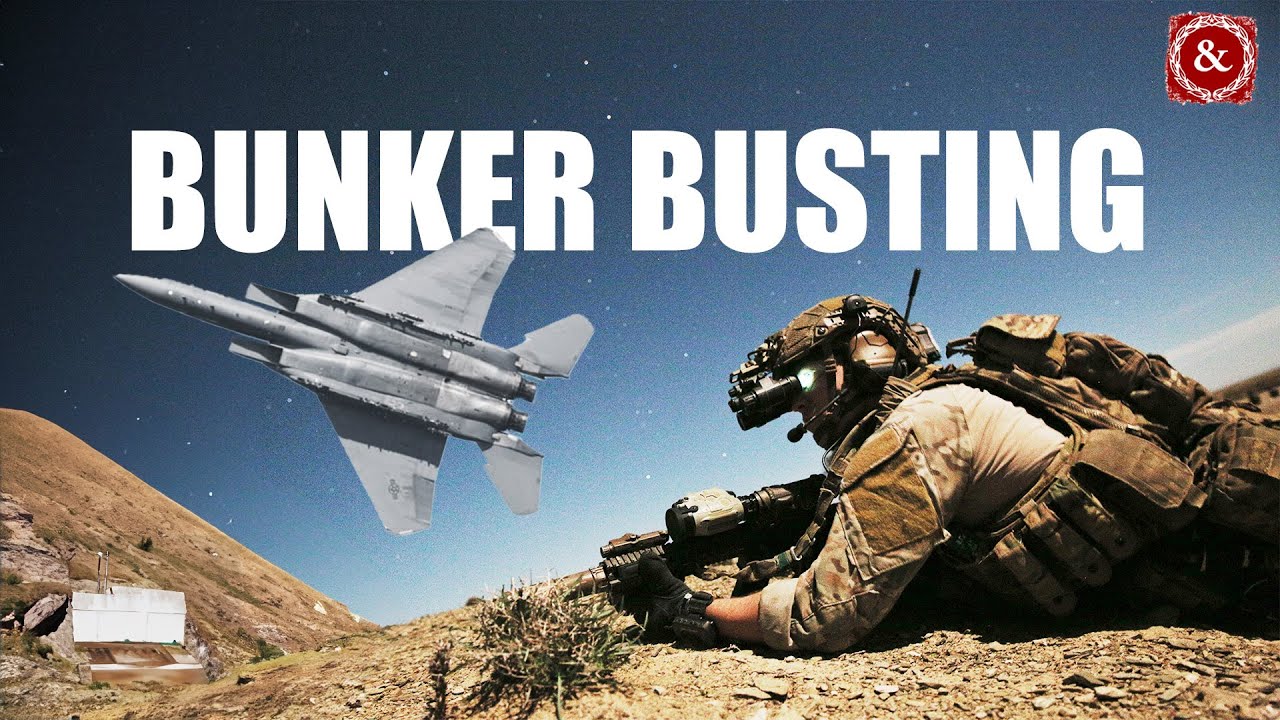
The article “Complexity of Destruction: The Challenge of Penetrating Iran’s Underground Missile Bases” addresses the intricate military strategies and technological challenges posed by Iran’s fortified missile installations, which are situated over 100 meters underground. It examines the limitations of existing U.S. munitions, such as the GBU-57, which can penetrate only up to 60 meters, thereby necessitating the development of more advanced weaponry. The discourse includes an analysis of various U.S. military assets, including aircraft and special forces, equipped to execute complex operations aimed at neutralizing these heavily protected sites.
In addition, the article highlights the geographical defense mechanisms employed by Iran, utilizing the Alborz and Zagros mountain ranges to shield its missile locations. It further explores the innovative approaches being researched by U.S. military strategists, including improved GPS-guided bomb technology and new tactics for preparatory strikes. The interplay of espionage, military structure, and the ongoing tensions in the region illustrates the multifaceted challenges that arise in efforts to effectively penetrate and dismantle Iran’s underground missile capabilities.
U.S. Plans to Destroy Iran’s Underground Missile Bases
The landscape of modern warfare is complex, notably shaped by the enduring interplay of technology and geography. You stand on the precipice of a critical period, where decision-makers must navigate the intricacies of destroying Iran’s fortified underground missile bases. These facilities, some extending over 100 meters below ground, have become a significant component of Iran’s military infrastructure, and the challenges associated with targeting these structures are vast.

Complexity of Destruction
Depth of Iranian Missile Bases
The subterranean nature of Iran’s missile bases presents a formidable obstacle to any prospective military operation. Housed within the embrace of rugged mountains, these installations can extend beyond the reach of conventional munitions. The U.S. military’s GBU-57, a bomb engineered for penetrating fortifications, is limited to a depth of approximately 60 meters. This shortfall highlights the unparalleled difficulty the U.S. faces in neutralizing these targets. The military intelligence community estimates that many of these Iranian sites are reinforced with extensive layers of earth, steel, and concrete, designed to withstand conventional aerial attacks.
Limitations of Current U.S. Bomb Technology
At present, U.S. bomb technology, including the Massive Ordnance Penetrator (MOP), falls short of ensuring effective engagement with these deep facilities. Developed in 2004, the MOP exhibits constraints in both depth penetration and effectiveness, potentially leaving a gap of 30 to 40 meters against the deepest structures. The need for enhanced technology capable of breaching deeper into these defenses has become urgent, driving a critical reevaluation of current capabilities.
Challenges in Targeting Deep Structures
Intelligent targeting has emerged as a vital necessity. However, the task is complicated by the geological variances inherent in mountain formations. The erratic nature of terrain can deflect even the most advanced bombs away from intended targets. Consequently, a successful assault demands not only sophisticated bombs but also an intricate understanding of the battlefield’s topology.
Bunker-Buster Development
Overview of the GBU-72 and Its Capabilities
In response to the clear technological gaps, the U.S. Air Force has embarked on the development of the GBU-72, a modern bunker-buster bomb designed to maximize penetration capabilities. This 5,000-pound precision weapon boasts novel smart fuse technology, which allows for accurate detonation timing and enhances the bomb’s overall destructive potential against hardened targets.
Advancements in Targeting Technology
Recent advancements in GPS guidance technology introduce the possibility of deploying multiple bombs to strike the same location accurately. This capability improves the likelihood of achieving greater depth penetration and systematic destruction of underground defenses. By layering the strikes, aerial forces can effectively degrade the structural integrity of these fortified installations.
Limitations Against the Deepest Facilities
Despite these advancements, considerable limitations persist. Iran’s strongest facilities are engineered to withstand significant assaults, featuring dense reinforcement with 2.5 meters of concrete and extensively fortified doors. This design promotes resiliency, ensuring that even if a missile strikes, the operational capacity of the facility remains intact.
Iran’s Military Structure
Composition of Underground Facilities
Iran’s military architecture intricately weaves a network of underground facilities designed for both storage and operational effectiveness. Current intelligence estimates suggest these encompass thousands of ballistic missiles and other strategic assets, rendering them critical nodes in Iran’s military strategy. The substantial investment into the construction of these installations signals the prioritization of resilience and concealment in the face of potential adversarial operations.
Role of the Revolutionary Guards
The Iranian Revolutionary Guards play a pivotal role in managing and securing these underground assets. Dubbed “nightmare” bases, these facilities are crucial for Iran’s defense posture. The Guards operate with a unique focus on asymmetrical warfare, making them adept at utilizing these subterranean structures against conventional military threats.
Strategic Importance of Ballistic Missiles
Ballistic missiles represent a significant aspect of Iran’s military capability, serving as both a deterrent and a means of regional assertion. The reliability and concealment of the launch mechanisms afforded by underground facilities increase the potential for rapid deployment and surprise attacks, emphasizing the need for a strategic response from adversaries.
Mobile Launchers
Overview of Iran’s Mobile Missile Systems
Iran’s reliance on mobile launch systems has fundamentally altered the dynamics of targeting strategies. These mobile platforms afford military planners a challenge, as they can be swiftly repositioned, complicating intelligence and engagement efforts. This strategic mobility enables Iran to operate with an emphasis on adaptability, creating difficulties for U.S. and allied forces hoping to neutralize these assets.
Impact on Targeting Strategies
The complexities introduced by mobile missile technologies necessitate a reassessment of engagement protocols. You must consider factors such as real-time surveillance, intelligence gathering, and environmental conditions. The very nature of mobile launchers demands that military planners develop conventional and unconventional tactics to preemptively strike before these assets can be activated.
Countermeasures Required for Engagement
To counter the threats imposed by mobile systems, U.S. forces must integrate multiple layers of countermeasures. This could involve deploying drones for reconnaissance, utilizing advanced thermal imaging, and leveraging cyber capabilities to disrupt command and control functions.

International Concerns
Expansion of Iran’s Nuclear Infrastructure
The growing scope of Iran’s nuclear infrastructure has raised alarms on an international scale. As Iran continues refining its capabilities and expanding its missile arsenal, the potential consequences for regional stability compound. You must analyze how the evolution of Iran’s military technologies could threaten existing equilibrium in the region.
Implications for Regional Security
The regional security implications of Iran’s expanding capabilities are profound. Neighboring countries and global powers, particularly the U.S., perceive these advancements as a direct threat. This perception can lead to escalated tensions and arms races, thereby heightening risks of confrontation and destabilizing established alliances.
Responses from Global Powers
In light of these developments, global powers have mobilized in various ways. Diplomatic efforts, economic sanctions, and military positioning are among strategies employed to counteract Iran’s military ambitions. However, as the situation evolves, the efficacy and permanency of these responses are drawn into question.
Challenges in Precision
Quality of Iran’s Missile Technology
While Iran has pursued an ambitious military modernization program, the actual quality of its missile technology has occasionally come under scrutiny. Reports of failed strikes, particularly in operations against opponents like Israel, underscore the imperfections in Iran’s missile systems.
Analysis of Failed Strikes
An analysis of recent conflicts reveals that despite numerical superiority, Iran’s missile technology has faced challenges in accuracy and reliability. These shortcomings can undermine the broader strategic objectives as they question the operational capabilities that may lead to failed missions or unintended collateral damage.
Factors Affecting Missile Accuracy
Several variables influence missile precision, including manufacturing quality, guidance systems, and the conditions surrounding missile deployment. Understanding these factors is essential, as they contribute to forming strategic responses that decisively target Iran’s vulnerabilities while minimizing risks of escalation.

Espionage Vulnerabilities
Role of Mountains in Concealment
Iran’s mountainous terrain offers a dual role, acting both as a shield for its military assets and as a potential vector for espionage. The rugged landscapes provide covert pathways and concealment, thereby protecting strategic infrastructures from the prying eyes of adversaries.
Successful Operations by Israel
Israel has long operated within an intricate chess game of intelligence and military operations against Iran. Successful strikes against Iranian nuclear scientists and infrastructure demonstrate Israel’s capacity to penetrate domestic defenses with high levels of precision and stealth, showcasing the vulnerabilities embedded in Iran’s security architecture.
Potential for Sabotage Against Facilities
The potential for sabotage remains pronounced. Given the vastness of Iran’s underground network, the ability of adversaries to deploy covert operations may lead to reduced functionality of critical military assets. Such vulnerabilities introduce a new vector of warfare that complicates both Iranian planning and allied responses.
Potential Countermeasures
Ground-Based Sabotage Tactics
As military strategists contemplate options, ground-based sabotage emerges as a viable countermeasure. Utilizing special forces for strategic strikes on critical infrastructure introduces a layer of unpredictability and potential disruption to Iranian operations.
Integration of Aerial and Ground Operations
The future of effective engagements may hinge on the seamless integration of aerial and ground operations. Coordinated tactics can enhance overall mission success rates, as they would leverage precision airstrikes alongside on-the-ground intelligence and reconnaissance to optimize engagement outcomes.
Challenges Posed by Natural Terrain
The natural terrain poses considerable challenges to ground operations, particularly as dense mountains can impede accessibility and operational fluidity. U.S. forces must meticulously navigate these spatial constraints to ensure mission success while minimizing risks to personnel and equipment.
U.S. Military Capabilities
Overview of Military Assets Available
The U.S. military boasts a formidable array of assets capable of executing targeted operations against Iranian facilities. Aircraft carriers, F-18 fighters, and advanced stealth bombers, including the B-2 and B-21, provide a versatile operational framework that promises extensive air superiority.
Role of Special Forces in Operations
Special forces, notably the Delta Force and Green Berets, are essential to direct engagement strategies. Their training emphasizes rapid insertion, precision targeting, and effective coordination with other military branches, enabling efficient execution of complex operations.
Deployment Strategies for Effective Engagement
Strategic deployment of military assets enhances the efficacy of operations in a multifaceted conflict zone such as Iran. Whether through preemptive strikes or retaliatory measures, the orchestration of various tactical approaches will play a pivotal role in shaping military outcomes in the region.
Conclusion
Summary of Challenges in Targeting
The challenges associated with targeting Iran’s underground missile facilities remain formidable. Issues of depth, precision technology, and mobile launch capabilities present obstacles that necessitate innovative tactics and updated strategies.
Future of U.S. and Israeli Operations
The future of U.S. and Israeli operations will depend on the evolution of strategic responses to corrosive security environments, technological advancements in warfare, and the maintenance of regional balance. The focus must persist on adapting to emerging threats while reinforcing collaborative approaches.
Importance of Strategic Planning
Strategic planning is paramount, as it encapsulates the complexities of military engagements and the geopolitical ramifications associated with operations against Iran. Given the intricacies at play, early and careful planning will determine the likelihood of operational success within an increasingly contentious framework.
In summary, you must recognize that the fabric of modern warfare combines layers of technological prowess with the unyielding contours of geography. Understanding the forces at play within this intricate lattice is essential for informing effective military strategies and fostering enduring stability in the region.