
Napoleon Bonaparte’s meteoric ascent from a little-known captain to the Emperor of France exemplifies a remarkable trajectory influenced by the socio-political upheaval of the French Revolution. His military prowess, strategic vision, and unyielding ambition enabled him to orchestrate numerous victories over nearly two decades, particularly against his primary adversary, England. However, this rise was complemented by significant defeats and increasing challenges, notably his infamous campaign in Egypt and the catastrophic invasion of Russia.
The article examines Napoleon’s odyssey through warfare, highlighting his tactical innovations and the consequences of his relentless ambition. It also delves into the formation of coalitions against him, his extraordinary victories like the Battle of Austerlitz, and the eventual downfall marking the end of his reign. The narrative reflects on the paradox of a renowned leader whose legacy is shaped by both his astounding conquests and his ultimate defeats, offering insight into the broader implications of his military and political strategies in shaping European history.
The Ascendance of Napoleon Bonaparte
Early Life and Military Beginnings
You begin by recognizing that Napoleon Bonaparte was born on August 15, 1769, on the island of Corsica. His modest beginnings shaped his aspirations and ambitions. You notice that he hailed from a relatively obscure noble family, which provided him with an education at the military academy of Brienne-le-Château. It was during this formative phase that Napoleon exhibited an affinity for strategic thinking and leadership. His early military career commenced when he joined the French army as a second lieutenant of artillery at the age of 16. Enthusiastic about the ideals of the Enlightenment and the uprising against monarchy in France, his military inclinations merged seamlessly with the revolutionary zeitgeist. You can perceive the influence of the French Revolution as a catalyst that transformed petty officers into dignitaries with substantial power in a rapidly changing society.
Utilizing the French Revolution
You continue to explore how the French Revolution acted as a critical juncture in Napoleon’s life. The revolution not only disintegrated the old regime but also created opportunities for young military leaders to emerge. With the royal order dismantled, you observe that Napoleon adeptly seized this moment. His political acumen transformed the chaos into a platform from which he could ascend. He aligned himself with revolutionary ideologies, yet, strategically, he prioritized personal ambition over ideological consistency. His participation in the suppression of the royalist insurrection in 1795 earned him recognition and proved pivotal for his future. As you evaluate this period, you see how he skillfully navigated the tumultuous waters of revolutionary France, positioning himself as a key military figure.
Rapid Rise to Power
Examining Napoleon’s swift ascent to power, you recognize that by 1799, just six years after his return from military endeavors in Italy, he orchestrated a coup d’état known as the 18 Brumaire. You perceive this act not merely as a seizure of power but as a calculated maneuver that reflected his military genius. You observe the public’s fatigue with revolutionary fervor and instability, which made them susceptible to his promise of order and stability. The establishment of the Consulate positioned him as First Consul, marking the inception of his control over France. Additionally, you contemplate that his engagement in victorious campaigns diffused public dissent, thereby facilitating unfettered power.
Napoleon as a Military Innovator
Reformation of the French Army
You delve into Napoleon’s reforms that revolutionized the French army, ultimately transforming it into a formidable force. By restructuring military hierarchies, creating various corps, and enabling greater maneuverability, he redefined warfare. The corps system enabled rapid mobilization and flexibility, allowing for simultaneous engagement across vast territories. Each corps, possessing its own infantry, cavalry, and artillery, exhibited independent combat capabilities, a phenomenon that contrasted sharply with the rigid formations of previous wars. You recognize how Napoleon’s reforms not only demonstrated his vision but also his understanding of combining administrative efficiency with military innovation.
Tactics and Strategies
As you scrutinize Napoleon’s tactics, you find his mastery in battlefield deception and rapid movement particularly notable. You observe that he employed a strategy of engagement that emphasized surprise, exploitation of enemy weaknesses, and decisive attacks at critical moments. The brilliance of his tactics lay in his ability to concentrate forces at decisive points, allowing him to outmaneuver larger enemy armies. Additionally, his strong emphasis on the morale of troops, coupled with effective communication, underlined a shift from traditional warfare to a more modern approach that focused on the psychological dimensions of conflict.

Influence on Modern Warfare
You begin to understand Napoleon’s lasting influence on military doctrine and theory, which resonates even in contemporary warfare. His emphasis on mobility, the integration of arms, and the importance of surprise are principles embedded within modern military curricula. You grasp that his campaigns established a template for subsequent military leaders and political systems, altering how nations approached warfare. You find it significant that beyond sheer force, it was his strategic foresight and ability to adapt that entrenched his legacy in the corridors of military history.
Key Campaigns and Battles
The Italian Campaign (1796-1797)
In assessing Napoleon’s role in the Italian Campaign, you note it as a defining moment in his military career. This campaign showcased his tactical genius as he led the French forces against Austria and its allies. With a combination of aggressive posturing and decisive victories, you note how he transformed the French army into a potent war machine. The series of battles, including Lodi and Arcole, exhibited not only his capability to command but also his ability to inspire troops amidst dire conditions. You conclude that the Italian Campaign solidified his reputation as a formidable military leader.
Egyptian Campaign (1798)
As you turn to the Egyptian Campaign, you discover a poignant chapter that foreshadowed his eventual unraveling. Initially motivated to disrupt British trade routes and establish French influence in the region, you identify this endeavor as marked by both ambition and overreach. Despite early victories, such as the battle of the Pyramids, the campaign deteriorated into a logistical nightmare. You observe the crucial moment when Lord Nelson’s naval forces decimated the French fleet at the Battle of the Nile, effectively isolating Napoleon’s troops. Faced with untenable conditions, you realize that this campaign illuminated the limitations of his military ambitions.
The Battle of Austerlitz (1805)
The Battle of Austerlitz stands as a seminal victory in Napoleon’s career. Here, on December 2, 1805, his strategic prowess reached its zenith. You analyze his methods of deception, drawing the coalition forces into a trap that capitalized on their underestimation of his army. By feigning weakness, he lured the Allied forces into overextending themselves, thus enabling a decisive French strike. The resounding victory not only reaffirmed his military dominance but also resonated across Europe, compelling other nations to recognize and recalibrate their strategies against France. You acknowledge how Austerlitz became emblematic of Napoleon’s ingenuity and tactical masterclass.
Consolidation of Power: The Emperor of France
Establishment of the Napoleonic Code
Delving into the period of consolidation, you note that upon declaring himself Emperor in 1804, Napoleon sought to embed his reforms within a broader legal framework through the establishment of the Napoleonic Code. This code, emphasizing civil rights, property rights, and the secular nature of the state, significantly shaped legal systems across Europe. You perceive that his legal innovations not only streamlined governance but also facilitated social mobility, dismantling feudal barriers. As you contemplate the impact of the Napoleonic Code, you recognize its role in establishing principles of individual rights which endure in various forms across legal systems today.
Imperial Ambitions and Governance
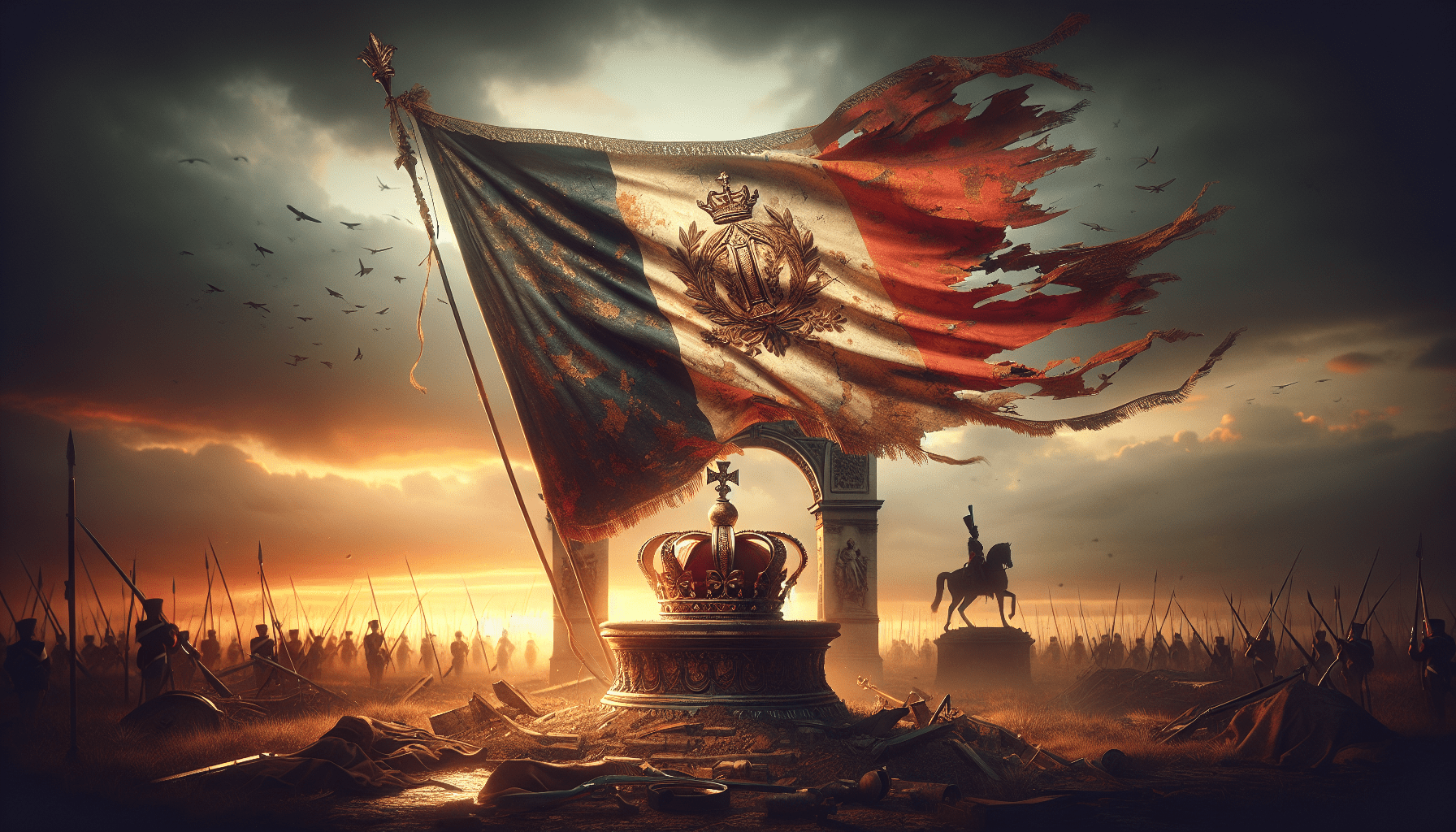
Your analysis deepens as you observe Napoleon’s aspirations for an empire that reflected both personal ambition and a desire for French hegemony in Europe. Under his rule, France expanded its territory, often at the expense of neighboring states. You reflect on the administrative changes he implemented to centralize power, employing loyal officials and implementing systematic governance that mirrored his military strategies. However, underlying this empire was a tension between effective governance and authoritarian control, where dissent was often quelled.
Crowning as Emperor
You contemplate the significant moment on December 2, 1804, when Napoleon crowned himself Emperor of the French. This act symbolized the culmination of his rise to power, reflecting both personal ambition and the revolutionary zeal of a nation reborn. During the coronation ceremony at the Notre-Dame Cathedral, you are struck by the imagery of self-crowning, which illustrated his departure from the established monarchies of the past. You perceive this moment not merely as a personal triumph but as an embodiment of the revolutionary ideals he purported to uphold.
The Continental System
Objective to Weaken Britain
In your examination of the Continental System, you identify it as Napoleon’s attempt to cripple Britain economically by imposing a blockade on British trade throughout Europe. You perceive this as a strategic response to his longstanding rivalry with Britain, aiming to divert trade to France and its allies. However, as you delve deeper, you find that the sustainability of such a system was fundamentally flawed, reliant upon unity among European states that had diverse economic interests.
Economic Sanctions and Challenges
As you analyze the implementation of the Continental System, you observe significant resistance and economic hardship it imposed on Europe. Nations reliant on British trade struggled under the weight of sanctions, leading to widespread discontent. You note that rather than isolating Britain, the blockade spurred smuggling and prompted resentment among the very allies upon whom Napoleon relied. The strain on national economies foreshadowed fractures in the coalition he had established.
Impact on European States
You consider the broader implications of the Continental System on European politics and alliances. The economic turmoil catalyzed tensions within Napoleon’s sphere of influence, sparking uprisings and dissent in regions such as Spain and Russia. You note that these strains contributed to a gradual disintegration of the alliances that had once propped up his empire. Ultimately, the Continental System served as a critical misstep in Napoleon’s grand design, reflecting the complexities of maintaining an empire based on forced cooperation.
The Downfall Begins: The Invasion of Russia
Motives Behind the Invasion
As you delve into Napoleon’s fateful invasion of Russia in 1812, motivations emerge that are both strategic and personal. You recognize that the desire to enforce compliance with the Continental System and the need to address growing defiance from Tsar Alexander I formed a compelling rationale for invading Russia. However, as you progress, it becomes clear that this ambition was underpinned by a hubris that disregarded the logistical complexities and vastness of the Russian terrain.
Logistical Failures and Tactical Errors
You scrutinize the military blunders that characterized the invasion. Despite possessing one of the most formidable armies in history, your analysis reveals a lack of preparation for the harsh realities of a Russian winter and the vast distances involved. The overstretched supply lines and failure to secure critical logistics became decisive factors in the campaign’s outcome. As you observe the cascading logistical failures, you realize they rendered even the most skilled military strategies ineffective against the unforgiving landscape.
The Impact of Harsh Weather Conditions
The descent into catastrophe is further illustrated as you confront the brutal winter weather conditions that plagued Napoleon’s campaign. You recognize that the bitter cold, compounded by inadequate supplies and attrition from skirmishes, decimated the Grand Army. You perceive how psychological factors also played a role, as morale plummeted amid inhospitable conditions. The winter of 1812 marked not just a military defeat but the unraveling of Napoleon’s grand ambitions, signaling the beginning of his decline.
The Coalition Forces Unite Against Napoleon
Formation of the Sixth Coalition
As you explore the formation of the Sixth Coalition, you comprehend the shift in European alliances that arose from Napoleon’s failures. Faced with the dire consequences of the Russian campaign, nations began to unite once more against him. You recognize that this coalition consisted of key powers—Britain, Russia, Prussia, and Austria—each motivated by self-preservation and mutual animosity towards Napoleon’s expansive ambitions. This unification represented a historic turning point in European geopolitics.
Key Battles Leading to Defeat
You consider the critical battles that marked the resurgence of coalition forces. The battles of Leipzig in 1813 and later engagements exemplified Napoleon’s vulnerabilities. Despite his tactical acumen, the numerical superiority and resolve of the coalition forces overwhelmed his beleaguered troops. You acknowledge how these confrontations were not merely military confrontations but also symbolic of the collective will of multiple nations determined to curb his dominance.
The Disintegration of Napoleon’s Empire
As the coalition forces advanced into France, you perceive the rapid disintegration of Napoleon’s empire. The once-mighty facade crumbled under the pressure of combined military action and popular dissent. Your analysis reveals that regions previously under French control were abandoning allegiance, signaling a profound shift in the European landscape. The momentous battles rendered his imperial aspirations increasingly untenable, culminating in his first abdication in 1814.
The First Exile to Elba
Circumstances of Abdication
In the aftermath of his defeat, you examine the circumstances surrounding Napoleon’s abdication in April 1814. Realizing that resistance was futile against the united forces of the Sixth Coalition, you note his decision to abdicate in exchange for sovereignty over Elba, a small island in the Mediterranean. The abdication marked another pivotal moment in his tumultuous life; yet, you understand that historians would view it less as a moment of closure and more as a brief intermission in a dramatic saga.
Life and Governance in Elba
Your exploration of Napoleon’s life on Elba reveals a period of reflection, albeit one characterized by his unabated ambition. Even on this distant isle, you discern that he retained an interest in governance, implementing reforms, and promoting industry. Through your lens, you understand that his time on Elba was not a passive retirement but rather a continuation of his ingrained desire to influence, albeit on a smaller scale. His ability to maintain a semblance of power amidst exile illuminates his enduring resolve.
Escape and the Hundred Days
As you delve into Napoleon’s dramatic escape from Elba in March 1815, you recognize it as a testament to his indomitable spirit and strategic planning. Seizing an opportunity, he swiftly returned to France and gathered support from former soldiers and disillusioned citizens, reinstating himself as Emperor during the tumultuous period known as the Hundred Days. You grasp that this resurgence was driven by Napoleon’s ability to resonate with the nationalistic fervor of the French populace, who were eager to reassert their place on the European stage.
The Epic Return and Final Stand
The Brief Resurgence of Power
Your analysis of Napoleon’s brief resurgence reveals a mix of tactical brilliance and a lack of robust foundations. Within weeks, his charisma and reputation for military prowess rallied support and revitalized his rule. However, as you evaluate this period, you discern that the momentum was ephemeral, buoyed by nostalgia rather than lasting allegiance. Rising tensions with the coalition forces were palpable, and divisions within his own ranks soon emerged, complicating his return.
Key Strategies and Decisions
In assessing Napoleon’s strategies during the Hundred Days, you contemplate the decisive choices he made, particularly regarding his military engagements. Attempting to consolidate power swiftly while preparing for conflict with the burgeoning coalition, he initiated aggressive maneuvers. You realize that, while tactically sound in certain respects, these decisions often reflected desperation rather than calculated strategy. The culmination of these choices would soon bear fruit in the final act of his saga.
The Battle of Waterloo
The Battle of Waterloo on June 18, 1815, signifies not only a military defeat but a definitive turning point in European history. You reflect on Napoleon’s strategy during the battle—his confrontation with the Duke of Wellington and the timely assistance of Prussian forces under Gebhard Leberecht von Blücher. As you contemplate the intense combat, you recognize that the failure to secure decisive victories marked the disintegration of his ambitions. Faced with overwhelming opposition, surrender became inevitable, sealing his fate and ensuring his position as a historical figure mired in both grandeur and failure.
Conclusion
As you reach the conclusion of your exploration, you contemplate the remarkable life of Napoleon Bonaparte—his meteoric rise and eventual downfall. From humble beginnings to emperor, his story encapsulates the complex interplay of ambition, ideology, and military innovation. You recognize that while his existence was marked by extraordinary achievements in warfare and governance, it was equally characterized by overreach and hubris. The lessons learned from his trajectory underscore the enduring relevance of power, ambition, and the human condition, as well as the remarkable complexities of leadership and legacy. Ultimately, you conclude that Napoleon’s life serves as a pivotal chapter in the narrative of European history, reflecting themes that resonate even in contemporary discourse on power and governance.