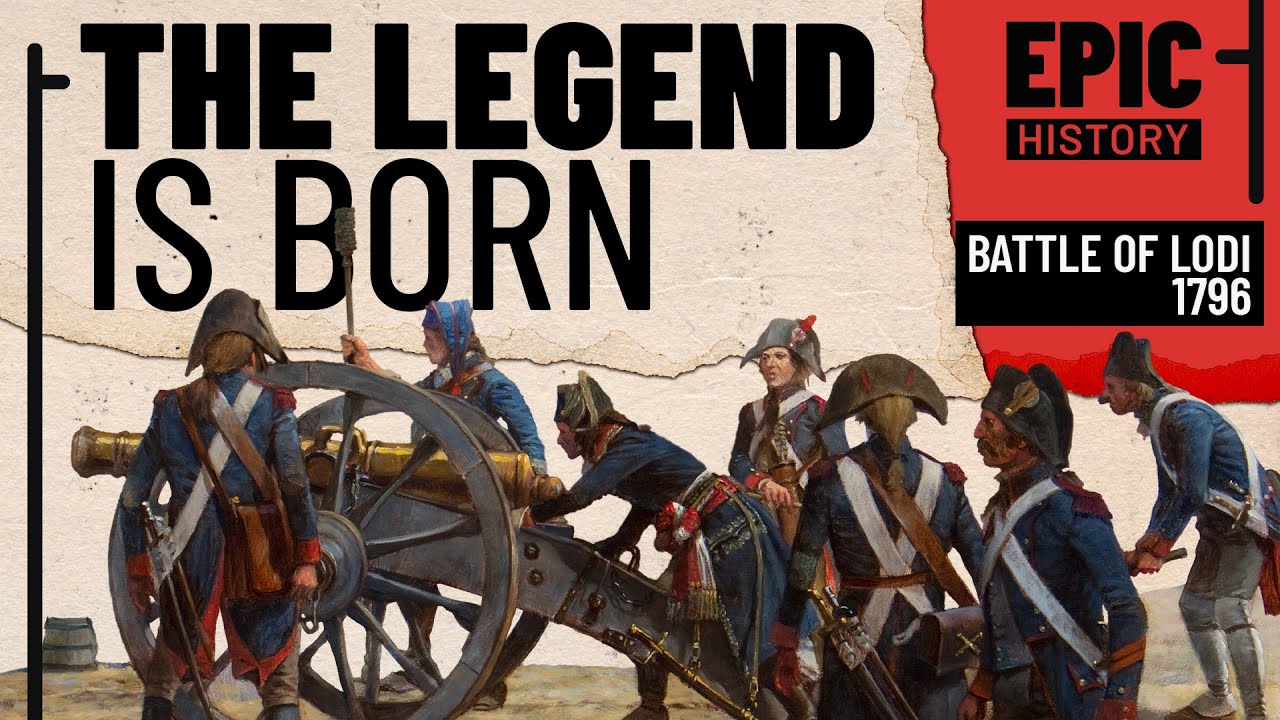
In 1796, during a tumultuous period of the Revolutionary Wars, Napoleon Bonaparte assumed command of French forces in northern Italy. At merely 26 years of age, he faced the daunting task of revitalizing a demoralized army. His adept leadership quickly transformed these ragged troops into a formidable fighting force, achieving decisive victories against the Austrians and effectively removing Piedmont from the conflict. This period not only solidified Napoleon’s military reputation but also fueled his burgeoning belief in his destiny to shape the future of nations.
This article examines the early victories of Napoleon in Italy, with particular emphasis on the pivotal Battle of Lodi. It explores the broader context of the conflict, the innovative strategies Napoleon employed, and the significant outcomes of his campaign. By analyzing the dynamics of this battle and its immediate aftermath, one can appreciate how these formative experiences laid the groundwork for Napoleon’s subsequent rise to prominence in European military and political affairs.
Napoleon in Italy: An Analysis of the Battle of Lodi (1796)

Timeline and Context
Overview of the Revolutionary Wars in 1796
In 1796, the Revolutionary Wars reached a turning point as the young French Republic grappled with formidable opposition from a coalition of European monarchies. This period was characterized by both external military engagements and internal political upheaval. The Coalition included principal powers such as Austria, Britain, and various Italian states, each seeking to undermine the revolutionary ideals espoused by France. You must consider this context to understand the stakes and urgency of the military actions that unfolded during the year.
Napoleon’s Appointment and Age
At the age of 26, Napoleon Bonaparte was appointed the commander of the Army of Italy in March 1796. His ascent to this position came during a tumultuous time when the French army was beleaguered and demoralized. Initially, many viewed his appointment as controversial, questioning the wisdom of placing such a young and relatively inexperienced general at the helm of a vital military operation. However, Napoleon’s prior military engagement during the siege of Toulon had provided him some merit, albeit untested on the scale he was now about to face.
Challenges Faced by the French Army
The Army of Italy was far from an organized and well-equipped force. You should appreciate the dire circumstances the soldiers encountered, including insufficient supplies, rampant hunger, and low morale. The soldiers were not only poorly paid but also lacked adequate footwear and arms. This disarray was compounded by the pressure of external forces, primarily the Austrian army and its allies, thus setting a challenging stage for Napoleon as he took command.
Early Victories
Initial Successes Against Austrian Forces
Napoleon’s military acumen became evident through his initial engagements with the Austrian forces. His rapid maneuvering and tactical innovations led to multiple swift victories, which were crucial for bolstering the French position in Northern Italy. Your understanding of these early successes is pivotal; they showcased Napoleon’s strategic mind and ability to inspire his troops.
Impact on Piedmont’s Involvement
The early victories against the Austrians had immediate consequences for the Kingdom of Piedmont. Following a series of defeats, Piedmont would eventually withdraw from the conflict, realizing that their position was untenable. This shift weakened the Coalition’s stance and provided the French army with critical breathing space to pursue further operations. The implications for regional alliances and loyalties cannot be understated; Napoleon’s tactics began to fracture the coalition against him.
Psychological Effects on the French Troops
The victories contributed significantly to a transformation in the soldiers’ psyche. As the French troops tasted success on the battlefield, their confidence surged. This psychological uplift was crucial; it shifted their outlook from despair to determination, fostering a sense of camaraderie and loyalty towards their leader, which, in turn, laid the groundwork for subsequent military exploits.
Background of the Conflict
France’s Entanglement with the Coalition
By 1796, France was embroiled in a complicated web of alliances and enmities primarily due to the insurrectionary forces at play following the inception of the Revolution. The Coalition opposing France was a formidable assemblage comprising not only neighboring states such as Austria and Piedmont but also broader European interests, each alarmed by the revolutionary fervor spreading from France. You must grasp that the outcome of the campaign in Italy carried the potential to alter this contentious balance of power.
Internal Strife and Counterrevolutionaries
In addition to external threats, France faced considerable internal challenges. Various counterrevolutionary movements, particularly in regions such as Vendée, posed additional complications for the Directory. The internal strife further strained the resources and attention of the military and governing body, complicating efforts to mount a coherent defense against the Coalition. It was against this backdrop of division that Napoleon’s campaign in Italy unfolded.
The Political Landscape of the French Directory
The French Directory, implementing a pragmatic but often criticized governance structure, sought to stabilize the nation while prosecuting the war. This regime was marked by corruption and inefficiency, raising public discontent and undermining its authority. Your analysis of this period would benefit from recognizing how these political realities influenced military decisions and, subsequently, the outcomes Napoleon achieved during his campaign.
Napoleon’s Arrival and Leadership
Assessment of the Army of Italy
Upon arriving at the French Army of Italy, Napoleon conducted an assessment that revealed the extent of disarray within the ranks. You must understand that the troops were not merely underprepared but were mired in a dire state of neglect, lacking basic resources and leadership. The army was not a coherent fighting force, and this presented a daunting challenge to any emerging leader.
Strategies to Enforce Discipline and Supply Management
Napoleon recognized that improving morale and discipline were just as critical as military strategy. He implemented strict measures to rebuke indiscipline while simultaneously enhancing supply logistics. This dual strategy proved effective in revitalizing the army. You can appreciate the significance of logistics; the success of campaigns often hinges on the ability to sustain troops through proper supply channels and maintain troop morale.
Techniques to Boost Troop Morale
To further boost the morale of his soldiers, Napoleon employed a combination of rigorous training, swift victories, and the promise of plunder. This mixture of discipline and promised rewards shifted the troop dynamics. Such techniques not only prepared the army for combat but also imbued them with a sense of shared purpose that is paramount for effectiveness in battle.

Strategic Plans
Preventing Enemy Unification
A cornerstone of Napoleon’s strategy was preventing the unification of Austrian and Piedmontese forces. He understood that should these armies consolidate, they would outnumber his troops, thereby threatening his campaign. Your examination of this strategic foresight is critical; Napoleon’s ability to identify and exploit enemy weaknesses would become a hallmark of his military strategy.
Dividing Forces for Individual Conquests
Napoleon’s plan was elegantly simple yet profoundly effective: divide and conquer. By isolating his adversaries, he could exploit their weaknesses in detail and win against larger forces by engaging them piecemeal. This approach not only diminished enemy morale but also created openings for rapid advances that turned the tide in favor of the French.
Initial Tactical Maneuvers
Utilizing the element of speed and surprise, Napoleon orchestrated his initial maneuvers as he advanced through Italy. You will note how his engagement strategies ran contrary to traditional military doctrines of the time, emphasizing agility and adaptability over static, fortified positions. This approach would become an integral part of military teachings in subsequent years.
Battle Dynamics
Engagement with Smaller Forces
The French forces often engaged the enemy with deliberate focus on smaller, more manageable formations when facing larger Austrian contingents. This tactical choice favored the strengths of his troops and allowed Napoleon to leverage superior battlefield tactics. Your analysis should consider how engaging smaller forces allowed for a concentration of effort and maximization of advantages at pivotal moments.
Exploiting Enemy Miscommunications
Napoleon’s keen understanding of battlefield dynamics enabled him to exploit enemy miscommunication and mistakes effectively. He capitalized on moments when his opponents displayed indecisiveness or confusion. In your analysis, consider how the psychological aspects of warfare, combined with strategic exploitation of miscommunication, illustrate a revolutionary shift in military leadership.
Utilization of Strategic Positions
The French army often engaged in battles from advantageous terrains, maximizing their effectiveness and minimizing the risks involved. By selecting the battleground—be it through ambushes or fortified high ground—Napoleon showcased his adeptness at using the environment as an ally. Your consideration of these tactics reveals how environmental awareness could shape military outcomes.

Key Incidents
Boost in French Morale Due to Victories
The sequence of victories early in the campaign significantly boosted the morale of the French troops. As Napoleon secured victory after victory, soldiers began to view themselves not merely as participants in a war but as agents of change. You must appreciate how morale can transform an army’s effectiveness on the battlefield—victories served both as practical accomplishments and as psychological reinforcement.
Dynamic Movements and Maneuvers During Battles
The ability to adapt dynamically during engagements became a hallmark of Napoleon’s command. His movements were characterized by quick, decisive maneuvers that kept enemies off balance. Your exploration of this fluidity will shed light on how flexibility in tactics can determine outcomes in military confrontations.
Night Operations and Their Significance
Napoleon also introduced a series of night operations, which stood in stark contrast to conventional practices of the time. These operations, conducted under the cover of darkness, allowed for surprise attacks which often led to significant tactical advantages. You should consider the implications of these tactics on the conventional understanding of military engagements, particularly how they reshaped the battlefield dynamics.
Final Outcomes
Rapid Advancements of French Troops
By successfully implementing his strategic plans, Napoleon orchestrated rapid advances through the Italian territories, culminating in significant territorial gains. This momentum was key to altering the geopolitical landscape of Northern Italy, triggering a reshaping of alliances among the various Italian states. Your assessment of this rapid advancement highlights the power of a well-executed military strategy.
Napoleon’s Rise in Military Fame
The swift successes in Italy effectively catapulted Napoleon into the limelight, establishing his reputation as a military genius. The victories not only solidified his position as a leader but also set the stage for his eventual rise to power. You will find that Napoleon’s relationship with the public shifted, as their perception evolved from skepticism to admiration.
Long-Term Impacts on European Politics
The outcomes of the campaign in Italy had ramifications far beyond the immediate military context. They laid the groundwork for future conflicts and diplomatic engagements across Europe, as other nations recalibrated their strategies in light of France’s newfound military prowess. Your understanding of these long-term impacts is essential to grasping the eventual rise of Napoleonic France as a dominant force on the European stage.
The Battle of Lodi
Strategic Importance of the Location
The Battle of Lodi, fought on May 10, 1796, was a crucial engagement in Napoleon’s campaign. The town of Lodi, situated strategically over a river crossing, not only protected key supply routes but also served as a tactical pivot point for French advances deeper into Northern Italy. Your evaluation of this location underscores its significance in the context of military planning and operational strategy.
Tactics Employed by Napoleon
Napoleon deployed a combination of infantry and artillery to force engagement with the Austrian defenses at Lodi. His tactical acumen was evident as he skillfully coordinated assaults from multiple angles, creating overlapping fields of fire to maximize his forces’ advantages. Your critique of these tactics reveals the innovative military strategies Napoleon employed that would redefine conventional warfare.
Challenges Faced During the Battle
Despite eventual success, the battle posed significant challenges, particularly concerning troop morale and logistical constraints. The terrain was complicated, and the urgency of crossing the river under fire tested discipline within the ranks. Understanding these challenges is essential; they paint a more holistic picture of the realities faced by command structures in military engagements.
Conclusion
Recapitulation of Key Victories
In summation, the series of victories achieved by Napoleon during his Italian campaign significantly reshaped the military and political landscape of Europe. From the initial skirmishes against Austrian forces to the pivotal Battle of Lodi, each engagement showcased the synergy of tactical ingenuity, logistical oversight, and psychological warfare.
Enduring Effects of the Italian Campaign
The Italian campaign marked the emergence of Napoleon not only as a formidable military leader but also as a pivotal figure in reshaping European politics. The alliance reconfigurations and shifting power dynamics initiated by French victories had lasting effects that transcended borders and ideologies, resonating into the 19th century.
Looking Ahead to Napoleon’s Future Endeavors
As one looks forward, the success of the Italian campaign emboldened Napoleon for subsequent endeavors, setting the stage for his continued ascension to political power and eventual self-crowning as Emperor. Your analysis should appreciate the intricate interplay between military success and political ambition, highlighting how Napoleon’s early victories propelled him into a transformative role in European history.
In sum, understanding the intricacies of Napoleon’s campaign in Italy provides crucial insights into the evolution of modern warfare and the subsequent political landscape of Europe, shaping historical narratives well beyond that fateful year of 1796.