
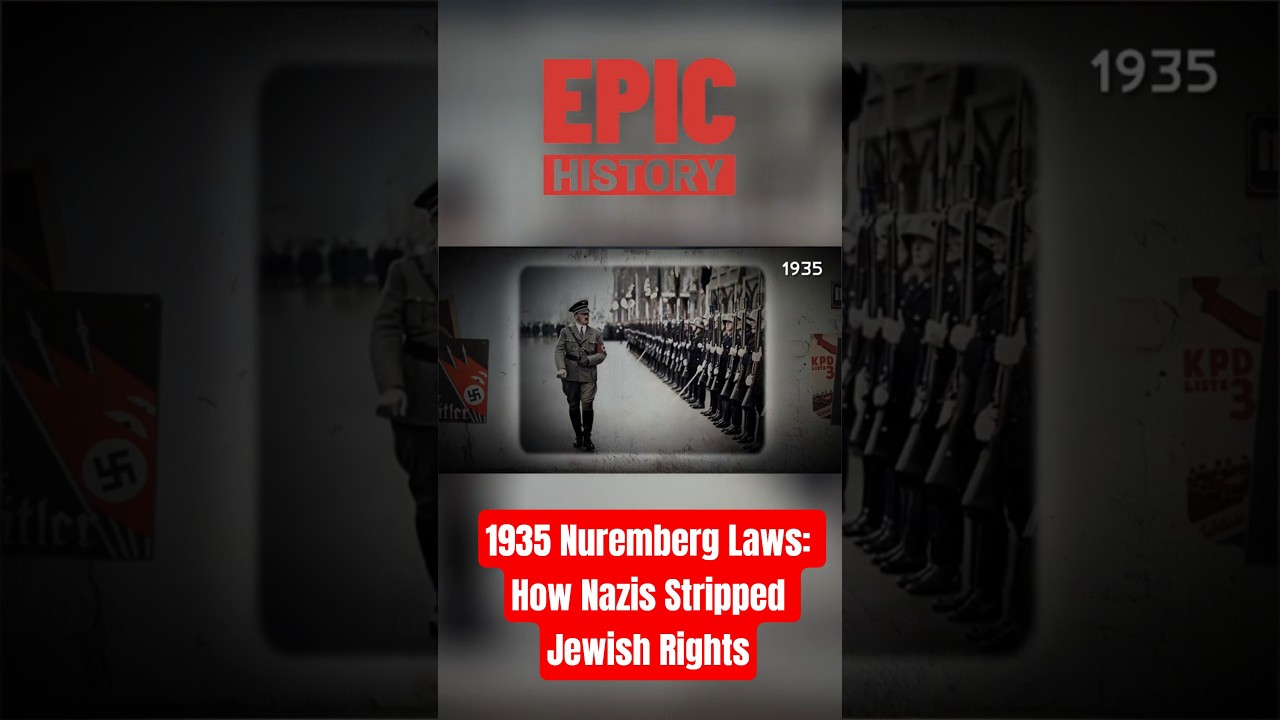
The 1935 Nuremberg Laws represented a pivotal moment in the systematic dismantling of Jewish rights in Nazi Germany. Enacted with the intent to define and codify racial purity, these laws stripped Jewish individuals of their citizenship and imposed severe restrictions on their social and economic lives. As you explore the ramifications of these laws, the sociopolitical climate that allowed such discrimination becomes evident, highlighting a tragic chapter in human history.
This examination will detail the specific provisions of the Nuremberg Laws and their immediate impact on the Jewish community. By analyzing the broader implications of these legal measures, you will gain insight into how such policies paved the way for further persecution. The analysis will also reflect on the long-term consequences of these actions, emphasizing the need for vigilance against similar ideologies in contemporary society.
Historical Context of the Nuremberg Laws
Germany’s Economic and Political Climate in the 1930s
In the 1930s, Germany was mired in a tumultuous period characterized by economic strife and political instability. The aftermath of World War I left the nation with crippling reparations, rampant inflation, and widespread unemployment. The Great Depression, which began in 1929, exacerbated these problems, leading to desperation among the populace. The socio-economic turmoil created fertile ground for radical ideologies. The National Socialist German Workers’ Party, or Nazi Party, capitalized on this discontent by promoting a narrative that scapegoated Jews and other minorities as the source of Germany’s woes. Your country was ripe for transformation, intoxicated by promises of national rejuvenation and a return to greatness, steering you toward a path of exclusion and division.
Rise of Anti-Semitism Prior to the Laws
The roots of anti-Semitism in Germany run deep, stretching back centuries and intertwining with cultural and religious animosities. By the time the 1930s arrived, a toxic blend of socio-economic hardship and long-standing prejudices had escalated public sentiment against the Jewish community. The Nazi Party harnessed and intensified this animosity through propaganda that depicted Jews as enemies of the state, responsible for Germany’s misfortunes. As you navigated this bleak landscape, anti-Jewish rhetoric grew ever more pervasive, reinforcing harmful stereotypes and fostering a climate in which dehumanization could flourish. You witnessed the slow normalization of discrimination, as vocal opponents, such as Jewish intellectuals and community leaders, were pushed further to the margins of society.
Previous Legislation Against Jews
Before the Nuremberg Laws were enacted in 1935, numerous legislative measures targeted the Jewish population. The groundwork was laid through the 1933 Law for the Restoration of the Professional Civil Service, which barred Jews from public sector roles. In 1934, further legal restrictions were enacted to limit the participation of Jews in various professions, which set a dangerous precedent for institutionalized discrimination. The gradual escalation of such rules was accompanied by widespread social acceptance, making you acutely aware of the chilling effect that legal exclusion could have on a community’s rights and identity. These preceding laws foreshadowed the more extensive codification of anti-Jewish sentiment that would crystallize into the Nuremberg Laws.
Overview of the Nuremberg Laws
The Definition of a Jew
At the crux of the Nuremberg Laws was a deceptively simple clarification of Jewish identity. The laws defined a Jew not solely by religious beliefs but through racial criteria, determining that anyone with three or four Jewish grandparents would be classified as a Jew, regardless of their level of religious observance or personal identification. This racialized understanding represented a radical shift in how identity was understood in your society. Jews were stripped of the individual agency to define themselves, their very existence being subject to the oppressive gaze of Nazi ideology. Such classification served to erase your identity, limiting the rich tapestry of cultural and personal narratives associated with Jewish life.
Key Provisions of the Laws
The Nuremberg Laws, consisting of the Law for the Protection of German Blood and German Honor and the Reich Citizenship Law, were a comprehensive foundation for systematic discrimination. The first law prohibited marriage and sexual relations between Jews and non-Jewish Germans, effectively enforcing racial purity. The second law stripped Jews of German citizenship, relegating them to the status of subjects without legal rights or protections. These statutes represented not just an ideological shift but a legal codification of hatred that would fundamentally alter the landscape of German society. As you delve deeper into these laws, you realize how they intertwined notions of race, citizenship, and morality, manipulating your understanding of national identity.
Implementation Mechanisms
The enforcement of the Nuremberg Laws relied on a bureaucratic apparatus designed to ensure compliance. Local authorities and law enforcement were tasked with implementing the laws, requiring official documentation and surveillance to enforce conformity among citizens. The creation of registries and other administrative tools ensured a system of social control that permeated your everyday life. Non-compliance, whether through intermarriage or the simple act of socializing, was met with severe penalties, including imprisonment or worse. The meticulous planning behind the implementation of these laws reveals your reality as one in which fear and compliance replaced personal freedom.
Immediate Effects on Jewish Rights
Revocation of Citizenship
The immediate effect of the Nuremberg Laws was the revocation of citizenship for the Jewish population. By classifying Jews as subjects, the Nazis stripped away their political voice and marginalization became systemic. You found yourself in a society where legal recognition was now contingent upon ethnic and racial identity, creating a stark divide between Jews and non-Jews. Your rights to participate in the democratic processes that once defined your citizenship vanished overnight, replaced by a sense of vulnerability and fear. This public announcement that you were no longer considered a member of the national community sent ripples of despair through the Jewish population, fundamentally altering the very notion of belonging.
Prohibition of Intermarriage
The prohibition of intermarriage marked another immediate and profound consequence of the Nuremberg Laws. No longer could you expect to pursue relationships across the supposed boundaries that now defined societal acceptance. The dictates of the Nazi regime prescribed who you could love, who you could marry, and ultimately who you could build a life with. These restrictions on personal freedoms not only devastated individual lives but also sought to obliterate familial and cultural connections, effectively severing the bonds that had historically united communities. In this context, love became a political act, and as you scanned the social horizon, the repercussions of these laws echoed loudly through neighborhoods, schools, and communal spaces.
Exclusion from Public Life and Professions
The continuation of anti-Jewish sentiment was enforced through the exclusion of Jews from public life and various professions, amplifying your sense of isolation. With the loss of citizenship came the loss of professional avenues; Jews were expelled from the civil service, academia, law, and medicine—fields in which they had long excelled. As you walked the streets of your city, you likely felt an eerie emptiness where once there was community and collaboration. Cultural institutions, media, and arts, all avenues of human expression that included Jewish voices, began to tremble under the weight of Nazi ideology. Your existence was reduced to a specter, haunting the spaces where you once thrived.
Social and Economic Impacts
Separation from Economic Participation
The institutionalized discrimination engendered by the Nuremberg Laws resulted in the stark separation of Jews from economic participation. You could see how businesses began to close, as Jewish entrepreneurs found themselves ostracized and stripped of their livelihoods. The overarching narrative painted Jews as exploiters rather than contributors to the economy, creating a rationale for their exclusion that was couched in pseudo-scientific claims of racial inferiority. The landscape of the economy shifted dramatically as non-Jewish customers were discouraged or, in some cases, prohibited from engaging with Jewish businesses. This shift decimated not only Jewish wealth but also the collective economic vitality of communities across Germany.
Impact on Jewish Businesses
Jewish businesses, once flourishing centers of commerce and culture, faced annihilation in the wake of the Nuremberg Laws. Storefronts that had once proudly displayed signs advertising Jewish enterprise became symbols of shame and ostracism. Boycotts, instigated by Nazi propaganda, devastated what remained of the economic fabric woven by Jewish merchants. For you, this meant a loss of both income and identity; your business, once a source of pride, became a reminder of the fragility of your existence in a society that increasingly wielded economic power as a weapon of exclusion. The deliberate targeting of these lifelines left many Jewish families struggling to survive, leading to famine and desperation.
Changes in Community Structures
The Nuremberg Laws also resulted in significant changes within Jewish community structures, as communal organizations scrambled to support their disadvantaged members in an increasingly hostile environment. Working together, you and your community members formed support networks that not only provided essential resources but also fostered solidarity and resilience in the face of widespread persecution. However, these networks struggled against the backdrop of growing surveillance and oppression. As your community became more fragmented, the very systems that had once served to unite you began to erode under the relentless pressure of animosity and exclusion.

Responses from the Jewish Community
Efforts to Adapt to New Restrictions
In response to the draconian measures imposed by the Nuremberg Laws, the Jewish community undertook various strategies to adapt to the ever-tightening noose of restrictions. Many attempted to comply with the laws in hopes of alleviating tensions with the surrounding non-Jewish population. You might have felt the desperation of your neighbors as they sought to fit into a landscape that increasingly rendered their lives unsustainable. In adapting, communities organized alternative avenues for gatherings and religious observance, carving out sanctuaries amidst a harsh legal reality. Such adaptations were acts of resilience, defiance, and ultimately survival in the face of escalating antagonism.
Emigration as a Response
The desire to escape the tightening grip of the Nazi regime became evident in the Jewish community’s response to the Nuremberg Laws. Faced with existential threats, many sought to emigrate to countries that offered refuge from persecution. You might have witnessed friends and family frantically arranging paperwork, desperately hoping to leave a homeland that no longer felt safe. However, emigration proved fraught with obstacles, including strict immigration quotas and a general sense of disbelief or apathy from the international community regarding the urgency of the situation. Each failed attempt felt like an additional weight as you navigated both sorrow and dread—an exodus narrowly prevented by bureaucratic barriers beyond your control.
Community Resistance and Solidarity
Despite the fear that permeated daily life, pockets of resistance emerged within the Jewish community. Acts of defiant solidarity brought people together as they sought to preserve their cultural heritage and collective identity. You might have found comfort in clandestine gatherings, sharing stories, music, and traditions that reaffirmed your connection to one another. These efforts were not without risk, as conformity often held severe consequences. Yet, the spirit of resistance manifested in myriad ways, serving not only as a bulwark against the onslaught of systemic oppression but also as a testament to the enduring power of community bonds.
International Reactions to the Nuremberg Laws
Initial Responses from Global Leaders
As the Nuremberg Laws came into effect, the international community’s initial responses varied widely, ranging from condemnation to indifference. Some global leaders were quick to denounce the laws, claiming that they violated fundamental human rights principles. However, many, including those in powerful nations, grappled with the complexities of diplomatic relations with Germany. You must navigate the disheartening reality of global politics, where the immediate plight of the Jewish community was often sidelined for concerns about trade and international stability. The response, or lack thereof, showcased a shocking ambivalence toward the sufferings of others—an indifference that would haunt history.
Public Outcry and Protests
While official diplomatic recognition varied, there emerged a notable public outcry in several countries following the implementation of the Nuremberg Laws. Activists and members of Jewish communities abroad began to protest vigorously against what was perceived as injustice. You may recall the passionate speeches, desperate calls for action, and the mobilization of grassroots movements striving for awareness. However, this activism often struggled against a backdrop of ignorance or apathy, as many in the general populace remained unaware of the extent of the situation or were misled by existing prejudices. The efforts of protestors highlighted a crucial juxtaposition between awareness and the societal inertia that often accompanied it.
Impact on Jewish Refugee Policies Worldwide
The implementation of the Nuremberg Laws had profound implications for Jewish refugee policies worldwide. Communities around the globe were confronted with the pressing dilemma of how to respond to the influx of Jewish refugees seeking asylum from the escalating persecution. However, stringent immigration quotas and xenophobic sentiments complicated many nations’ willingness to open their borders. The echoes of your community’s plight resonated in countless halls of power as debates raged over how to address the burgeoning refugee crisis. The responses—or lack thereof—revealed the fragility of international solidarity and the latent anti-Semitism that characterized the era, making all too clear the need for empathy and moral leadership in times of humanitarian emergencies.

Legal and Moral Implications
Violation of Human Rights Principles
The Nuremberg Laws represented a stark violation of human rights principles, not only undermining the dignity of the Jewish community but also setting a dangerous precedent for future discriminatory legislation throughout the world. As you consider these laws, it becomes clear that they traversed beyond mere sociopolitical changes into the realms of ethical degradation. Human rights, which had begun to gain a foothold in international discourse, were cast aside in favor of racial purity and exclusion. The moral implications surrounding these laws revealed a grim truth—legal frameworks could be twisted to serve the most insidious ends, compelling you to confront the fragility of rights when viewed through the lens of national identity.
Reactions from Legal Scholars and Human Rights Activists
As the ramifications of the Nuremberg Laws became clear, reactions from legal scholars and human rights activists crystallized into a powerful critique of state-sponsored discrimination. You might have encountered passionate arguments asserting that legality does not equate to morality, as activists engaged in public discourse to challenge the ethical underpinnings of the regime. These scholars insisted that societies had a moral obligation to resist oppressive laws and protect the rights of vulnerable populations. In many ways, their voices served to illuminate the paths toward justice that could emerge even in the darkest circumstances, presenting a glimmer of hope amidst despair.
Precedent for Future Discrimination Laws
The Nuremberg Laws not only reshaped the legal landscape of Nazi Germany but also set a concerning precedent for future discriminatory legislation. Scholars often grapple with the implications of these laws, recognizing that the mechanisms of exclusion can be replicated within other contexts and cultures. As you reflect on this historical trajectory, it becomes clear how the frameworks employed by the Nazis provided a roadmap for systemic discrimination and persecution. The enduring legacy of these legal choices haunts contemporary society, serving as a reminder that vigilance and advocacy remain essential to safeguarding the rights of all individuals, regardless of their background.
Long-Term Consequences for Jewish Rights
The Aftermath of the Laws in Nazi Germany
The consequences of the Nuremberg Laws in Nazi Germany were vast and devastating, marking a point of no return for countless individuals and families. As legal structures fortified the marginalization of Jews, the social landscape further deteriorated into an abyss of violence and terror. These laws opened the floodgates to more repressive measures, leading ultimately to the methods of extermination used in the Holocaust. While grappling with the profound injustices inflicted upon you and your community, the aftermath of this discriminatory legislation started a cascade of persecution that would fundamentally alter the future of your people.
The Expansion of Anti-Jewish Legislation
In the years following the implementation of the Nuremberg Laws, the Nazis expanded their campaign against Jews with a series of increasingly severe legislative measures. Additional regulations further curtailed your freedoms, leading to the segregation of Jews in ghettos, the arming of state-sponsored violence, and the eventual mass deportation to concentration camps. Each new piece of legislation marked a step deeper into a chasm of horror, eroding your humanity and that of your community. The normalization of state-sanctioned discrimination became entrenched in the fabric of society, further entrenching the idea that certain lives were worth less than others—a notion that would reverberate for generations.
Overall Impact on the Holocaust
The Nuremberg Laws set the stage for the catastrophic events of the Holocaust, the systemic genocide of six million Jews. The classification of Jews as subhuman laid the groundwork for the atrocities that would follow, leading to a calculated attempt to exterminate an entire people. As you consider the impact of these initial legal provisions, it becomes painfully clear how they fortified the logic behind violence and hatred. The dehumanization of Jews created an environment where genocide could occur, reminding you of the dire consequences that can stem from legislation rooted in fear, hatred, and ignorance.
The Legacy of the Nuremberg Laws
Influence on Post-War Human Rights Frameworks
The legacy of the Nuremberg Laws extended far beyond the borders of Nazi Germany, influencing the development of post-war human rights frameworks. In the wake of World War II and the Holocaust, there emerged a renewed recognition of the need for universal human rights protections. The atrocities committed in the name of exclusion and discrimination catalyzed the establishment of conventions and treaties aimed at safeguarding the rights of individuals, regardless of their race, religion, or ethnicity. As you delve into the history of this period, it becomes evident that the lessons drawn from the Nuremberg Laws played a pivotal role in shaping the evolution of contemporary human rights discourse, emphasizing the necessity of preventing hateful ideologies from taking root.
Role in the Establishment of International Law
The global repercussions of the Nuremberg Laws furnished a critical context for the establishment of international law and norms aimed at accountability for human rights violations. The Nuremberg Trials themselves illuminated the principles of justice and responsibility, as they sought to hold perpetrators accountable for crimes against humanity. These legal frameworks established a precedent that would ripple through the annals of history, paving the way for continued discussions surrounding genocide, war crimes, and crimes against humanity. You become acutely aware of the implications that this legacy holds for contemporary society—a mandate to ensure that injustice is met with accountability, lest history repeat itself.
Awareness and Education on Anti-Semitism
In the wake of the Nuremberg Laws and subsequent horrors of the Holocaust, the importance of awareness and education on anti-Semitism became paramount. Many communities recognized the necessity of addressing hate and prejudice through education, promoting understanding and empathy among diverse populations. You may step into spaces that encourage dialogue and reflection about the roots and consequences of anti-Semitism, ensuring that the experiences of the past are never lost to time. This commitment to education embodies the hope that collective remembrance can illuminate pathways toward tolerance, cohesion, and solidarity in your society.
Conclusion
Summary of the Nuremberg Laws’ Impact
In summation, the Nuremberg Laws cast a long shadow over history, marking a crucial turning point for Jewish rights and exposing the catastrophic consequences of systemic discrimination. Legal classifications stripped Jews of dignity and agency, laying the groundwork for generations of suffering. The ramifications of these laws reverberated beyond the borders of Nazi Germany, influencing international human rights discourse and irrevocably altering the perception of minority rights.
Lessons Learned for Modern Society
The lessons drawn from the impact of the Nuremberg Laws are poignant and relevant today. They remind you of the persistent threat of hate, the importance of safeguarding human rights, and the necessity of resisting ideologies that seek to dehumanize others. As you navigate the complexities of modern societies, the echoes of history serve as a clarion call for vigilance against bigotry and discrimination.
The Importance of Protecting Minority Rights
Ultimately, the legacy of the Nuremberg Laws encapsulates the imperative of protecting minority rights in the face of rising intolerance. You understand that the fight for human dignity endures, demanding your engagement in advocacy for those marginalized by discrimination. As you reflect on this history, consider how you might contribute to a world that celebrates diversity, champions justice, and fosters environments where all individuals can thrive, free from the shadows of division and persecution.