
The Battle of Italeni, fought on April 9, 1838, represents a significant conflict between the Voortrekkers and the Zulus, set against the backdrop of the Great Trek in what is now KwaZulu Natal, South Africa. Following the massacre of Piet Retief and his men by King Dingane, the escalating tensions culminated in violent confrontations as the Zulu impis targeted Boer settlements. This article will explore the events leading up to the battle, the tactics employed by both sides, and the aftermath that shaped the trajectory of colonial relations in the region.
An examination of the battle reveals the complexities of leadership and strategy among the Boers as they faced the formidable Zulu forces. Critical moments, such as the choices made by commanders Uys and Potgieter and the ensuing chaos that led to significant losses on both sides, will be analyzed. The article aims to provide a detailed account of this historic engagement, reflecting on its implications for both the Boer and Zulu communities in the context of their ongoing struggles during this tumultuous period.
The Battle of Italeni: An Academic Examination
Historical Context of the Battle of Italeni
Overview of the Great Trek
The Great Trek, a significant migration of Dutch-speaking settlers known as the Voortrekkers, commenced in the 1830s as a response to British colonial policies perceived as oppressive. Driven by a desire for autonomy and the pursuit of land, the Voortrekkers moved inland from the Cape Colony, seeking new opportunities in the northern territories. This migration was characterized by a collective spirit and a quest for self-determination, which unfortunately placed them in direct conflict with indigenous peoples, particularly the Zulu nation. The Great Trek not only exemplified the Voortrekkers’ determination but also set the stage for numerous confrontations, including that of Italeni, which would later define their relationship with the Zulu.
Background of the Zulu and Boer Conflicts
The tensions between the Zulu and the Boer settlers were fraught with mistrust and competition for land and resources. The Zulu, under King Dingane, had consolidated their power through military might and strategic alliances, while the Boers, emerging as a distinct socio-political group, sought to assert their dominion over territory they deemed available. The situation escalated into violent encounters marked by raids, retaliatory strikes, and ultimately, battles that reflected the broader struggle for territorial supremacy in Southern Africa. The Zulu viewed the Voortrekkers as intruders, while the settlers saw their actions as necessary for survival in a hostile land.
Significance of the 1838 Massacre of Piet Retief
The massacre of Piet Retief and his party on February 6, 1838, stands as a pivotal moment in the Zulu-Boer conflict. Retief, seeking diplomatic negotiations with Dingane to secure land rights, was instead met with treachery leading to the slaughter of his group. This event not only sparked outrage among the Voortrekkers but also galvanized them into action, unifying their efforts for retribution against the Zulu. Retief’s massacre became a rallying cry, transforming a diplomatic endeavor into a quest for vengeance and marking a significant turning point that would culminate in the Battle of Italeni.
Prelude to the Battle
Initial Zulu Raids on Boer Settlements
In the aftermath of Retief’s death, the Zulu executed a series of raids on Boer settlements, reflecting their intent to reinforce territorial claims and eliminate the perceived threat posed by the Voortrekkers. These initial assaults were not merely acts of retribution but strategic moves aimed at destabilizing Boer settlements to cement Zulu dominance over the region. The Voortrekkers found themselves in a precarious position, grappling with fear and uncertainty as their communities faced the brutality of Zulu incursions.
Retaliatory Measures by the Voortrekkers
In response to the Zulu raids, the Voortrekkers organized punitive expeditions aimed at retaliating against the Zulu for their aggression. This led to a cycle of violence where both factions engaged in a tit-for-tat exchange of raids, further entrenching their hostilities. The Voortrekkers, fueled by a desire for retribution and the need to protect their families and livelihoods, adopted a more militaristic stance, leading to the formation of commandos for offensive operations. These expeditions served both as defensive measures and as efforts to reclaim lost territory.
Formation of Boer Commandos
The formation of Boer commandos illustrated the increasing militarization of the Voortrekkers in their struggle against the Zulu.IThese groups were typically composed of men from various settlements, uniting under a common cause: to defend their way of life and retaliate against Zulu aggression. The commandos operated with a degree of autonomy, reflecting the decentralized nature of Boer society at the time. Leaders such as Piet Retief and Hendrik Potgieter emerged to guide these forces, although the lack of centralized command would later prove consequential in the ensuing conflict.
Military Leaders and Their Strategies
Roles of Piet Retief and Hendrik Potgieter
Piet Retief, though slain before the Battle of Italeni, had established a foundational ethos that influenced the Voortrekkers’ military approach. His commitment to land negotiation turned into a mantra of vengeance, propelling subsequent leaders such as Hendrik Potgieter into action. Potgieter, a notable figure in the Voortrekker movement, assumed leadership following Retief’s death, guiding the commandos with a focus on swift and decisive strikes against the Zulu. His military strategy primarily revolved around taking advantage of terrain and preparing his men for open confrontations, which reflected a blend of Boer resilience and tactical necessity.
Leadership Styles Among the Voortrekkers
The Voortrekkers exhibited diverse leadership styles amid the crisis. While Retief favored negotiation and diplomacy, Potgieter embraced a more militaristic approach. Leadership within the commandos often reflected personal charisma, regional affiliations, and previous military experience, leading to varied execution of strategies. Differences in leadership philosophies occasionally hampered cohesion among the diverse Boer factions, eventually complicating their unified efforts against the Zulu. However, the shared objective of enacting revenge against the Zulu for the perceived injustice of Retief’s massacre acted as a unifying force amid these variations.
Dingane’s Tactics and the Zulu Military Structure
Dingane’s strategic ingenuity significantly shaped the Zulu military structure, marked by discipline, training, and a focus on asymmetric warfare. He employed a centralized command with a series of regiments that operated under a core philosophy of overwhelming force and tactical surprise. These regiments, composed of able-bodied men, were adept at utilizing the topography of the land to execute ambushes and direct assaults—a tactic that served them well against the less coordinated Boer forces. Dingane’s ability to adapt his strategies to counter Boer initiatives demonstrated the complexity of the Zulu military ethos, which was deeply embedded in their cultural identity and social stratification.
The Start of the Battle
Deployment of Boer Forces
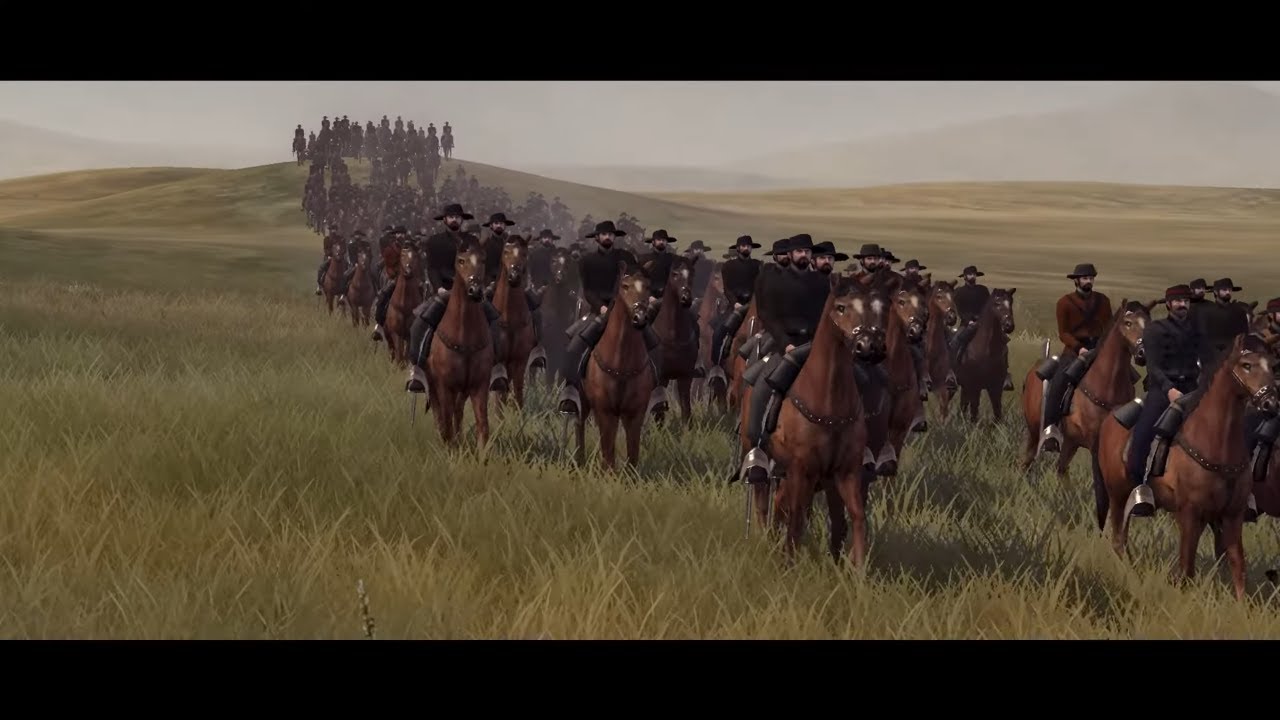
On April 9, 1838, the stage was set for the Battle of Italeni, as the Boer forces, numbering approximately 300, mobilized in two separate columns. Their decision to forgo wagons for agility reflected a commitment to rapid engagement with Zulu forces, who were believed to be positioned nearby. The separation of their commandos, however, would soon prove to be a substantial tactical error, as it diluted their collective strength and made them vulnerable to the Zulu’s maneuverability. As the Voortrekkers prepared to advance, the tension in the air was palpable, mirroring the uncertainty that had characterized their journey thus far.
Encountering Zulu Stragglers
In the early stages of the engagement, the Boer forces encountered Zulu stragglers, who were captured and interrogated. This moment of contact offered them misleading intelligence, suggesting that the main Zulu army was stationed at Umgungundlovu. While these captives could have provided crucial insights, they instead led the Boers into a false sense of security and a linear progression toward confrontation with the Zulu forces concentrated on Italeni Hill. This encounter symbolizes the uncertainty that pervaded the pre-battle atmosphere, where each decision carried the weight of potential consequences.
Initial Engagements at Italeni Hill
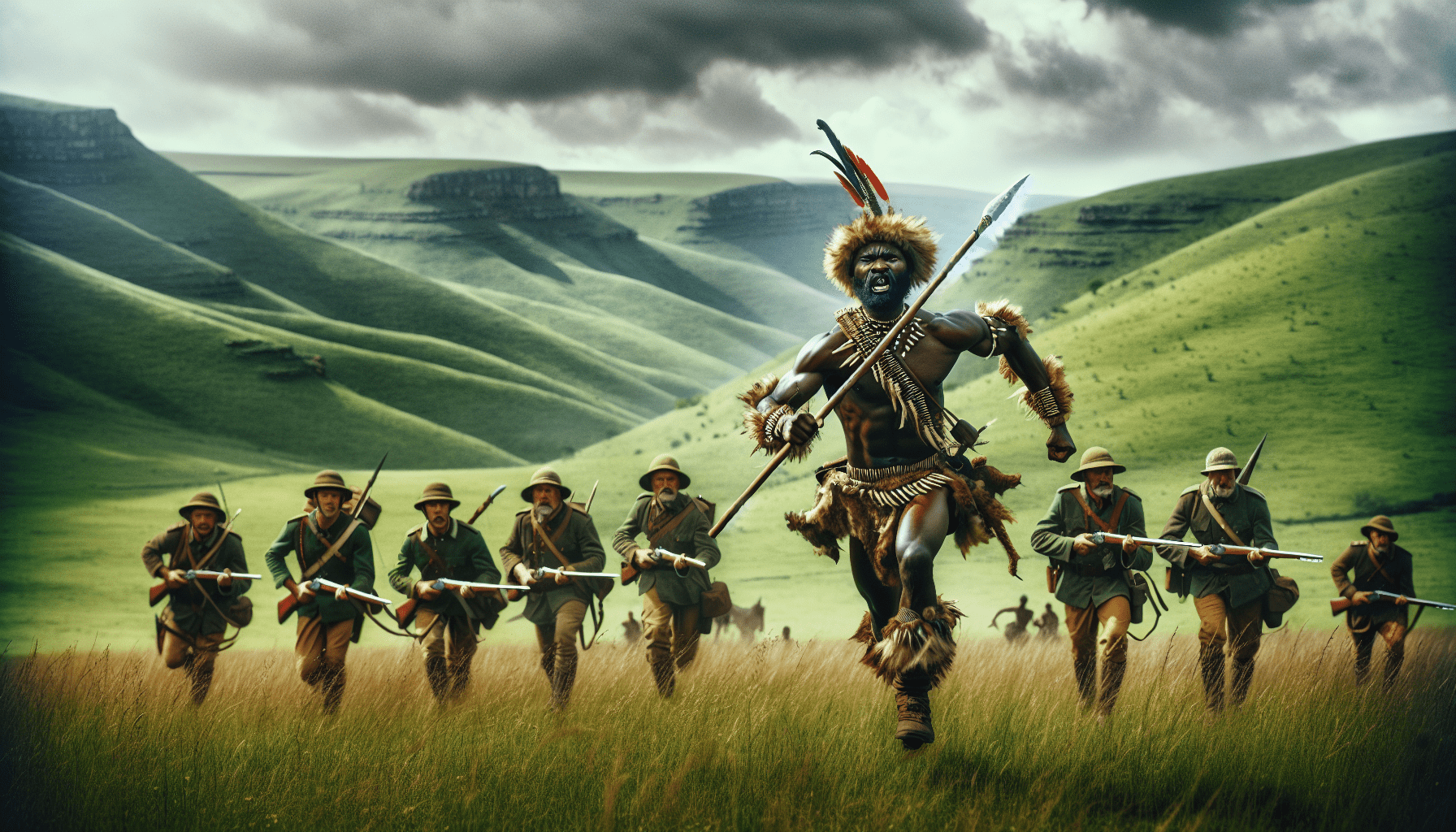
As the Boers approached Italeni Hill, they began to engage with visible Zulu forces stationed atop the elevation. The initial engagements were marked by vigor, with Boer marksmen successfully inflicting casualties on the Zulu. However, the Zulu’s resilience shone through as they maneuvered cohesively, responding with counterattacks designed to leverage their positional advantage. The battleground, characterized by undulating hills and treacherous terrain, played a crucial role in the unfolding drama, setting the stage for the larger conflict that would unfold.
Key Tactical Decisions
Choosing Targets: Uys’ and Potgieter’s Forces
The tactical decisions made by commanders such as Uys and Potgieter would ultimately shape the trajectory of the battle. Each commander had the opportunity to select their target among the exposed Zulu regiments, with Potgieter opting for engagement on the plains while Uys targeted the fortified position on Italeni Hill. This dichotomy in tactical choices reflected deeper strategic philosophies: the immediate capture of Zulu forces versus a head-on assault against the fortified position. Unfortunately, the fragmented approach diluted their impact, rendering them susceptible to Zulu maneuvers that exploited the inherent chaos of battlefield decision-making.
Unplanned Retreats and Strategic Mistakes
As the battle progressed, unplanned retreats marred the Boer advance. Initial successes quickly turned into chaotic retreats as the relentless Zulu counterattacks caught the commandos off guard. Reports of confusion among the Boer ranks became widespread, leading to a disorganized withdrawal that undermined their cohesion and ability to mount an effective response. The failure to maintain discipline in the face of adversity illustrated the challenges of leadership during intense conflict and the consequences of hasty decision-making.
Use of Terrain and Environment in Warfare
The tactical use of terrain significantly influenced the outcomes of the Battle of Italeni. The Zulu forces exhibited a profound understanding of their environment, utilizing hills and valleys to their advantage while engaging the Boers. Conversely, the Voortrekkers’ initial plans were undermined by their underestimation of the Zulu’s tactical adaptability. The terrain, which had initially seemed favorable to them, became a double-edged sword as the Zulu maneuvered to encircle and isolate Boer units, turning the battlefield into a complex arena of shifting allegiances and shifting fortunes.
The Climactic Conflict
Zulu Charges and Boer Counteractions
As the conflict escalated, the Zulu launched furious charges designed to weaken the resolve of the Boer forces. With drums beating and warriors rallying, the Zulu onslaught struck at various points, causing disarray among the Boers. The Voortrekkers, albeit initially standing firm in their positions, found themselves engaging in desperate counteractions. The exchanges of fire soon devolved into close-quarters combat as the Zulu pressed their advantage, illustrating the chaotic and visceral nature of warfare where the line between triumph and defeat became palpably thin.
Pursuit and Dispersal of Boer Forces
Inevitably, the tide turned as the persistent Zulu advances began to fragment the Boer lines. The Zulu’s ability to cut off retreat routes compounded their tactical advantage, leading to the dispersal of Boer forces into isolated groups. This breakdown in unity not only hindered their potential for organized resistance but also left many Boers vulnerable to targeted Zulu charges. It is during these moments of chaos that individual acts of bravery emerged, underscoring the contrasting human experiences within the larger narrative of war.
Heroic Acts and Sacrifices During Combat
Amidst the chaos of battle, stories of heroism and sacrifice emerged from the fray. Individuals within the Boer ranks, such as Piet Retief’s loyal followers, displayed extraordinary courage in the face of overwhelming odds, risking their lives to save their comrades. These acts of valor became emblematic of the human spirit’s resilience amid despair, as men faced insurmountable challenges with unwavering determination. However, the heavy toll of sacrifice became apparent as casualties mounted, marking a steep price for the aspiration of independence and territorial claim.

The Role of Women and Non-Combatants
Impact of the Conflict on Boer Families
The Battle of Italeni and the preceding conflicts had profound implications for Boer families, many of whom were left vulnerable in the wake of ongoing violence. As men left to join the commandos, women and children were often left behind to defend their homesteads and endure the psychological toll of war. The impact on family structures was significant, as traditional roles were challenged by the dire necessity of ensuring survival amid a landscape rife with danger. The emotional and social ramifications of the conflict extended far beyond the battlefield, becoming an indelible aspect of the Volksgeist.
Rescue Efforts and the Role of Boer Women
Amid the conflict, Boer women actively participated in efforts to secure the safety of their families and communities. Engaging in various forms of resistance and aid, they played pivotal roles in logistical support, tending to the wounded, and providing shelter to fleeing individuals. These rescue efforts stand as a testament to their resilience, showcasing the multifaceted experiences of women during wartime. The sacrifices they made to protect their families laid a foundation for future generations, influencing the socio-cultural fabric of Boer society.
Civilians Caught in the Crossfire
Civilians, caught in the crossfire of the Zulu-Boer confrontations, faced harrowing realities during the Battle of Italeni. Many found themselves displaced, witnessing the destruction of their homes and communities as the war unfolded. Innocent lives were tragically lost, and families were irrevocably altered, leading to a legacy of grief that transcended both Boer and Zulu experiences. Their stories serve as powerful reminders of the human cost of conflict, emphasizing the need for empathy in historical narratives that often prioritize military strategies over civilian suffering.
Aftermath of the Battle
Casualties: Boer and Zulu Losses
In the aftermath of the Battle of Italeni, the toll was devastating on both sides. The Boers suffered significant losses, with estimates indicating that a dozen or so men perished during the conflict. Conversely, the Zulu forces reportedly incurred much larger casualties, with numbers exceeding 500. The disparity in losses reflected the chaotic nature of battle and the often-unforeseen consequences of engagement. These casualties not only marked individual tragedies but also reverberated throughout their respective communities, influencing morale and shaping future military strategies.
Immediate Reactions from Both Sides
Immediate reactions to the battle underscored the magnitude of the conflict’s impact. For the Boers, the aftermath prompted introspection regarding their military coordination and decision-making processes, leading to heated discussions over leadership failures and strategic errors during the engagement. Conversely, the Zulu viewed their victory as a validation of their military prowess and cemented Dingane’s authority. Both factions understood that the battle had set the stage for future conflicts, leading to further hostilities fueled by unresolved tensions and historical grievances.
Long-term Consequences for the Boer Settlements
The long-term consequences of the Battle of Italeni extended beyond immediate territorial considerations. The victor’s narratives began to crystallize, shaping the identities of both the Zulu and the Boer communities. For the Boers, the loss underscored vulnerabilities, provoking further migrations and development of defensive strategies in the face of ongoing Zulu aggression. This ongoing cycle of conflict affected community cohesion, influencing their perceptions of identity and their relationships with both indigenous populations and colonial powers.
Historical Interpretation and Legacy
Different Perspectives on the Battle
The Battle of Italeni has been framed through contrasting lenses. For the Voortrekkers, it was a tragic yet clarifying moment, revealing the limits of their military strategy and the untenable nature of living alongside a powerful adversary. Conversely, in Zulu narratives, the battle signifies a moment of triumph and resilience against colonial encroachment. Contemporary interpretations vary as well, with historians re-evaluating the battle’s significance in the context of broader colonial conflicts and the ongoing struggle for identity and autonomy within the region.
Cultural Impact on Zulu and Boer Identities
The battle perpetuated narratives central to both Zulu and Boer identities, reinforcing cultural myths of heroism and righteousness. For the Zulu, the battle became part of their cultural heritage, symbolizing resistance against oppression and a testament to their martial traditions. For the Boers, it represented both a martyrdom for their cause and an impetus for regrouping in the face of adversity. The cultural narratives around Italeni solidified identities that would influence socio-political dynamics for generations, marking the ethnic fissures that continue to shape South Africa today.
The Battle of Italeni in South African History
The Battle of Italeni, set against the backdrop of the broader South African historical tapestry, exemplifies the complexities of colonial conflict and indigenous resistance. Its implications extend beyond military engagements, influencing socio-cultural dynamics, ethnic identities, and the landscape of power relations in Southern Africa. As a touchstone for understanding the Voortrekker-Zulu interactions and the cultural legacies of colonialism, the battle resonates with contemporary discussions on identity, memory, and reconciliation within South Africa’s diverse societal context.
Conclusion
Summary of Key Insights
The Battle of Italeni serves as a poignant illustration of the entrenched conflict between the Voortrekkers and the Zulu, encapsulating the interplay of leadership, strategy, and cultural identity in shaping regional dynamics. The historical context reveals a tapestry woven with ambition and rivalry, propelled by the inexorable human drive for independence and survival. The legacy of this conflict invites reflection on the nuanced narratives that form the foundation of contemporary societal constructs.
Reflections on the Importance of Understanding Historical Conflicts
Understanding the historical complexities of battles such as Italeni is crucial to unpacking contemporary tensions in post-colonial contexts. The events at Italeni highlight the intricate web of human experiences that underlie the narratives of conflict, urging modern observers to engage critically with history. By acknowledging the multifaceted dimensions of these interactions, one can cultivate a broader understanding of how such conflicts continue to shape identities and relations in the present day.
Future Implications for Historical Narratives
As discussions surrounding the past evolve, the narrative surrounding the Battle of Italeni must adapt to embrace diverse perspectives that highlight the voices of both the Voortrekkers and the Zulu. Reassessing historical accounts and honoring the stories of non-combatants and those affected by conflict presents an opportunity for depth in historical narrative construction. In fostering a collective reckoning with the past, societies can move toward a more inclusive understanding of history—a vital step in addressing the ongoing legacies of conflict and striving for reconciliation within diverse communities.