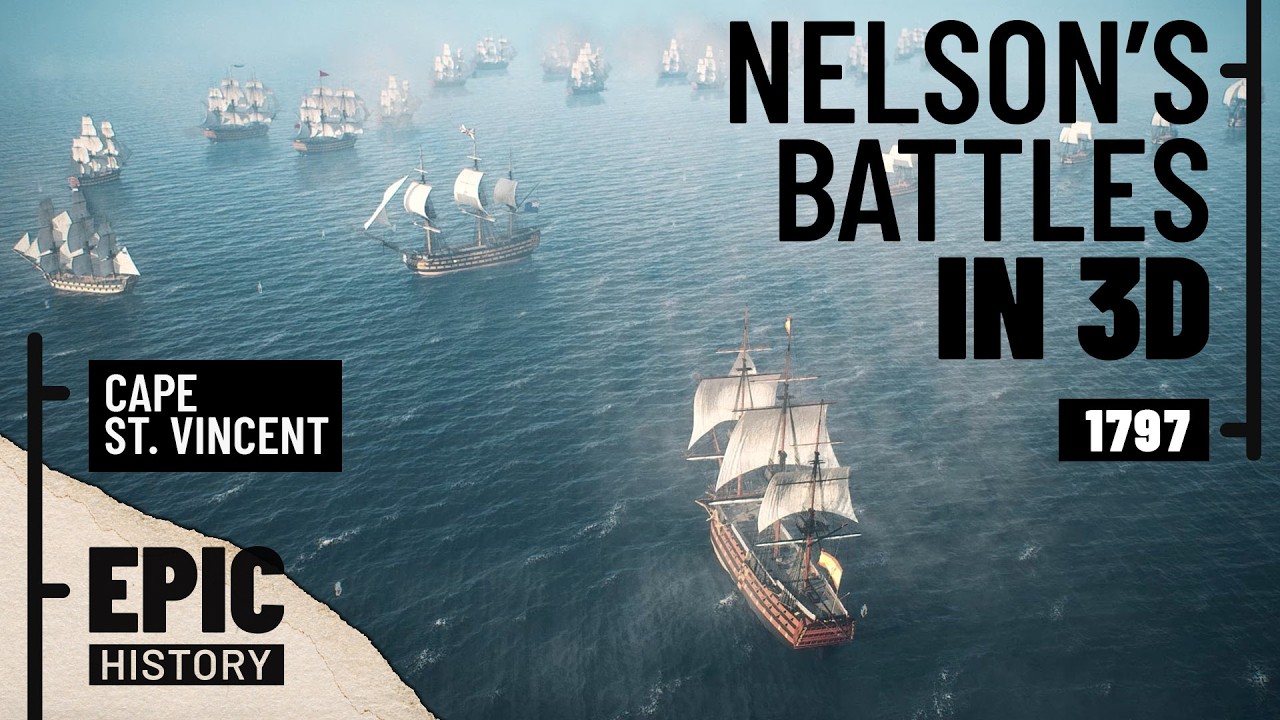
The article “Nelson’s Battles in 3D: Cape St. Vincent” presents a thorough examination of a pivotal naval engagement during the French Revolutionary War, a conflict that threatened British maritime hegemony due to a burgeoning alliance between France and Spain. The narrative unfolds the circumstances leading to the confrontation, highlighting the strategic intentions of British Admiral John Jervis to thwart the unification of Franco-Spanish naval power. Central to this account is the emergence of Commodore Horatio Nelson, whose audacious tactics and decisive leadership played a critical role in securing a remarkable British victory despite being heavily outnumbered.
Key elements of the battle are explored, including the formidable Spanish fleet, which boasted 27 ships, among them the powerful Santísima Trinidad, and the subsequent tactical maneuvers that defined the clash near Cape St. Vincent. The outcome of this confrontation not only solidified Nelson’s reputation as an extraordinary naval tactician but also had far-reaching implications for British naval strategy, effectively diminishing the threat posed by the Spanish fleet while preserving Britain’s maritime dominance. The discussion then transitions to contemporary reflections on the importance of meaningful careers, framing Nelson’s historical context within a broader narrative of addressing significant global challenges.
The Battle of Cape St. Vincent: A Comprehensive Analysis
Historical Context
Overview of the French Revolutionary War
The French Revolutionary War erupted in 1792, marking a radical shift in power dynamics across Europe. This conflict was driven by revolutionary ideals that challenged traditional monarchies, with France at the forefront, attempting to export its radical political changes. The upheaval in France not only led to internal strife but also spilled over into continental Europe, igniting a series of wars involving various coalitions and alliances. In this tumultuous atmosphere, the emergence of new alliances shifted balances of power, particularly the formation of a coalition between France and Spain in the late 18th century, which posed a specific threat to British naval supremacy.
Threat of French and Spanish Alliance
The alliance between France and Spain created a formidable maritime threat for Britain. Both nations sought to undermine British dominance on the high seas, leveraging their combined naval strength to challenge Britain’s military capabilities. If this alliance were to succeed in pooling their naval resources, the British Royal Navy could find itself significantly outmatched. The Spanish Navy, bolstered by its assets and experienced personnel, could potentially establish a unified fleet powerful enough to dominate naval engagements and secure vital trade routes, thus jeopardizing Britain’s economic interests and imperial security.
British Naval Dominance in the Late 18th Century
In the late 18th century, Britain recognized that its naval power was paramount to its status as a global empire. With over 144 ships of the line, the Royal Navy enjoyed a considerable advantage in terms of naval infrastructure, training, and experience. This dominance extended beyond sheer numbers—it was characterized by innovative tactics, a well-trained crew, and leadership that often inspired great feats of naval performance. However, the looming threat of a Franco-Spanish alliance nudged Britain’s commanders into strategic preparations, highlighting the necessity of maintaining their naval superiority.
Importance of the Battle
Strategic Goals of Admiral Jervis
Amidst increasing tensions, Admiral Sir John Jervis aimed to prevent the French and Spanish fleets from unifying their efforts at sea. Engaging the Spanish fleet near Cape St. Vincent, despite being outnumbered nearly two-to-one, became a calculated risk intended to disrupt potential alliances and maintain dominance in the Atlantic. This battle was not merely a military engagement; it was a strategic maneuver designed to send a message that Britain would not allow any coalitions to overpower its fleets.
Significance for British Empire and Security
The outcome of the Battle of Cape St. Vincent carried immense implications for Britain’s empire and the security of its maritime interests. A victory would reinforce Britain’s naval strength and deter further attempts by France and Spain to unite against it. Conversely, defeat could spell disaster, potentially isolating Britain in a time of war and opening the door for its adversaries to exploit its weakened position. Thus, the stakes of the battle transcended the immediate conflict, encompassing broader geopolitical ramifications.
Impact on Future Naval Engagements
The tactics and outcomes witnessed during the Battle of Cape St. Vincent laid foundational principles for future naval engagements. The effective leadership displayed by British commanders, particularly Commodore Horatio Nelson, exemplified innovative tactics that would shape warfare paradigms. Naval strategies employed during this confrontation would be studied and emulated in subsequent maritime conflicts, highlighting the importance of audacious tactics in overcoming numerical inferiority.

Key Figures
Admiral Sir John Jervis: Leadership and Strategy
Admiral Sir John Jervis, a seasoned naval officer with extensive experience, commanded the British fleet during this pivotal battle. His extensive background included fighting the French and Spanish forces, but the Battle of Cape St. Vincent marked a culmination of Jervis’s career, as he faced a formidable and numerically superior opponent. His decision to engage the Spanish fleet was grounded in strategic foresight, and his ability to inspire confidence among his men played a crucial role in the British success.
Commodore Horatio Nelson: Tactical Innovator
Commodore Horatio Nelson emerged as a central figure during the Battle of Cape St. Vincent. Known for his bold tactics and unorthodox approach to naval warfare, Nelson’s actions during the engagement would ultimately cement his reputation as a brilliant strategist. By prioritizing aggressive maneuvers over traditional line-of-battle strategies, Nelson successfully disrupted the Spanish fleet and showcased the essential qualities of leadership in the face of overwhelming odds.
Admiral Córdoba and the Spanish Command Structure
The commanding officer of the Spanish fleet, Admiral José de Córdoba y Ramos, found himself at a significant disadvantage during the conflict. Despite leading a more formidable number of ships, his command faced internal challenges that impaired effectiveness. His reliance on traditional naval tactics clashed with the innovative strategies employed by Jervis and Nelson, resulting in a failure to capitalize on their numerical superiority and leading to the devastating outcome for the Spanish fleet.
Spanish Fleet
Composition and Strength of the Spanish Navy
The Spanish Navy, while being one of the most powerful maritime forces of the time, struggled with various systemic issues. Armed with 27 ships, many of which were considered powerful vessels of the line, the Spanish fleet boasted the formidable Santísima Trinidad, which had a staggering 130 guns. However, the overall efficacy of the fleet was hampered by outdated tactics and a lack of adequate training compared to their British counterparts.
Role of the Santísima Trinidad
The Santísima Trinidad stood as the flagship of the Spanish fleet, representing the pinnacle of naval power and a symbol of Spanish military might. However, despite its impressive armament, the ship became a target during the battle. Its presence was both an asset and a liability; while it intimidated the British, its slow maneuvers contributed to the vulnerabilities that the Spanish fleet ultimately exhibited in combat.
Comparison of Forces: British vs. Spanish
In comparing the British and Spanish fleets, the British held significant advantages in terms of leadership, experience, and innovative tactics. While the Spanish fleet outnumbered the British, the latter had only 15 ships engaged, with a well-coordinated command structure that permitted rapid and decisive action. This underlined the adage that in warfare, quality of command often outweighs mere numerical superiority.

Strategic Movements
Introduction to the Tactical Situation at Cape St. Vincent
The stage was set at Cape St. Vincent for a massive naval engagement driven by increasingly volatile political circumstances. With Jervis in command of the British fleet and Córdoba leading the Spanish, the proximity of the fleets allowed for the brewing confrontation. Forces from both sides were approaching, guided by intelligence that heightened the urgency of their naval postures, setting the trajectory for an inevitable clash.
Preparation of Jervis’s Fleet for Engagement
In preparation for the imminent battle, Jervis undertook measures to ensure his fleet’s readiness. This included fostering communication among officers, organizing ship formations, and strategizing tactical maneuvers. By instilling confidence among his crew and ensuring every ship was operating at peak efficiency, Jervis laid the groundwork to maximize their combat effectiveness.
Routes and Maneuvers Leading to the Battle
As the fleets converged, various navigational challenges affected both sides. The British fleet executed maneuvers that capitalized on prevailing winds and sea currents. Conversely, the Spanish, attempting to consolidate their strength, often found themselves hampered by their formation. The evolving tactical situation showcased the importance of adaptability in naval engagements, as strategies had to shift in real time to respond to the fluid dynamics of battle.
Outcome of the Battle
Analysis of the British Victory
The British victory at the Battle of Cape St. Vincent was a testament to the power of innovative tactics and effective leadership. Despite being outnumbered, Jervis’s decision to engage allowed Britain to maintain its maritime dominance. The audacity displayed by Nelson, particularly his flanking maneuvers, disrupted the Spanish formations and created openings for decisive engagements, leading to crippling losses for Córdoba’s fleet.
Casualties and Losses on Both Sides
The battle resulted in considerable casualties on both sides; however, the British managed to achieve a strategic and symbolic victory with significantly lower losses than their adversaries. The British captured four Spanish ships, while the Spanish suffered extensive damage, both materially and in terms of morale. This disparity underscored the effectiveness of British tactics and the crisis of leadership facing the Spanish command.
Aftermath and Immediate Consequences
In the immediate aftermath of the battle, the British victory reverberated throughout Europe, demoralizing the Spanish fleet and reiterating British capabilities at sea. Jervis’s success contributed to the prevention of a Franco-Spanish coalition at sea, a strategic win that would resonate through subsequent conflicts. The defeat marked a turning point that shifted the balance of naval power back in favor of Britain and dampened further efforts of collaboration among France and Spain.
Battle Dynamics
Tactical Engagement Techniques Employed
Tactical engagement during the Battle of Cape St. Vincent revolved around innovative strategies that prioritized mobility and surprise. The British employed techniques that emphasized aggressive maneuvers and concentrated fire, often violating traditional naval engagement doctrine that favored stricter formations. These dynamics demonstrated the effectiveness of adaptability in combat situations.
Challenges in Spanish Fleet Formation
The Spanish fleet struggled with maintaining coherent formations amidst the innovative tactics of the British. Their reliance on predetermined strategies left them vulnerable to the fluid seas of battle. This rigidity culminated in the inability of Admiral Córdoba to effectively coordinate his fleet’s response, leading to their disarray during the critical moments of the fight.
Decisive Moments in the Battle
Key moments during the battle included Nelson’s audacious decision to engage, breaking the Spanish line, and his successful boarding operations which resulted in the capture of vital ships. These decisions not only turned the tide in favor of the British but also exemplified the leadership qualities that would define Nelson’s naval career.
Significance for Nelson
Emergence as a Naval Tactician
The Battle of Cape St. Vincent marked a crucial moment in Commodore Horatio Nelson’s career, positioning him as a formidable naval tactician. His approach during this battle showcased elements of daring and strategy that distinguished him from his contemporaries. His ability to execute decisive maneuvers under pressure set the stage for his future triumphs.
Recognition and Honors Received
Nelson’s audacious actions during the battle earned him widespread acclaim and accolades. Following the engagement, he received significant recognition from both his peers and the British public, ultimately being knighted for his contributions. This honor solidified his status as a national hero, paving the way for what would become an iconic legacy in British naval history.
Long-term Influence on Naval Warfare
The tactics employed by Nelson during the Battle of Cape St. Vincent influenced naval warfare long after the dust settled. His revolutionary ideas on tactical engagement urged future generations of naval strategists to challenge conventional methodologies, emphasizing the importance of speed, audacity, and flexibility in naval tactics. Nelson’s legacy becomes evident in how naval operations were carried out in the 19th century and beyond.
Admiral Córdoba’s Maneuvering
Strategic Intent Behind Withdrawal Attempts
Admiral Córdoba’s attempts to withdraw and regroup showcased the challenges faced by the Spanish command during the battle. His strategic intentions were aimed at preserving strength and potentially realigning forces to counter the British threat, yet such attempts were often undermined by the dynamic and fluid nature of maritime warfare.
Impact of Córdoba’s Decisions on Battle Outcome
Córdoba’s decisions during the engagement directly impacted the battle’s outcome, illustrating a lack of adaptation to evolving battle circumstances. His insistence on maintaining traditional naval tactics ultimately hindered the response time of his fleet, compromising the ability to regain control amidst the chaotic conditions that prevailed during the engagement.
Reactions of the Spanish Command During the Battle
The reactions of the Spanish command during the battle reflected the growing panic and disorientation they experienced as the British secured the upper hand. As losses mounted, the chain of command struggled to maintain order, leading to confusion and further losses. The lack of an effective response to Nelson’s maneuvers underscored the structural weaknesses inherent within the Spanish naval command.
Conclusion
Reflecting on the Legacy of Cape St. Vincent
The Battle of Cape St. Vincent remains a pivotal moment in naval history, embodying the struggles for dominance during a period defined by shifting alliances and warfare. The legacy of this battle transcends immediate military achievements, serving as a testament to the innovation and adaptability required for success in conflict.
The Impact of Historical Battles on Naval Strategy
Historical battles like Cape St. Vincent hold enduring lessons in strategy, leadership, and the importance of tactical innovation. War is not merely a test of strength but also one of intelligence, creativity, and the willingness to adapt to ever-changing circumstances. The strategies employed during Cape St. Vincent would inform naval engagements for generations to come.
Bringing Historical Lessons into Modern Context
As contemporary leaders in various fields grapple with complex global challenges, the lessons of the Battle of Cape St. Vincent resonate. The need for decisive leadership, strategic foresight, and adaptability remain relevant today. Understanding the intricacies of historical conflicts can provide valuable insights that can be applied to modern situations, ultimately fostering informed decision-making in an increasingly interconnected world.