
The Battle of Salamis, fought in 480 BC, serves as a critical juncture in the Persian Wars, showcasing the resilience of the outnumbered Greek fleet against a formidable Persian navy. Under the astute leadership of Themistocles, the Greeks strategically capitalized on the geographical constraints of the narrow straits of Salamis. This tactical advantage allowed the more agile Greek triremes to outmaneuver their larger Persian counterparts, leading to a decisive victory that fundamentally altered the course of the conflict.
In this analysis, you will explore the multifaceted strategies employed by the Greek forces and the historical context surrounding their remarkable triumph. The interplay of geographical knowledge, naval technology, and superior tactics will be examined, alongside the implications of the battle for both Greek morale and Persian naval supremacy. Ultimately, this exploration reveals how a seemingly insurmountable challenge transformed into a defining moment for ancient Greece.
The Battle of Salamis: A Convergence of Strategy, Geography, and Leadership

Historical Context of the Persian Wars
Background of the Greek-Persian Conflict
The Greek-Persian conflict emerged against a backdrop of cultural and political tension. After the Persian Empire subjugated Ionian Greek city-states in Asia Minor, Athenian democrats supported a revolt. This declining power of the Ionian Greeks was met with a robust Persian response, leading to a desire for retribution against Athens. Hence, the roots of animosity were laid, culminating in a series of invasions that would define the geo-political landscape of the ancient Mediterranean.
King Darius’ Initial Invasions and the Battle of Marathon
In 490 BC, King Darius sought to quell the Greek resistance and punish Athens for its involvement in the Ionian revolt. The Athenian victory at the Battle of Marathon became a symbolic triumph of democracy over despotism, elevating Athenian morale but inciting further Persian resolve. Darius’s campaign, though initially successful, faltered significantly at Marathon, marking the first substantial defeat of Persian forces in Greece. This laid the groundwork for his son Xerxes to confront the Greeks with renewed vigor.
The Stakes for Athens and the Rise of Xerxes
Following Darius’s death, Xerxes ascended the throne, determined to avenge Athens and subjugate Greece. This ambition was amplified by his desire to solidify his legacy. Athens, buoyed by its military prowess but vulnerable, faced the urgency of a looming storm. The stakes could not have been higher: not only was Greek independence at risk, but the balance of power in the region hung precariously on the outcome of the ensuing confrontations.
The Strategic Importance of Salamis
Geographical Advantages of the Salamis Straits
The straits of Salamis, narrow and intricate, presented a unique battleground where the vulnerabilities of larger ships could be exploited. In these confining waters, the Greek fleet was able to maneuver effectively while the unwieldy Persian behemoths struggled to operate. This geographical advantage became central to the Greek strategy, acting as both a defensive bulwark and an offensive platform.
Implications of Naval Power in Ancient Warfare
Naval prowess played an essential role in ancient warfare. Control of the seas provided not only a tactical advantage in battles but also crucial logistical support for supply lines and troop mobility. By the time of the Battle of Salamis, the significance of naval strength was well understood; it was the fulcrum on which victory could pivot. Thus, Athens’s investment in its navy was not merely ambitious; it was an existential necessity.
How Geography Shaped Greek Tactics
Greek tactics at Salamis were directly influenced by the topography of the area. Utilizing knowledge of local currents and winds, the Greeks positioned themselves to draw the Persian fleet into the straits, effectively neutralizing their numerical superiority. The narrow confines of the straits allowed choppier waters to disrupt the Persian formations, leading to confusion and disarray among their ranks. Thus, geography and clever tactics became instruments of Greek ingenuity and resilience.
The Greek Naval Fleet
Composition and Capabilities of the Greek Triremes
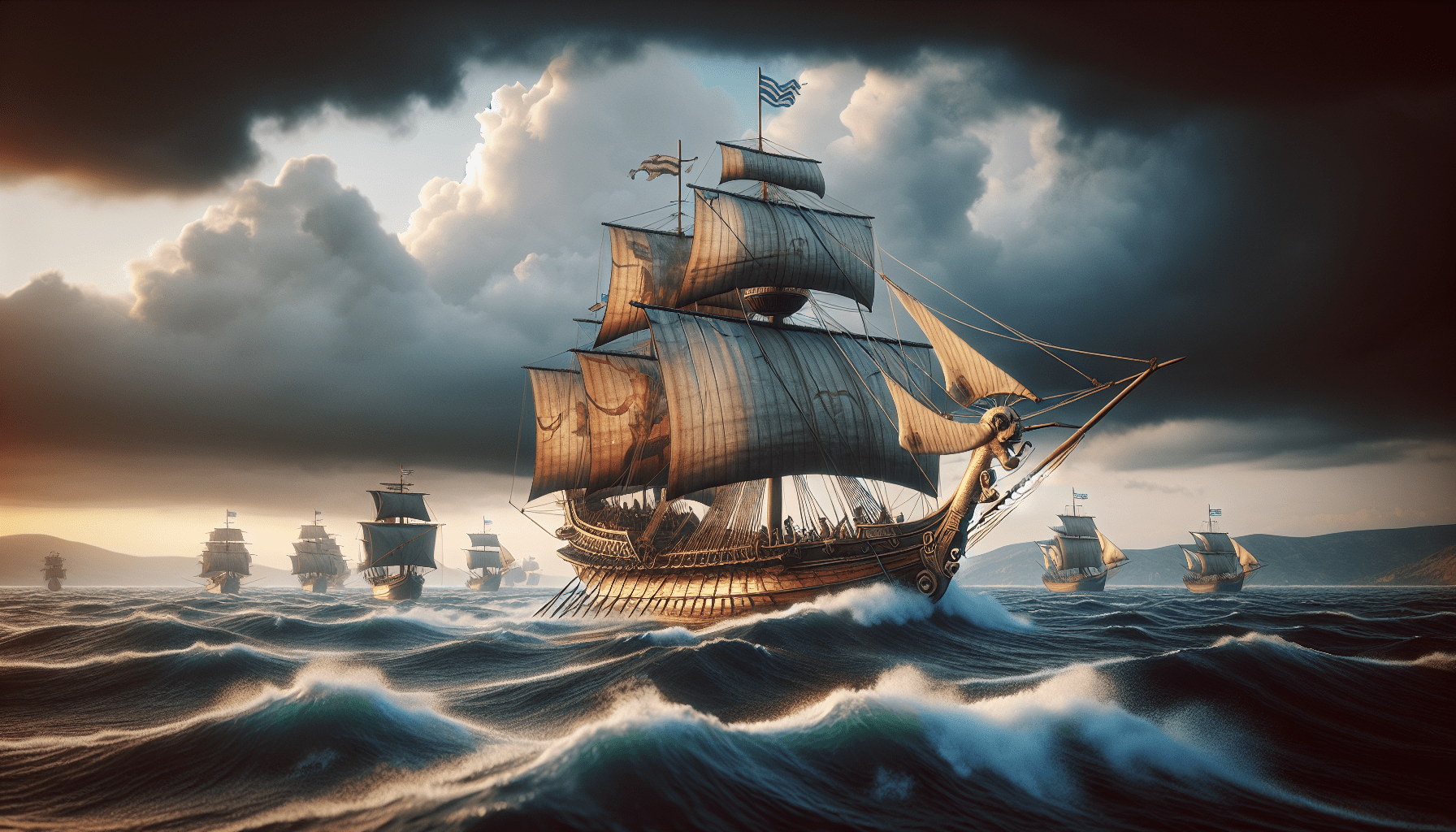
The backbone of the Greek naval strategy was the trireme, a vessel designed for speed, agility, and endurance. With three rows of oars, these ships could swiftly maneuver in combat, allowing them to strike with precision. Each trireme housed around 200 men, who worked in concert to create a highly responsive maritime force. This gave the Athenians a distinct edge in naval engagements, particularly in the treacherous straits of Salamis.
The Innovation in Shipbuilding and Naval Strategy
The emergence of the trireme represented a pivotal innovation in ancient naval warfare. The design allowed for a lighter vessel that could navigate narrow waters, a crucial factor in Greek tactics. Moreover, the strategic emphasis on speed over size represented a shift in naval thinking, fundamentally altering how naval engagements were conducted. The combination of design acumen with strategic foresight underscored the uniqueness of the Greek approach to naval confrontation.
Deployment and Organization of the Athenian Fleet
The Athenian fleet was meticulously organized to maximize its capabilities. Triremes were deployed in a manner that allowed for flexibility in formations, with the leadership of seasoned commanders like Themistocles ensuring that each vessel could perform in concert with the others. This level of coordination was critical for executing the complex maneuvers required to capitalize on the limitations imposed by the Gulf of Salamis.
Persian Naval Strength
Overview of the Persian Naval Forces
The Persian navy consisted of a diverse array of ships, manned by crews from across the vast empire, including Egyptians, Phoenicians, and subjugated Greek city-states. While numerically superior, this heterogeneous composition often led to a lack of unity in strategic decision-making, ultimately undermining their combat effectiveness. The sheer size of the Persian fleet, with its formidable ships, posed a significant threat but also revealed inherent vulnerabilities.
Challenges Faced by the Larger Persian Fleet
Despite their numerical advantage, the Persian forces grappled with challenges that haunted them throughout their campaign. The size of their fleet rendered it less agile, limiting their ability to adapt to the rapidly changing dynamics of naval combat. Furthermore, the grandeur of their vessels proved to be a disadvantage in the tight confines of Salamis, where maneuverability was a critical requirement for success.
Underestimating the Greek Capabilities
The Persian command grossly underestimated the Athenian resolution and capacity for naval warfare. Caught off guard by the Greeks’ strategic expertise, the Persian leaders thought their numerical superiority and advanced ship designs would guarantee victory. This underestimation was a fatal miscalculation that would ultimately contribute to their downfall.
Leadership and Strategic Planning
Themistocles as a Decisive Figure
The efficacy of the Greek naval strategy can largely be attributed to the leadership of Themistocles. A visionary strategist, he understood the imperative need for a robust naval fleet and was pivotal in mobilizing resources toward its development. His ability to navigate the complexities of Athenian politics and forge a united front among the fractious city-states exemplified the qualities of effective leadership critical for opposing the Persians.
Implementation of Deception and Trickery
Themistocles’s strategic brilliance also lay in his ability to employ deception. By spreading false intelligence regarding Greek ships and intentions, he lured the Persian fleet into the straits of Salamis, setting the stage for a tactical ambush. This clever maneuvering demonstrated the impact of cunning in warfare, where the element of surprise played an instrumental role in securing victory.
Formation of Alliances Among Greek City-States
The unified front achieved among the Greek city-states was unprecedented in an era marked by fragmentation and rivalry. As the Persian threat escalated, leaders like Themistocles successfully engaged their counterparts in Sparta, Corinth, and other city-states to form a coalition. This collective action drastically shifted the balance of power and fostered a sense of solidarity against the common foe.
The Role of Intelligence and Information
Utilizing Spies and Scouts for Strategic Advantage
The battle plan hinged on the effective communication of intelligence gathered through spies and scouts. This information provided the Greeks with critical insights into Persian movements and their battle strategies. The ability to anticipate enemy actions and movements bolstered Greek confidence going into Salamis and served to undergird their tactics significantly.
Communicating Plans and Rallying Support
Ensuring effective communication of battle plans and rallying support from allied city-states was indispensable for Athenian success. The diplomatic finesse employed by Themistocles helped forge unity among traditionally rival factions, allowing for streamlined decision-making and increased morale. This cohesion translated into effective collaboration during the chaos of battle.
The Role of Misinformation in the Battle
Misinformation became a tactical weapon for the Greeks, leading the Persian forces into a carefully contrived trap. By misleading their adversaries regarding the location and strength of their fleet, the Greeks were able to manipulate the Persian advance. This perceptive use of information as a weapon showcased the profound effect of psychological tactics in warfare.

Execution of the Battle Plan
Luring the Persian Fleet into the Straits
The execution of the Athenian battle plan relied upon the successful luring of the Persian fleet into the confines of Salamis. The Greeks strategically positioned their forces so that, as the Persians sailed into the straits, they found themselves at a disadvantage. The narrowness of the waterway hindered the effectiveness of the larger Persian ships, allowing Athenian triremes to strike with greater impact.
Tactics Employed During the Naval Engagement
The Greek tactics during the battle included a combination of speed, agility, and cohesion among units. The triremes would launch rapid offenses, targeting the vulnerable sides of the Persian ships and exploiting gaps in their formations. These tactics, rooted in the understanding of naval combat and enhanced by the narrower battlefield, played to the strengths of the Greek fleet and overwhelmed the unwieldy Persian forces.
Adapting to Evolving Scenarios During the Battle
Flexibility in tactical execution was critical amidst the chaos of battle. Greek commanders swiftly adjusted their strategies in response to unfolding events on the battlefield, allowing them to capitalize on the disarray within the Persian ranks. This adaptability was in stark contrast to the cumbersome operational tempo of the larger Persian fleet, which struggled to reorganize effectively under pressure.
Factors Contributing to Greek Victory
Surprise and Psychological Advantages
The element of surprise was pivotal in the Greek victory at Salamis. The Persian fleet, expecting an easy triumph, was instead met with a well-coordinated and determined force of Greek triremes. The psychological impact of this unexpected resistance shattered the confidence of the Persian ranks, leading to confusion and panic.
Speed and Maneuverability of Greek Triremes
The inherent design advantages of the Athenian triremes, which afforded them remarkable speed and maneuverability, allowed the Greeks to engage and disengage with precise timing. This agility enabled the Greeks to enact hit-and-run tactics that continually pressured the larger Persian ships. In the narrow confines of the straits, this became a decisive factor in dictating the terms of engagement.
The Impact of Greek Unity and Morale
Unified under the banner of resistance against Persian domination, Athenian morale soared during the battle. The shared experience of confronting a common adversary fostered a sense of camaraderie that translated into fierce determination on the battlefield. This collective spirit, coupled with the desperation of the stakes involved, enhanced the effectiveness of Athenian forces against their far larger opponents.
Aftermath of the Battle of Salamis
Consequences for Persian Naval Power
The defeat at Salamis severely undermined Persian naval strength and morale. The loss not only diminished their fleet’s operational capacity but also instigated doubts about Xerxes’s leadership. The implications of this defeat echoed throughout the empire, demoralizing Persian forces and emboldening the Greek city-states, setting the stage for further confrontations.
Effects on Greek Morale and Unity
In the aftermath, the Greek victory fostered unprecedented unity and boosted morale across the city-states. The triumph at Salamis became a rallying point for Athenian and allied forces, ultimately leading to their successful confrontation in subsequent battles. This newfound sense of solidarity laid the groundwork for a sustained resistance against Persian attempts at subjugation.
How Salamis Set the Stage for Subsequent Victories
The events of Salamis galvanized the Greeks for the remaining confrontations in the Persian Wars. The victory not only served as a tactical turning point but also as an ideological statement, proving that a coalition of determined city-states could indeed thwart the might of the Persian Empire. This instilled a confidence that would be crucial in rendering further Persian campaigns futile.
Conclusion
Summary of Key Factors Leading to Greek Victory
In summary, the Greek victory at the Battle of Salamis can be attributed to a confluence of factors, including strategic geographical advantages, superior naval tactics, effective leadership, and robust communication. The merging of these elements created an environment conducive to overcoming the odds against a numerically superior adversary.
Reflection on the Lessons of the Battle of Salamis
The lessons gleaned from Salamis extend beyond military strategy; they emphasize the importance of unity in the face of existential threats. The Greeks demonstrated that collective effort, innovation, and adaptability could yield profound outcomes, even in dire situations. This ethos resonates well beyond the pages of history and remains relevant in contemporary contexts of collaboration and resilience.
The Enduring Impact of This Naval Battle on Future Conflicts
The Battle of Salamis marks a significant point in military history, showcasing the effectiveness of strategic innovation over brute force. Its legacy continues to influence naval warfare and strategic thinking, highlighting the importance of morale, intelligence, and adaptability in achieving victory. As a learning point, Salamis serves as a testament to the enduring power of unity and strategic ingenuity in turning the tide of conflict.