
The history of Russia unfolds dramatically as it emerges from a period known as the Time of Troubles, characterized by chaos and foreign invasion. Central figures such as Prince Pozharsky and Kuzma Minin lead the charge to liberate Moscow from Polish forces, setting the stage for significant leadership change with the appointment of the youthful Mikhail Romanov. This period witnesses a complex interplay of war, social reform, and religious upheaval, most notably the establishment of serfdom through the Sobornoye Ulozheniye and the division within the Russian Orthodox Church instigated by Patriarch Nikon’s reforms.
As the narrative progresses, the ascendance of Peter the Great marks a pivotal shift in Russia’s trajectory towards becoming a formidable European power. Driven by an ambition to modernize, Peter embarks on transformative campaigns, establishing St. Petersburg and reforming the military and government structures. This era is also significant for the rise of influential female rulers, including Empresses Anna Ioannovna and Elizabeth, who navigate the complexities of war and diplomacy, ultimately shaping the course of Russian history into the 18th century.
The Time of Troubles
Overview of the Crisis
In the early 17th century, Russia found itself engulfed in a profound crisis known as the Time of Troubles (Смутное время). This tumultuous period, spanning from approximately 1598 to 1613, was characterized by political instability, foreign invasions, famine, and civil strife. The death of Tsar Feodor I in 1598, and the subsequent lack of a clear heir, left a power vacuum that various noble factions attempted to exploit. This situation led to widespread chaos, with the populace facing an onslaught of suffering from war, starvation, and disease. The ramifications of this crisis were so severe that it is estimated a significant portion of the population, potentially up to a third, perished during this time.
Foreign Occupation of Moscow
The culmination of the Time of Troubles saw Moscow occupied by foreign powers, primarily the Polish-Lithuanian Commonwealth. In 1610, Polish forces captured the city, further complicating the already desperate situation for the Russian people. Occupation was marked by brutal repression and cultural dislocation, as local populations struggled under foreign rule. The occupation forced Russians into a defensive stance, igniting a sense of national identity that would rally them against the foreign invaders. Resistance movements began to coalesce, revealing the deep-seated aspirations of the Russian populace for sovereignty and stability.
Role of Prince Pozharsky and Kuzma Minin
In this critical juncture, two figures emerged as icons of national resistance: Prince Dmitry Pozharsky and merchant Kuzma Minin. Under their leadership, a people’s militia was organized, drawing on various social classes to confront the Polish garrison occupying Moscow. Their efforts culminated in the liberation of the city in 1612, an event celebrated in Russian history as a moment of unity and resilience. Pozharsky’s noble birth and military acumen, paired with Minin’s personal investment in the struggle as a common man, embodied a unique alliance that would inspire subsequent generations. This liberation not only restored Moscow but also paved the way for the selection of a new ruling dynasty.
Establishment of the Romanov Dynasty
Election of Mikhail Romanov
In the aftermath of the Time of Troubles, the Zemsky Sobor, a national assembly, convened to elect a new ruler to restore stability. In 1613, they chose Mikhail Romanov, a relatively obscure figure at the time, partly due to his family’s noble lineage and connection to the last ruling dynasty. Mikhail’s ascension marked the beginning of the Romanov dynasty, which would govern Russia for over three centuries. His election was seen as a collective move towards national healing and unity, reflecting a desire to move away from the chaos that had defined the preceding years.
Early Reforms and Internal Peace
Mikhail Romanov’s reign initiated a series of reforms aimed at restoring internal order and peace. He paved the way for significant political and military restructuring, facilitating the rebuilding of a war-torn nation. Mikhail engaged in negotiations that resulted in peace treaties with foreign powers, allowing Russia to regain territories lost during the Time of Troubles. Under Mikhail’s guidance, the state began implementation of policies that would stabilize the economy, regulate the populace, and lay the groundwork for future reforms.
The Legacy of the Romanovs
The Romanov dynasty’s establishment had a lasting impact on Russian history, reshaping the socio-political landscape for generations. The dynasty symbolized continuity and stability in a nation that had experienced profound turmoil. The Romanovs would oversee a period of expansion, transformation, and conflict, balancing between tradition and the pressures of modernity. The period that followed the Time of Troubles is often viewed as laying the foundation for Russia’s emergence as a significant European power.
Social and Religious Changes
The Sobornoye Ulozheniye and Serfdom
One of the most significant legislative acts during the early Romanov period was the Sobornoye Ulozheniye of 1649. This legal code organized the structure of Russian society but also formalized serfdom, binding the majority of the peasantry to the land and their landlords. The implications of such legislation were profound, as approximately 80% of the population remained in a servile condition. The codification of serfdom created a rigid social hierarchy that persisted for centuries, shaping the Russian agrarian landscape and reinforcing the power dynamics within the feudal system.
Patriarch Nikon’s Reforms
The period was also marked by substantial religious upheaval, notably through the efforts of Patriarch Nikon in the 1650s. Nikon’s reforms aimed at aligning the Russian Orthodox Church with Greek Orthodox practices, which included changes in liturgical texts and rituals. However, these reforms sparked significant dissent, leading to a schism within the church between the reformers and those who resisted change—the Old Believers. This rift had lasting effects on Russian society, creating enduring religious tensions that highlighted the intersection of faith and identity within the national discourse.
The Division within the Orthodox Church
The division within the Orthodox Church reflected broader societal conflicts and struggles for power. The dissent against Nikon’s reforms illustrated the challenges faced in unifying a nation emerging from chaos. The Old Believers, feeling persecuted for their adherence to traditional practices, symbolized a counterculture that resisted the tides of modernization and reform. This fissure served to deepen societal divisions and contributed to the complexities of Russian identity in subsequent centuries.
The Thirteen Years’ War
Conflict with the Polish-Lithuanian Commonwealth
The Thirteen Years’ War (1654-1667) emerged from ongoing tensions with the Polish-Lithuanian Commonwealth and was sparked by the Cossack uprisings. The Russian Empire, seeking to reclaim territories lost and assert its influence, engaged in a protracted conflict that would test its military prowess. The war not only aimed to expand Russian borders but also to reaffirm the nation’s sovereignty in the face of external threats.
Military Campaigns and Territorial Gains
Throughout the war, Russian military engagements led to significant territorial gains, including the capture of Smolensk and Kiev. These victories bolstered Russian morale and contributed to a sense of national pride. The successful campaigns against the Polish-Lithuanian Commonwealth demonstrated Russia’s emerging military capabilities and laid the groundwork for future expansions, establishing a more assertive stance in regional politics.
Impact on Russian Society
The Thirteen Years’ War had profound implications for Russian society, exacerbating social tensions and highlighting the stark realities of warfare. The human cost of conflict impacted countless families, often deepening the plight of the peasantry and leading to increased discontent. The aftermath of the war would set the stage for internal strife, including revolts and resistance movements that would shape the sociopolitical landscape of Russia.
Rise of Peter the Great
Seizure of Power from Sofia
The ascendance of Peter the Great marked a significant turning point in Russian history. In 1689, at the age of 17, Peter seized power from his half-sister, Princess Sofia, who had been acting as regent. His rise was characterized by a desire for reform and a vision for modernizing Russia. This power struggle highlighted the complex dynamics of succession and the challenges faced by emerging leaders in navigating traditional power structures.
Journey to Europe and Its Impacts
Peter’s transformative journey to Europe between 1697 and 1698 served as a catalyst for his ambitions. This Grand Embassy exposed him to Western technologies, military innovations, and governance models that significantly influenced his outlook on ruling Russia. Peter’s interactions with foreign leaders and craftsmen ignited a commitment to reshaping Russian society, marked by a determination to adopt European customs and practices.
Introduction of Western Innovations
Upon his return, Peter embarked on a series of sweeping reforms aimed at modernizing Russia’s military, administration, and economy. He established new government institutions, implemented tax reforms, and prioritized the development of industry and commerce. Peter’s efforts to westernize Russian society were aimed at elevating its status on the European stage, often met with resistance from traditionalists who were wary of abandoning established customs.
Peter the Great’s Wars
Conflict with the Ottoman Empire
Peter the Great’s military aspirations also led to conflicts with the Ottoman Empire. He sought to increase Russia’s territory and access to warm-water ports, which had long eluded previous rulers. The war with the Ottomans was marked by strategic military maneuvers, ultimately leading to Russia’s acquisition of the critical Black Sea port of Azov. These successes were pivotal in recognizing Russia as a formidable player on the international stage.
The Great Northern War
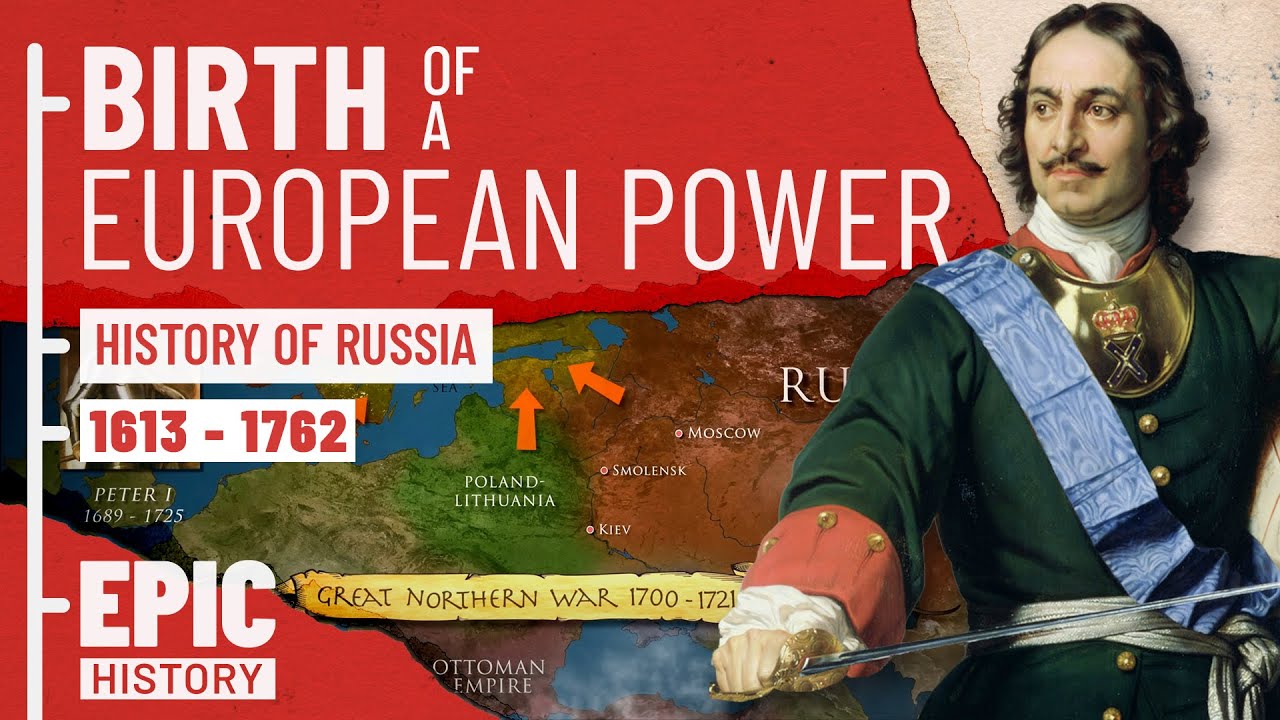
The Great Northern War (1700-1721) was perhaps the most defining conflict of Peter’s reign. Pitting Russia against Sweden, a dominant power in Northern Europe, the war illustrated Peter’s determination to secure Russia’s status as a European power. The war involved multiple battles across the Baltic region, leading to significant territorial changes and effectively ending Sweden’s reign as a regional hegemon.
Victory at the Battle of Poltava
The turning point of the Great Northern War came with the historic Russian victory at the Battle of Poltava in 1709. This decisive battle not only marked the decline of Swedish power but also cemented Peter’s reputation as a military leader. The victory at Poltava was pivotal in elevating Russia’s status in European politics, allowing Peter to negotiate favorable terms at the war’s conclusion and solidifying Russia’s expansionist ambitions.
Cultural and Structural Reforms
Establishment of St. Petersburg
In 1703, Peter the Great founded the city of St. Petersburg, which would serve as Russia’s new capital and a symbol of its ambitions towards Westernization. The city was designed to reflect modern European ideals, with wide avenues and grand architecture. The establishment of St. Petersburg was not merely a geographical shift but a cultural project aimed at redefining Russian identity and aligning it closer to Western norms.
Reforms in Education, Government, and Industry
Peter’s ambition for a modern Russia extended into education, government, and industry. He instituted educational reforms that promoted technical and scientific learning, sending students abroad to study and bringing foreign experts to Russia. His government reforms sought to centralize power and increase efficiency, establishing a meritocratic approach that undermined the traditional nobility’s control. Industrial advancements were also prioritized, fostering a sense of economic modernization equivalent to the political changes afoot.
Formation of the Russian Navy
A significant aspect of Peter’s maritime vision was the establishment of the Russian Navy. Recognizing the importance of naval power for national security and influence, he invested heavily in naval training and shipbuilding. The formation of a capable navy allowed Russia to assert its naval presence in the Baltic Sea and beyond, contributing to its growing influence in European affairs.
The Eighteenth Century Power Shift
The Reign of Empress Anna Ioannovna
Following Peter the Great’s death in 1725, his successors struggled to maintain the momentum of reform. The reign of Empress Anna Ioannovna (1730–1740) was marked by a return to the aristocracy’s interests, despite her initial commitment to Peter’s reforms. However, she propelled Russian expansion through diplomacy and military acquisitions during her tenure. Anna’s rule highlighted the significant role of female leadership in shaping political dynamics during this turbulent period.
Exploration of Alaska by Vitus Bering
During Anna Ioannovna’s reign, exploration efforts were intensified, notably by Danish navigator Vitus Bering. In the service of the Russian Empire, Bering embarked on voyages that charted parts of the northwest coast of North America, including Alaska and the Aleutian Islands. These explorations expanded Russian interests in the Pacific and laid the groundwork for future territorial claims, highlighting the empire’s ambition to extend its reach beyond Europe.
Catherine the Great’s Ascension to Power
The ascension of Catherine the Great in 1762 marked another transformative era in Russian history. Following a coup that led to the deposition of her husband, Peter III, Catherine demonstrated considerable political acumen. She continued to foster the reforms initiated by Peter while also emphasizing her enlightened ideals, contributing to Russia’s emerging status as a significant European power.
Military Engagements in Europe
Participation in the Seven Years’ War
Catherine the Great’s reign also saw Russia engage in the global conflict of the Seven Years’ War (1756–1763), significantly impacting European dynamics. Russia’s involvement allowed it to solidify its influence over Eastern Europe and project power into Western Europe, establishing itself as a formidable contender in the shifting balance of power.
The Victory at Kunersdorf
In 1759, the Russian army achieved a resounding victory at the Battle of Kunersdorf against the Prussian forces. This battle was one of the most significant victories for Russia during the war. The success notably reinforced Russia’s military reputation and elevated Catherine’s status as an effective ruler, though the subsequent political maneuvering limited the benefits of this victory.
Consequences for Russian Influence in Europe
The outcome of the Seven Years’ War and Russia’s military engagements during this period reinforced its appetite for expansion and influence in European affairs. As the conflict concluded, Russia emerged with increased prestige, marking a significant escalation of its presence in the international arena. This period significantly shaped Catherine’s policies and ambitions, steering the nation towards further engagement in European geopolitics.
Conclusion
The Transformation of Russia into a European Power
The period spanning from the Time of Troubles to the latter part of the 18th century marked a pivotal transformation in Russia’s trajectory towards becoming a European power. Through decisive leadership, military engagements, and cultural reforms, Russia began to redefine itself in the context of European statehood.
Lasting Impact of the Romanov Reforms
The legacy of the Romanov dynasty’s reforms established a foundation that would influence Russian society far beyond its own reign. The consolidation of power, the implementation of legal codes, and the promotion of Western ideologies contributed to shaping modern Russian identity. The profound impact of these reforms rippled through Russian history, defining social structures and political landscapes for generations.
Legacy of the 18th Century Rulers
The 18th century left an indelible mark on Russia, characterized by its complex interplay of tradition and reform, expansion and consolidation. The reigns of leaders like Peter the Great and Catherine the Great represented both the ambitions and challenges of a nation rediscovering its place in the world. Their legacies continue to resonate in modern discussions of Russian identity, governance, and its historical narrative as a European power.