
John F. Kennedy’s Moonshot stands as a seminal moment in the history of American space exploration, marking a bold commitment to send humans to the Moon and return them safely by the end of the 1960s. In a pivotal 1961 speech, Kennedy articulated this vision as a unifying national objective amid the Cold War, emphasizing the necessity for accelerated advancements in science and technology. This ambitious undertaking mobilized not only NASA but also private industries and academic institutions, fostering innovation through the development of critical technologies such as the Saturn V rocket and Apollo lunar modules.
The legacy of the Moonshot is multifaceted, encapsulating significant achievements like the historic Apollo 11 mission, in which astronauts Neil Armstrong and Buzz Aldrin made humanity’s first footprints on lunar soil. This endeavor transformed the landscape of science and engineering while spurring technological advancements that resonate in numerous fields today. Challenges such as political shifts and budget constraints serve as a reminder of the resilience required for exploration, emphasizing that monumental achievements are often accompanied by significant risks and sacrifices.
Historical Context
The Cold War Climate
The Cold War era, stretching roughly from the late 1940s until the early 1990s, fostered an environment of intense geopolitical tension between the United States and the Soviet Union. As nuclear arsenals grew and ideological divides deepened, the competition for global influence manifested not just in military might but also in technological prowess. The launch of the Soviet satellite Sputnik in 1957 marked a significant moment in this rivalry, igniting fears in the United States of falling behind in scientific advancement and national security. This climate of fear and competition provided fertile ground for ambitious undertakings, where success was often seen as a reflection of national superiority. The drive to claim dominance in space and science became emblematic of the broader struggle, leading to what would be termed the Space Race.
The Space Race Origins
The Space Race was fundamentally born out of the backdrop of Cold War tensions, wherein the perceived gap between American and Soviet technological capabilities raised both alarm and patriotic fervor across the United States. Early milestones included the successful launch of Sputnik and the subsequent establishment of NASA in 1958, formulated in response to the increasing urgency surrounding space exploration. Each achievement by the Soviets, such as Yuri Gagarin’s historic flight in 1961, propelled America toward a definitive rebuttal. This period was characterized by urgency, where the quest for an American manned lunar landing emerged not only as an engineering challenge but as a statement of resolve and national pride. Thus, the Apollo program was conceived, encapsulating the spirit of competition, innovation, and the pressing need for an America unyielding in its aspirations.
America’s Technological Landscape in the 1960s
The 1960s was a transformative decade for American technology, marked by rapid advancements spurred by both military necessity and an increasing appetite for scientific exploration. The nation witnessed remarkable innovations in computing, electronics, and materials science, elements that would soon converge on the ambitious goal of lunar exploration. With governmental investments, particularly under the aegis of NASA, the U.S. cultivated a robust technological ecosystem. This included the birth of the Integrated Circuit, which laid the groundwork for modern computing, alongside advances in telecommunications. Moreover, as universities and private industries collaborated with federal agencies, a culture of innovation began to flourish, setting the stage for the monumental challenge articulated by President Kennedy.
JFK’s Vision
The 1961 Speech
In a historic address before Congress in May 1961, President John F. Kennedy made his intentions clear: the United States would send a man to the Moon and bring him back safely to Earth before the decade concluded. This visionary declaration was not merely a statement about space exploration; it was a clarion call for unity and resolve in the face of global competition. Kennedy’s eloquence drew on the dual themes of technology and human ambition, presenting the moonshot as a pivotal challenge that could galvanize national spirit and innovation. This moment crystallized a vision that would ultimately mobilize an entire nation behind the cause of space exploration.
Framing the Moonshot as a National Objective
Kennedy understood that the success of the moonshot would hinge on rallying public support, a strategy he cleverly orchestrated by framing it as a collective mission. By positioning lunar exploration as a national objective rather than a mere scientific endeavor, he tapped into the deeply-held beliefs that defined the American identity. This narrative served not only to inspire confidence in technological capabilities but also to galvanize efforts across various sectors—from government to academia and private industry. Kennedy’s vision redefined what was possible, urging citizens to grasp the mantle of exploration and to view their participation as instrumental in reclaiming America’s position on the world stage.
The Symbolism of Space Exploration
Kennedy deftly employed the symbolism of space exploration to evoke notions of progress, unity, and human spirit. The act of landing on the Moon signified not just a technical achievement but a victory over adversity, aligning the lunar mission with the broader goals of societal triumphs such as civil rights and the overcoming of poverty. In this narrative, the Moon became a symbol not only of national capability but of the indomitable spirit of humanity—the potential to transcend limitations, push boundaries, and unite in pursuit of greatness. The implications of Kennedy’s vision would resonate far beyond the technical achievements of the Apollo program, solidifying space exploration as a defining objective of American ingenuity.

NASA’s Role
Establishment and Goals of NASA
The establishment of NASA in 1958 marked a significant shift in the United States’ approach to space exploration. Formed in the wake of Sputnik’s launch, NASA was charged with leading the nation’s space endeavors and coordinating efforts that spanned a vast array of scientific and engineering disciplines. The agency’s goals were ambitious: to advance aeronautics and space technologies, conduct human spaceflight, and ultimately land on the Moon. These objectives demanded not only meticulous planning but also robust collaboration across numerous sectors, including academia, private industry, and international partners. As NASA began to delineate its mission, it became clear that the endeavor would necessitate unprecedented levels of resource allocation and inter-agency cooperation.
Leadership Under Wernher von Braun
The leadership of Wernher von Braun, a prominent figure in the American space narrative, brought a wealth of experience from his work in Germany during World War II. As the chief architect of the Saturn V rocket, von Braun’s vision and expertise were instrumental in the lunar program’s success. He inspired a generation of scientists and engineers, translating ambitious theoretical concepts into tangible designs and operational plans. Under his leadership, NASA adopted a systematic approach to rocket development—prioritizing safety, reliability, and efficiency. von Braun’s ability to communicate complex ideas effectively ensured a shared understanding of goals among various stakeholders, fostering an environment ripe for innovation and problem-solving.
Collaboration with Private Industry
Recognizing the enormity of the Apollo program, NASA actively fostered collaborations with private industry, creating a synergistic relationship that would prove crucial to its success. Companies ranging from large aerospace firms to smaller innovative startups were engaged in various capacities, from developing spacecraft components to supplying advanced materials. This cross-pollination of expertise not only accelerated technological advancements but also allowed for the efficient allocation of resources. The public-private partnerships established during this time resonated throughout the decade, setting a precedent for ongoing collaboration in future space endeavors and highlighting the critical role the private sector plays in advancing national objectives.
Technological Innovations
Development of the Saturn V Rocket
The Saturn V rocket stands as one of the most significant achievements in aerospace engineering, emblematic of American ingenuity and determination. Designed to carry astronauts to the Moon, the Saturn V was the largest and most powerful rocket ever built, necessitating groundbreaking advancements in propulsion and structural design. From its towering height to its multi-stage capability, the Saturn V represented a colossal engineering feat that combined innovations in rocket technology and materials science. Each stage of the rocket operated with precision, ferrying astronauts beyond Earth’s atmosphere and paving the way for lunar exploration. The successful deployment of the Saturn V served as a benchmark, validating the rigorous methodologies and collaborative efforts that drove the Apollo program forward.
Design of the Apollo Command/Service Module
The Apollo Command/Service Module (CSM) was a masterpiece of design and functionality, central to the execution of the lunar missions. The CSM was responsible for transporting astronauts to and from the Moon while providing essential life-support systems throughout their journey. It was equipped with state-of-the-art navigation controls and communication systems, ensuring reliable connections with mission control. The module’s innovative design also included redundancies and fail-safes, underscoring NASA’s commitment to crew safety. The CSM’s evolution through rigorous testing and simulation practices demonstrated not only technical resilience but also a profound understanding of the complexities of space travel, ultimately allowing for safe and successful missions.
Engineering the Lunar Module
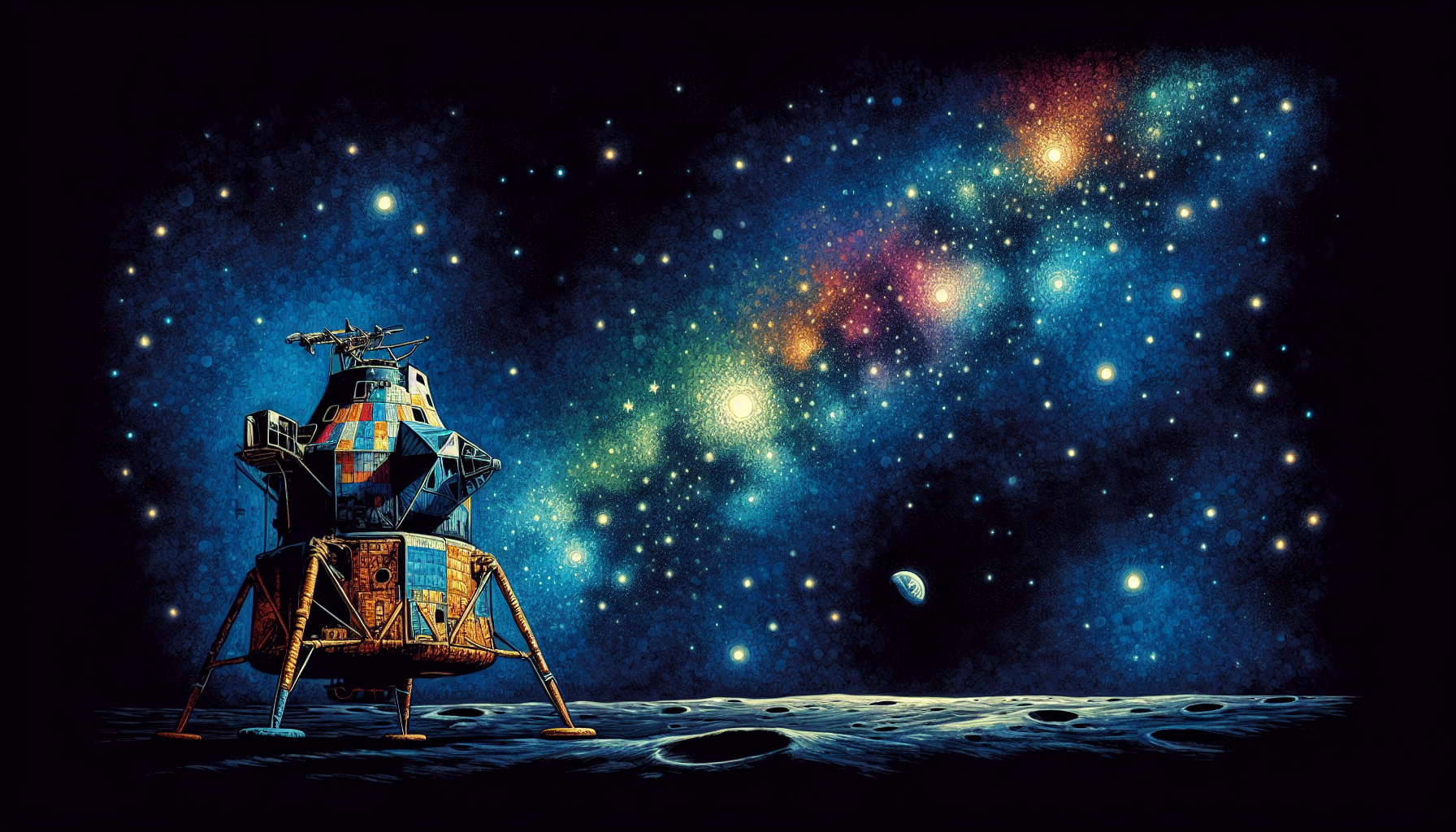
The Lunar Module (LM) epitomized a paradigm shift in aerospace engineering, specifically designed to facilitate the unique demands of lunar landing and ascent. Distinct for its lightweight structure and dual stages—one for descent to the lunar surface and another for ascent back to the Command Module—the LM was a remarkable engineering achievement. Its design underwent extensive revision to optimize functionality while ensuring safety for the astronauts. The LM’s ability to land on the challenging terrain of the Moon and return successfully highlighted the meticulous attention to detail and innovation that characterized the Apollo missions. As the launching point for humanity’s first extravehicular activity on the lunar surface, the Lunar Module was symbolic of both human ingenuity and extraordinary preparation.

Human Resources and Training
Selecting the Astronauts
The selection of astronauts for the Apollo program was a rigorous process, emphasizing not only technical qualifications but also psychological and physical resilience. Initial criteria focused on military test pilots, individuals who were accustomed to high-stakes environments and could effectively manage the demands of spaceflight. However, as the program evolved, NASA expanded its view of ideal candidates, seeking individuals with diverse backgrounds in engineering, science, and medicine. The goal was to cultivate a team capable of collaboration and problem-solving under unprecedented conditions. This selection strategy ultimately forged a cohort of astronauts who embodied the spirit of exploration, contributing to innovative solutions in preparing for the lunar missions.
Training Programs and Simulations
The comprehensive training programs developed for astronauts were crucial in ensuring the success of the Apollo missions. These programs included intense physical conditioning, technical training on spacecraft systems, and simulated missions that mirrored the complexities of space travel. NASA employed cutting-edge technology to create realistic simulations, allowing astronauts to practice crucial maneuvers such as docking and emergency procedures. The investment in thorough training underscored NASA’s commitment to crew safety, fostering an environment in which astronauts could develop the skills and confidence necessary to navigate the unknown challenges of lunar exploration. This holistic approach to training ensured that the crew was not only prepared for liftoff but also equipped to handle potential setbacks during their missions.
Creating a New Generation of Engineers
The Apollo program catalyzed the creation of a new generation of engineers and scientists, destined to lead the way in space exploration and technological innovation. Universities and technical institutions engaged deeply with NASA, cultivating talent through partnerships that integrated practical experience with academic rigor. The demand for skilled workers in aeronautics and engineering burgeoned, inspiring students and professionals alike to pursue careers in fields previously deemed niche. As the program progressed, the presence of women and minorities began to diversify the workforce, challenging traditional barriers and broadening the landscape of American engineering. The legacy of this initiative became a defining pillar of subsequent advancements in space technology and education.
Preliminary Missions
Mercury Missions and Their Impact
The Mercury missions served as the foundation for human spaceflight in America, laying crucial groundwork for subsequent endeavors, including the Apollo program. These missions aimed to test the basic elements of manned space travel, focusing on human endurance in space and the viability of life-support systems. Notable flights, such as those commanded by Alan Shepard and John Glenn, succeeded in demonstrating that human beings could survive and operate effectively in the harsh environment of space. The lessons learned during Mercury provided vital insights into the complexities of spaceflight, paving the way for the more sophisticated Gemini and Apollo missions.
Gemini Missions’ Contributions to Lunar Objectives
Building upon the successes of Mercury, the Gemini program introduced more complex missions characterized by the first American spacewalks and orbital rendezvous. These objectives were crucial in preparing for the Moon landings, particularly the ability to dock spacecraft—an essential skill for the coordinated operations required during the Apollo missions. Crew members had to master techniques to maneuver their spacecraft and conduct repairs in space, further refining the intricacies of human space activity. With each Gemini flight, NASA gained invaluable experience in critical areas such as timing, navigation, and life-support systems, directly informing the strategies employed during Apollo.
Key Lessons Learned in Orbital Operations
The preliminary missions revealed essential insights governing orbital operations, encompassing aspects of spacecraft operation, environmental control, and astronaut performance. Through rigorous testing, NASA recognized the significance of redundancy in systems to enhance safety during flight. Data collected during these missions facilitated the refinement of navigational techniques, contributing to improved accuracy in reaching lunar orbits. Moreover, the experiences underscored the importance of continuous communication with mission control, reinforcing collaborative problem-solving under pressure. These insights highlighted the interplay between human endeavor and technology, forming a crucial basis for the successful execution of subsequent Apollo missions.
Apollo 11 Mission
Launch and Journey to the Moon
On July 16, 1969, Apollo 11 launched from Kennedy Space Center in Florida, marking a historic moment in human exploration. The Saturn V rocket propelled astronauts Neil Armstrong, Buzz Aldrin, and Michael Collins into a journey that would culminate in lunar history. The launch itself elicited a blend of anticipation and uncertainty, with millions across the globe watching as the spacecraft surged into the sky. Following a carefully pre-planned trajectory, the mission navigated the complexities of space travel, highlighting the extraordinary engineering and meticulous training that brought them closer to their lunar destination.
The Lunar Landing
After navigating the vast expanse of space, Apollo 11 successfully entered lunar orbit, signaling the approach to one of the most critical phases of the mission: the lunar landing. The Lunar Module, nicknamed “Eagle,” separated from the Command Module, where Collins remained, and began its descent toward the lunar surface. As Armstrong and Aldrin executed last-minute adjustments, tension coursed through the mission control room and the world beyond. On July 20, 1969, the Eagle touched down in the Sea of Tranquility, and the first words transmitted back to Earth—“The Eagle has landed”—heralded a turning point in history and illustrated the triumph of human endeavor over the monumental challenges of space exploration.
First Steps on the Moon and Their Significance
Stepping onto the lunar surface, Neil Armstrong famously declared, “That’s one small step for man, one giant leap for mankind,” encapsulating the profound significance of this moment. The act of placing a foot on an extraterrestrial body represented the culmination of years of ambition, struggle, and collaboration. As Armstrong and later Aldrin conducted a series of experiments, gathered lunar samples, and planted the American flag, they symbolized humanity’s insatiable curiosity and spirit of exploration. These early steps on the Moon not only fulfilled Kennedy’s vision but also forged a narrative that resonated with hope, inspiring future generations to pursue the impossible.
Global Impact
Boosting American Prestige
The success of the Apollo 11 mission elevated American prestige on the global stage, illustrating the nation’s capability to achieve what had once seemed unfathomable. Landing on the Moon not only demonstrated technological superiority but also served as a powerful narrative against the backdrop of the Cold War. It positioned the United States as a leader in scientific advancement, fostering a sense of national pride and unity. This accomplishment garnered admiration and respect from allies and adversaries alike, redefining America’s role in the world and establishing it as a formidable force in the realm of space exploration.
Inspiring International Space Efforts
The triumph of Apollo 11 sparked a new wave of interest in space exploration across the globe, inspiring an array of international missions. Countries that once perceived space as the exclusive domain of superpowers began to invest in their own space programs, motivated by the success of the moon landing. This burgeoning enthusiasm led to collaborations, joint missions, and a shared passion for exploring the cosmos. The cooperative ethos emerged as nations recognized the potential for combined resources and expertise to push the boundaries of scientific inquiry. This period of increased international engagement set the stage for a diverse array of missions that would explore the Moon, Mars, and beyond.
Cultural Impact and Public Interest in Space
The Moon landing transcended mere technological achievement; it became an indelible part of global culture, inspiring art, literature, and media. The intrigue surrounding space exploration captured the public imagination, leading to an unprecedented interest in science and technology among the general populace. Films, music, and literature began to reflect this fascination, as Americans and others around the world embraced the possibilities of what lay beyond Earth. Educational initiatives aimed at fostering interest in STEM fields surged, as leaders recognized the potential for the Apollo program to ignite a passion for knowledge among young minds. This cultural shift fundamentally reshaped societal views on science and exploration, influencing generations to pursue their dreams of discovery.
Technological Legacy
Spinoffs in Computing and Materials Science
The technological advancements spurred by the Apollo program are ubiquitous in modern society, resulting in ingenious applications across various industries. Achievements in materials science, particularly the development of heat-resistant materials for spacecraft, have inspired innovations in everything from firefighting suits to high-performance gear. Similarly, the demands of the lunar missions catalyzed advancements in computing technology, spearheading the emergence of compact, reliable computers that laid the foundation for the digital age. The multi-disciplinary inventions derived from the Apollo program exemplified how space exploration can yield transformative technologies, ultimately benefiting everyday life.
Advancements in Communication Technology
The Apollo missions also catalyzed significant advancements in communication technology. The need for real-time communication with spacecraft led to innovations in radio transmissions and satellite technology. NASA’s efforts in developing efficient communication systems initiated the evolution of satellite communications, impacting areas such as broadcasting, weather monitoring, and global communications. These advancements increased connectivity not only in the United States but across the globe, proving that the reach of space missions extended far beyond the heavens and into the fabric of societal infrastructure.
Long-term Effects on Engineering and Education
The legacy of the Apollo program continues to resonate in contemporary engineering and education, highlighting the importance of innovation and interdisciplinary collaboration. The emphasis on rigorous training and hands-on experience has influenced curricula and practices within STEM fields, inspiring educational institutions to cultivate environments that foster exploration and creativity. The achievements of the Apollo missions serve as powerful examples of the possibilities that arise when diverse disciplines unite in pursuit of a single goal. This ongoing legacy underscores the intersection between technology, education, and human potential, urging future generations to explore and enact their own bold ambitions.
Conclusion
Reflection on JFK’s Ambition
Reflecting on John F. Kennedy’s ambitious vision, it is evident that the moonshot was far more than an engineering endeavor; it was a powerful narrative that galvanized a nation’s spirit. By articulating a bold goal during a time of uncertainty, Kennedy inspired a collective sense of purpose, encouraging Americans to dream bigger and strive harder. His understanding of the symbolic weight of space exploration plays an essential role in assessing how leadership can shape public discourse and direction. As we contemplate the impact of this vision, it becomes a reminder of the power of ambition to unify and elevate a society.
The Moonshot as a Catalyst for Change
The Apollo program, epitomized by the moonshot, acted as a catalyst for monumental change both within the United States and globally. It prompted unprecedented advancements in technology, driven by a sense of urgency and competition that transcended borders. The lessons learned and the spirit of inquiry fostered during this era continue to inform contemporary exploration endeavors, illustrating how a single mission can resonate through decades. As an enduring symbol of human potential, the moonshot inspires future generations to embrace challenges, strive for greatness, and push the boundaries of knowledge.
Looking Forward: The Future of Space Exploration
As humanity stands on the precipice of a new age of space exploration, the foundational work established by JFK’s moonshot serves as a guiding light. The vision of colonizing Mars, conducting interstellar missions, or exploring distant planets finds its roots in the tenacity and innovation of the Apollo program. Moving forward, the ethos of collaboration and curiosity fostered through Kennedy’s ambition must continue to guide those aspiring for the stars. The future of space exploration beckons, promising to unfold new narratives in the annals of human achievement and imagination. The call to adventure is ever present, inviting you, the next generation, to be part of this remarkable journey.