
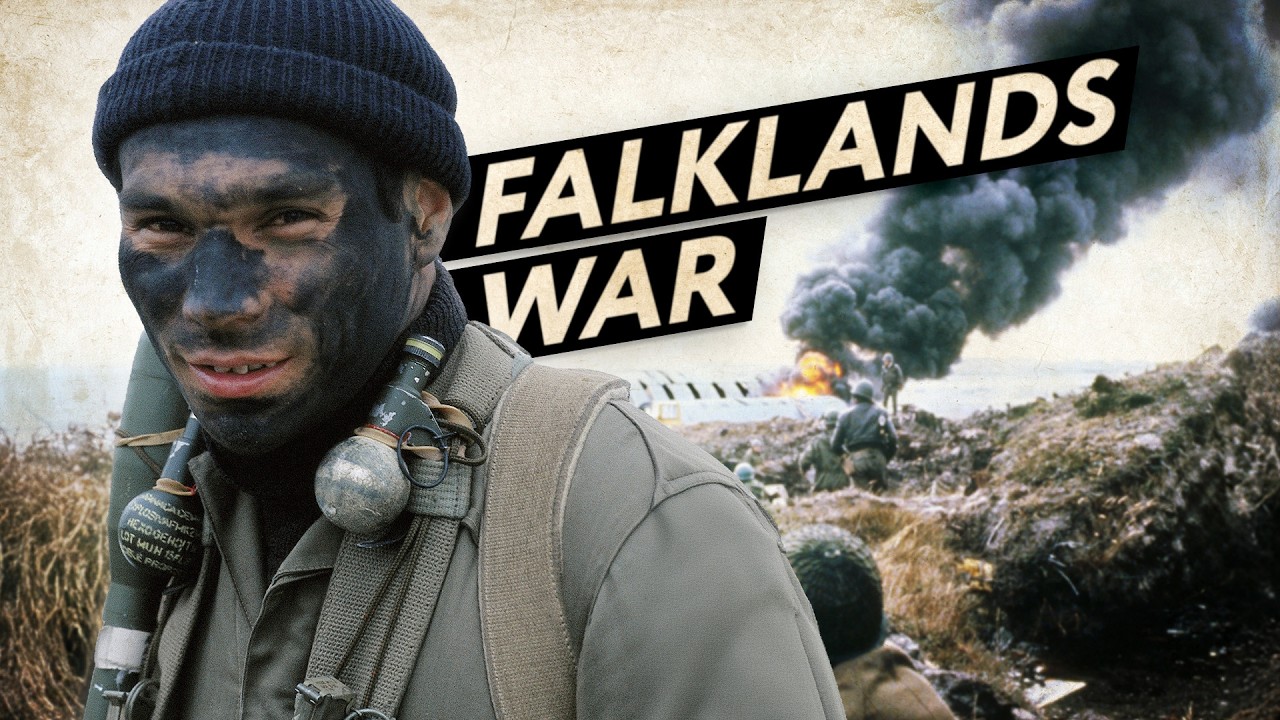
In the documentary “Why Argentina Lost the Falklands War,” the events of March 28, 1982, serve as a focal point for understanding the dynamics of this critical conflict. The Argentinian navy’s audacious invasion of the Falkland Islands, supported by 900 troops, sets the stage for an unexpected confrontation with British forces. Despite the Argentinian junta’s confidence that Britain would refrain from intervening, historical analyses reveal how Britain’s political resolve and military strategy could effectively challenge Argentina’s geographic advantage.
The documentary examines the series of strategic miscalculations made by the Argentinian leadership, juxtaposed with Britain’s determination to reclaim the contested territory. Insights drawn from extensive research and firsthand accounts not only illuminate the military tactics employed by both sides but also underscore the broader implications of the conflict on national identity and international relations. Such an analysis invites viewers to reflect on the lessons learned from the Falklands War, contributing to a deeper understanding of contemporary geopolitical challenges.
The Falklands War: A Comprehensive Examination
Historical Context of the Falklands Conflict
Overview of British and Argentinian Claims
The Falklands War of 1982 emerged from longstanding disputes over territorial sovereignty. The British claim to the Falkland Islands, known in Spanish as Islas Malvinas, dates back to the 18th century when they first established a settlement in 1765. However, it was short-lived, as Argentina, which had inherited the Islands after independence from Spain in the early 19th century, expelled British forces in 1770. Over the years, both nations have erected historical narratives justifying their claims, with Argentina viewing the Islands as an integral part of its national territory, while the British emphasize the principle of self-determination that favors the desire of the islanders to remain British. These competing claims lay the groundwork for eventual military confrontation.
Colonial Legacy and Its Impact
The colonial legacy of both nations has heavily influenced their claims and interactions over the islands. Britain’s colonial ventures throughout the 19th and 20th centuries fostered a sense of entitlement and dominance. In contrast, Argentina has approached the Malvinas issue from a post-colonial perspective; claiming the islands is central to the Argentine identity and anti-colonialist sentiment. This complex historical backdrop has shaped national narratives and continuously fueled tensions between the two countries.
Previous Conflicts and Tensions
Before the 1982 war, there were instances of heightened tensions surrounding the Falklands, such as the conflict of 1953 when British forces forcibly removed Argentine squatters from the islands. The incident deepened resentment in Argentina and reframed the issue of Falklands sovereignty as a matter of national pride. By 1982, relations had soured further, with unresolved disputes and diplomatic failures creating a fertile ground for military action.
Political Landscape in Argentina
Rise of the Military Junta
In the late 1970s, Argentina experienced significant political turmoil, culminating in a military coup that established a harsh dictatorship. The Junta assumed power amidst a backdrop of economic difficulties and political dissent. The regime sought to unify the populace under nationalist sentiments, redirecting attention from its repressive tactics to the need for patriotic action regarding the Falkland Islands.
Nationalism as a Political Tool
Nationalism became instrumental for the Junta, serving as both a rallying cry to consolidate power and a distraction from domestic issues. By invoking the symbolism of reclaiming the Falklands, the military government crafted a narrative that positioned the invasion as an act of national restoration, capable of garnering popular support while diverting attention from human rights abuses and the economic crisis plaguing Argentina.
Public Sentiment and Support for the War
Initially, public sentiment towards the Falklands War was largely supportive, fueled by patriotic fervor and state propaganda. Many Argentinians viewed the military action as rectifying a historical injustice, thereby galvanizing national unity under the regime. However, as the realities of the conflict unfolded—marked by casualties and loss—the enthusiasm began to wane, leading to disillusionment among the population.
Britain’s Political Response
Initial Reactions to the Invasion
When the Argentinians landed on the Falklands on April 2, 1982, the British government, led by Prime Minister Margaret Thatcher, faced an immediate diplomatic predicament. The initial reactions were marked by surprise, though political and military leaders quickly shifted focus towards a robust response aimed at regaining control over the islands.
Mobilization of Political Support
In the ensuing days, Thatcher rallied political support across party lines, framing the situation as a matter of national sovereignty and honor. The opposition Labour Party, alongside various political factions, coalesced in favor of reclaiming the Falklands. This unity effectively solidified the government’s stance and positioned the narrative of the conflict within a broader context of British resilience and moral obligation.
Decision-Making in the British Government
The British decision-making process involved a calculated military strategy underpinned by logistical considerations, public sentiment, and geopolitical implications. Key figures in the Ministry of Defence and military leadership engaged in extensive discussions regarding whether to deploy troops or negotiate. Ultimately, a decision was made to deploy a naval task force to the South Atlantic, marking the beginning of a calculated military response to the invasion.
Military Strategies of Argentina
Initial Invasion Tactics and Preparation
Argentina executed the invasion of the Falklands with a well-coordinated strategy that relied heavily on surprise and overwhelming force. The plan involved a rapid deployment of naval and troop assets to secure the islands quickly, targeting both military and civilian installations while capitalizing on the perceived lack of British resolve to intervene.
Logistics and Operational Challenges
Despite early successes, the Argentine military grappled with significant logistical hurdles. The long distance from the Argentine mainland to the Falklands created a complex supply problem, compounded by the limited operational scope of their naval and air resources. Communication breakdowns and a deficit of intelligence severely hampered their operations, undermining their strategic advantage.
Use of Naval and Air Force Capabilities
Argentina’s initial strategy relied heavily on its naval and air force capabilities, utilizing the aircraft carrier 25 de Mayo and a modest fleet of warships. The air force conducted sorties aimed at both military and civilian targets to assert dominance. However, the effectiveness of their capabilities was limited by inadequate training and maintenance, exacerbated by the challenges of communication and coordination among military branches.
British Military Strategy
Counter-Invasion Planning
As soon as the invasion was confirmed, British military planners developed a comprehensive strategy called Operation Corporate, aimed at reclaiming the Falklands. The plan involved mobilizing a task force capable of projecting force over 12,000 kilometers. The British government invested heavily in ensuring the success of this endeavor, prioritizing strategic air and naval dominance as well as securing international support.
Challenges of a Long Supply Line
The logistical challenges of a lengthy supply chain were daunting for the British military. They had to establish secure routes for restocking essentials, maintaining troop morale, and ensuring adequate medical and logistical support throughout the operation. The Royal Navy’s ability to manage these supply lines amidst hostile conditions was crucial and demanded relentless coordination and adaptability.
Key Military Engagements and Their Outcomes
British military engagements included a series of well-planned amphibious assaults and air campaigns. Significantly, key battles such as the airstrikes on Argentine positions and the landing at San Carlos cemented British footholds on the islands. These engagements quickly turned the tide of the conflict, showcasing Britain’s military efficacy and operational adaptability, ultimately leading to a decisive path towards victory.
Key Battles and Turning Points
The Battle of Goose Green
The Battle of Goose Green, fought on May 28-29, represented a pivotal engagement in the Falklands War. British forces launched a surprise attack against entrenched Argentine troops, leading to a swift and decisive victory. This did not just embolden British forces, but it also marked a turning point, as it demonstrated the effectiveness of British tactics and the resolve of their soldiers in the face of adversity.
Air and Naval Engagements
Air superiority emerged as a defining factor in the conflict. British forces employed Sea Harrier jets, which successfully conducted airstrikes that severely damaged the Argentine navy and hindered its operational capabilities. Conversely, the loss of several Argentine aircraft diminished their air threat, further cementing British control over the seas and skies.
Decisive Moments in the Conflict
Moments such as the sinking of the Argentine cruiser General Belgrano and the unyielding determination displayed by British troops during land engagements served as significant morale boosters for British forces. These events not only shifted the military momentum but also shaped public perception back in Britain, solidifying support for continued military operations.

The Role of International Relations
Support and Opposition from Global Powers
The Falklands War drew attention from global powers, with the United States initially taking a neutral stance but ultimately supporting the British effort. European countries also expressed their backing of British sovereignty in the region, although not all world leaders were aligned, and Argentina sought to leverage non-aligned nations’ sentiments for diplomatic advantage.
Impact of the Cold War Dynamics
The Cold War context provided a complex backdrop for the Falklands conflict. The geopolitical interests of superpowers like the United States shaped the responses of both nations. Authoritative non-aligned nations heard from Argentina’s rhetoric, but Britain’s ties with the U.S. solidified its strategic position, leading to logistical and military support that proved crucial throughout the war.
Diplomatic Efforts Before and During the War
Prior to hostilities, various diplomatic efforts were made to resolve the sovereignty issue, but those proved largely ineffective. As the conflict escalated, efforts by international mediators to facilitate negotiations were also hampered by the military realities on the ground. The lack of sustainable diplomacy exacerbated the situation, allowing the war to unfold.
Media Influence and Public Perception
Coverage of the War in Argentina
In Argentina, media coverage of the conflict was tightly controlled by the military regime, which portrayed the invasion as a triumphant act of national pride. Propaganda framed the narrative to ensure unwavering public support. However, as the tide of war began to shift, alternative voices were suppressed, leading to growing dissatisfaction among civilians.
British Media Portrayal and Public Sentiment
The British media provided an array of responses, from initial disbelief to rallying cries for military action. The graphic coverage of battles and casualties was essential in shaping public perception and sentiment, as calls for support and national pride spread through newspapers and broadcasts. The media’s ability to galvanize sentiment provided political impetus for the government’s military strategy.
Impact of Journalism on Military Morale
Journalism played a profound role in influencing military morale on both sides. For British forces, reports of successes uplifted spirits and reinforced commitment, while in Argentina, the initial euphoria of the invasion began to crumble under the weight of reports of losses. The way the narrative evolved had significant implications for both military effectiveness and public support.
Consequences of the War for Argentina
Political Repercussions and Changes
The fallout from the war resulted in significant political shifts in Argentina. The military regime faced intense scrutiny and unrest following the defeat, leading to the eventual return to democracy in 1983. The public’s disillusionment with the Junta’s promises served as a critical factor in pushing for transparency and reform in the political landscape.
Socio-Economic Impacts on Argentina
Economically, the war exacerbated existing problems, leading to increased inflation, unemployment, and economic despair. Consequently, the repercussions sparked a social reckoning and debunked the militaristic authoritarian narrative that had previously defined the Argentine experience. The stark realities imposed by defeat fundamentally altered social and economic dynamics.
Long-Term Effects on National Identity
The emotional and psychological scars of the war permeated Argentine society, influencing national identity for decades. The notion of the Malvinas became interwoven with a broader discourse of sovereignty and loss, shaping national consciousness. The way the narrative coalesced around the idea of recovering claim while reconciling past failures continues to impact the political discourse in contemporary Argentina.
Conclusion
Summary of the Main Points
The Falklands War stands as a complex intersection of historical claims, political motivations, military strategies, and societal impacts. The juxtaposition of Argentine nationalism against British resolve laid the groundwork for one of the most significant 20th-century conflicts, with outcomes that reverberated across both nations.
Reflections on National Pride and Loss
The emotional aftermath of the conflict challenged both nations to reconsider their identities. For Argentina, the defeat became a point of collective shame intertwined with patriotism, while for Britain, the success rejuvenated a sense of historical supremacy. The narratives crafted during and after the war continue to shape both countries’ understandings of themselves.
The Legacy of the Falklands War in Contemporary Politics
In contemporary politics, the legacy of the Falklands War remains salient. The themes of sovereignty, national pride, and the complexities of identity continue to inform discourse, not only concerning the Falklands but also in broader regional contexts. The enduring struggle over the islands remains emblematic of larger themes of colonial legacy, sovereignty, and the powerful influence of nationalism in global affairs.