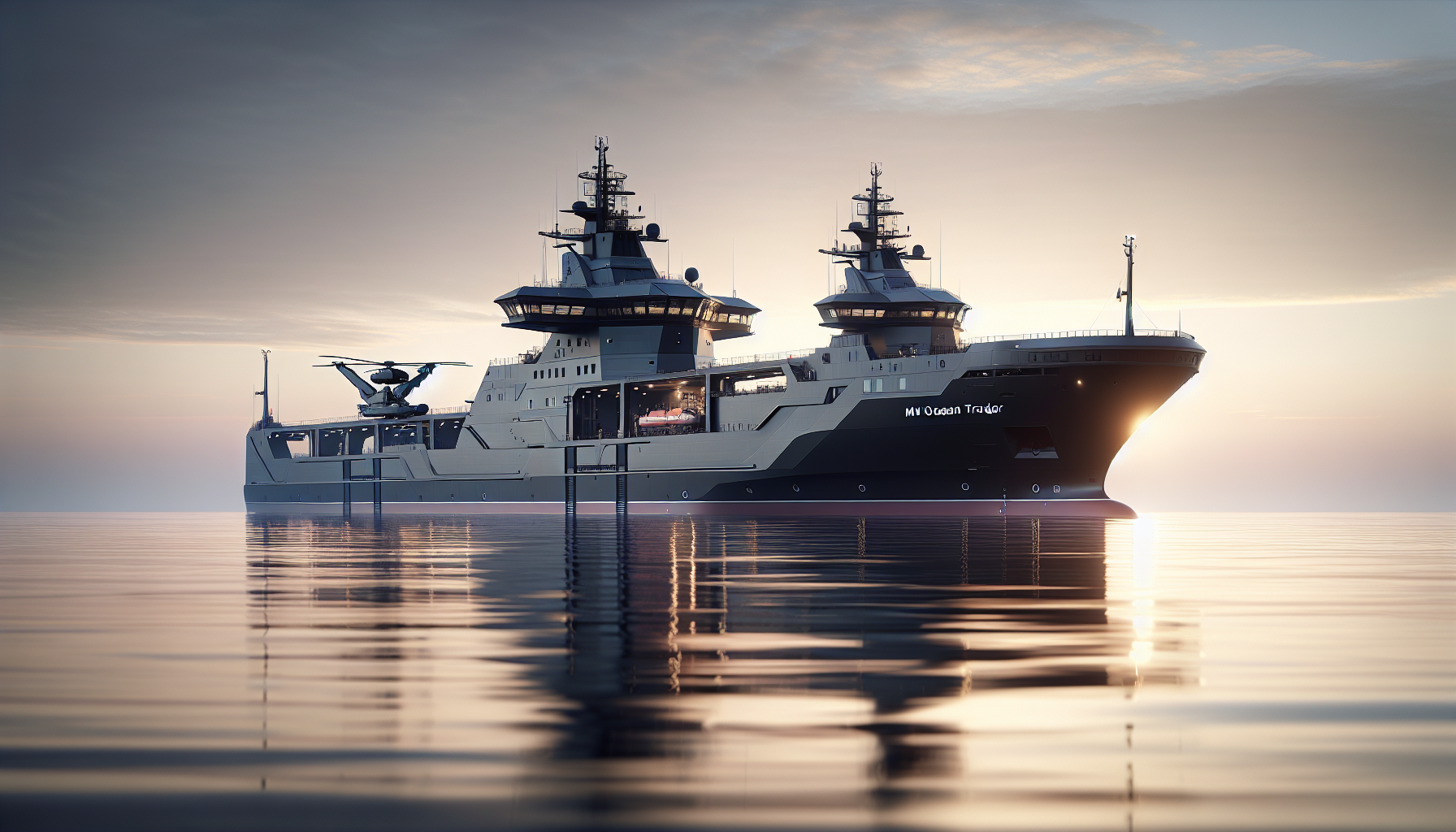
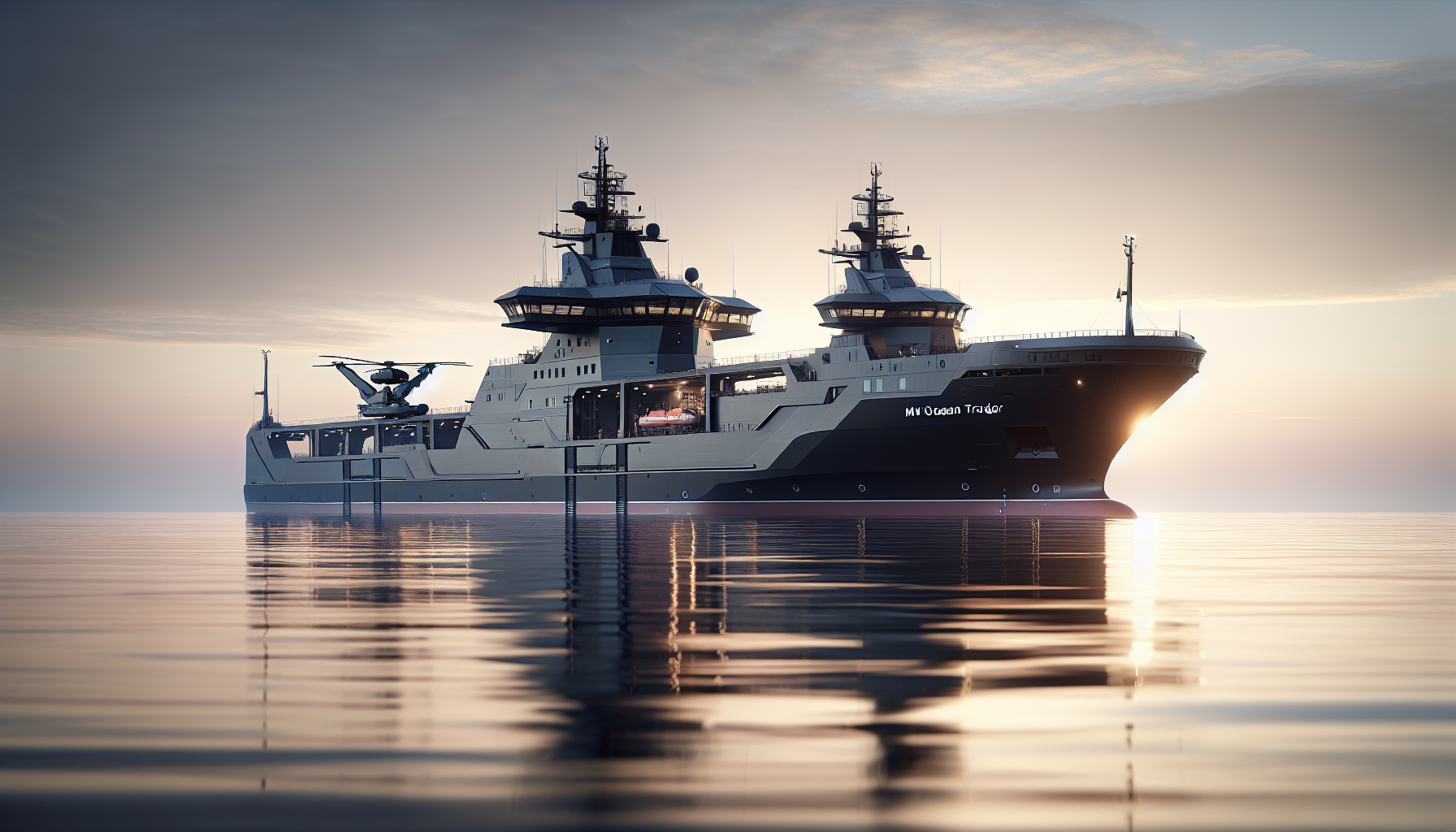
The MV Ocean Trader, often dismissed as an ordinary cargo vessel, serves a far more complex role as a floating base for special operations. Operating under the U.S. flag, this ship boasts an array of covert capabilities, including helicopter hangars and drone launchers, enabling it to support classified military missions. Its presence in strategic locations, such as the Caribbean, underscores its significance in contemporary military operations.
This article explores the Ocean Trader’s transformation into a ‘Special Ops Mothership,’ detailing its operational capabilities and the potential missions it undertakes. Through an examination of its design and functions, the discussion will illuminate how such low-profile military platforms are critical in modern defense strategy, particularly in light of rising tensions in the region.
Overview of the MV Ocean Trader

Basic Specifications and Structure
The MV Ocean Trader, a U.S.-leased vessel, serves as a multipurpose platform that merges commercial design with military functionality. Originally constructed as a cargo ship, the Ocean Trader is characterized by its unassuming appearance, eschewing traditional military identifiers such as hull numbers or visible weaponry. The ship’s dimensions allow for substantial cargo capacity, yet it has been carefully modified to facilitate a variety of military operations. This operational versatility underscores the vessel’s transition from a standard merchant ship to a specialized support platform for U.S. Special Operations Command.
Operational Role in U.S. Military Logistics
In the realm of military logistics, the MV Ocean Trader assumes a vital role as a floating base for special operations. The vessel is strategically utilized to transport personnel and supplies to locations that may be geographically isolated or politically sensitive. The ship’s unique capabilities enable it to operate in a clandestine manner, ensuring that U.S. military engagements remain below the radar of both adversaries and the general public. As such, the Ocean Trader stands as a critical asset in the larger framework of U.S. military logistics, facilitating rapid deployment and operational readiness in various theaters of operation.
Design and Conversion
Initial Purpose as a Cargo Ship
The MV Ocean Trader was initially constructed to fulfill a commercial shipping role, designed primarily for the transportation of goods across international waters. This original purpose was grounded in sound maritime engineering principles, providing the ship with a robust hull and ample deck space. However, as global geopolitical dynamics shifted and the demand for specialized military vessels increased, the need arose for the Ocean Trader to undergo substantial modifications to support covert military operations.
Modifications for Special Operations
Transformations of the MV Ocean Trader included the installation of helicopter hangars, drone launch facilities, and specialized launch bays for rigid-hulled inflatable boats (Zodiacs). These modifications were executed with precision, allowing for seamless integration of advanced operational technologies while maintaining the ship’s low profile. The vessel’s design strategically minimizes its visibility, enabling it to operate unnoticed in territories where military presence is either unwelcome or prohibited. The culmination of these alterations results in a platform capable of supporting various special operations missions, from reconnaissance to direct action.
Capabilities and Features
Helicopter Operations
One of the Ocean Trader’s standout features is its capacity to support rotary-wing operations. The designated helicopter hangars allow for the deployment and recovery of various helicopters, which serve as vital assets for insertion, extraction, and aerial reconnaissance. This capacity significantly enhances operational flexibility, enabling the coordinated execution of missions across land and maritime domains. Helicopter operations not only extend the reach of U.S. Special Operations forces but also provide critical logistical support in challenging environments.
Drone Launch Facilities
In an era where unmanned aerial systems (UAS) are increasingly utilized for reconnaissance and strike missions, the Ocean Trader is equipped with drone launch facilities. These installations facilitate the deployment of drones for intelligence gathering, surveillance, and reconnaissance (ISR) missions. Such capabilities allow for real-time situational awareness, augmenting the decision-making process during operations. The ability to launch and recover drones from a floating platform further amplifies the operational reach of U.S. military forces.
Zodiac Launch Bays
The inclusion of Zodiac launch bays represents another critical capability of the MV Ocean Trader. This feature allows for the rapid deployment of inflatable boats, which are indispensable in clandestine operations, especially in littoral environments. The swift launch and retrieval of these craft enable special operations personnel to access remote locations and establish beachheads for further military action. These launch bays serve as a tactical advantage, allowing for quick and stealthy infiltration and exfiltration missions.
Operational Flexibility
Adaptability for Different Missions
The Ocean Trader’s design promotes versatility, allowing it to adapt seamlessly to a range of mission profiles. Whether engaged in humanitarian assistance, counterterrorism operations, or clandestine reconnaissance, the ship’s design enables it to pivot quickly to meet operational demands. This adaptability is complemented by its capacity to host diverse specialized units, supporting various aspects of military engagement with relative ease. The Ocean Trader’s utility as a platform articulates the evolving nature of military operations in contemporary conflict scenarios.
Stealth Technology and Low-Profile Design
Stealth technology and an inherently low-profile design are other advantages that enhance the Ocean Trader’s operational flexibility. The vessel’s exterior is designed to minimize radar and acoustic signatures while employing technological advancements to obscure its presence. These stealth capabilities are crucial when conducting sensitive missions in contested environments, ensuring that U.S. forces can operate with diminished risk of detection. This operational anonymity significantly enhances mission effectiveness, providing superiority in situations where surprise and situational superiority are paramount.
Strategic Importance
Role in U.S. Foreign Policy
The MV Ocean Trader embodies a unique strategic asset within U.S. foreign policy. By providing a discreet yet formidable presence in international waters, it illustrates the U.S. commitment to maintaining security in critical regions. The vessel’s mobility enables it to respond swiftly to evolving geopolitical landscapes, reinforcing alliances and deterring potential adversaries. Its deployment aligns with broader U.S. military objectives, signaling readiness and adaptability in a complex global environment.
Presence in Critical Regions Like the Caribbean
In particular, the Ocean Trader’s presence in the Caribbean underscores its strategic importance. Given the region’s historical significance and susceptibility to geopolitical rivalries, the ship plays a pivotal role in monitoring regional stability and supporting U.S. interests. As tensions simmer between the U.S. and nations like Venezuela, the upgrade and utilization of platforms such as the Ocean Trader amplify potential deterrent capabilities while simultaneously ensuring the rapid deployment of resources, if needed.
Recent Deployments
Current Operational Theaters
The operational significance of the MV Ocean Trader has been particularly pronounced in recent deployments across key theaters. Current operations appear concentrated in regions susceptible to unrest, particularly the Caribbean, where its stealth capabilities can be maximized. Additionally, the vessel has been rumored to support missions in West Africa and the South China Sea, exemplifying the ship’s role as a linchpin in U.S. military operations on the global stage. This adaptability ensures operational readiness in the face of emerging challenges.
Notable Missions in Response to Geopolitical Tensions
The rapid escalation of geopolitical tensions has led to missions where the Ocean Trader has been prominently involved. Although specifics remain classified, it is speculated that its capabilities have been instrumental in crisis response and humanitarian missions, as well as potential deterrent operations. By maintaining a presence in regions grappling with instability, the Ocean Trader exemplifies how military assets can be mobilized proactively, responding effectively to unpredictable global developments.
Historical Context
Evolution of Special Operations Support Vessels
To fully appreciate the significance of the MV Ocean Trader, one must examine the historical context surrounding special operations support vessels. Such ships have evolved considerably over the past few decades, driven by changing warfare dynamics and the emergence of asymmetric threats. From early maritime support platforms to sophisticated, purpose-built vessels, the evolution reflects broader trends in military strategy emphasizing flexibility, clandestine operations, and technological integration.
Comparison with Other Military Platforms
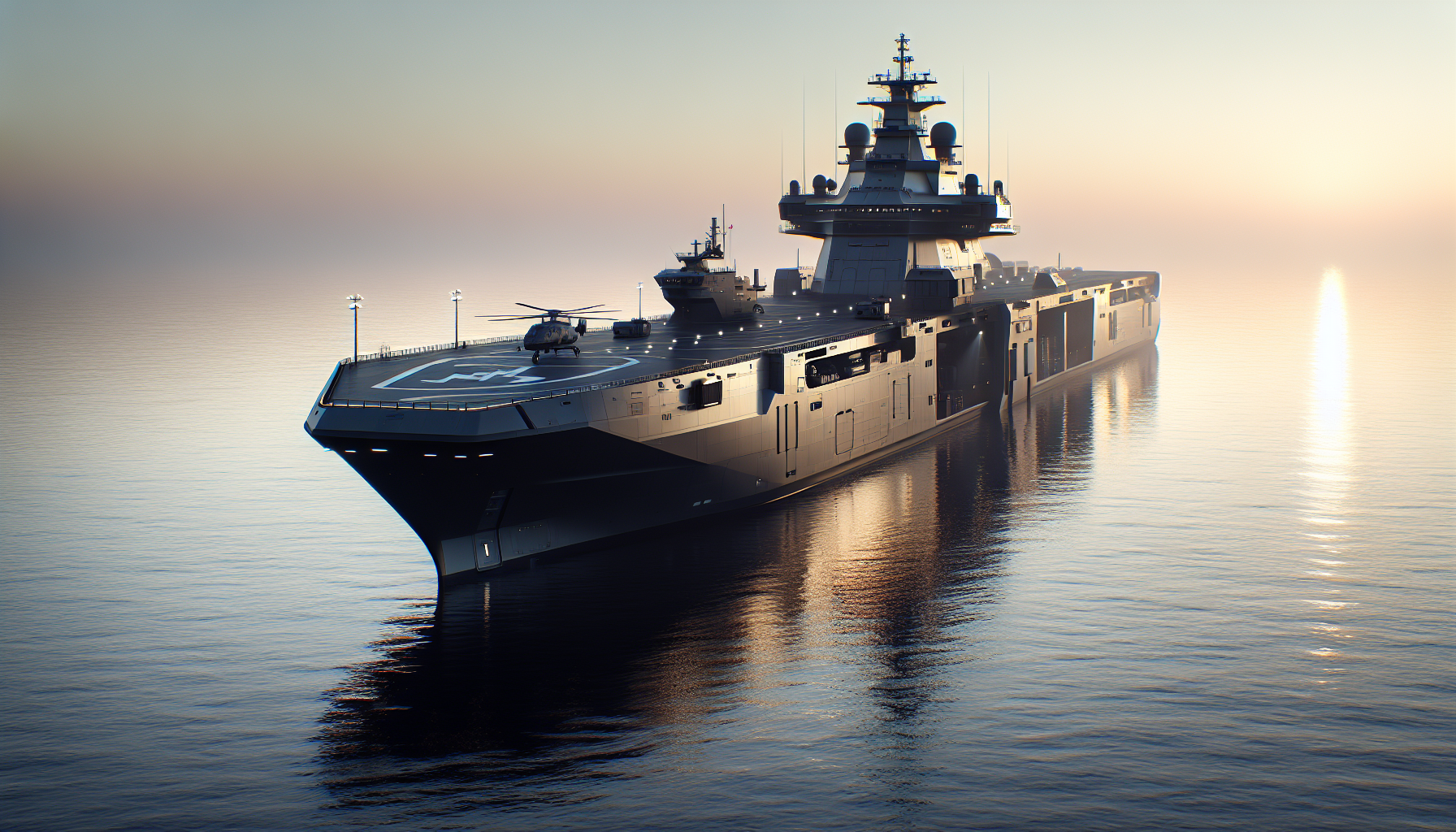
When compared to traditional naval vessels, the Ocean Trader presents a stark contrast in terms of design and operational scope. Unlike large destroyers or aircraft carriers, the Ocean Trader does not possess robust conventional armament. Instead, it prioritizes stealth, versatility, and support capabilities, aligning more closely with modern warfare’s shifting paradigms. This differentiation marks a growing recognition of unconventional military operations, illustrating the need for platforms that can provide tactical advantages in urban and asymmetrical combat environments.
Tactical Applications
Support for Covert Operations
The MV Ocean Trader’s capabilities are particularly tailored for supporting covert operations. Its low-profile design and advanced technology enable the execution of missions that require precision and stealth. Such operations may include intelligence gathering, direct action against high-value targets, or counter-terrorism initiatives. The ship’s ability to deploy specialized teams discreetly maximizes efficacy, allowing U.S. forces to navigate complex operational landscapes while minimizing collateral risk.
Coordination with Special Operations Command
Further enhancing the Ocean Trader’s utility is its seamless coordination with U.S. Special Operations Command (JSOC). This coordination enables the ship to function as a force multiplier, extending the reach and efficacy of special operations units. By integrating various branches and units of the military within a single operational framework, the Ocean Trader ensures the optimally synchronized execution of missions. This synergy highlights the importance of adaptable platforms in contemporary military strategy.
Challenges and Limitations
Operational Risks in Hot Zones
Despite its numerous advantages, the MV Ocean Trader is not without risks. Operating in contested environments presents significant challenges, including the threat of detection and engagement from adversarial forces. Mission planners must carefully assess the operational landscape to mitigate these risks, implementing robust planning and contingency measures. The vessel’s presence in hot zones necessitates constant vigilance and strategic adaptability to respond adeptly to evolving threats.
Logistical Constraints of a Floating Base
The logistical operation of a floating base like the Ocean Trader presents inherent constraints. Challenges may arise concerning supply chain management, maintenance needs, and operational continuity, particularly in extended deployments. Additionally, the reliance on maritime logistics can complicate support efforts in regions lacking adequate infrastructure. The complexities associated with logistics in such scenarios must be addressed to ensure sustained operational readiness.
Conclusion
Summary of the MV Ocean Trader’s Role as a Special Operations Mothership
In summary, the MV Ocean Trader exemplifies the evolution of military platforms designed for modern special operations. Its role as a flexible, resilient, and discreet floating base highlights the Navy’s strategic pivot towards adaptable solutions in an increasingly dynamic geopolitical landscape. With advanced capabilities and an ability to operate seamlessly in sensitive environments, the Ocean Trader stands out as an essential asset for U.S. military operations.
Implications for Future Military Operations
The existence of the Ocean Trader raises important implications for future military operations. As the nature of warfare continues to evolve, the demand for specialized vessels that can facilitate covert operations and strategic engagements is likely to increase. The Ocean Trader serves as a prototype for future military platforms, characterized by adaptability, stealth, and multifunctional capabilities. As nations navigate complex security challenges, the integration of such advanced operational assets will be critical in shaping the future of military engagements worldwide.