
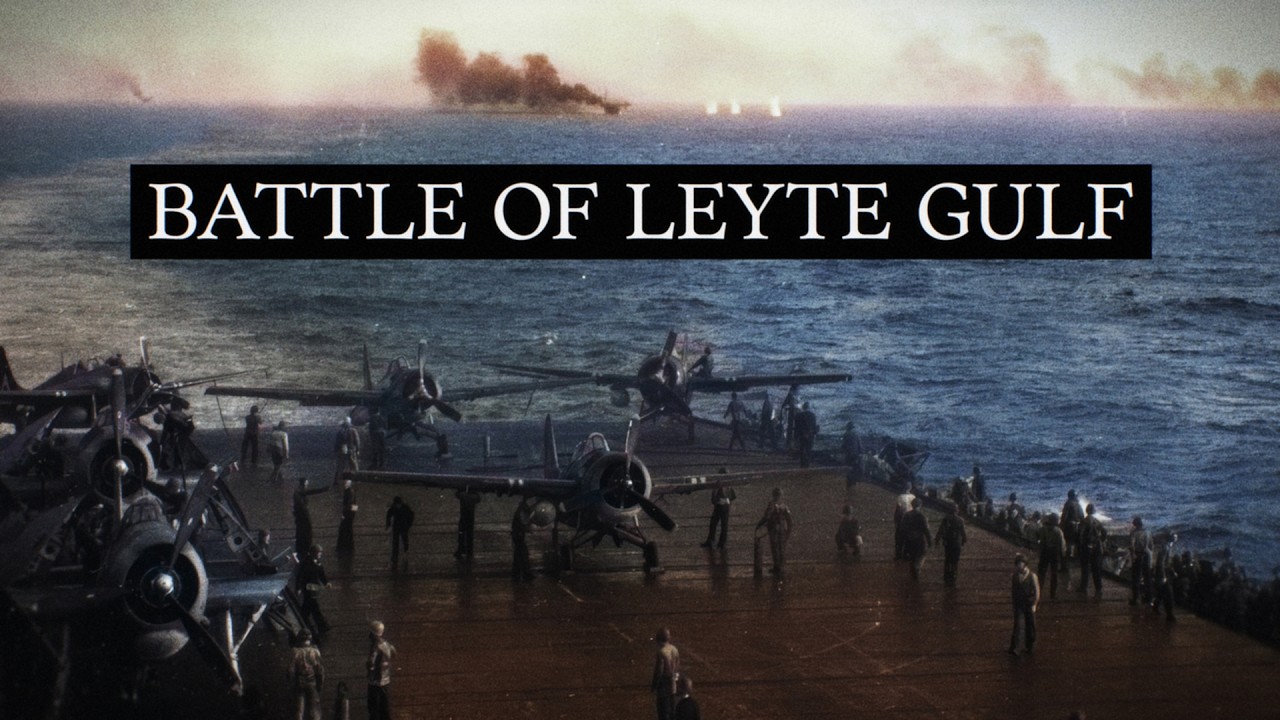
The Battle of Leyte Gulf, fought in the autumn of 1944, stands as a monumental event in naval warfare, marking a critical juncture in World War II. Japan sought to thwart the United States’ efforts to reclaim the Philippines, a crucial trade route essential for their strategic and resource-oriented ambitions in the Pacific. This multifaceted confrontation evolved into what is widely recognized as the largest naval battle in history, showcasing the complexities and scale of maritime conflict during this tumultuous period.
This article provides an analytical overview of the battle’s strategies, key players, and implications for the war’s trajectory. By examining the preparations and tactical decisions made by both the Allied and Japanese forces, insights into the operational challenges faced during the battle emerge. Through a synthesis of historical sources and documented accounts, the significance of Leyte Gulf in shaping naval warfare and its lasting legacy will be elucidated.
The Battle of Leyte Gulf: A Comprehensive Analysis
Background of the Battle
Strategic Importance of the Philippines
In the broader context of World War II, the Philippines emerged as a crucial theater of conflict due to its geographical positioning and resource-rich environment. The archipelago served as a pivotal trade conduit linking Japan to its occupied territories in Southeast Asia. As you analyze the strategic imperatives, consider that regaining control of the Philippines not only deprived Japan of critical resources but also laid the groundwork for a potential invasion of the Japanese home islands. The Philippine Command envisioned a scenario whereby the U.S. Navy could launch operations from newly liberated territory, further threatening Japanese interests in the region.
Japanese Goals and Objectives
For the Imperial Japanese Navy, the recapture of the Philippines represented not just a fight for territory but a struggle for survival. Japan sought to halt the advancing U.S. forces with a complex and calculated plan, aiming to strike hard as American troops landed on Leyte. The foremost objectives were to eliminate American naval strength, ensure the safety of Japanese supply lines, and ultimately regain dominance over the Pacific. If successful, these actions could lead to a drawn-out conflict that might tip the balance of power back in Japan’s favor.
American Military Strategy and Preparations
In response to these aggressive maneuvers, the U.S. military executed an elaborate series of preparations, cementing the importance of intelligence and logistics. The Leyte operation became a focal point of American strategy, intending to bridge the gap between previous naval victories and the eventual push toward Japan. The gathering of substantial forces—troops, aircraft, and naval vessels—was essential to ensure overwhelming superiority in the battlefield. The planning stages emphasized coordinated efforts among air, land, and sea forces to maximize effectiveness against Japanese resistance.
Key Players in the Battle
Allied Forces Leadership
The leadership of the Allied forces during the Leyte Gulf campaign played a significant role in shaping the outcome of the battle. Notably, General Douglas MacArthur, overseeing ground operations, was determined to liberate the Philippines in pursuit of his “I shall return” promise. In the naval sphere, Admiral Chester W. Nimitz was instrumental in orchestrating the fleet’s movements and strategies. Under their command, a diverse coalition of American, Australian, and other Allied forces worked in concert, highlighting the importance of collaboration across military branches.
Japanese Command Structure
On the Japanese side, the command structure was characterized by a rigid hierarchy that often stymied flexibility. Notable figures included Admiral Soemu Toyoda, the Commander in Chief of the Combined Fleet, whose strategies reflected a mixture of traditional naval tactics and adaptations to modern warfare. However, as the battle unfolded, inflexibility within the command structure hindered Japan’s ability to respond effectively to the changing dynamics of the conflict, ultimately impacting their effectiveness on the battlefield.
Important Naval Vessels Involved
The naval forces engaged in the Leyte Gulf were marked by significant and innovative vessels that shaped the course of the battle. The U.S. fleet was anchored by formidable aircraft carriers such as the USS Essex and USS Intrepid, which enabled powerful air support, while the Japanese fleet included battleships such as Yamato and Musashi. The presence of these vessels not only illustrated the scale of naval commitment but also highlighted the technological advancements in shipbuilding and warfare strategy that defined the engagement.
Prelude to Leyte Gulf
Initial Engagements in the Pacific Theater
Prior to the Leyte Gulf, the Pacific Theater had witnessed numerous clashes that cumulatively set the stage for this monumental encounter. The tide had been gradually shifting favorably toward the Allies, evidenced by victories in battles such as Midway and the Marianas. These previous confrontations not only weakened Japanese naval capabilities but also built a momentum that American forces were eager to capitalize on during the Leyte operation.
The Build-Up to the Leyte Operation
In the months leading up to the Leyte landings, both sides engaged in extensive preparations. For the Allies, logistical efforts were paramount; thousands of troops and vast quantities of supplies were mobilized in anticipation of landing on Leyte Island. Intelligence-gathering activities intensified, with reconnaissance flights aimed at assessing Japanese defenses. For Japan, understanding that the U.S. would likely target Leyte, the strategic focus shifted to counteracting the anticipated landing and leveraging any weaknesses in American planning.
Intelligence and Reconnaissance Efforts
Effective intelligence and reconnaissance played a critical role in shaping the Leyte campaign. The Allies employed advanced aerial surveillance to gather real-time information on Japanese positions, which allowed them to refine their operational plans. Similarly, the Japanese attempted to employ reconnaissance aircraft to monitor Allied movement, although miscalculations and communication failures often resulted in ineffective responses. The intelligence race underscored the necessity of accurate information in naval warfare, revealing how misinformation could sway the tides of battle.
The Phases of the Battle
The First Phase: The Leyte Landings
The initial landings at Leyte on October 20, 1944, represent a pivotal moment in the battle, as Allied troops established a foothold on Philippine soil. You would observe the coordinated bombardment from naval vessels preceding the amphibious assault, as troops disembarked under the cover of naval and air support. The landings were met with fierce opposition but demonstrated American resolve and the effectiveness of their integrated military strategy. As forces secured the beachhead, it signified not only a tactical victory but also a symbolic reclaiming of territory lost to Japan.
The Second Phase: The Battle of Surigao Strait
Following the landings, the Battle of Surigao Strait marked the first significant clash between the U.S. and Japanese naval forces within Leyte Gulf. Utilizing superior technology and tactics, Allied forces engaged a numerically inferior Japanese fleet that was hamstrung by outdated strategies. You would witness the decisive American naval superiority manifesting through coordinated attacks from multiple directions, culminating in the destruction of key Japanese warships. This phase depicted the shifting balance of power at sea, as the once-feared might of the Imperial Navy faltered under coordinated Allied pressure.
The Third Phase: The Sibuyan Sea Engagement
As the battle continued, the engagement at Sibuyan Sea emerged as another significant confrontational point. This phase showcased the utility of air cover, with U.S. forces launching aerial assaults on Japanese vessels, including the formidable battleship Yamato. The effective use of dive bombers and torpedo attacks resulted in considerable damage to the Japanese fleet, illuminating the increasing reliance on air power in naval warfare. The outcome here further supported the notion that air superiority was now a decisive factor in maritime engagements.
Major Battles Within Leyte Gulf
Battle of the Sibuyan Sea
Central to the Leyte Gulf conflict, the Battle of the Sibuyan Sea highlighted the pivotal role that air support played in naval warfare. On October 24, 1944, American planes unleashed a series of attacks on the Japanese fleet, leading to the sinking of several key vessels. This battle signified a tangible shift in naval tactics, showcasing how integrated air and sea operations could decimate traditional naval formations. The results were catastrophic for Japan, marking a decisive moment in the larger framework of the Leyte Gulf campaign.
Battle of Surigao Strait
Following the initial engagements, the Battle of Surigao Strait remains one of the most notable military encounters of the Leyte Gulf. American forces, having amassed a strategically superior fleet, engaged the Japanese in a night battle that underscored the effectiveness of American naval tactics. Utilizing effective positioning and innovative strategies, U.S. forces were able to trap and annihilate a significant portion of the Japanese fleet. This victory not only assured naval dominance but also set a precedent for future naval engagements, illustrating the success of tactical innovation and unity of command.
Battle of Cape Engaño
The Battle of Cape Engaño further illustrated the complexities of naval engagements in the Leyte Gulf. Here, U.S. forces engaged the Japanese carrier group, leading to the destruction of several important vessels. Not only was this significant for its immediate tactical outcomes, but the engagement symbolized the final waning of Japanese naval power. The outcome reinforced the notion that the era of traditional naval tactics was yielding to new paradigms, one dominated by air power and swift maneuverability.
Technological Advancements
Naval Tactics and Innovations
Throughout the Leyte Gulf campaign, you would observe the operational evolution of naval tactics as new technologies emerged. The use of aircraft carriers transformed traditional naval engagements, moving the locus of power from large battleships to smaller, more versatile vessels capable of launching air strikes. The integration of naval and air force strategies demonstrated an innovative approach to warfare, creating dynamic battle scenarios that challenged conventional tactics.
Aircraft Carriers and Their Impact
The pivotal role of aircraft carriers during the Battle of Leyte Gulf cannot be overstated. These floating airbases allowed for rapid deployment of fighter planes, which provided invaluable air support and reconnaissance. You would find that the Allied forces effectively leveraged their aircraft carriers to achieve air superiority, ultimately ensuring the success of naval campaigns. The psychological and tactical advantages afforded by these carriers reshaped maritime strategies, making them essential components of modern naval warfare.
Radar and Communication Systems
The advancements in radar and communication systems significantly influenced the dynamics of the Leyte Gulf battle. Enhanced radar capabilities enabled forces to detect enemy movements at greater distances, thereby affording the Allies crucial situational awareness. Such technological innovations allowed American forces to coordinate attacks more effectively and avoid ambushes. Clear communication lines further ensured rapid response capabilities, showcasing how technology was increasingly intertwined with military success.
Human Element in Naval Warfare
Heroism and Sacrifice of Sailors
Amid the strategic and technological considerations, the human element of warfare emerges with profound significance. The heroism displayed by sailors on both sides was undeniable, characterized by acts of bravery amidst chaos. Accounts of individuals stepping forward to save comrades or undertaking perilous missions resonate through historical narratives, illustrating the depth of commitment that often lies beneath the surface of military operations.
Leadership Decisions Under Pressure
The pressures of battle necessitated often swift and critical decision-making by military leaders. You can explore how the choices made by commanders could dictate the course of engagements and, in essence, the war itself. From commanding air strikes to deploying naval forces, leadership under duress displayed both the strengths and vulnerabilities of the command structure. The outcomes at Leyte Gulf reveal the ramifications of such decisions, shaping not just individual careers but the broader war effort.
Psychological Effects on Crews
The psychological toll on sailors engaged in the Leyte Gulf battles presented another dimension to naval warfare. The harrowing experiences of combat, combined with long hours at sea, often led to heightened stress and anxiety within crews. You may consider how these psychological factors impacted morale and performance, affecting the quality of decision-making during critical junctures in the battle.
Aftermath of the Battle
Casualties and Losses
In the wake of the Leyte Gulf battles, the human cost became evident through staggering casualty figures. Both American and Japanese forces suffered significant losses, with thousands of lives extinguished or forever altered by the conflict. The magnitude of these casualties underscores the brutality of war and invites reflection on the price of military ambition. The aftermath extends beyond the immediate losses, prompting contemplations about the long-term societal impacts on both combatants and the nations involved.
Shift in Naval Dominance
The outcome of the Leyte Gulf marked a significant shift in naval dominance, establishing the United States as the preeminent maritime power in the Pacific. The crippling of the Japanese fleet fundamentally altered the balance of naval strength and paved the way for subsequent Allied victories in the region. This shift redefined strategies for future engagements, with the U.S. Navy moving forward as a proven force in modern warfare.
Long-Term Impact on WWII
The importance of the Leyte Gulf extended beyond immediate combat outcomes to the broader trajectory of World War II. The engagement laid down a model for future naval operations, emphasizing the necessity of air dominance and joint operations. As the war progressed, the consequences of Leyte would inform decisions in subsequent confrontations as Allied forces continued their march toward Japan.
Legacy of the Battle
Influence on Naval Warfare Doctrine
The Battle of Leyte Gulf profoundly influenced naval warfare doctrine, especially as militaries reassessed the role of air power in maritime strategy. The effective integration of air, land, and sea forces set a precedent that continues to resonate within modern military institutions. It reshaped how future naval campaigns would be constructed, emphasizing the need for cohesive strategies that united various branches of the military.
Cultural Depictions of Leyte Gulf
Culturally, the Battle of Leyte Gulf has been memorialized through various media, from books and documentaries to films. These representations serve to educate current and future generations about the sacrifices and heroics displayed during the campaign. The engagement is often framed within a narrative of triumph and resilience, underscoring how collective memory shapes national identity and historical discourse.
Commemoration and Historical Memory
The legacy of Leyte Gulf is preserved through commemorations and memorials that honor the sacrifices of those who fought. These observances ensure that the stories of courage and determination are not forgotten, reflecting the broader lessons about the cost of conflict. Historical memory around Leyte also serves as a cautionary tale of how ambition and conflict can lead to devastating consequences, adding depth to our understanding of war.
Conclusion
Summary of Key Insights
In conclusion, the Battle of Leyte Gulf stands as a watershed moment in naval warfare and World War II. Its strategic importance, the interplay of human elements, and the technological advancements that defined the engagement provide rich insights into the complexities of military operations. The collective endeavors of both Allied and Japanese forces underscore how multifaceted and consequential warfare can be.
Importance of Leyte Gulf in Modern Context
Understanding the significance of Leyte Gulf in a modern context allows for reflection on contemporary military strategies and the evolving nature of warfare. The integration of technology, the role of leadership, and the psychological dimensions of conflict remain pertinent areas of exploration. As you examine current military operations, the lessons drawn from Leyte Gulf continue to inform strategy and tactics.
Reflection on the Costs of War
Ultimately, the Battle of Leyte Gulf invites profound reflections on the costs of war—human, financial, and moral. As militaries navigate modern conflicts, the principles and consequences observed during Leyte serve as crucial reminders of the complexities inherent in warfare and the enduring scars borne by those who serve. The battle serves not merely as a historical event but as a poignant reminder of the stakes involved in the pursuit of power.