
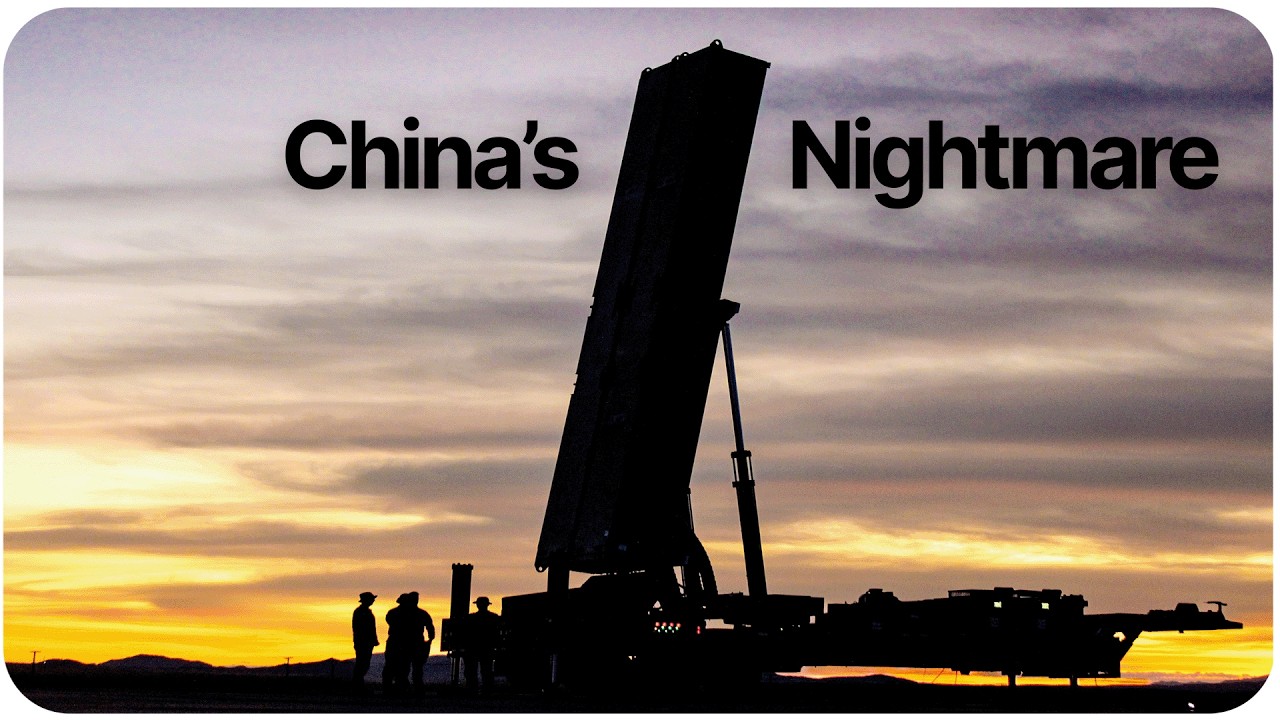
The United States Army’s Long-Range Hypersonic Weapon, colloquially termed Dark Eagle, recently showcased its capabilities during Exercise Talisman Sabre in Australia. This missile, engineered to strike targets over 1,700 miles away at speeds exceeding Mach 5, represents a significant advancement in military technology. Its recent testing success, albeit limited to just two occasions, raises geopolitical concerns, particularly for China. The deployment of Dark Eagle, even in the absence of live fire exercises, has elicited apprehensions regarding potential destabilization and heightened military escalation in the region.
The implications of Dark Eagle’s operational range are profound, as it enables the Army to target key Chinese positions with unprecedented speed and accuracy. Thus, the mere presence of this missile in the Australian military landscape has triggered a fusion of strategic anxiety and diplomatic scrutiny from China. This article will analyze the development of Dark Eagle, its test history, and the strategic concerns it raises, particularly in relation to regional security dynamics and Chinese defensive posture.
Dark Eagle: A Comprehensive Analysis
Overview of Dark Eagle
Definition and Purpose of Dark Eagle
The Dark Eagle, formally known as the Long-Range Hypersonic Weapon (LRHW), represents a significant advancement in military technology. This hypersonic missile is designed to strike targets at speeds exceeding Mach 5, with a range capable of reaching over 1,700 miles. The primary purpose of Dark Eagle is to enhance the U.S. Army’s capability to penetrate hostile airspace, particularly in scenarios where enemy defenses are heavily fortified. The missile’s design aims to provide a rapid response to emerging threats, establishing a strategic advantage.
Key Technological Features
Dark Eagle incorporates several advanced technological features that differentiate it from conventional missile systems. Its hypersonic capability enables it to travel at speeds exceeding five times the speed of sound, significantly reducing the time for an adversary to react. The missile utilizes a glide phase for much of its flight trajectory, allowing it to maneuver unpredictably and evade interception. Additionally, its precision guidance systems are designed to ensure high accuracy, making it a formidable weapon in modern warfare.
Comparison with Other Hypersonic Weapons
In the landscape of hypersonic weapons, Dark Eagle stands as a competitor against similar systems developed by other nations, particularly China and Russia. While the Russian Avangard and the Chinese DF-ZF also demonstrate hypersonic capabilities, Dark Eagle’s design focuses on long-range land-based applications. Compared to its peers, Dark Eagle’s ability to operate within a joint force framework significantly enhances its strategic integration with allied systems, thereby amplifying its deterrent effect.
Historical Context
Development Timeline of Dark Eagle
The development of Dark Eagle has roots in the U.S. Army’s pursuit of advanced weaponry to counter emerging threats. Initiated in the late 2010s, the project aimed to address the increasing sophistication of missile defense systems. After a series of trials and prototypes, Dark Eagle made its operational debut in 2023, marking a pivotal moment in its development history.
Significance in the Cold War Context
Understanding Dark Eagle’s context necessitates a reflection on the Cold War era, during which hypersonic technology was explored but not fully realized. The dynamics of that period, characterized by a bipolar international system, highlighted the strategic value of rapid strike capabilities. Dark Eagle can be viewed as a contemporary response to the lessons learned during the Cold War, ensuring that the United States maintains a cutting-edge advantage in potential peer-to-peer conflict.
Previous Generations of Hypersonic Weapons
Before the advent of Dark Eagle, several generations of hypersonic weapons have paved the way for current technologies. Notable programs include the U.S. Navy’s Hypervelocity Projectile and various experimental systems aimed at testing flight characteristics at hypersonic speeds. These prior iterations laid the foundation for many technological advancements now seen in Dark Eagle, including materials capable of withstanding extreme temperatures and innovative propulsion systems.
Recent Deployments
Participation in Exercise Talisman Sabre
Dark Eagle’s recent participation in Exercise Talisman Sabre serves as a critical juncture in demonstrating its capabilities in a multinational exercise scenario. Conducted in Australia, this exercise showcased the missile’s operational readiness and interoperability with allied forces. The deployment was significant not just for testing tactical applications but also for sending a strategic message to global adversaries.
Strategic Significance of Deployment in Australia
Deploying Dark Eagle in Australia extends the reach of U.S. military capabilities in the Asia-Pacific region. With critical Chinese outposts now within range, this positioning amplifies deterrence and offers a new platform for power projection. The strategic implications are profound, as they signal a commitment to maintaining regional stability and demonstrate to allies the U.S. dedication to collective defense.
Reactions from U.S. Military Leadership
Responses from U.S. military leadership regarding the deployment of Dark Eagle have underscored its importance. Military officials have emphasized the need for cutting-edge capabilities to deter aggression from near-peer competitors. The successful deployment reflects a broader strategic pivot towards hypersonic technologies, reinforcing the U.S. military’s resolve to adapt to an evolving geopolitical landscape.
Test Performance
Overview of Successful Test Launches
Dark Eagle’s recent test launches have yielded promising results, with a small but significant number of successful demonstrations. These tests are crucial in validating the missile’s hypersonic capabilities and refining its performance parameters, thus ensuring operational readiness. The success in these launches has been celebrated as a milestone in U.S. military innovation.
Challenges Encountered During Testing
Despite successful trials, the development of Dark Eagle has not been without challenges. Technical difficulties during the testing phases have included issues related to stability during hypersonic flight and the integration of advanced guidance systems. Addressing these challenges is essential to ensure reliability and effectiveness when employed in real-world scenarios.
Implications of Test Success for Future Development
The success of Dark Eagle’s test launches carries significant implications for future military developments. By demonstrating the viability of hypersonic technologies, the U.S. can invest further into research and development without the uncertainty that previous failures may have induced. This upward trajectory is expected to accelerate advancements and foster the integration of hypersonic capabilities across the armed forces.
Geopolitical Concerns
China’s Reaction to Dark Eagle’s Deployment
China’s response to the deployment of Dark Eagle has been one of concern and caution. The introduction of such a capability near its borders raises alarms regarding its national security architecture. Chinese officials have condemned the move as a provocative act, warning against the potential for an arms race in the region.
Concerns About Regional Destabilization
The introduction of Dark Eagle exacerbates existing apprehensions regarding regional destabilization. As nations grapple with the implications of advanced military technologies, the possibility for miscalculations or escalations in conflict scenarios increases. The U.S. must calibrate its military presence and engage in thoughtful diplomacy to mitigate such risks.
Potential Military Implications for Asia-Pacific Security
Dark Eagle’s deployment signals a shift in the military balance in the Asia-Pacific region. As the geopolitical landscape is increasingly characterized by competition, the presence of hypersonic weapons could alter strategic calculations for both the U.S. and its adversaries. The implications extend beyond immediate military applications, influencing alliances and defense strategies among regional partners.
Strategic Impact
How Dark Eagle Enhances U.S. Military Capabilities
Dark Eagle enhances U.S. military capabilities by expanding the range and speed of precision strike options available to commanders. This ability to engage targets rapidly from a considerable distance enables the U.S. Army to operate effectively in contested environments. It not only acts as a deterrent but also empowers the ability to conduct decisive operations.
Potential to Overcome Enemy Defenses
The hypersonic nature of Dark Eagle allows it to theoretically overcome traditional missile defense systems. By traveling at speeds that prevent interception, it creates challenges for adversaries in detecting and thwarting incoming attacks. This capability is particularly critical in scenarios where time-sensitive targets are vital to an opponent’s operational capacity.
Comparative Analysis of U.S. and Chinese Military Strategies
A comparative analysis reveals notable differences in U.S. and Chinese military strategies concerning hypersonic technology. Whereas the U.S. focuses on deterrence through rapid strike capabilities, China amplifies its own defense technologies to counter such threats. The strategic interplay between these approaches could shape future military engagements and lead to heightened tensions.

China’s Defensive Measures
Overview of Chinese Military Capabilities
China’s military capabilities have evolved significantly, focusing on modernization and technological advancement. In the realm of hypersonic weapons, China has invested heavily in developing systems intended to counteract U.S. advantages. This arms race compels consideration of how military technology will shape future confrontations.
Speculation on China’s Responses to Hypersonic Threats
Given the advent of Dark Eagle, speculation abounds regarding China’s potential responses. This may include accelerating its own hypersonic programs or enhancing defensive systems to counter U.S. capabilities. Additionally, China could adapt its broader military strategies, anticipating that rapid strikes will necessitate pre-emptive or defensive postures.
Impact on China’s Military Modernization Efforts
China’s military modernization efforts are likely to be influenced by developments such as Dark Eagle. The need to counter U.S. innovations fosters an environment for continued investment in cutting-edge technologies, potentially leading to an escalatory cycle in arms development. This landscape will require vigilance and strategic foresight from all stakeholders.
The Role of Australia
Australia’s Position in U.S. Military Strategy
Australia occupies a pivotal role in U.S. military strategy, serving as a key ally in the Asia-Pacific region. The bilateral defense agreements between the U.S. and Australia facilitate collaborative efforts and extend American military reach within the region. Hosting the Dark Eagle enhances this partnership and underscores the importance of collective security arrangements.
Bilateral Defense Agreements and Collaboration
Bilateral defense agreements between the U.S. and Australia enable the exchange of technology and joint military exercises, fostering interoperability. These collaborations underscore the united front against potential threats in the Asia-Pacific region and reinforce shared strategic objectives, particularly in the face of increasing regional tensions.
Domestic Reactions Within Australia to Hosting Dark Eagle
The deployment of Dark Eagle has spurred varied reactions within Australia. While some view it as a necessity for strengthening national security, others raise concerns about escalating tensions in the region. The Australian government faces the challenge of balancing national interests with the complexities of regional diplomacy in an era defined by superpower rivalry.
Public and Political Reactions
Media Portrayal of Dark Eagle’s Capabilities
Media portrayals of Dark Eagle’s capabilities have varied significantly, often highlighting the missile’s sophisticated technology and strategic significance. Reports tend to emphasize its potential effectiveness, but also raise awareness regarding the consequences of its deployment, contributing to public discourse on national security.
Analysis of Public Sentiment Regarding Military Expansion
Public sentiment regarding military expansion, particularly concerning hypersonic developments like Dark Eagle, reflects a mixture of support and apprehension. While some citizens recognize the necessity of advancing military capabilities to deter adversaries, others express concerns about the implications for peace and stability in the region.
Political Discourse Surrounding Hypersonic Developments
The political discourse surrounding hypersonic developments is characterized by debates on defense strategy and international relations. Policymakers navigate the intricacies of military innovation while addressing concerns over regional and global stability. This dialogue is essential for developing a cohesive strategy that addresses both security needs and diplomatic engagements.
Conclusion
Summary of Dark Eagle’s Significance
In conclusion, Dark Eagle emerges as a significant component of U.S. military strategy, poised to reshape the dynamics of power in the Asia-Pacific region. Its capabilities offer striking advantages, particularly in rapid deployment and precision targeting. Such advancements underscore the importance of technological supremacy in modern warfare.
Final Thoughts on Regional Security Dynamics
The evolution of hypersonic weaponry, exemplified by Dark Eagle, introduces complexities into regional security dynamics. As nations adapt to emerging technologies, the potential for miscalculations and escalations increases, necessitating careful diplomatic management alongside military readiness.
The Evolving Landscape of Hypersonic Weaponry
As hypersonic technology continues to evolve, the landscape of military conflict may experience transformative changes. Dark Eagle, alongside similar systems developed globally, represents a critical juncture in warfare. The strategic implications of these advancements will undoubtedly shape future military doctrines and international relations for years to come.